The Pentagon recently released a directive on Irregular Warfare that has generated speculation among the various players in Afghanistan. When you see documents that say “The Chairman of the Joint Chiefs of staff shall” it is a powerful piece of paper from on high. There are a finite number of people in the world who can task four star generals or deputy secretaries of defense and professionals in the business study these directives as if they were the Dead Sea Scrolls. This comment came from a discussion thread in a group I belong to.
“I find it particularly interesting that DoD would come up with a “Directive of the obvious”… For all of its claims the Army as an organization doesn’t learn so quickly. I suppose that it took years of doing the same things expecting different results for the light to shine on reality. Not to be condescending in any way; I am glad to see the directive has been introduced. I hope that it grows roots quickly and flourishes… There is a full-spectrum under which many current peripheral entities can be brought to bear in order to surpass the expectations that DoD may currently have.”
I could not have said it better myself; it will be interesting to see how this directive impacts the template used by the U.S. military as it introduces more maneuver units into the country. Reports in the press indicate that the Army is planning on sending combat units in to Loghar and Wardak Provinces which are just outside of Kabul. The Marine Corps appears to be preparing to deploy in expeditionary force strength into the south. That could mean up to three infantry regiments of Marines with all their supporting arms, aircraft and logistics. That is a lot of gunfighters. The Question is – does it matter?
The Taliban control large swaths of Afghanistan not because they are better fighters but because they are beating the Karzai regime with better governance in the areas they control. The people know that a Taliban tribunal will not award land and water rights based on the largest bribe. They also know that once a case is settled the dispute is over. Fire fights between families involved in land and water disputes are frequent and bloody affairs in areas under government control. In areas under Taliban control the losing party accepts the Taliban ruling or takes 15 rounds in the chest. People tend to cooperate in systems like that.
But they don’t like it too much and would rather see a platoon of Marines or Army soldiers hanging around than a crew of religious zealots. It would be a pleasant surprise to see the Army and Marine units who flow into the country next year deployed down to the district level. I suspect that there will be tentative steps to branch out like that and these steps will involve what the new directive terms “civilian-military teams.”
That will be interesting to see play out and I believe small teams at the district level can, if properly funded and deployed, make a difference in the battle to control the only thing that matters in Afghanistan. The people.
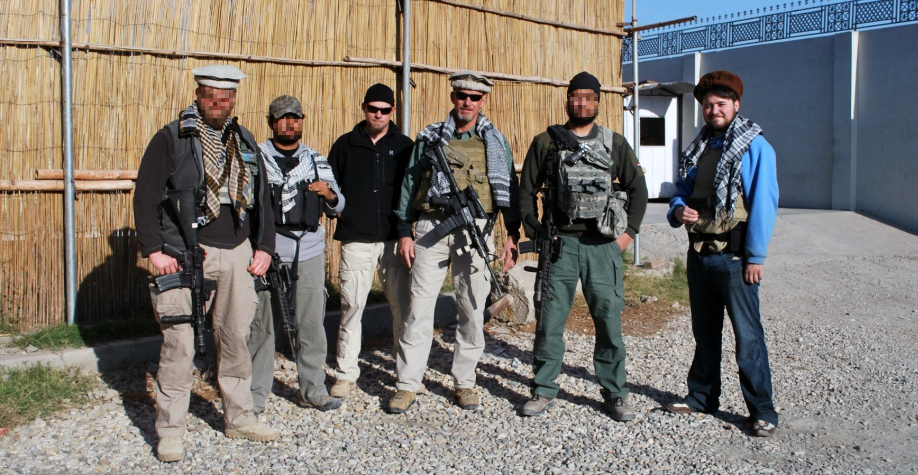
We were able to conduct a “civilian-military team” field trial a few days ago during a road mission to Kabul (to re-stock the bar). This was a demonstration to our SF buddies of why we prefer unarmored local vehicles and they caught on fast. One of the Captains remarked that he never really got to see too much of the country because his visibility in an armored hummer was so restricted. They also marveled at how we attracted no attention (except in the busy main street of Surobi; a HIG R&R village). We also rolled up on a French convoy which gave the boys an excellent opportunity to experience the joy of low visibility ops when the Frenchman manning the trail .50 cal swung the barrel towards us.
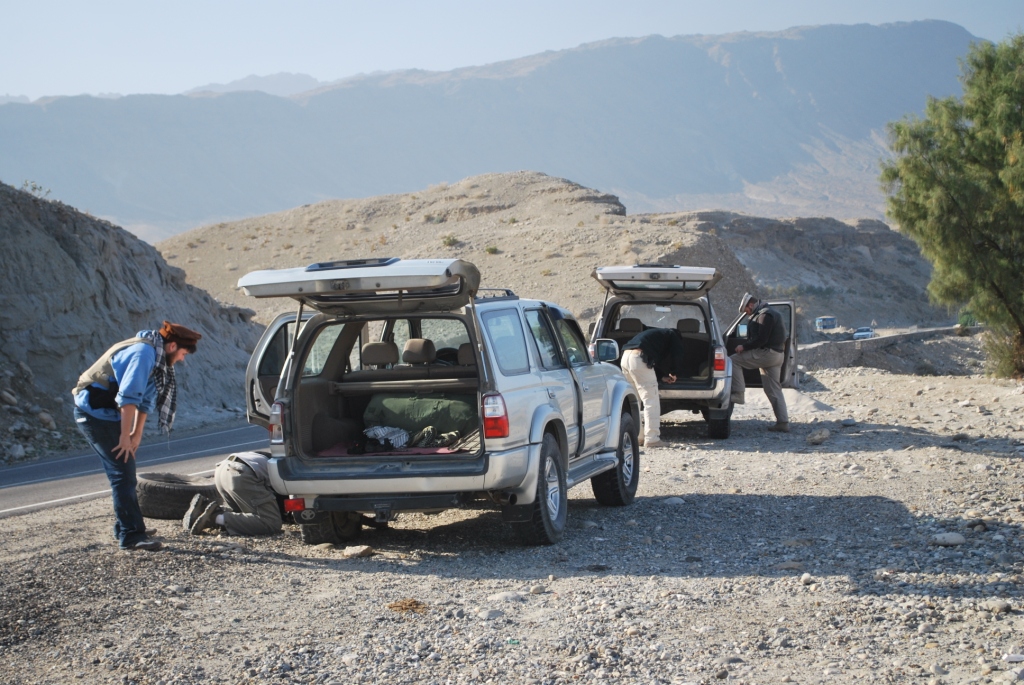
The military travels in convoys that do not allow the local vehicles to get near them. They do this to avoid being hit by “suicide vehicle borne improvised explosive devices” (VBIED’s). In the south Canadian and British forces force all traffic off the roads they are driving down to prevent VBIED’s. In the east sometimes all the traffic will pull off the road when they see an American convoy approaching and sometimes it won’t.
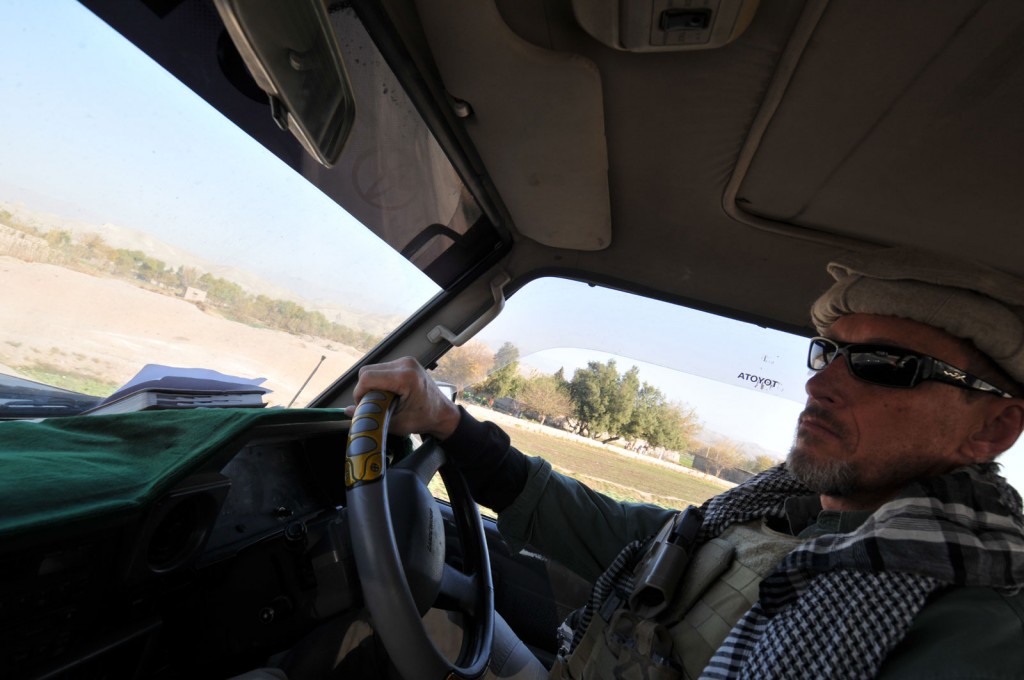
Using unarmored local vehicles with light body armor and fighting kit is another option. This appears to be taking unwarranted risks but I’ll let the quote below from Vietnam legend Col David Hackworth address the issue.
“In Vietnam, today’s most successful infantry tactics and techniques were yesterday’s heresy and madness. When these ‘overly reckless’ ideas were first introduced by farseeing innovators in 1965 and 1966, few commanders took them seriously. Most, because of parochial conventional orientation, looked upon these new concepts with contempt not unlike many reactionary English lords’ attitude toward the longbow before Crecy. But today in Vietnam, these once ‘wild schemes’ have become standard drill. These bold techniques have changed the thrust of the war from uneconomical multi brigade operations to fights that are fought almost exclusively by the squad and platoon.”
That was true in Vietnam and it’s true today; we need to win the people and that means being in the with them 24/7. We can do it and do it for pennies on the dollar we currently spend. But only if we reach back to our past and remember how to conduct independent small unit operations on a very large scale. Let them live and move around like we do and you’re talking change you can really believe in.
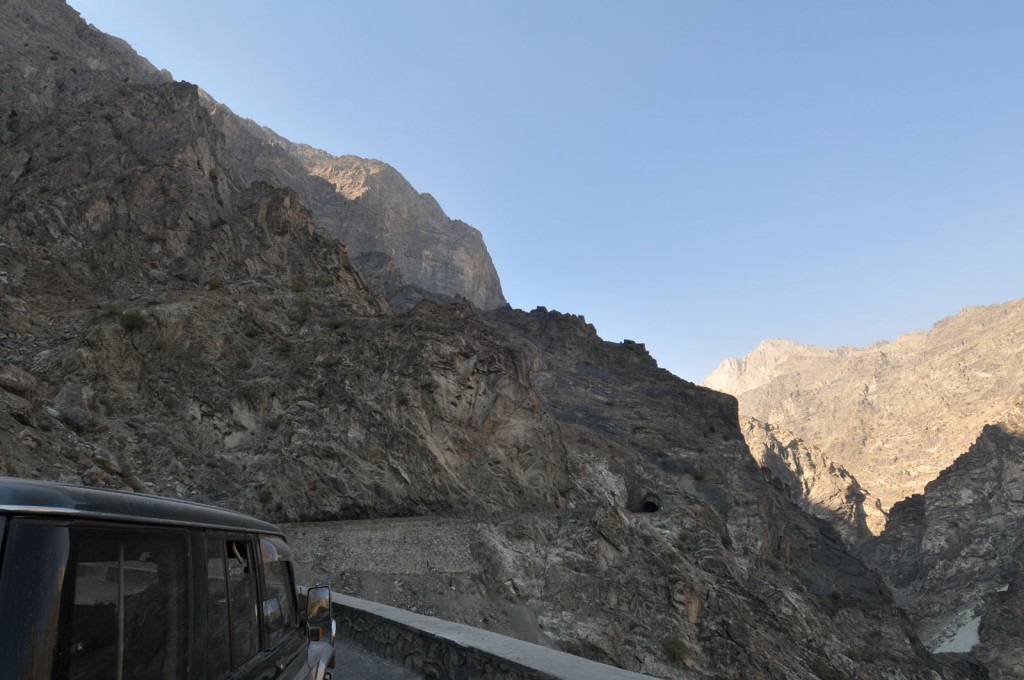
It is time for some “outside the box” thinking and last week’s demonstration may lead to more discussions between the big base behind the wire military and all the other internationals in Afghanistan who feel safer at night on the streets of Kabul or Jalalabad than we do in Washington DC or Chicago.

The Thunder Run has linked to this post in the blog post From the Front: 12/10/2008 News and Personal dispatches from the front and the home front.
I like your way of thinking. Great articles. Keep it up, and watch your back.
Tim, Force Protection used to be just another element of the Principle of War, Security, and was something that commanders and their S-3’s did to protect their forces. Kosovo put our warriors in to potentially hazardous situations where they might be killed, but it was recognized at that time that there was nothing in the Balkans worth losing an American over. FP sprang up as a discipline to allow us to posture and pretend that we mean business when we put boots on the ground. Internal oppositional elements within our own polity use our casualties as PSYOP opportunities to degrade morale and reduce support for the war. Then they get all sanctimonious when they discover that every soldier doesn’t have a bullet-proof, EFP-proof vehicle to ride in, or that every soldier doesn’t have upper-arm and side panels for his IBA.
Americans aren’t raising as many sons to be warriors as we did 67 years ago. The few intact families left don’t have any spare sons to be sacrificed in far-away places for poorly explained reasons. Casualty aversion is as much a demographic factor as an ideological factor. The American people no longer trust the leadership not to squander our precious children’s lives stupidly, so the leaders keep as many fobbits imprisoned behind the wire as they can, busting people over reflective belts so they can cover their asses when somebody gets run over.
The object is not to kill Taliban, secure districts, or bring Afghanistan in to the 21st Century. The object is to get through 13 months without controversy, or anything bad that might be blamed on you.
Dear Sir,
I am a member of a Human Terrain Team and I live at a combat outpost and go out on foot patrols daily gathering useful cultural atmospherics. Please check your information. Obviously you do not have a clue what HTT members are doing or how they operate.
I know exactly what I’m talking about. I said the HTT’s cannot leave the base without being embedded in a military patrol, that they cannot access the websites they are supposed to monitor on the military system and that their ability to go out and interact with the locals is limited. What part of that did I get wrong? You said you go out on foot patrols daily. Foot patrols – are you kidding me? Do I need to get out the clue bat?
Well here it is – this country is larger than Iraq. It has more people than Iraq. These people are spread out all over this vast place because they live off livestock and substance farming. How many of those people are you going to impact by foot patrolling? How far do you go daily – 3 miles, 5 miles maybe 6? You could be making a positive impact on the few people you are interacting with daily but you are making no impact on the overall Afghanistan effort. Reaching out to the locals during combat patrols is Corporal level work – you’re getting paid more than an assistance Secretary of Defense and you’re foot patrolling.
Let me use a great scientific analogy to drive this point home. If you were a microbiologist and tested the soil near your FOB you would find anthrax. When you see anthrax in this analogy think armed Pashtun’s in opposition to the Karzai government. You report anthrax up the chain and the big guys on high say big deal – there is anthrax everywhere in Afghanistan due to centuries of pastoral herding. What counts with anthrax is being able to identify the species, family and phylum to determine if it is a virulent strain. You are persistent and bring in the experts who can identify the species, family and phylum of the anthrax you found and he determines that it is a very virulent strain and not organic to the area. Now you have peoples attention and they know how to focus their efforts to determine how the non native anthrax spores you found got there and if they are being weaponized. Then all you surveillance and patrolling efforts could be focused on looking for signatures of bio warfare, culture stock, incubators, milling equipment etc..
The point is Anthrax is not a threat to us in Afghanistan – unless it is a virulent strain which has milled down to around 3 microns and mixed with a suspension agent of some sort. Likewise the people of Afghanistan are not a threat to us unless they are a dedicated member of an armed opposition group (AOG.) You my friend are supposed to be the expert who can tell us the family, genus and phylum of the locals thus enabling the focus of effort described above. Can’t do that foot patrolling.
Do you go out without all the combat kit? Do you meet with elders on your own? Do you speak any Dari or Pashto? Do you know exactly which elders to go visit when something bad happens in one of your districts? For me the answer to all those questions is yes. You may have language skills (which is not standard with HTT’s) but the answer to my other questions for you is no. I know it is no. And if you can’t do what I can (as a one man regional security team for the Government of Japan) then what the hell is it you think you are accomplishing? Here is a tip – the elders won’t tell you a damn thing unless you invest the time to prove to them that you are really interested and want to make a difference. When they understand that the fire hose comes on and they will bombard you with information some of which will be a great use to your command and some of which will be worthless – knowing how to sort that out should be what the HTT personnel are doing. But that is graduate level stuff and you guys have yet to mature past the elementary school level. That is an analogy about the overall program – not a comment on program personnel some of whom I know well and admire greatly.
I have been on both sides of the fence – in uniform as am infantry officer and in local garb living outside the wire as a small businessman. I’ve got five years on the ground and more than just a little bit of experience with which to back my opinions. You’re part of a program that is broken and I am not the only one saying that. I think my blog speaks for itself and indicates to the casual reader that I “have a clue.” If I am missing something or if you want to join the web rings I run with please write back, but do so professionally – name calling is the sign of a weak intellect and poor command of the facts – I suffer from neither.
I don’t doubt your expertise, but am wondering about the numbers. Your proposal sounds as if it would involve significantly more boots on the ground than are currently planned for Afghanistan. If so, where will they come from?
Excellent points, and I am learning a lot from reading this blog.
Also I was kind of curious Tim, I found an article about the Hazaras and using them to police in Afghanistan. What are your thoughts about using these guys for police work over there? Graeme Wood wrote it for the New Yorker. I didn’t know if the reporter was full of it or if he did his homework on this one.
http://www.newyorker.com/reporting/2008/12/08/081208fa_fact_wood?currentPage=all
Hey Matt,
I absolutely agree that using Hazara’s or Tajiks down south is a great idea. Mr. Wood mentioned that there had been Tajik policemen in Kandahar before but that were little better than the locals. That has not been my experience when operating in the south. We always used the same crew of Tajik fighters from the Pansjhier and I they were very very good. I also liked the fact that I was with Afghans who were no more welcomed in the area than we were – all in it together if you will.
What I found strange about the article is how quickly their Canadian handlers broke contact and retreated when they had some initial success with their ambush. Breaking contact and running is dangerous, really dangerous and I wonder why they did that.
My assumption is that there was only the one Canadian mentor and he didn’t want to get in a big firefight without a wingman. Fair enough but still turning and running back to the station house is a good way to get shot. I also could not believe that after seven years there were districts in Kandahar Province that ISAF has left for the Taliban. There are 17,000 ISAF soldiers at the Kandahar Airfield and not all of them are maintainers – in fact most of the rear echelon support stuff is done by civilian contractors so what all the others are up to is a mystery to me.
Also a mystery is how the Hazara came to be Shia’s? I thought they were the remnants of the Golden Horde and they certainly had little to do with Persia after the Arabs converted them. A little mystery and not important but it has to be an interesting story.
And for Soldier’s Mom – thank you so much for the encouragement and interest you show in the FRI blog. You are right to be concerned about numbers – we have to anticipate that the numbers of deployable American combat units will decline. My idea’s would fit that scenario. I run around this country – even in contested areas – with the numerical equivalent of an American infantry squad. I am certain that American infantry platoons could travel anywhere they wanted in Afghanistan and be able to decisively punish anyone who dared take them on using their organic firepower. If deployed in dispersed formations they could also use the life support template used by the PSC’s operating in Afghanistan. Live in local compounds, eat local chow fixed by local cooks, obtain local transport to augment your mobility and you could send thousands of support troops home. We are running out of people, money and time – inshallah the leaders on high will adapt a more flexible approach soon.
Thanks, Tim, for your thoughtful, detailed response to my question. I hope that lots of the right people are reading this blog!
Tim said, “If deployed in dispersed formations they could also use the life support template used by the PSC’s operating in Afghanistan. Live in local compounds, eat local chow fixed by local cooks, obtain local transport to augment your mobility and you could send thousands of support troops home. We are running out of people, money and time – inshallah the leaders on high will adapt a more flexible approach soon.”
It’s my understanding that Afghanistan presents real logistical challenges and the Pakistani border crossings are untenable at times. It naturally follows that your statement describes a practical appraoch to the problem.
Asymmetrical warfare indeed.
Godspeed.
Thanks Tim. What is interesting about the economy right now, is that cheaper solutions for fighting this war will be looked at hard. Perhaps ‘warfare on the cheap’ will be the next big thing in today’s warfighter think groups? Can you imagine bringing in some old Rhodesian war vets to teach poor man’s COIN stuff at some of the war colleges and centers? Or how about this, if we can’t get enough troops to fight the Taliban, then let’s capture the Taliban and convert them, just like the Selous Scouts did with guerillas during the Rhodesian War? Now that is economy of force and war on the cheap! LOL Take care and Semper Fi.
http://en.wikipedia.org/wiki/Selous_Scouts
Tim San,
Some of the people working in Afghanistan have had about enough of the risk aversion that paralysis current military operations. I do understand from the military side of things that losing people is not preferred but think about it. They ‘force’ roads in areas where the locals want no part of development and does their reason for not wanting it really matter? It is STILL the AFGHANs country, right? Or do we continue to barricade ourselves in COPs and FOBs hoping that things change? If US lives are as precious is we make them out to be then why do act the way we do brining undue attention to ourselves while continuing to piss off the locals? My solution is, “Contractor COIN”. Less people more qualified and less risk adverse than military leader to get out amongst the populous and local leaders, not the higher strata ones that are lining their pockets with Uncle Sugar’s sweet milk from his teat…. and actually make a difference in Aghanistan as opposed to waging a one year war for 7 (+) years and showing no immediate signs of stability, development, (I love this buzz word that is bastardized constantly) ‘capacity’ we get things moving at a more rapid rate. The Afghans know that as long as the incursion remains manageable by the US military that we will continue to dump millions (+ or -) a couple of billion into corrupt leaders’ pockets in order for the US to feel good about ourselves. How about turning the issue over to those who don’t mind being here for the $$ and allow professionals to do what they are here to do. It would be performance based so if you don’t perform your time is done. Much less resources would be required and the bureaucracy would be minimized. Would there be some scandals? of course their would but aren’t there always? Oh, I know why it wouldn’t happen There wouldn’t be a chance to reward those serving in Kabul who do nothing but quagmire the process and have no idea that there is actually conflict going on outside of their disillusioned reality… What was I thinking? I encourage discourse regarding this topic.
Sir,
Never have thought to find this kind of input on current affairs in Afghanistan. Regards for giving us a chance to see it with Your eyes. If You do have the time and will to explain the current state of relations between the North and South parts of the country and their respective residents, please kindly do so.
How had the death of Ahmad Shah Massud affect the north? Anyone that can stand up for his man as he did? With the Taliban creeping back (if such) how are the norh folks reacting?
Taleban tax: allied supply convoys pay their enemies for safe passage
A security company owner explained that a vast array of security companies competed for the trade along the main route south of Kabul, some of it commercial traffic and some supplying Western bases, usually charging about $1,000 ( £665) a lorry. Convoys are typically of 40-50 lorries but sometimes up to 100.
I won’t name the company, but they are from the Panjshir Valley [in north Afghanistan]. But they have a very good relation with the Taleban. The Taleban come and move with the convoy. They sit in the front vehicle of the convoy to ensure security, said the company chief.
Leonid,
I think I might have addressed this in the “Traveling in the North” post but what is happening with the people up there is interesting.
We saw consistent reporting over the past two years that the warlords of the north were re-arming. That was reflected in a drop in the amount of weapons being collected in the joint UN Afghan government disarming and demobilize program which had been considered a success up till that point.
Now you see a climb in AOG (armed opposition group) incidents combined with high levels of armed criminality plaguing all the northern Provinces. The villagers up there will tell any international who cares to listen that it is grossly unfair to let the Pashtun in the south benefit from a booming poppy crop while simultaneously trying to disarm them. They will point to the criminality and AOG incident rate as proof that their early cooperation with the UN/AF Gov program has left them at the mercy of their traditional enemies who have grown stronger and now enjoy unlimited access to money and weapons. These feeling are aggravated by the snails pace of reconstruction, then further aggravated by a central government who most people feel are more lawless than the old Taliban and one which offers them no protection or services.
Add to that mix the feeling that Karzai is trying to marginalize their leaders – specifically Gen Dostum and his Lieutenants and what you have is a recipe for Civil War. It is impossible for us – security guys like me I should say – to gauge how serious a problem this is. Only the Embassy and our Intelligence agencies would be able to know that and I hope they do.
Amongst the international community working here the conventional wisdom is that the leaders in the north are using these grievances as leverage for getting more money and attention from both Kabul and the donor nations. I’m pretty sure we are reading the tea leaves correctly on this issue but if we aren’t….things could go very wrong very fast.
Interesting stuff. So would you care to speculate about what a few of these scenarios would look like, that would kick things off in Afghanistan? I know in Iraq, bombings were being used to create sectarian violence with the hopes of starting a civil war there. Will this tactic work in Afghanistan? Thanks. S/F
Interseting weapons the “army guys’ are carrying.
Big dude on the far left looks like he’s got an M-16 with a shorty stock, Eotech Halo Sight, some custom hardware but I can’t see a barrel past the hand guard. fuzzy pic or is that a big honkin’ 6.5?
And army guy next to Brandon seems to be sporting an AR pistol.
Nice CQB kit.
Fantastic post, Tim. Keep up the great work. You seem to have an excellent understanding of what the problems are in Afghanistan. Hope you don’t mind if I lend a bit of academic backing to what you say. Not from me, mind you, but then-Lt. Gen. David Petreaus.
In October of 2005 Petraeus returned from his second tour in Iraq to take command of the Combined Arms Center (CAC) at Fort Leavenworth, Kansas. He took charge of the team that was writing what would eventually become the >U.S. Army / Marine Corps Counterinsurgency Field Manual 3-24, released on December 15, 2006.
FM 3-24 revolutionized how we fought the war in Iraq. The 5 additional surge brigades to bolster the existing 15 in Iraq weren’t just sent to do the same thing; there was a radical change in strategy. No more were we going to stay on our bases and only head out on raids (oversimplified but generally accurate). We moved our troops off the bases to live among the people (again oversimplified but generally accurate). We stopped “commuting to work.”
Not only did this lead to a more successful prosecution of the war, it also made our troops safer. Here is one of the key insights from 3-24:
In other words, get off the bases and be among the people. Get to know them personally. Know your area of operations backwards and forwards; economics, religious sects, clans, tribes, ancient rivalries, who owns every store and shop, what holidays the celebrate and how, who the village/clan/tribal leaders are, local politics, on and on. Yes kinetics are important. It’s just that alone firepower cannot win.
Petraeus’ team wrote about just this in FM 3-24
You can’t do this if your emphasis is on “force protection,” and indeed as stated above such an emphasis is counterproductive, as counterintuitive as that may sound. Now, I understand that it’s easy for me to sit here and type these words, never having served myself. And I’m not an original thinker here; all I’m doing is relaying what other more learned and experienced men and women have said.
Earning the trust of the people is critical to beating an insurgency. As Lt. Col. (Dr.) David Kilcullen wrote in FM 3-24
My .02
support of the population is critical. I say it is India, with their biological warfar intruding our
lives. I would like information on the purchase of warfare.
M no expert basicly a Indian civilian but yes your idea makes a lot of sense cause working at the grass roots and building friendly relations along with infastuctur and winning over the political locals at the grass roots is truly one of the best ways to win or at least slow down violence. it some what the strategy used by us to cope up with the violence created by naxals at least it seems to be the idea to me.
Thank you!