What Did I Tell You Part II

Yesterday I posted the following breaking news on FRI:

The Afghan defense minister, the army chief of staff and (although not in the press and maybe an inaccurate tip) four Afghan army corps commanders have been sacked.

My sources for this kind of information have never failed me but the media and Resolute Support staff are failing you by refusing to allow the news to come out unfiltered. This mornings news feed carried conformation of the scoop in this mealy mouthed way:

Ghani also reshuffled the local army leadership, as the Taliban threatened further attacks.

There are six corps in the Afghan army. Four of them have just had their commanding generals relieved. I do not believe the Afghans have a deep bench of senior general officer talent and know this move will cause turmoil in ongoing operations. It’s devastating to morale and  not well timed either as it’s spring and time to start a new fighting season.

So, at this point, what difference does it make?

I don’t know. As many of my friends have said nobody cares about Afghanistan anymore.  I respond that people will start caring when we start losing troops again but it is possible we’ll continue to avoid casualties (with the exception of the occasional SF soldier because they are staying in the fight). If that pattern holds then it means our train and assist missions are locked down inside FOB’s and never leave them. Which is to say they are wasting their time because you can’t mentor combat troops unless you’re fighting with them too. That approach is the exact same type of kabuki theater that is inflicted on the public daily by TSA agents at our airports.

Yet I still smell danger; not in the form of a threat to our country but in the form of refusing to learn from repeated past mistakes. I remain unable to track down who agreed to the deployment of 300 Marines and why. I’ve talked to general officers up to the three star level and they don’t know either nor are they optimistic about achieving mission success. I could have pressed general Turner on the issue but he’s a friend and I’m not a real reporter and would never put a friend on the spot like that.

I know the Pentagon will contend that the currently level of secrecy involving the Afghan commitment is to prevent enemies from knowing what we are up to. I also know the one entity that knows exactly where American troops are and in what number is the Taliban. They don’t need the press to tell them where we are and what we’re doing. This brings up the disturbing possibility that the Pentagon could fall into the same position of distrust and contempt that they were in at the end of the Vietnam war.

Recently in the news was another story about a gang of youths robbing and beating people. This was on a BART train but in the past similar things have occurred in shopping centers, state fairs or the high end retail property in Chicago. These stories always say the perpetrators are “youths” but look at the comment section following any of these reports and note the commentary concerning the ethnicity of the “youths”. The media won’t report on ethnicity concerning mob assaults which is one of the reasons Americans despise our main stream media. The media lies by omission and fools no one; our military leaders should not emulate their strategy; we’ve been losing enough lately.

I don’t  want to see the military become the home of the “five o’clock follies” again.  Nor do I want to see Afghanistan descend into civil war again. Both these possibilities are inevitable if we continue to do the same thing over and over expecting different results.

As I mentioned yesterday I am comfortable that whatever Secretary Mattis decides is the correct course of action because I respect the man that much. However it is dangerous to put that much faith in one man. Knowing him and knowing his level of understanding about war I would have expected him to drive a stake through the heart of all this females in the infantry bullshit. He hasn’t yet and he may not ever say a word on the subject. If that happens then I’ll admit I was wrong about the man; even our heroes are, in the end, only human and thus vulnerable to the twin curses of hubris and pride.

If there was ever a time in our history we needed a hero to step up an interject reality into the narrative it is now. If we don’t find one soon we’re doomed to descend into the third world status. History tells us that descent can be rapid and when it happens we’ll learn what the Afghans already know; death waits just around the corner and cares nothing about race, gender, annual income, or altruistic feelings. Death cares about death; we can be a free people or a dead people. Everything rides on the truth and treating reality with respect by not feeding a pretend narrative that makes coastal elites feel good about themselves.
The Momentum Is Not With Us

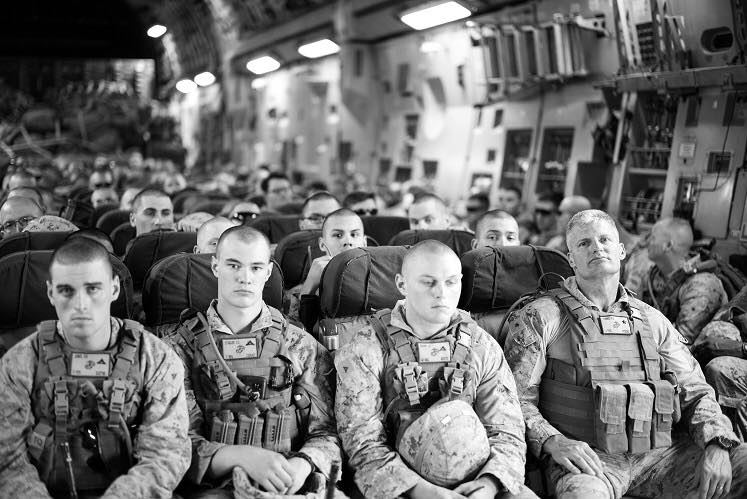
The 300 Marines of Task Force Southwest (TF Southwest) are on their way back to the Helmand province of Afghanistan to help stabilize the Afghan National Security Forces (ANSF) in that part of the country. Based on the mornings news from the front it would appear they will be too little, to late.

Last night the Taliban staged an attack on the biggest base in the North of the country, Mazar-i Sharif, killing 140 young recruits who were in the base mosque for Friday prayers. How is it that an army, mentored by international military units for the past 15 years, cannot protect its young recruits from being slaughtered on its largest base? This is the biggest question of the day and one we can anticipate will never asked by our corporate media or explained by the senior American generals in Kabul.

But it’s worse than that because Mazar is not in Pashtun lands and the Tajiks and Uzbeks who comprise a majority of the population up north fought the Taliban back in the 90’s as part of the Northern Alliance. The Taliban is a mainly Pashtun movement and seeing the franchise branch out into the Tajik and Uzbek communities is a sign that the momentum is not going our way. There have been individual northern tribal fighters in the Taliban before but if the non-Pashtun tribes are now majority anti government it would seem that the game clock is rapidly running out.

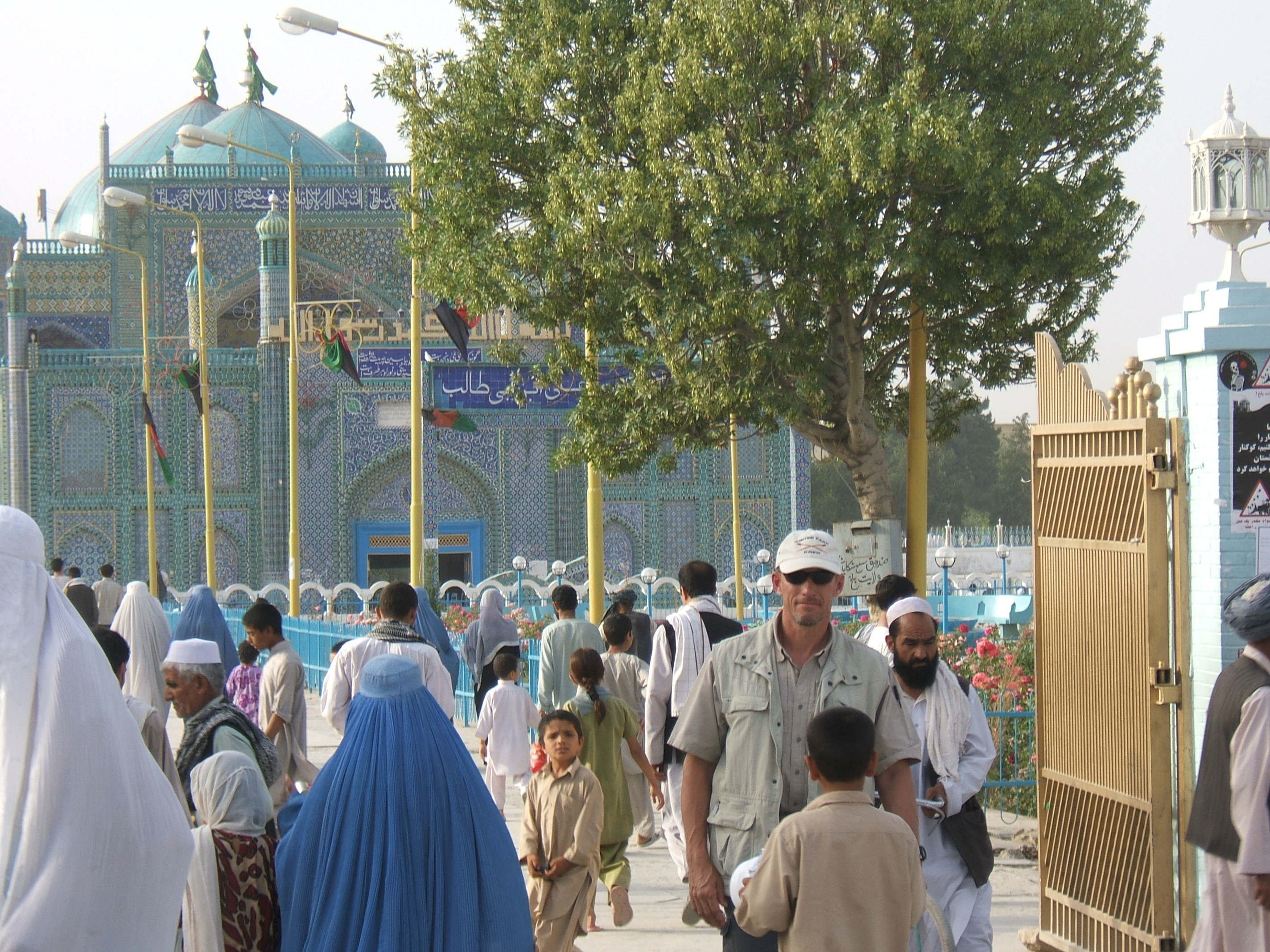
Standing in front of the Blue Mosque in Mazar-i Sharif back when it was safe to travel the north.

Into the fray the Marines now enter without supporting arms or other combat enablers. They are not going to fight; their mission is to advise and assist which identical to the German army mission that is on the very base in Mazar that was attacked last night. The Germans suffered no casualties because the international advise and assist teams are housed on secure FOBs inside the Afghan FOBs where un-vetted Afghan troops are not allowed to enter.

And therein lies the problem. Mentoring of foreign armed forces is best done with teams who both train and fight with them. Advising officers after mounting (literally) a combat patrol to take you from your office to their office is ridiculous. You cannot put lip stick on that pig. Can it work? Hard to see how at this point.

Which brings up the question of what could the commanding general, Army LtGen John Nicholson,  (no relation to Marine Corps LtGen Larry Nicholson who has been featured in this blog several times) be thinking when he asked for a few thousand more troops to help train the Afghan National Security Forces (ANSF)? That question was answered for me by BGen Roger Turner, the Commanding General of TF Southwest. He said the Afghan security forces in general and the Afghan army specifically have improved to the point where with  a little extra mentoring and support they can turn to corner and become self sufficient.

Marines from TF Southwest heading into the Helmand. BGen Roger Turner is on right. (Photo by Cameron Glendenning)

General Turner, who I have known for a long time, is nobodies fool. He is a bright, tough and more importantly, intuitive combat leader. General Nicholson has been at his job for over a year and also has a stellar reputation. Both of these men have been handed tasks that, in my humble opinion, cannot be achieved. But I don’t know what they know and will give them the benefit of the doubt.

Mainstream press coverage of this deployment has been uniformly uninformed, as has has the normally more accurate alternative media. This story posted on Brietbart yesterday is a good example. Read it and think about what you know on the topic when you’re finished. Then scroll through any of the last 10 posts on this blog and you’ll see what I mean. Apples versus oranges.

There is no indication that the momentum in this conflict is shifting towards our side. It clearly belongs to the various groupings of Taliban, ISIS and the other armed opposition groups and drug running syndicates that flourish countrywide. And then there is the annoying fact that the picture being painted by the Resolute Support mission staff differs (dramatically) from reality. This backgrounder PDF released by NATO states the following about ANSF attrition:

Reducing attrition is essential for the long-term viability of the ANSF, especially with respect to retaining quality personnel. If total strength objectives are increased in the future, attrition must be reduced even further. Average monthly attrition rates are 2.6% in the ANA and 1.29% in the ANP. The ANSF’s goal is to reach an attrition rate of less than 1.4%. On average, the ANSF consistently gets 6,000-9,000 recruits every month

Those rates of attrition are (to be charitable) suspect. This week Steve Inskeep of NPR had an interview with the author of a new book,  Our Latest Longest War, LtCol Arron O’Connell, USMC.  This book may well be the best yet from the military perspective on the Afghan conflict and I cannot recommend it more highly. Here is a portion of the interview:

O’CONNELL: I believe we’ve been trying to help them out of the tragic story of Afghanistan for 15 years. Americans are big-hearted people. The United States is the wealthiest and most powerful country in the world. But there is still space to reason what the appropriate amount of blood and treasure is to spend on a mission that seems to be in stalemate at best, backsliding at worst.

I think we have pretty good evidence now, both from Iraq and Afghanistan, that the massive assembly-line attempt to produce capable, professional national security forces has not worked well, and it’s been at tremendous cost. And for all those who say we should just keep doing what we’re doing in Afghanistan, let me explain why that’s not sustainable. Every year, between a quarter and a third of the Afghan army and the police desert. Now, these are people that we have armed and trained. We’ve given weapons to them. We’ve given them basic military training. And every year, a third of them disappear.

INSKEEP: With the guns.

O’CONNELL: With the guns. That’s not sustainable for us economically, and it’s certainly not sustainable for the Afghan people to just fill the hills with armed militias.

That sounds a little higher than 2.6% per month but 2.6 x 12 = 31 so the NATO brief is about right but looks better than the stats provided in the interview above.  And this is why I feel it imperative to go back and cover this deployment. There is too much blood and treasure riding on this mission to condemn it to the mediocre coverage of the main stream media.

If you have the means and are interested in the truth regarding the situation in Afghanistan then please take the time to visit the Baba Tim Go Fund Me page and donate. We all deserve the truth about what is being done in our name and the only way to get it is to send someone over there who understands what he’s seeing and has the depth of knowledge to give context and background to his reporting.

After making a generous donation it would be appropriate to say a quiet prayer for the men and woman of TF Southwest. Their going need all the good karma in the world to pull this off. My money is still on them.

Dealing With Moral Trauma By Doing The Impossible

Moral Trauma is a new term for an old phenomenon. A good definition of the term (from the VA) is:

In the context of war, moral injuries may stem from direct participation in acts of combat, such as killing or harming others, or indirect acts, such as witnessing death or dying, failing to prevent immoral acts of others, or giving or receiving orders that are perceived as gross moral violations.

Victory mitigates Moral Trauma. Victorious warriors have no problem understanding the purpose behind their sacrifices in combat; everybody understands what they were asked to do when they are on the winning side. Yet only a few can comprehend what was asked of warriors who know they did not win. The moral insult increases by orders of magnitude when the loss was inflicted not on the battlefield but by the gross incompetence of the ruling class in Washington, DC.

American military men should be used to this by now, as we have won every battle yet lost every war (except Grenada, but that was a minor police action) for the last 72 years. Winners never react well to losing; the American military is no exception. Some turn to the bottle or drugs, some become physical training fanatics pushing themselves to the limit in search of a good night’s sleep, and some turn that disappointment into a drive to do the impossible.

Can one man, a military vet with zero movie-biz experience, write, direct, star in, and produce a movie that is actually worth your time to sit and watch? No, that’s impossible. Many have tried, and all have failed—until now.

I got an advanced copy of my friend Kerry Patton’s new film Dark of Light and was happy to review it because he’s a good friend and a poster boy for post-traumatic growth. With his work on the TV show Outsiders, he’s now a poster boy.

Kerry Patton in his role as Shane on the Outsiders. What did I tell you? Poster Boy material.

I wasn’t looking forward to doing this because I didn’t see how Kerry could develop a movie that was … you know…good. I love him like a brother, and I’d put lipstick on his pig in a heartbeat, but I don’t have to because Kerry did well. His movie spoke to me, and like the last movie reviewed here, A War, I saw a message directed at those who served as well as their loved ones.

The movie is about a widower home from the wars and tending to his young daughter, whom he is raising as a single parent after losing his wife to cancer. His daughter is raped and murdered which we are spared from watching on screen (vets of Afghanistan and Iraq are sensitive to the violation of children having seen too much of it). A quote by Kerry’s character featured in the movie trailer (and caught the attention of my Facebook friends) is: “What does that mean, Maggie…Justice”? That is a question as old as Western Civilization and one that any Afghan male would have no problem answering.

The main character in the movie is a former interrogator/translator who is carrying heavy weight from his time overseas and the subsequent loss of his wife and child. How does he handle it? Alone, like we all do, because few know and fewer care about what happened to us or what we did in the war, as T.R. Fehrenbach observed in the book This Kind of War (the best book ever about Korea, as far as I’m concerned).

Americans, even when they are proud of them, do not like their legions.

We vets know this well, so most of us never talk about our time in the wars. Kerry’s character doesn’t talk about it either, as he seems to understand nobody really cares much and that he will have to deal with his demons alone. When we meet the lead character in the film, he seems to be doing as well as one can expect. He has a young daughter at home and thus is in the enviable position of living with somebody whose happiness and well-being are more important than his own. That’s a good situation, as it prevents being visited by the demons of self-pity.

He’s got a farm with ducks and chickens, which is cool but requires a trigger warning. The protagonist keeps his chickens housed in an elaborate chicken FOB. This blog is named in honor of my chickens, who staged a jail break (while I was overseas) from the chicken FOB I had built and migrated to the barn. I liked them better than chickens, which should be free range.  And for the record in real life Kerry lets the chickens free range during the day so he’s off my chicken free range shit list. Shoot, I’m off track again…apologies.

Kerry and I last year in DC, where we were attending the funeral of an old friend

Kerry’s character seems to be coping well, but he’s not really, and you can see that when he goes out to do farming chores. He stares off into the distance with a haunted expression that many of us know too well. But that happens, and the healthy man or woman who has served knows that time is the only thing that will dull this sense of unease at being in a place where we are safe. We don’t do safe, we are born to battle, and many of us only feel secure when facing the dangers of war. Think about that; as weird as it sounds, it’s true.

Then the ultimate moral transgression is visited upon our character with the loss of his daughter, and he crumbles, turning to the bottle and allowing the demon of self-pity to drain him of his vitality, health, peace of mind, and personal honor. What is the balm for a man’s soul when this much tragedy has visited him in such a short time?  Badal.

Badal, which means both “revenge” and “exchange,” is the primary mechanism for settling grievances in Pashtun society, and as with almost everything, it is first and foremost a process for restoring honor.

Our Latest Longest War: Losing Hearts and Minds in Afghanistan University of Chicago Press.

When the law fails to deliver justice, doing it yourself is a staple of American movies. Taken comes immediately to mind, but those big-budget movies, although entertaining, are so far from reality that they should be classified as science fiction. Kerry Patton didn’t have the money or desire to do over-the-top special effects scenes; he has a good story. More importantly, Kerry doesn’t need the ego-pumping spectacle of beating 20 bad guys to a pulp using found objects and fists. Unlike a man who pretends to be other men for a living Kerry doesn’t have to prove he’s a bad ass to anyone. He’s telling a story, and it’s interesting, and it’s not about him or being a ninja freak who runs up triple-digit body counts while tossing off clever one-liners.

Our tribe can fight harder and better than any other tribe on earth. We can be implacable foes, and many of us have killed and killed often in the course of our duties. But we’re not killers.

We also know what we don’t know and what Kerry’s character doesn’t know (after grabbing the man police think is responsible) is if he has grabbed the right guy. As pissed as he is he’s not comfortable with what he is doing to his captive and what he’s doing isn’t nice. We all have brought a little of Afghanistan home with us but not so much that we think extra-judicial killing is acceptable after returning home. If forced to do it, stand by; we know what we’re doing, but we’d rather live the American dream as productive citizens. Ultimately, our protagonist knows what he’s doing, and it is beautiful to see.

Veterans (and those who support them) need to watch this movie to let the stoicism of Kerry’s character remind them that they have a choice in how they shoulder the weight they are carrying. You can reach inside for what sustained you in battle to see you through until Father Time takes away your pain, or you can fold up your tent, surrender to despair, and spend the rest of your life feeling sorry for yourself. There are no other alternatives. For us, life is now a counter-ambush drill – assault through and live; assault through and die, but assault through…. There are no other acceptable options. We go forward or we perish.

And if you reach inside far enough, you’ll discover you can do the impossible. Kerry Patton has done the impossible, and the product is a good, solid, enjoyable movie accessible to the public (because it’s good) and a message to fellow vets. Dig deep, do not give in to despair, and remember the virtues you learned in America’s Legions. Virtues gained in war can translate into success at home. Let Kerry Patton drive that message home to support you as you help him. He’s a true warrior who, in real life, is also a good man with a large heart, and I love him despite his chicken jail and all the hair gel I’ve been told he now uses.

Mo MOAB Madness

This weekend I read a Macedonian paper to get a read on what India had to say about Pakistan’s involvement in the MOAB strike. An Indian paper to get a read on what Afghans not associated with the government thought about the attack and a Qatar-based Arab news network for the most even handed and comprehensive coverage of the incident and its aftermath.

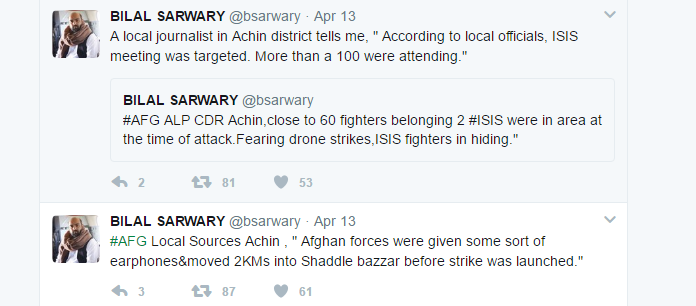
India is claiming over 500 Pakistani nationals were killed in the attack. The Taliban said “using this massive bomb cannot be justified and will leave a material and psychological impact on our people” and Afghan journalist Bilal Salwary tweeted:

And that is a short summary of all the new news on the MOAB strike.

The New York Times published a piece on the visit of Lt. Gen. H. R. McMaster, President Trump’s national security adviser, to Kabul over the weekend confirming what we already knew about the request for more troops. Gen McMaster also:

… appeared to take a tougher line on Pakistan, which has been accused of using the Taliban as a proxy force and giving its leaders sanctuary. Many analysts, as well as some coalition partners, have been critical of the United States’ uphill struggle to persuade Pakistan to crack down on the Afghan Taliban leadership, which has used Pakistan as a base for its battles in Afghanistan.

We already know Pakistan’s Internal Security Service (ISI) drives the instability in Afghanistan and we already know the administration is tired of it. The last administration was tired of it too but who cares? There is not much we can do about it for the same reason Afghanistan can’t allow ISIS to gain a foothold in Nangarhar province. The supplies required to sustain (or commit more troops) have to come through Pakistan via the Khyber Pass.

Pakistan’s continued involvement in destabilizing Afghanistan is a problem that will have to be managed, not solved. And the problem is complex.

As covered in a previous post the Islamic State in Iraq and the Levant Khorashan (ISIS-K)  was started by Pakistani Taliban who had fled from various tribal agencies in Pakistan’s Northwest Frontier into Nangarhar province of Afghanistan. They were mainly Tehrik-e Taleban Pakistan (TTP) fighters (and their families) from the Orakzai, North Waziristan and Khyber tribal agencies.  But there were also fighters from Lashkar-e Islam; a group group led by Mangal Bagh who was described by the Long War Journal as a:

Robin Hood-like in character, claiming to mete out egalitarian social justice and rooting out crime, which to some extent is true. But he does this with an iron fist; any resistance is swiftly and permanently quelled. He has visibly reduced the criminal activities in the area, while also having a huge impact on decreasing drug trafficking in the area. At the same time he is engaged in a bitter ideological and sectarian struggle with a rival faction, a feud that has claimed many lives, and has blatantly and forcefully defied the state.

Armed Afridi tribal fighter outside one of their compounds in the Khyber Pass during the fighting between Lashkar-e Islam and the Afridi’s in 2009. Photo by Freerangeinternational

Mangal Baugh and his crew were courted by both tribal elders and the Afghan government as related in the excellent analysis of the organization by the Afghan Analyst Network:

 The Afghan government’s support to Mangal Bagh’s men is an open secret among residents of the Spin Ghar districts near the Durand Line. Residents from Achin recall the generous hosting of groups of long-haired Lashkar-e Islam fighters at the houses of Shinwari tribal elders, such as Malek Usman and Malek Niaz, in Achin. They had introduced their black flag to the area long before ISKP hoisted a flag of the same colour with different symbols and slogans. According to residents, Lashkar-e Islam’s flags were flying over many houses in the Mamand valley in Achin in the summer of 2014.

Mangal Baugh was killed by a drone strike in Nangarhar province on 22 July 2016. Since then his fighters have apparently gone over to ISIS-K which seems to enjoy the support of Pakistan’s ISI which is why Pakistan appears to be so upset about the attack.

Signs of recent attacks by Mangal Baugh’s Lashkar-e Islam on an Afridi compound adjacent to the Khyber Pass road in 2009. Note the half dozen RPG strikes along the front of the building. Photo by Freerangeinternational

Pakistani Taliban come to Afghanistan in flight from the Pakistani army. While in Nangarhar province they are courted by the government; probably because they would be causing cross-border mischief easily deniable by Kabul. Then they turn on the Taliban and declare themselves to be a franchise of ISIS. The government in Kabul reacts (I’m not sure when) by attacking them and then NATO starts to drone them but mainly it’s the Taliban who lead the fight against ISIS and even drive them out of the Mamand valley…..for a day. How the hell does the ISI figure in all this…it appears they have agents fighting with and supporting various Taliban mahez commanders and they had some with the ISIS villains too. ISI agent vs ISI agent – reminds me of Mad magazine,

Complicated right? And how does the Taliban shift so much combat and fire power into Achin district? A better question is how did so many militants and their families find and settle on so much land in Nangarhar province? It’s not like the local tribes are timid about defending their land. My guess is that the locals have lost too much manpower over all the years of fighting. I just don’t understand how Pashtun’s from the Pakistan side of the Durand Line can take so much land and power from tribes on the Afghan side. I guess armed tribal migration still happens in the modern world. When everyone is a renter use is solely according to possession. …which is an old world concept.

NBC news helpfully pointed out that President Trump was not consulted by Gen. Nicholson prior to the MOAB strike. That is technically true but irrelevant. The MOAB was already in Afghanistan and the criteria for using it as weaponeering solution would have been well established. Gen Nicholson is an American combatant commander of a NATO mission who has served in Afghanistan longer than any of his predecessors. He’s a smart guy and I can promise you, without having a news source to site, that he notified CENTCOM of his intention to drop the MOAB. The bomb is (obviously) too controversial for him not to do that. And if CENTCOM knew then Secretary of Defense Mattis knew too because that is how these things are done. That the military can now weaponeer solutions without micromanagement from the White House is a good thing.

It’s interesting that Afghanistan Security Forces (ANSF) personnel were moved back two kilometers from their forward line of troops (FLOT in mil-speak) and issued hearing protection prior to the strike. The MOAB was obviously a big impressive boom that must have been a real shocker for the people in the targeted area who survived the blast. ANSF has yet to close with the targeted area due to fighting on the route leading into the cave complex. That’s a series failure by both ANSF and NATO.

The MOAB would have cleared all IED’s within a kilometer or so of the blast and the Afghans have line charges to clear routes through mine fields too. They should have attacked and held the complex following the MOAB strike especially if they knew important leaders were meeting there. Dropping a big bomb and not using the shock it generates to clean up the survivors and sieze the targeted area is an amateurs mistake and both Resolute Support (NATO) and ANSF should be better than that by now.

How will this attack affect ISIL-K? As I mentioned in the previous post they could very well shake off this attack and use it to prove how resilient they are in their propaganda. I’ll tell you the worst thing that can happen now is ISIS-K pulling off another spectacular suicide attack inside Kabul like they did last month.

ISIS-K has obviously inherited part or is working with the old Haqqani (HiG) network. The Haqqani’s group was the only group that could consistently get inside the Kabul “Ring of Steel” and set up complex attacks. ISIS-K has shown they can do that too. If they pull off another attack they can boast that the only people impressed by our big bombs are us.

And for yet another example of how totaly worthless the American media has become we have this helpful segment from Fox news concerning how ISIS may respond to the MOAB attack. The news persons are operating with the assumption that ISIS is a connected, integrated, hierarchical organization which it most clearly is not. Thus every assumption they make in this piece is absolutely ridiculous. Watch it for entertainment value only as I swear these people do not have one clue about what they are talking about.

That silliness passing as news reporting is yet another reason why it is important to send America’s reporter back to Afghanistan. The fighting there is not over and we’re going to stay so it is important that somebody who knows what he’s doing return to cover this important story. Visit the Baba Tim Go Fund Me page today and donate to support professional reporting of this confusing conflict.

MOAB Madness; The Media Gets It Wrong Again

If I needed a sign to confirm my plan to return to Afghanistan was a sound one, I need look no further than the coverage of yesterday’s MOAB bombing. It is clear that the usual ‘experts’ who comment on these types of events are clueless, and that makes me wonder (yet again) how much of the news we digest is factually correct.

The only Fox News show I’ll watch (occasionally) is Tucker Carlson. Still, yesterday he struck out when he interviewed an “army veteran” who claimed these tunnels were the same ones used by Osama bin Laden to escape in 2001. He then added some nonsense about the Haqqani group using them too before saying the MOAB was intended to “make ISIS fighters think twice about using such tunnels.” Everything the guy said was demonstrably wrong, as is most of the reporting out today following up on this story.

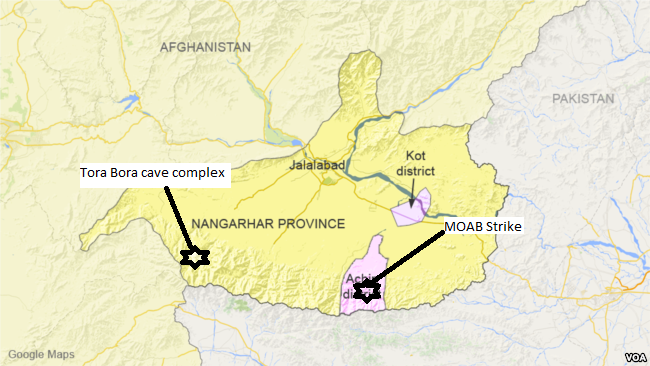
Osama bin Laden was trapped in the Tora Bora Complex in Khogyani district, not the tunnel complex in Achin district, which is at the head of the Mamand valley and the terminus for supply runs from across the border. It is also a training complex and a command and control node. ISIS has used this complex from day one because it is remote, easy to defend, fortified from back in the Mujaheddin days and is a direct link (via donkey train) to the ISIS-K Pakistani homeland.

The MOAB will have a psychological impact on ISIS, but that impact may or may not strengthen their resolve; it’s hard to say. What we do know is that militants in Afghanistan have been on the receiving end of unbelievable amounts of firepower for 16 years now, and it does not appear to have affected their ability to replace casualties, motivate their fighters, or stay in the fight.  ISIS can now claim that not even the “Mother of all Bombs” can hurt them and use the attack to drive recruiting through the roof. I don’t know how they’ll react, and I also know that nobody in the media does either.

We do know that the Islamic State of Khorasan (ISIS-K) is comprised mainly of former Tehrik-e Taleban Pakistan (TTP) militants from various tribal districts on the Pakistani side of the Durand Line. We also know Salafis have joined them from Kunar, Nuristan, Nangarhar and several other provinces.  What we don’t know (not that it matters) is how many militants were killed in the strike. The Independent Journal Review says over 100 people were killed based on a source who appears bogus to me, the Guardian says 36 were killed but doesn’t explain where that number comes from and the BBC is reporting dozens killed. All of these reports carry speculation about the number of civilians killed in the strike, too, which is something the press never speculated on when Obama was president, but I digress.

The truth is, we’ll never know how many were killed because their bodies are sealed inside the cave complex. That’s what 18,700 pounds of H6 (a mixture of RDX (Cyclotrimethylene trinitramine), TNT, and aluminum) delivered in an air-burst ordnance is designed to do. Were there noncombatants present in the caves? There had to be many boys and old men who do the cooking, goat herding, water humping, firewood gathering and other housekeeping chores. But I wouldn’t call them noncombatants; young males and old men will always be co-located with Islamic terrorist fighters in the bush.

Weaponeering is determining the quantity of a specific type of lethal or nonlethal weapons required to achieve a particular level of damage to a given target, considering target vulnerability, weapon effect, munitions delivery accuracy, damage criteria, probability of kill, and weapon reliability. The use of the GBU-43 MOAB yesterday was a weaponeering decision; nothing more. It may have sent a message to other potential antagonists. Still, it was used because we wanted to destroy several metric tons of weapons and ammunition stored inside a cave complex.

There will be unintended consequences from using this weapon, and one of them is this: the world just became a much safer place. I just finished a fascinating book titled The Upcoming War With Russia, written by General Sir Richard Shirreff, the recently retired Deputy Supreme Allied Commander Europe (NATO). The book is an urgent warning from a senior commander about an impending conflict with Russia, which takes place from May through July of 2017. It starts when the Russians seize the Baltic states because they are convinced NATO lacks the will and combat power to stop them. General Shirreff cities the problems we are currently facing regarding aircraft and combat unit readiness (they are at the worst levels of my lifetime and damn near as bad as 1949) as well as the attitudes of our current political leaders as the precipitating factor in Russia’s decision to initiate hostilities.

The purpose of his book was to alert the reader to a real, no shit, existential threat and he was spot on with one exception. He anticipated that Hillary Clinton would win the election and American foreign policy would remain as fickle as it had been under Obama. The sales of his book will now plummet because, in one bold move, President Trump removed the greatest enticement to World War III and thus the purpose of the book.  America has returned as a legitimate counterweight to any nation seeking to overthrow the current status quo. We are leading from the front again and tolerating no shenanigans.

But just because we are great again doesn’t mean things will go smoothly from this point forward. We are in a real sticky situation in Afghanistan, and if we do not radically change the approach we are taking there, we’ll never leave, never make the place better, never stop the fighting, and never stop the dying.

MOAB’ing ISIS in Afghanistan

Last Sunday (April 9th) CNN published a report of another American soldier killed in action while fighting in Afghanistan. The operator; Staff Sgt. Mark R. De Alencar, 37 from Edgewood, Maryland, a member of the 1st Battalion, 7th Special Forces Group (Airborne); was killed in while battling with  Khorashan in the Nangarhar province. Today the pentagon announced it had dropped the “mother of all bombs”, a GBU-43 Massive Ordnance Air Blast (MOAB) on Islamic State in Iraq and Syria-Khorasan province, or ISIS-K.

Readers who have followed our combat efforts overseas will remember the Khorashan Group as a fake news story  floated to justify the use of American tac air in Syria. During the summer of 2014, James Clapper, the US Director of National Intelligence for the Obama administration, released a dire warning about a new threat emanating from Syria called the Khorashan Group. A collection of 50 experienced, hard core former Taliban leaders in Syria specifically to develop external attacks, construct and test improvised explosive devices and recruit Westerners to conduct operations targeting the USA and Europe.

The Khorashan Group story was instantly outed on the internet. I was confused to see the ISIS group in Nangarhar province called  Khorashan; they have been there for years and I had never seen them called Khorashan before so I started looking into the ISIS problem in Nangarhar and found a hell of a strange story.

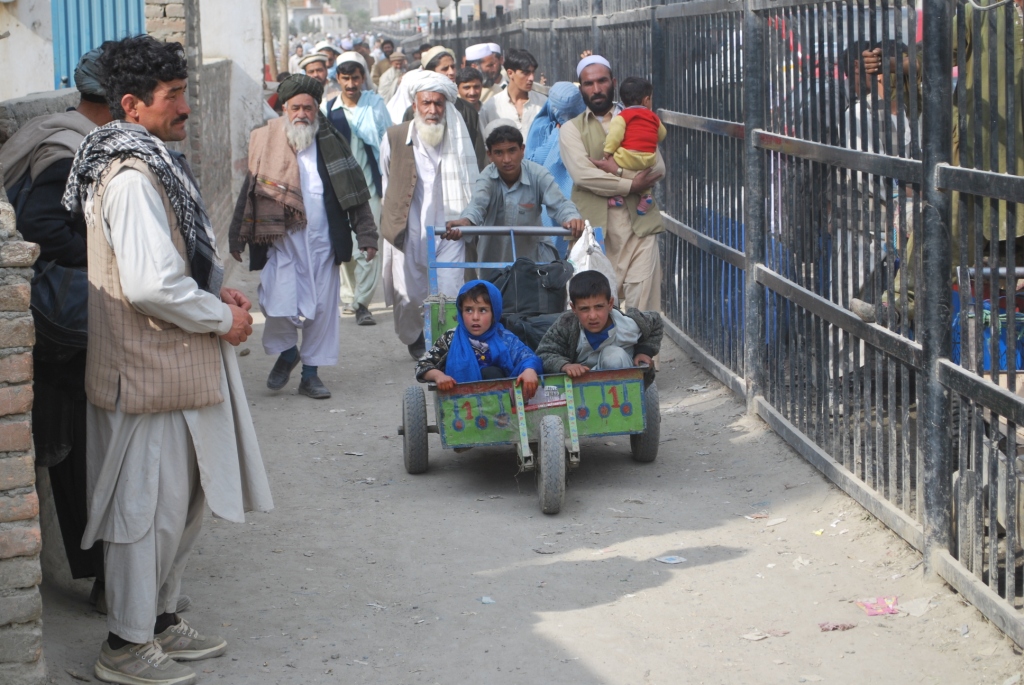
Free Range International on the Torkham border crossing in 2009

The current ISIS-K is not related to the former Khorashan group and probably got that name from the excellent Afghanistan Analysis Network (AAN). In July, 2016 Boris Osman of AAN published a report titled The Islamic State in ‘Khorasan’: How it began and where it stands now in Nangarhar. Boris explains in detail where ISIS came from, how they gained a foothold, why they remain and also why they are not spreading outside of Nangarhar province.  He also get’s the credit (as best I can tell) for the adding Khorashan to ISIS when referring to the ISIS movement in Nangarhar. The Afghan’s, like the Arabs, call them Daesh which seems easier to me but conflict analysts seem to like more specificity.

The ISIS-K designation makes sense when divorced from the bogus Khorashan Group of 2014. The definition of Khorashan (from the article linked above) is pasted below:

Khorasan is a historical term for areas populated by peoples speaking Iranian languages in northeastern Iran, the Transoxania part of Central Asia (Mawr-un-Nahr) and Afghanistan, mainly north of the Hindu Kush Mountains. In IS propaganda, it now comprises all of Afghanistan, most of Pakistan as well as Central Asia. Its reaches are felt as north as Kazakhstan and in eastern Turkistan.

That definition encompasses a wide range of tribes and peoples including Tajiks, Uzbecks, and the Hazara who do not normally cooperate with the largely Pashtun Taliban. Four main themes resonate throughout its propaganda: the duty of violent jihad, ISIS’s own legitimacy in fronting this cause, the trans-nationalism of its movement, and the discrediting of the “deviance” of its jihadi rivals. The propaganda is sophisticated and designed to affirm its legitimacy, and therefore “ownership” of the Afghan jihad.

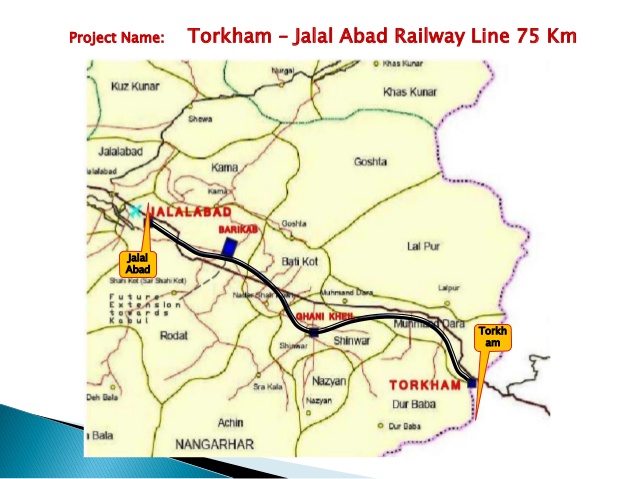
This map of a proposed railway line (that will never happen in our lifetimes) also shows the critical Jalalabad – Torkham road

The most important road in Afghanistan runs from the Torkham border crossing in Jalalabad province to Kabul. Over eighty percent of Afghanistan’s trade comes across that border which is a direct link to Pakistan’s ports. In 2010 Pakistani Taliban, mainly from Tehrik-e Taleban Pakistan (TTP) started to settle in  Achin, Nazian, Kot, Deh Bala, Rodat and Ghanikhel districts. They invoked  Melmastia from the local communities saying it was their moral obligation to help their Pashtun brothers escape the Pakistani army which was mounting operations targeting the TTP in the Northwest Frontier.

Crossing into Afghanistan at the Torkham border crossing

Fast forward to 2014; the muhajerin (refugees) from Pakistan have continued to settle in Nangarhar, but then the Pakistani army starts operation Khyber II, and militants from the Pakistani tribal agencies flood across the border to get away from them. Mule trains full of weapons and ammo, some of them 50 animals long, arrive daily in the Mamand valley in the Achin district along with hundreds of militants. Suddenly, the mujahideen declare they are now ISIS and evict the Taliban from the districts they control, but leave the Afghan security forces alone. The locals are happy because trade is moving, Taliban and government roadblocks are down, and nobody is shooting at anybody.

But then the Taliban attacked ISIS in Nazim district, and all hell broke loose with ISIS battling back hard and taking control of five districts by June of 2015. Then the Taliban call in their “elite forces” from Loya Paktia and Loy Kandahar, and these guys infiltrate the Mamand valley (in Achin district) one night during Ramadan, and (from the linked AAN article):

……. on 3 July 2015, local men (including those not usually sympathetic to the Taleban) and Taleban rose up together against ISKP, with calls by the Taleban via the mosque’s loud-speakers for all men of fighting age to come out and participate, or face seeing their homes burnt down. Taken by surprise, the ISKP fighters retreated from most of Mamand valley by the end of that day.

Could you imagine that? Every mosque in the valley telling the locals to fight the Daesh (which is what they call ISIS-K) or else? I would have loved to have seen that, and now, at the head of that same valley, we dropped a MOAB on the caves where those donkey train loads of weapons were stashed. But how the hell does the Taliban shift elite forces around the country? I have some experience moving truckloads of armed men around Afghanistan, and even when it was legal, it was hard to pull off. It’s impossible now (for us foreigners), but the Taliban did it.  Where were the Afghan Security Forces and Resolute Support in all this?  They have been targeting ISIS-K with drones in the past, have fought them before, and are fighting them now.

Afghanistan, a country I honestly love, is a weird damn place where the most improbable things like the population of an entire valley; reinforced by elite Taliban units from Kandahar and Paktia, stage an uprising and drive out a powerful foe in one day; happen as a matter of routine. Amazing.

Full Mission Rehearsal

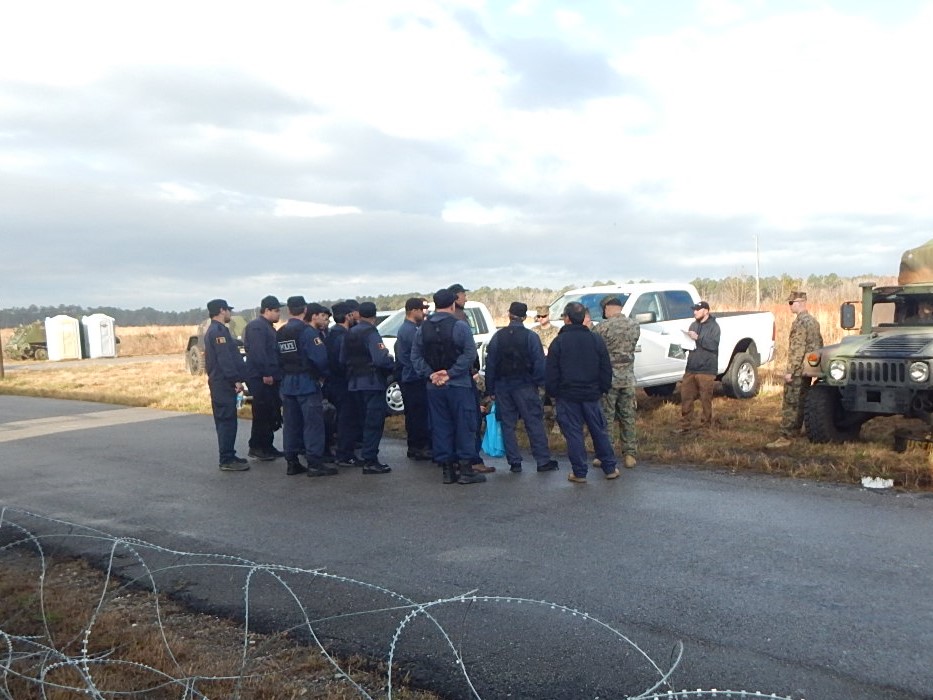
Task Force Southwest (the 300-man Marine Corps unit deploying to the Helmand province this spring) had a Full Mission Rehearsal exercise at Camp Lejeune, N.C., from February 27th to March 3rd. I attended the first two days of the exercise (as an embedded reporter) with the Afghanistan National Police (ANP) training team, who will be working out of the provincial capital of Lashkar Gah. It was time well spent with a diverse crew of experienced Marines.

By diverse, I mean they are from a variety of military occupational specialties (MOSs) and they are volunteers. As mentioned in an earlier post, one of the rules for embedded journalists is not to use the name, age, and hometown of Marines in our reports. This is a force protection measure designed to prevent cyber stalking and/or cyberbullying of Marines and their families. That’s a legitimate concern these days so I won’t be focusing on individuals in this or future posts.

The ANP training team will work with the ANP 505th Zone National Police in Lashkar Gah. The ANP team is heavy on officers, most of whom are experienced captains or majors who have deployed to Afghanistan. Even the Physician Assistant attached to the team has over 12 months of experience working with Afghan Security Forces (ASF) in Tarin Kot, capital of Uruzgan province, which was a serious Indian Country.

Extensive pre-deployment exercises for Marine Corps units are designed to make the various subordinate headquarters work through their standard operating procedures (SOPs) for contingencies they anticipate encountering while deployed. They do this using the communication equipment they are deploying with and under the control of their higher headquarters (BGen Roger Turner’s command group), which will be located at Camp Shorabak (30 miles away). This exercise can be boring if the exercise control group is off its game, but that no longer seems to be a problem.

Afghan role players (acting as the 505th ANP headquarters) getting briefed on the days events.

The exercise control folks are now contractors who run exercises for a living. They were excellent at keeping the problem running smoothly and inserting serious events (like a VBIED blowing up at their front gate) when least expected. Contractors are a significant improvement for designing and running exercises of this type because there is no military occupational specialty (MOS) for conducting training exercises. However, you still need experts to do it correctly.

Military theorist Carl von Clausewitz said “everything in war is simple. But the simplest thing is difficult”.

He described friction as it relates to military operations, and that was the goal of the mission rehearsal: to gum up the works with serious problems and see how the various command groups handled solving them. It’s not the most exciting evolution to watch, and it is also not that fun for the Marines working through the problems, but it’s essential to do. Operations centers need to remain calm and focused when under stress, and the only way to get them there is to stress them during their pre-mission training.

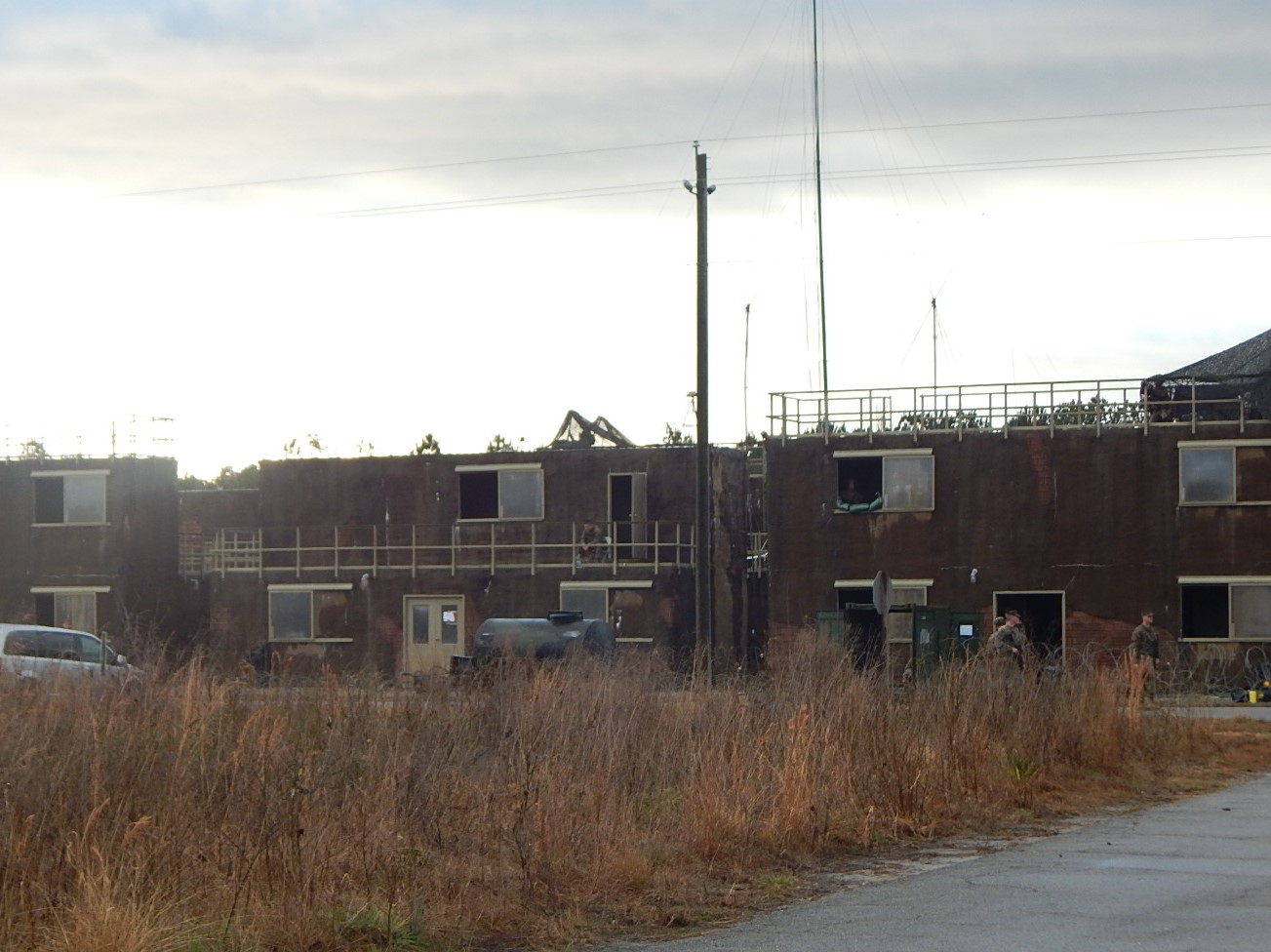
An old concrete building at Davis Airfield  (a WWII era landing strip converted into a training area) served as the headquarters building for the ANP training team.

Experienced military professionals can tell how good a unit it is within minutes of watching their tactical operations control (TOC) in action.  But as a member of the press I wasn’t allowed inside TOC’s so I watched the problems play out from the medical spaces. I saw what I expected to see: a group of experienced Marines working through issues in real time. Friction makes that hard to do when all the communication nets are involved (and some go down when the exercise controllers want to add stress), and I’ve seen command groups melt down with helmet fires under similar stress.  The ANP training team did fine; they didn’t get too excited and never got far behind the event horizon by failing to maintain good situational awareness with their higher headquarters.

I found a corner on the second floor above medical that had not been claimed by Marines and slept there too. I knew to roll up my sleeping bag and mat and to keep my ruck packed during the day (so I didn’t stand out like a pouge), and it wasn’t long before I was making friends and chatting with the team.  I liked them too – a good crew with a positive attitude and great stories from their prior deployments to Afghanistan. Plus I slept like a baby in my little corner on the second deck. I’m always awake before dawn and had a rental car staged at the airfield so I skipped out every morning for coffee and an egg sandwich. Talk about living the high life!

My best guess (and this is just a guess) is that Task Force Southwest will head into Helmand to help with the training and coordination but will remain confined to the bases from which they will be working. The 215th Corps of the Afghanistan National Army and the 205 Zone of the Afghan National Police are taking a severe beating while not getting their share of combat enablers like Tac Air (Afghans use the A-29 Super Tucano which is a good ground attack platform) which it seems are being concentrated in the east to battle an out break of The Daesh (ISIS) in Nangarhar province (where we lost another special operator last night).  It appears (again to me) that the 215th Corps and 205th Zone are fighting a holding action designed to keep the Taliban focused on Helmand. At the same time, the central government in Kabul tries to consolidate its control of the strategically critical eastern provinces.

If my guess is true, then this deployment will involve a lot of risk and some potentially long-term gain, making it one of the more unique deployments in the history of the United States Marine Corps.

Washington, D.C.

I was in the nations capitol to see my good friend Eric Mellinger retire after a distinguished 30 year career as an infantry officer in the United States Marine Corps.  I wasn’t the only one making a long trip for a short ceremony; men who had served with Eric came from all over the country to pay their respects to a Marine we admire and love like a brother. Which is not like a man loves a woman; we might be modern-day Spartans, but we’re not lifestyle Spartans. People worldwide read this blog, and I don’t want to cause any confusion.

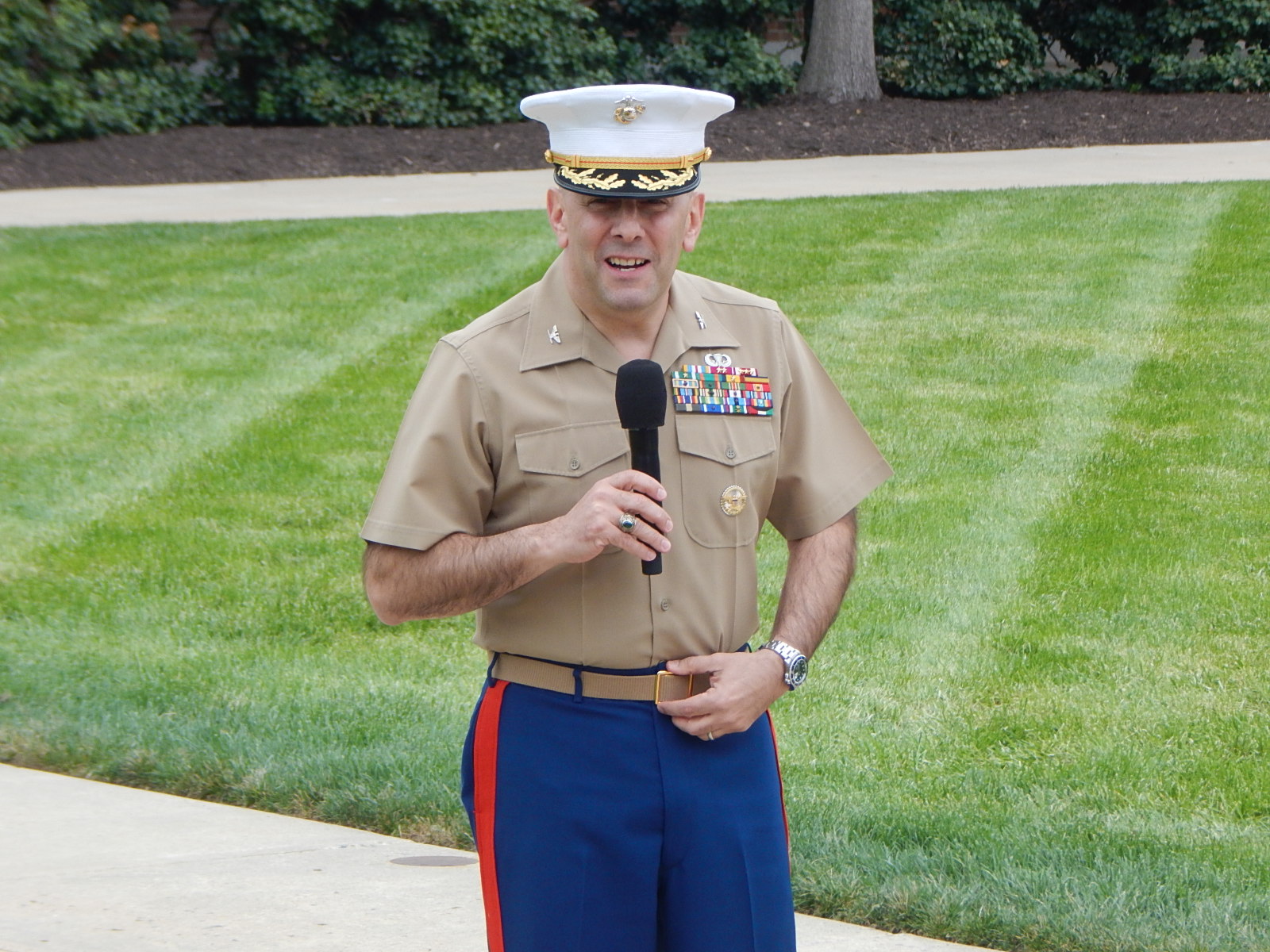
Colonel Eric Mellinger, USMC, addressed the crowd at his retirement yesterday. Good friend, fearless patriot, proud American

Eric is not your average Marine Corps Colonel; as a field grade officer, he has bounced between commanding (multiple times) at the battalion and regimental level and running the operations for senior Fleet Marine Force commands. He’s been a player for his entire career. Like many senior officers in the Corps today, he got on the fast track when he was selected to serve as an instructor at the Marine Corps Infantry Officer Course in Quantico, Virginia. I knew a healthy percentage of the Marine Corps fighting generals would make it a point to attend his retirement. I wanted to get their take on the upcoming deployment of the 300-man Task Force Southwest to the Helmand province in Afghanistan.

I was not disappointed; there were a couple of dozen general officers and senior colonels at Eric’s retirement ceremony, which was held at the Marine Corps Barracks in Washington, DC. My friends Dave Furness,  Paul Kennedy,  Mike Killian, Brad Schumaker (who I hadn’t seen in 25 years), and  Larry Nicholson were all there. Long time FRI readers will be familiar with these Marines (except  Brad) and for those of you who aren’t hit the hyperlinks on their names to read posts about them during their tours in Afghanistan. The reaction I got about the upcoming deployment of the Marine task force was unanimously less than enthusiastic.

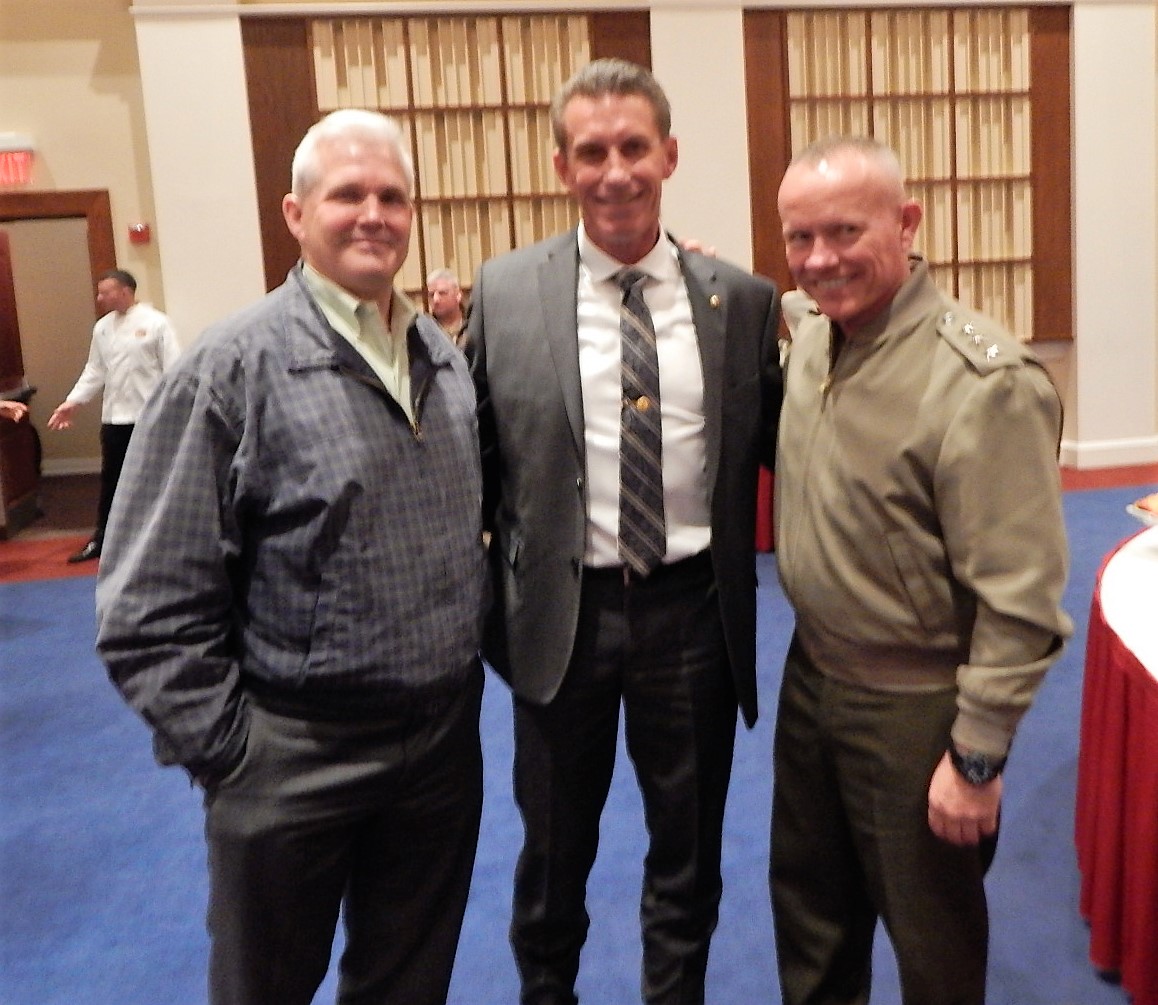
Lt General Larry Nicholson, retired Colonel Mike Killian and I at the post retirement reception

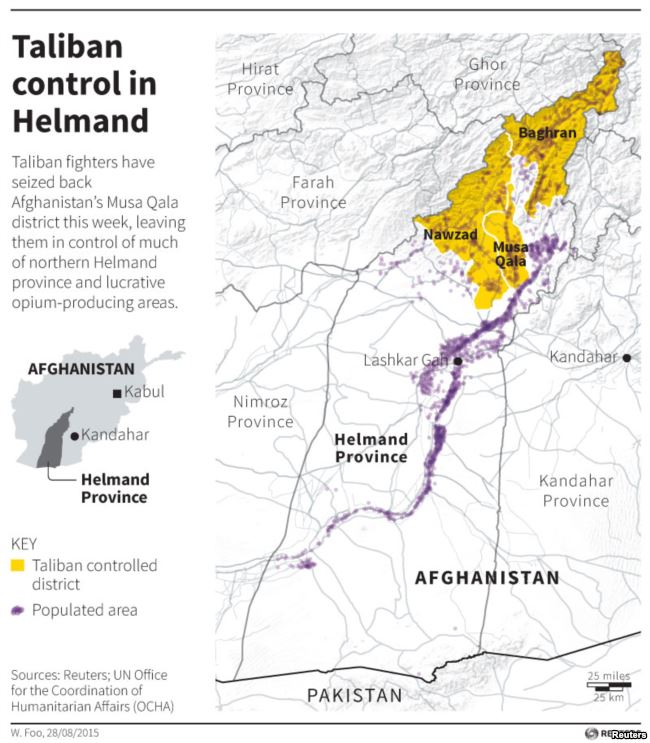
There was a time when the Marines, after many months of hard fighting, had the province locked down. In 2011, I could travel from Lashkar Gah to Khanishin without drama. North of Gereshk was too risky for our crew. Still, local commerce flowed without too many problems, and the big towns of Naw Zad, Musa Quala, and Sangin (not shown in the map below) were solidly under ISAF /Afghan Security Forces (ASF) control.

The Marines gave the Afghans the security space they needed by beating the Taliban like a drum and driving them out of the province—those who remained ditched their weapons and went along with the program. There were always pockets of resistance, but they were small and the level of violence manageable. The commanders I spoke with felt they had done what was asked of them. They gave the Afghans the security space they needed to sort themselves out. The Afghans blew it because they were selfish, greedy, stubborn,n and refused to cooperate among themselves. The Marines I talked to feel no obligation to return and try again; the Afghans had their chance already and can now enjoy the bitter harvest of their failure to do what they said they would do.

When I asked my friends their thoughts about my planned embed with Task Force Southwest (the Marine unit heading back to the Helmand province) their reactions were mixed. Most supported the idea, but my closest friends were strongly opposed. They felt the risk was too significant for a story nobody cares about, and it was time for me to move on to other things.

Helmand province in 2015 – the Taliban now control the south too

My experiences in Afghanistan were different from those of my Marine Corps buddies. I was there a long time and made some really good friends, but more importantly, my team and I saw the results of our efforts at formal dedication ceremonies of the district irrigation systemsmunicipal stadiums, and roads, schools, and bazaars we built. We had a hell of a run. We knew we had helped and received the gratification of having Afghans tell us how much they appreciated what we had done.

I guess I’m a bit stubborn because I think there is a story in the Marines returning to Afghanistan, and I invested too much into the place to walk away. But I will not be able to embed to cover this story without the generous support of people who, like me, feel it a travesty to abandon the Afghans to fate.

The Afghans

The American military was welcomed by a vast majority of the Afghan population when it entered the country in 2001. We helped rid the country of an unpopular, dysfunctional government and seemed to have set the conditions for sustained peace in a country that has known war for a generation.

We should have finished our mission to Afghanistan in December 2001 when we had Osama bin Laden (OBL) trapped, but instead, we snatched defeat from the jaws of victory. Frantic requests from the special operators in Tora Bora for American troops to seal the escape routes into Pakistan were ignored by CENTCOM.  Reportedly because the generals feared a “meat grinder” or “another Mogadishu” or “offending our Afghan allies”. When OBL slipped away into a dark Pakistani night, our mission to Afghanistan expanded and expanded. Sixteen years later, there is no end in sight.

Potential losses in risky operations should be evaluated against the mission. Confusing the importance of killing bin Laden with a mission involving the arrests of  Somali warlords is a failure (in my humble opinion) at the highest levels of command. But when CENTCOM went to the White House seeking guidance from on high, killing bin Laden took a back seat when former Secretary of Defense Rumsfeld handed them back their Iraq war plan and said he wanted a new one in five days. Unbelievable.

When bin Laden escaped, we decided to stay, and despite near-universal acceptance by the Afghan people at the start of our effort, we have, to date, failed. The warm welcome both aid workers and the military patrols received from 2002 through 2006 in rural Afghanistan is long gone. Kabul is now a dangerous place for internationals because the Afghans are frustrated, bitter, and angry at what some see as incompetence and others see as deliberate sabotage of Afghanistan and her people.

A good example of our bad start would be America’s initial efforts in Helmand province.  In late 2002, a U.S. Special Forces A Team arrived in the capital, Laskar Gah, and immediately offered bounties for “former members of the Taliban”. Mike Martin describes what happened next in  An Intimate War: An Oral History of the Helmand Conflict, (p. 125)

Early in January 2003, for example, Abdul Kadus, a seventeen-year-old orphan from Nad-e Ali, was arrested by Mir Wali’s forces in what appears, from the Guantanamo documents, to be a ‘sting’ in order to gain the bounty offered. In an almost exact copy of this modus operandi, Mohammad Ismail, a sixteen-year-old, was arrested, also in Gereshk. They share consecutive Guantanamo inmate numbers, although the records are unclear about their exact date of arrest.

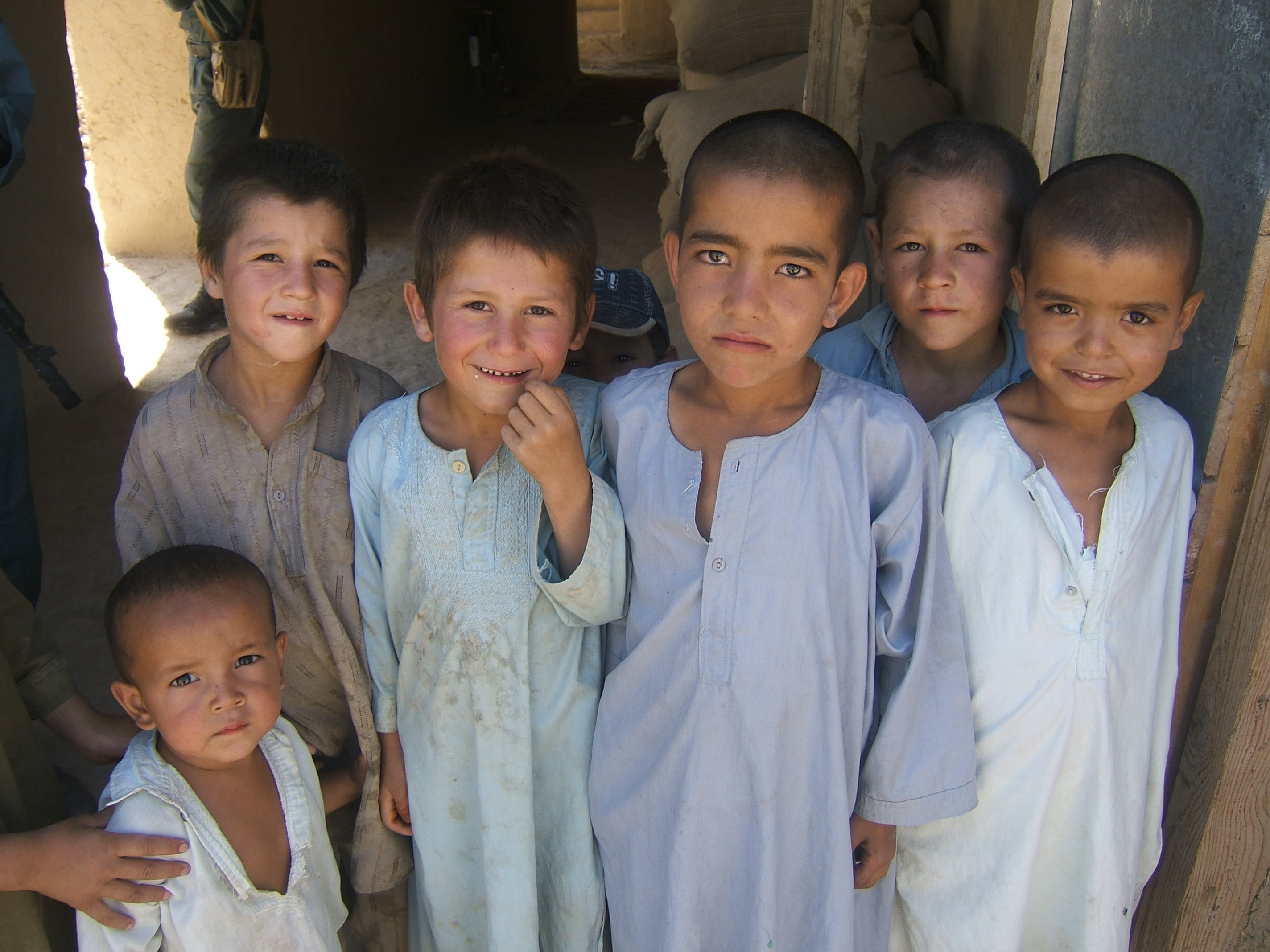
Afghan boys in Balkh province (summer 2006), if I remember correctly, these boys were at an Afghan police station because their father/uncle had died the night prior, and relatives were on the way to take custody of them.

Were I on active duty and sent with a team of commandos to Lashkar Gah in  2003, I would have done the same thing; I knew nothing about Afghanistan back then. The SF team in Lashkar Gah did what they were told to do, and pointing out the flaw in their plan isn’t to illustrate malfeasance because there was none. In 2017, this story is important only in how the Afghans saw and interpreted those events and our subsequent actions

I believe that the Afghans saw us as both seriously dangerous and naively stupid. Their elites played us for years to settle scores, steal land, or collect a king’s ransom by turning over illiterate orphans to SF teams. The average Afghan was (in my experience) baffled by our incompetence but willing to participate with us in the reconstruction effort.

Contributing to both poor program management and alienation from the Afghans (we were supposed to be helping) were unnecessarily restrictive security rules. B6-level armored SUVs, armed, high-end western mobile security teams, hardened compounds, and lavish life support were mandated for westerners working USAID or State Department contracts. That crippled our reconstruction efforts from the start and in the ensuing years we not only accomplished little but lost track of 70 Billion dollars.

By 2009, USAID was experimenting with alternative implementation profiles, including using former soldiers in direct implementation projects, thus eliminating the need for armored vehicles, security escorts, specialized compounds, etc. That was how Ghost Team started, and despite delivering massive projects on time and budget, it turned out to be too little and too late.

Here is another cultural dynamic in which we are tone deaf (due to political correctness) and need to wise up: our fascination with female empowerment. Here’s why: if your tribe lives in a society of scarce resources and makes an equal investment in educating and training both boys and girls, your tribe is going to starve.

In rural Afghanistan, women spend most of their adult lives producing and raising children regardless of their level of education. Efficient allocation of scarce resources would dictate investing those resources in family members who will use them for the benefit of the family.  Most Afghans I met have no issue with sending their daughters to school when they are young, but investing the resources to train a daughter to become a lawyer would be as foolish as training a son to be a midwife. In rural Afghanistan a female lawyer will spend her life inside the compound of her husband’s family just like her illiterate neighbors. Every penny spent educating her would have been wasted, and rural Afghans don’t have the disposable income to waste.

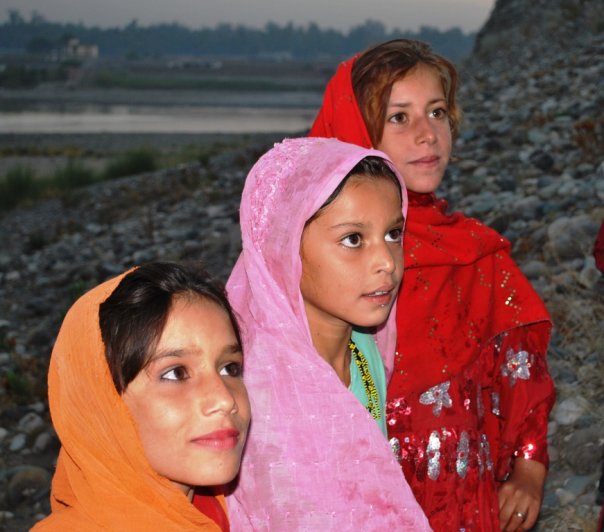
These girls lived in Little Barabad village across the Kabul River from the Taj Guesthouse (Jalalabad City, Nangarhar province). The closest school was 400 meters away, but it might as well have been 400 miles because the kids couldn’t get across the river or make the 40-mile round trip via the Beshud bridge to attend. Building a school for them would have been a waste of resources because the village comprised squatters from the Kuchi tribe occupying government land.  Building permanent structures in direct support of this little tribe would have made government eviction a near certainty. Baba Ken and Dr. Dave from  Synergy Strike Force sank a well for them in 2009 or 2010 – before that, their drinking water came from the Kabul River. This picture was taken in 2008.

The Afghans may see more benefit in allowing all their children access to higher education in time, but probably not before they have electricity, running water, paved roads, plumbing inside their homes, and security.

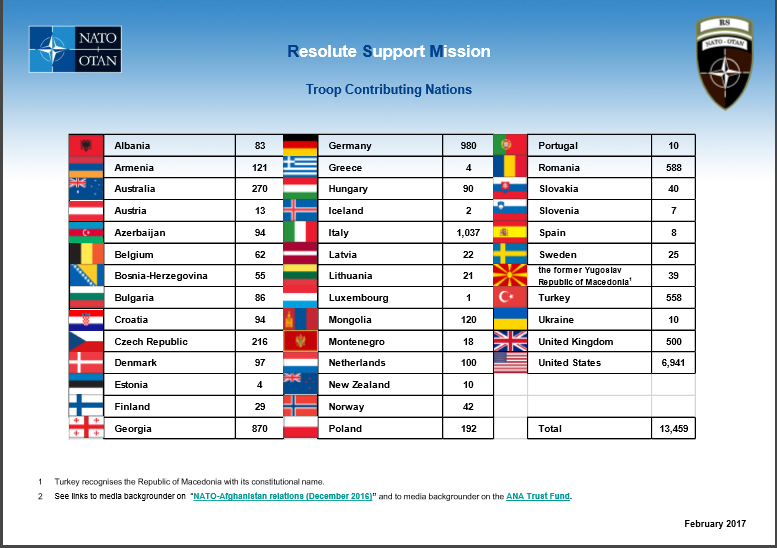
America and the 41 other countries contributing to Resolute Support will stay in Afghanistan, intending to see things through to an acceptable end-state. That is going to take time, and it is going to generate more casualties; the loss of talented, experienced combat soldiers will continue. The countries that lost those soldiers did not want to continue. America has already made it clear we’re not interested in continuing now, and we have much more to endure before anything gets remotely better.

Countries participating in Resolute Support

During the dark days ahead, it is essential to understand how our misguided efforts contributed to this mess and the impact that they have had on a civilian population that wants to be left alone in peace.


Push Back

Since launching my campaign to embed in Afghanistan I’ve received a lot of push back from my American friends who spent time outside the wire in Jalalabad with me. They are concerned that I’m placing myself in grave danger to cover a story that will end in dismal failure. They have little confidence in the Government of the Islamic Republic of Afghanistan (GoIRA) or the American military when it comes to solving the true problems driving the fighting country-wide. They also believe the military is incapable of telling the truth about the effectiveness of their efforts nor able to develop the tactical models required to deal with what is now a general insurgency.

One of them shared this observation in a group email a few days ago:

I remember something Sitting Bull said to Jim when Jim spoke of coming back and marrying into the tribe.  His response, “you’re not Muslim”.. So if ANYONE had a level of rapport with any Afghan who lives in the countryside, Jim did.  And for his counterpart to make that distinction after all they had been through, THAT means something.

He’s talking about Jim Gant who I consider the most remarkable soldier of our generation and a man I admire greatly. Jim was cursed by being successful where all others failed miserably and got the shaft for it but that’s another story for another post.

What’s ironic about that comment is (unknown by my friends) I’ve been asked to convert, marry into a tribe and stay in Afghanistan on four different occasions. Unlike Jim I was not talking with a tribal leader who loved me like a son; these men hardly knew me. They were trying to get another connected, educated, competent guy to join the tribe for the obvious benefits that would bring to the community. It is a typically Afghan thing to do in rural districts and I spent months at a time in remote districts accompanied by only an interpreter (Zaki or JD) and a driver. None of my friends (with the notable exception of Jim Gant and fellow Ghost Team members) have remotely similar experiences.

My colleagues from Ghost Team and I (along with a handful of westerners sprinkled throughout the country by marriage or business) are the only westerners who embedded inside local communities and directly supervised large projects that were completed on time and on budget. Consistent performance at that level required detailed knowledge of how local communities functioned. Projects had to be vetted correctly the first time, every time, to avoid the perception of favoritism of one tribe over another.

Another project completed on time, on budget, and 300 miles away from the closest American. Free Ranging is hard, can be dangerous but is also the most gratifying thing a westerner can do in Afghanistan.

I knew the tribes where we worked trusting them to protect our little team on nothing more than a hand shake. Free Ranging requires a high tolerance for risk, unshakable confidence in your ability to get through any situation along with the application of reason and logic to local atmospherics. Reason and logic allowed us to be comfortable operating in areas where everyone else was uncomfortable.  Reason and logic is why I’m comfortable going back. What is uncomfortable is being lectured by friends who don’t really know what I know. Which provides a perfect opportunity to discuss the realities of Free Ranging in contested lands.

Rule #1 is you will not be able to talk your way through every checkpoint. I was detained in Afghanistan, Dubai and the Northwest frontier of Pakistan during the years I spent Free Ranging. When pinched in Pakistan I was being driven through the town of Landi Kotal and was about 5 miles from the border. I was taken back to Peshawar (a policeman jumped in my cab to escort me and I had to pay for the ride back) where a magistrate released me on my own recognizance minus my cash, passport, and expensive (recently purchased) wristwatch. But I had my cell phone and called my friend (and manager of the Taj)  Mehrab who arrived (in the middle of the night) with enough cash to pay for a permit and escort to  get me through the Khyber Pass. I spent the intervening hours keeping a low profile in a crappy tea house and let me assure you I was terrified. Anyone who says they can handle that much risk and not be scared to death is delusional. But I kept my cool, remained calm and waited patiently.

If you ever found yourself alone, broke, tired and hungry in Peshawar, Pakistan, in the middle of the night, you might be a Free Ranger.

Mehrabudding Sirajuddin a good man who paid a high price for believing America was the strongest tribe. Photo by Michael Yon

Mehrab like many Afghans who worked with the international community was killed outside his house by Taliban gunmen in 2012. He was a good man who believed that the international community would bring peace and prosperity to Afghanistan. He also was a typical Afghan who would do anything to include transiting the Khyber Pass at night in the middle of the 2009 Khyber Pass offensive to help a friend in need. Meharb and the many Afghans I met who are just like him are the reason I want to go back.

The Free Range threat matrix, developed over a decade ago, is interesting reading for those unfamiliar with the realities on the ground in Afghanistan. It’s been updated for the embed this summer.

Free Range International Threat Matrix 2007

  1. Afghan Security Forces
  2. Motor Vehicle Accident
  3. Running into American or British army convoys while driving (high probability of getting shot even in Kabul and even in brand new up-armored SUV with diplomatic plates)
  4. Taliban ambush
  5. Serious disease or sudden illness

Free Range International Threat Matrix 2017

  1. Afghan Security Forces
  2. Motor Vehicle Accident
  3. Taliban ambush
  4. Serious disease or sudden illness

See the difference? Only the threat presented by ISAF road movements has been eliminated. Afghanistan is a scary place because the country is falling apart as a direct result of repeated failures by the international community to develop strategies that actually help the Afghan people.

Sixteen years down the road the Marines are going back because America has decided that we will, for the first time in my lifetime, actually see one of the debacles we created in a foreign land through to some sort of acceptable end state.

This story needs to be told honestly by a reporter who understands the Marines, the environment they are operating in and the degree of difficulty they will encounter as they balance force protection against mission effectiveness. Please take the  time to donate on my Go Fund Me page to enable honest, professional reporting on a story that will have a significant impact on your children’s future. Your kids may not be interested in war but war is interested in them. And if we cannot develop effective strategies to combat radical Islam war is going to find them.

Verified by MonsterInsights