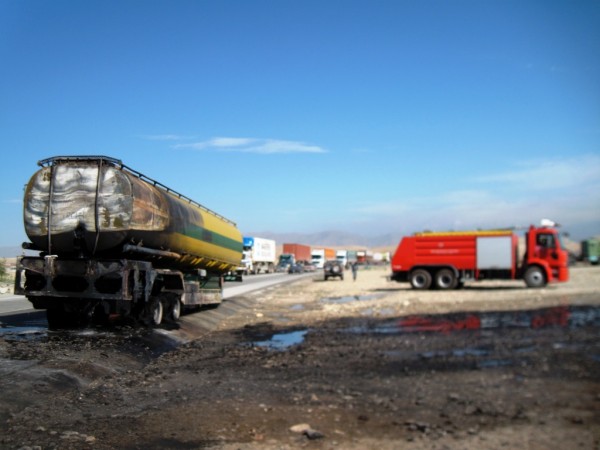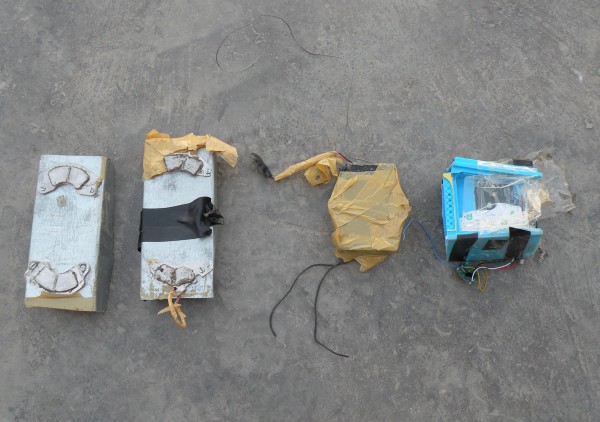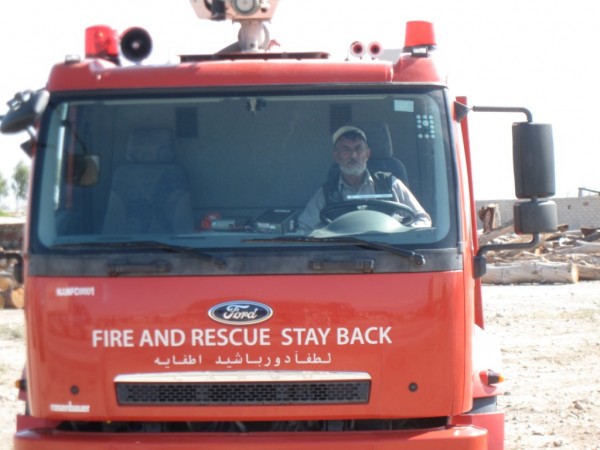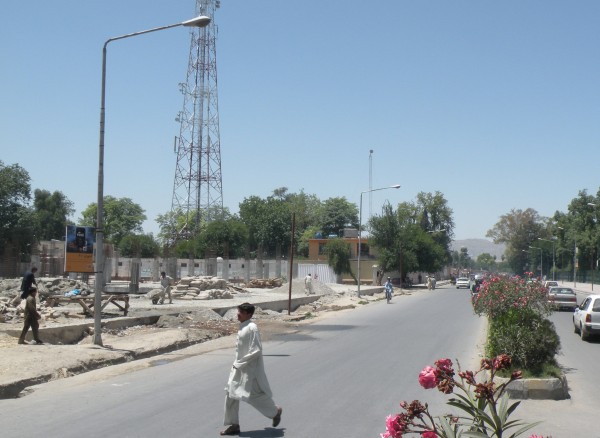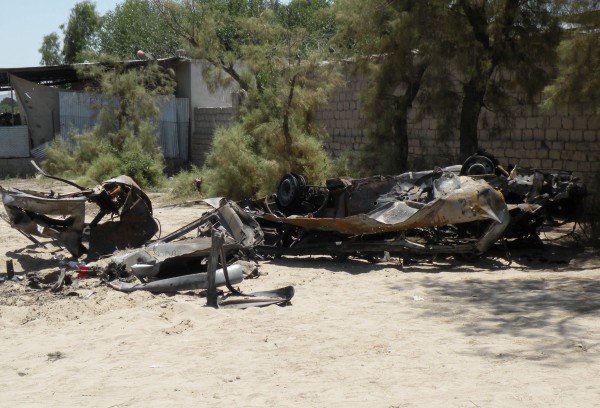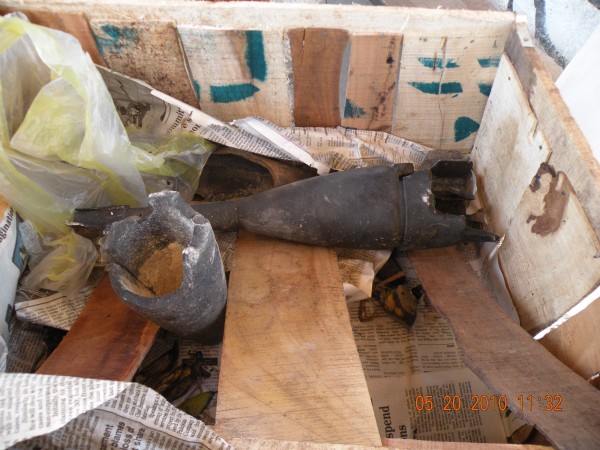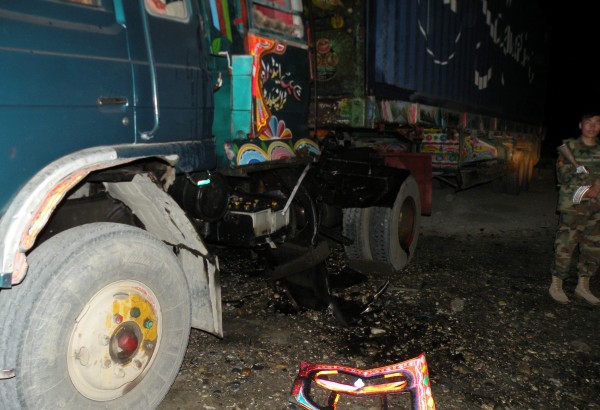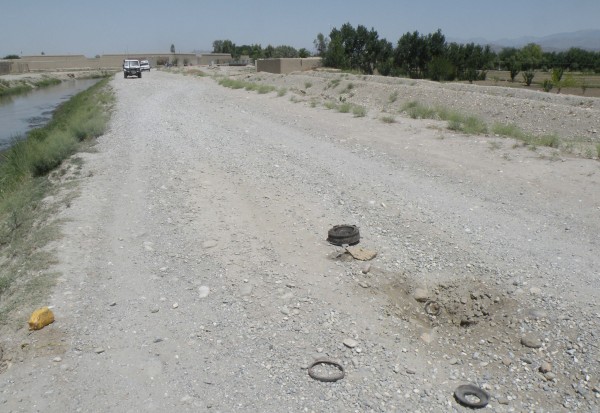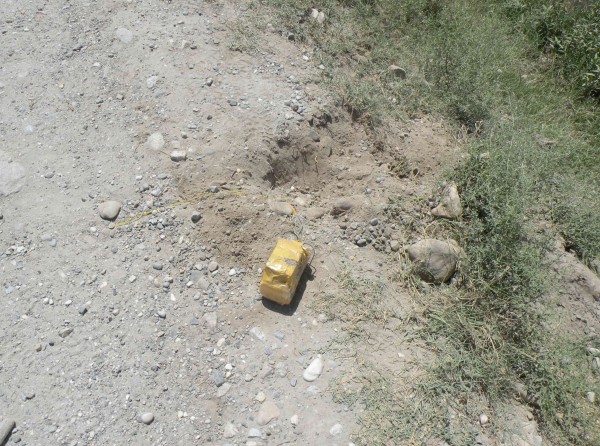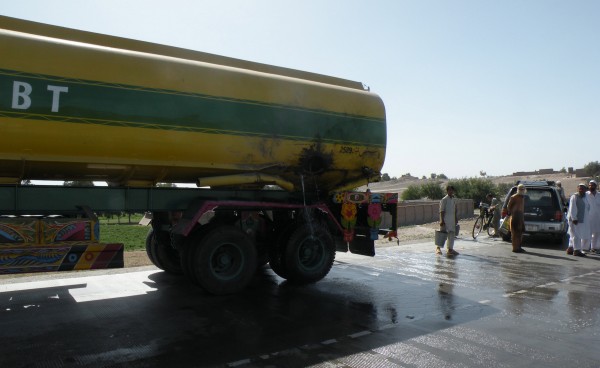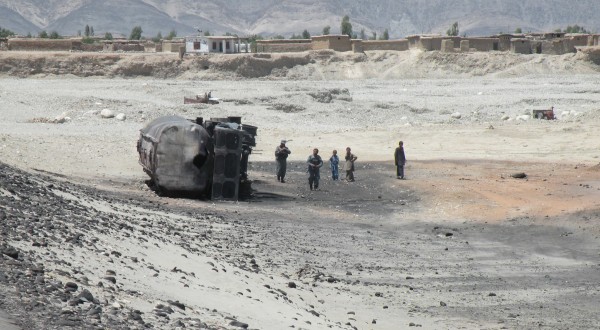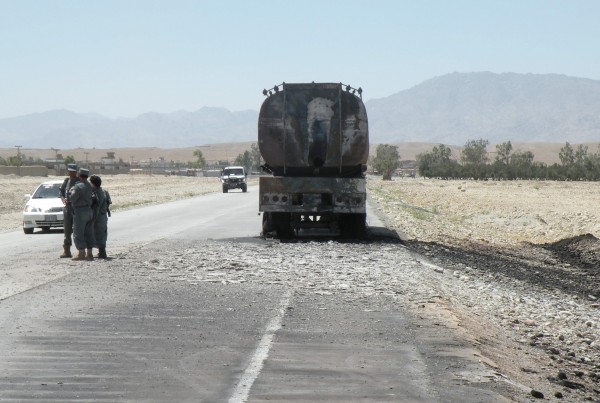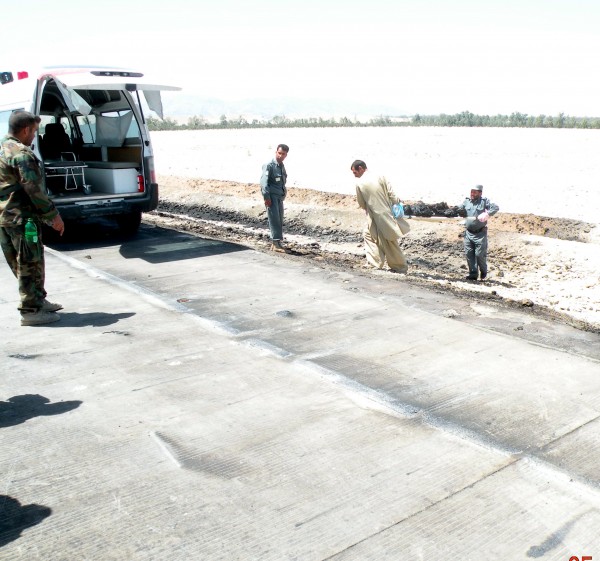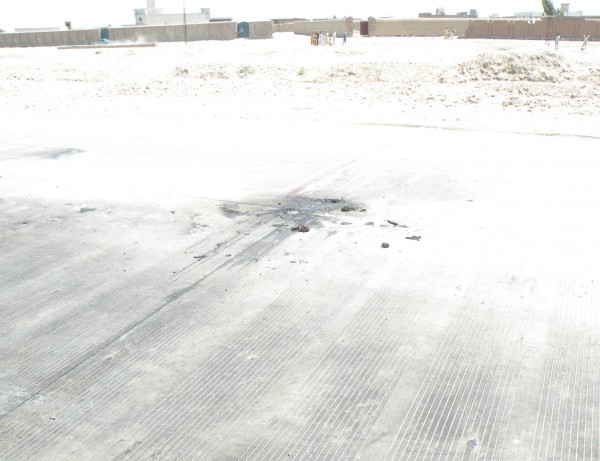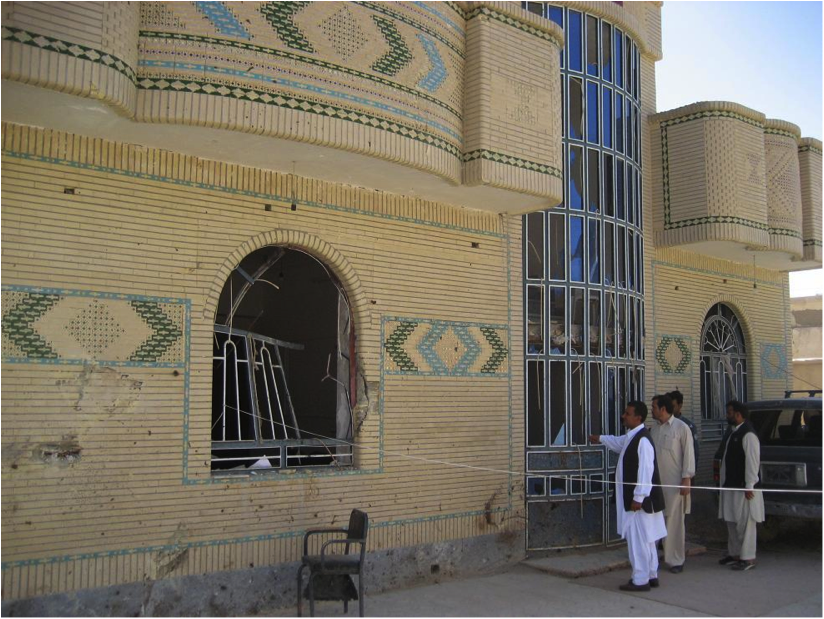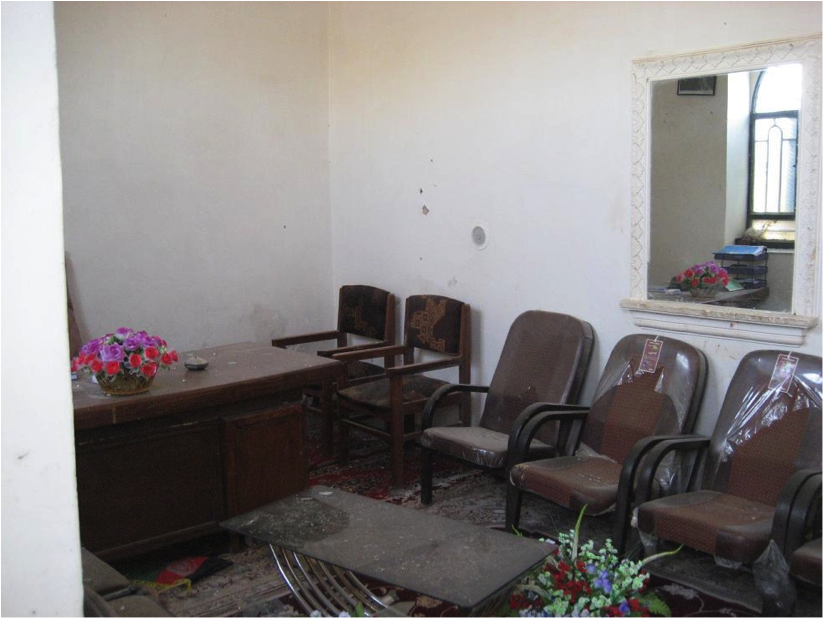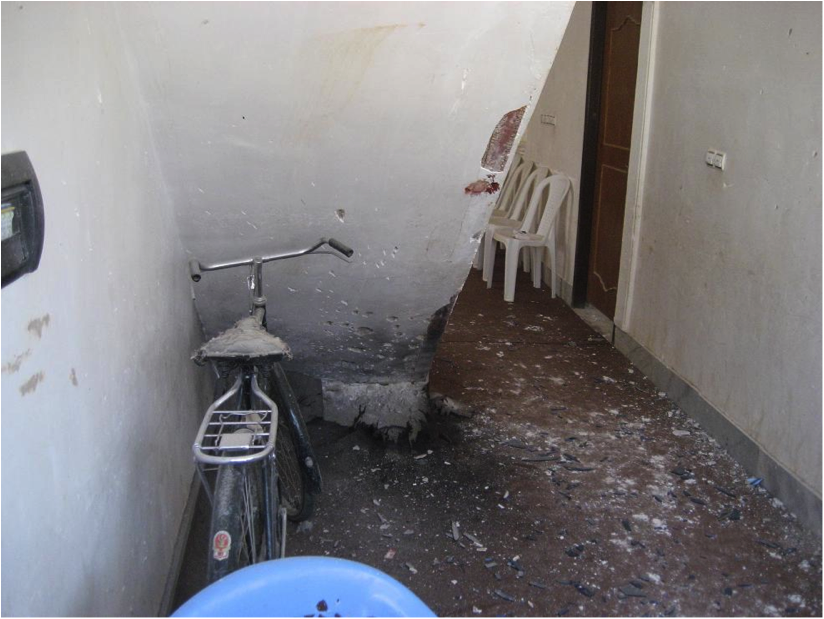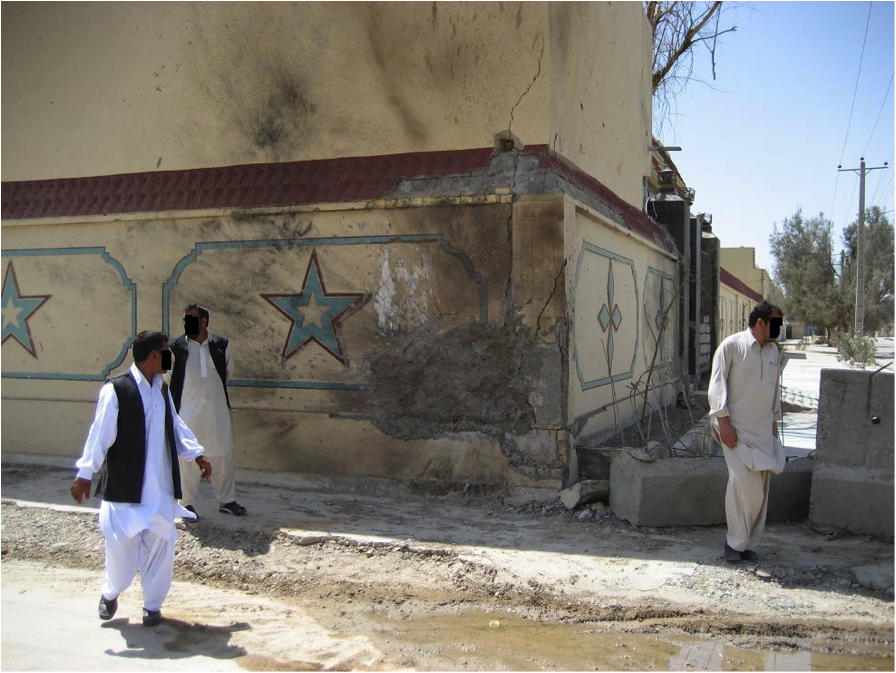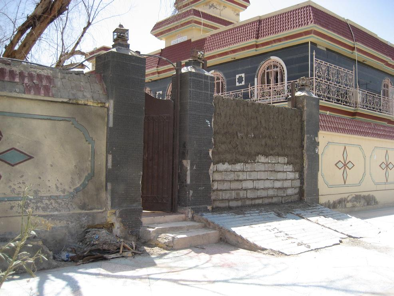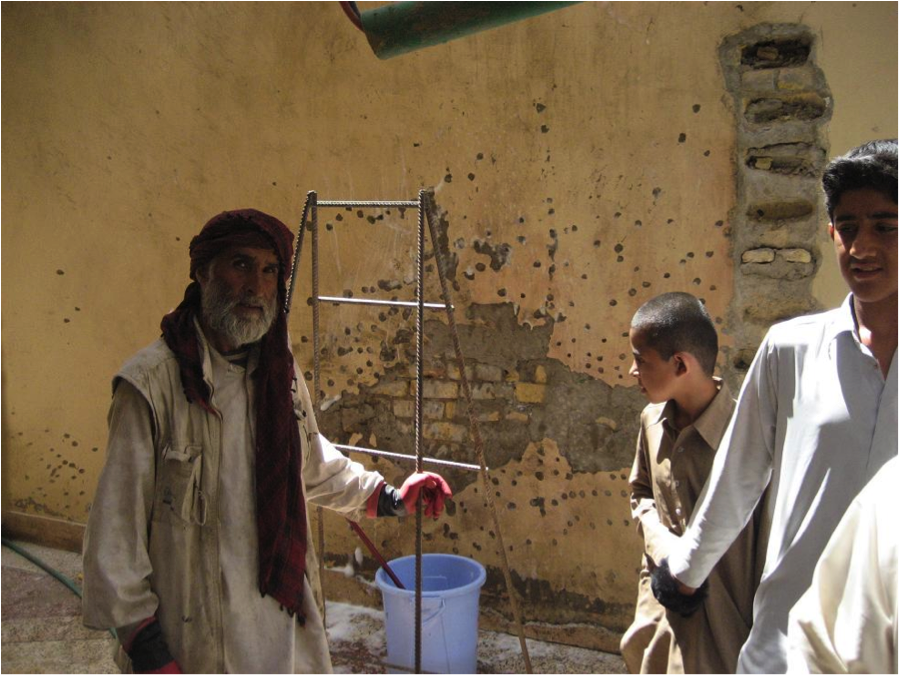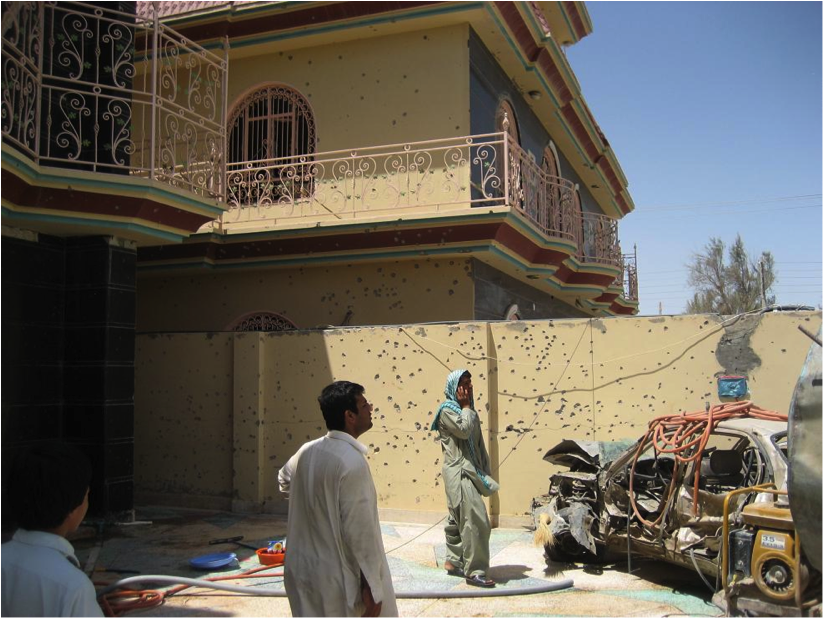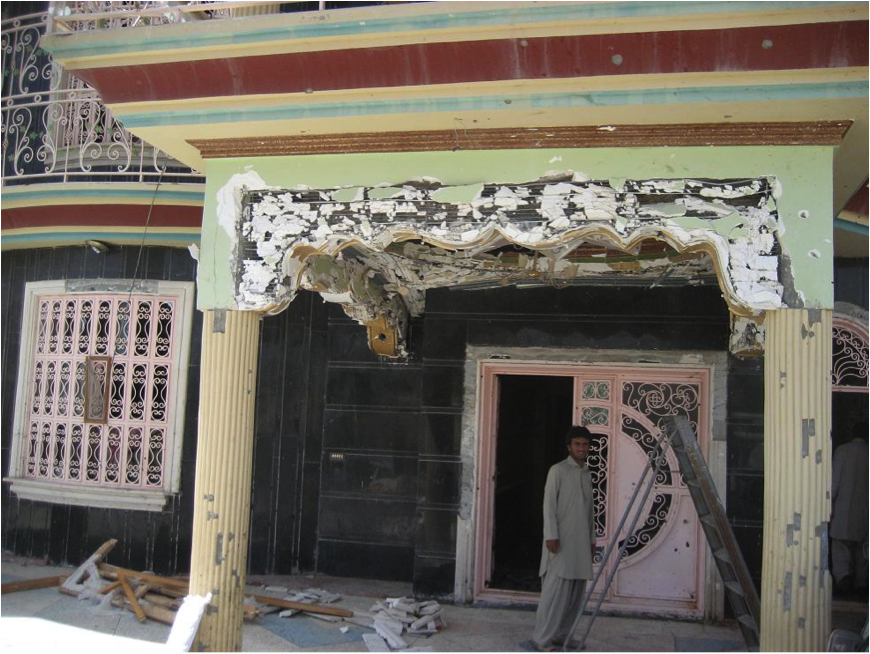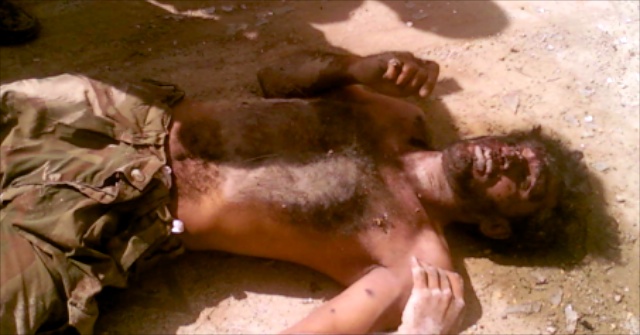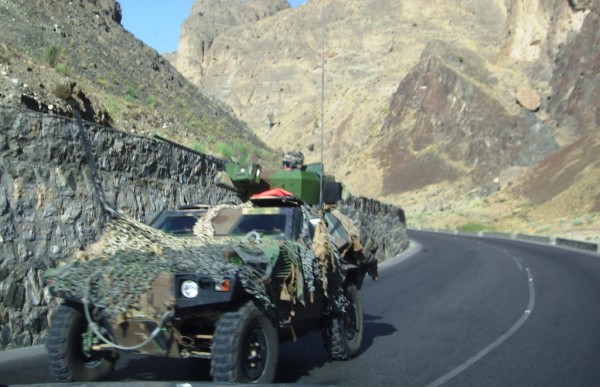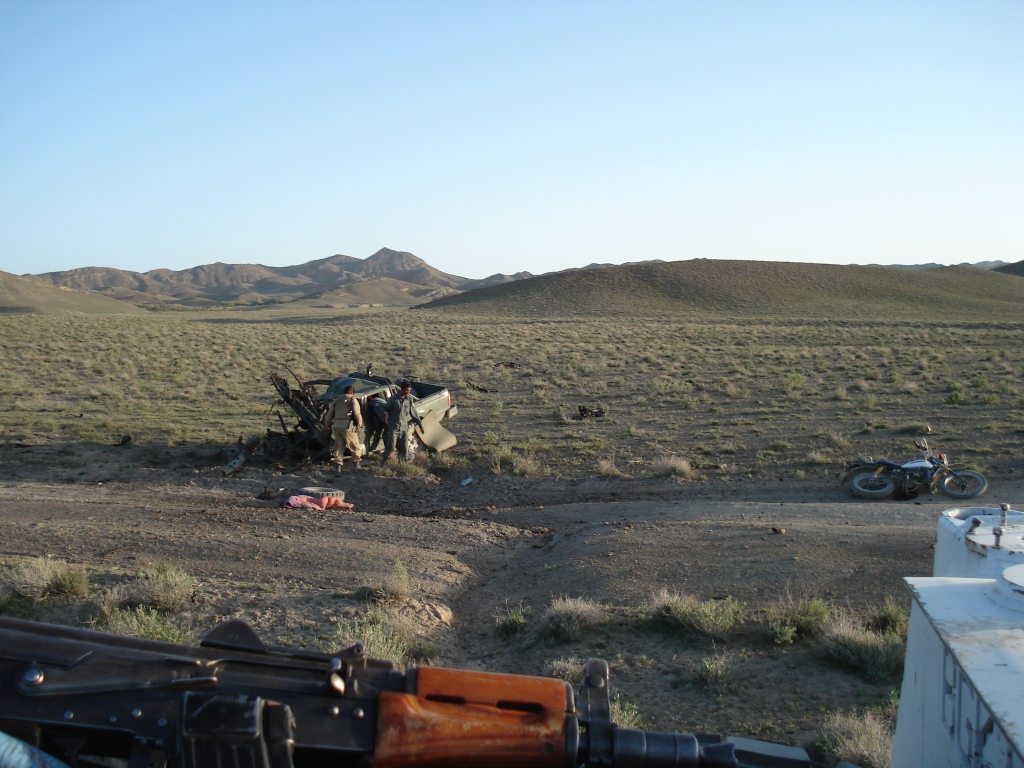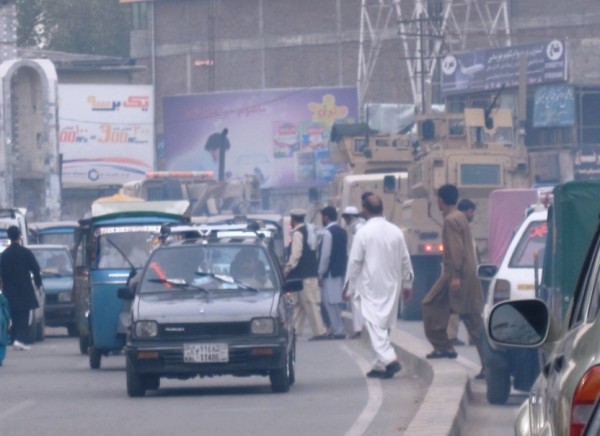
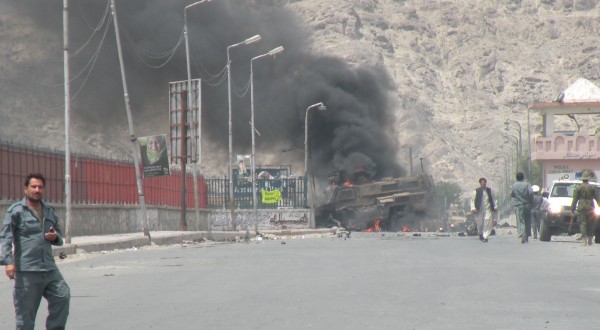
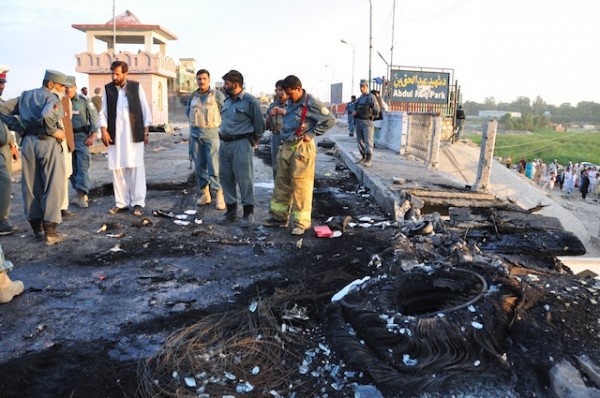
It is 95 degrees Fahrenheit during the day in Jalalabad, making this the coolest start to summer in memory. Unfortunately, the number of security incidents in Jalalabad and across the country has begun to climb, as temperatures normally do. Yesterday, for the first time since a one-off attack in 2008, the villains struck inside Jalalabad City at the U.S. Army. A VBIED (vehicle-borne improvised explosive device) attacked an RG-31 MRAP, killing both the VBIED driver and the turret gunner and injuring 11 local people of varying severity who were in the wrong place at the wrong time.
It is not just the Taliban and other insurgent groups turning up the heat – GIRoA (Government of the Islamic Republic of Afghanistan) is putting the heat on the reconstruction effort, too. Yesterday, President Karzai removed the head of the National Directorate of Security (NDS), Amrullah Saleh, and the Interior Minister, Hanif Atmar. After firing his two top security officials, he announced this:
“Karzai made his first official response to the jirga Sunday by ordering a review of all cases of Taliban suspects in Afghan jails and the release of those detained on doubtful evidence.”
This order does not apply to militants in American custody, but it is not like the Afghans have a solid record of keeping insurgents in jail in the first place. Then a memo from the new Minister of the Interior appeared, which seems likely to make getting a work visa (they are damn hard to get now) almost impossible. The Afghan security chat room buzzed for hours with discussion of this as we tried to decipher the new rules. The consensus is that the rules target third-country nationals (TCNs), both Nepalese (who make up the bulk of TCN armed security) and Filipinos (who make up the bulk of the finance and admin officers in companies that use TCNs in those important roles).
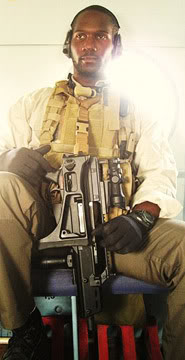
Just like the review of Taliban prisoners, these new visa requirements will not impact the contractors working on military bases, which are the majority of contractors working in the country. Contractors working at the FOBs enter and exit the country aboard military or contractor aircraft that fly directly to major military airfields from Dubai; they don’t have visas or work permits. The new rules specifically target security companies that use international reconstruction implementers to do all the reconstruction work outside military bases.
At exactly the time when Afghanistan is going to need more international security operatives to harden existing reconstruction efforts and provide (now needed) professional security to internationals operating outside the wire, the central government continues to squeeze them out of the business. On top of that, there are ongoing problems with Afghan-only security operations. Dexter Filkins posted an excellent story on this topic today, available here. He points out that both Watan and Compass security were not closed down after being banned by the Kabul government, but instead “worked out” their differences and remain in operation. I see reports of convoys from Compass security about their guys being ambushed almost daily on the security face chat room. Normally, the reports look like this:
“08 JUNE 10: DRIVE BY SHOOTING: at 1025 hrs Compass escorted convoy subjected to PKM and AK-47 fire delivered from two passing motorcycles at Grid 41R PR 91285 02241, 3 km Northwest of Keshnakod. No damages, convoy continued movement.”
If these convoys are taking fire, they are no doubt returning it too, which may account for reports of indiscriminate shooting. I find it hard to believe that security contractors are shooting up the countryside if, for no other reason, then ammo is so expensive and a pain to obtain. 7.62 x 39mm rounds (AK-47 ammo) sell for 50 cents a round at normal market rates with no discount on bulk purchases. I don’t really know what these contractors are doing, but Dexter seems to have a good handle on the topic. What I do know is that if ISAF wants the contractors it hires as convoy escorts to meet international standards, it needs to hire internationals. That is becoming increasingly difficult to do and clearly not something the Afghans want to see happen, as they channel security dollars to their companies by driving out international competition.
Most large reconstruction outfits use TCNs in finance officer positions because they have to handle and disburse large amounts of cash. Eliminating them from the workforce is short-sighted and dumb. The central government is reducing the ability of international aid agencies to rapidly develop Afghan human capital through daily mentorship by TCN professionals with the requisite training and certification to meet the standards of agencies like USAID. Project management, project engineers, and finance officers, as a rule, must be approved by funding agencies, which is a proven method for controlling fraud and theft.
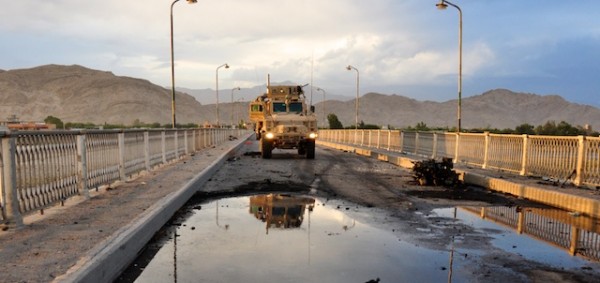
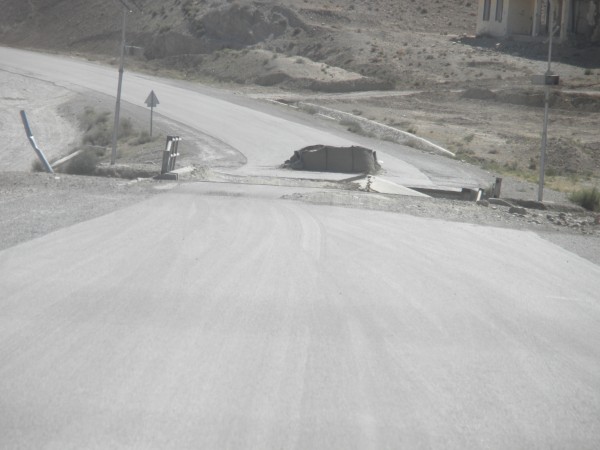
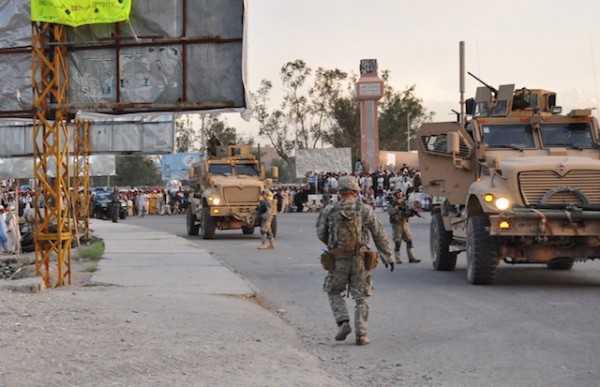
It took the army about four hours to recover their damaged MRAP, and the soldiers let me and one of our engineers look over the bridge to check its structural integrity. The roadbed will need to be replaced, which will require a few days (probably longer here), but the good news is that the damage was superficial.
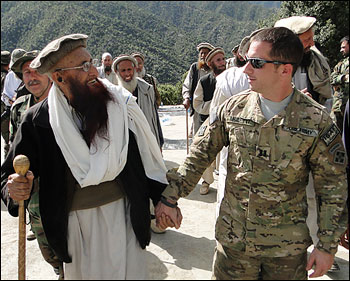
Talking with the American soldiers is always a treat. Paratroopers from the 101st are now in charge of RC East, and they seem to be a confident, cocky bunch, which is exactly the right attitude. One of the sergeants told me they get out all the time doing COIN, which he describes as talking to and being friendly with the people instead of hunting down and killing bad guys.
He said their pre-deployment training stressed that the Afghan people generally remain friendly toward Americans, which he said he didn’t really believe until he saw us pop out of the crowd, wearing casual Western clothes, smiling at and joking with the men around us as we passed through. I told him to always smile warmly when greeting Afghans and to learn four curse words and two mullah jokes in Pashto. Those modest skills will make him a hero wherever he goes as long as he stays out of the Korengal and Pech valleys in Kunar Province. He thought that was a great heads-up and laughed and laughed as he passed along this sage advice to his buddies. I love being around good infantry, and these guys have the look of world-class fighters.
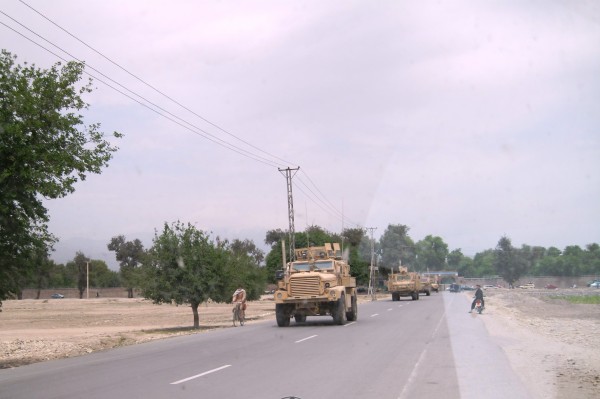
Here is the thing: the soldiers, through no fault of their own, really aren’t doing COIN. The MRAP vehicles, which protected them this time, are a physical barrier between the people and the soldiers. The body armor, helmets, and mandatory sunglasses serve as both physical and psychological barriers between the soldiers and the people they are trying to protect. I know the MRAPs and body armor will never go away – they are self-imposed constraints the commander has to deal with to accomplish his mission.
But no commander can accomplish the mission of protecting the local population if they are forced to deploy from and live on FOBs. They can’t protect families living 100 meters outside the wire of the bases from the Taliban, which even the illiterate peasant fighters in the south have figured out as they reverse the gains made by the Marines last winter in the Helmand River Valley.
The only way to combat small teams of Taliban enforcers roaming the countryside at night is to roam the countryside at night in small teams yourself, preferably without the helmets and body armor, so you too can be fast and sneaky.
Yesterday, an article popped up from ABC News saying this is the longest war in American history. As is typical with the dying, brain-dead, liberal media that is completely wrong, the longest war in American history was the Pig War in the San Juan Islands between the British and us. Afghanistan has three more years to go before it really becomes our longest war. Reading the mainstream media gives me a headache…. I know that liberalism is a disease with the complete ignorance of your country’s history being a major symptom, but you would think that by now the dinosaur media would at least have heard of Wikipedia.
The question the MSM should be asking, if they were capable of independent thought or even thinking clearly about the important issues of the day, is whether Afghanistan will become our longest war, and if so, why? President Karzai went to Washington last month for a round of meaningless photo ops and stupid proclamations because the current administration also thinks the American people are stupid enough to be fooled by such nonsense.
Karzai has obviously concluded that the Commander in Chief will continue to “vote present” for the foreseeable future and is tightening the screws on the few internationals who continue to work outside the wire in an attempt to divert more money to Afghan businesses, many of which have proven unreliable. Those of us who remain in the reconstruction fight are busy adapting, hardening our compounds, changing up our routines, spending inordinate amounts of time and effort trying to get a handle on how bad the current security situation is and how much worse it will get.
Yesterday, NATO lost ten men in battle; five Americans to an anti-tank mine in Nangarhar Province, and another five to different incidents in both the southern and central regions. At least one of the KIAs was a French Foreign Legion sergeant, and the rest could well be Americans. There is no way we will stay engaged here if the Taliban can inflict 10 KIA’s a day on us for any length of time.
Imagine that… the NATO military, designed and deployed to fight a battle of attrition, cannot, for a variety of reasons, fight one; it loses because it cannot accept the casualties that come with fighting. It doesn’t have to be this way. There is some world-class infantry from America and NATO in the theater, and now that the villains are offering battle, they could be let off their leash to react with speed, daring, and accurate, overwhelming firepower.
To do that, the leadership would have to accept risk, embrace uncertainty, and deploy smaller, mobile combat formations. That kind of change in the campaign plan can only come from decisions made at the Commander-in-Chief level. Those changes would require a president who is engaged, decisive, resolute, and able to exert sustained expert, confident leadership. We don’t have one of those.
Afghanistan is going down the tubes fast, my friends, and there are no signs, not one, to indicate things are going to start going our way any time soon.