Taliban Stakeout the Moral High Ground Announcing a Peace Deal with the United States

Sirajuddin Haqqani wrote an opinion piece in the New York Times yesterday where he explained the Taliban’s expectations and goals in signing a Peace Agreement with the United States. The piece was professionally written, and I do not believe Sirajudin can write so well in English, so I doubt he wrote it himself. Regardless, the Taliban statement stakes out the moral high ground with sentences like:

“I am confident that, liberated from foreign domination and interference, we together will find a way to build an Islamic system in which all Afghans have equal rights, where the rights of women that are granted by Islam — from the right to education to the right to work — are protected, and where merit is the basis for equal opportunity.”

Sirajudin Haqqani represents the Peshawar, not the Miranshah Shura, and the fact that he’s doing the writing indicates that the various factions in the Taliban are presenting a unified front. Haqqani is also directly responsible for scores of car bombings in Kabul and a laundry list of other attacks that targeted innocent Afghans. His statement has more than a bit of hypocrisy, but who cares? This communique was addressed to the Afghan people, and if they want to allow men like Haqqani to reconcile with the government, it is their business, not ours.

While the MSM component of the national media waited to see what President Trump would say so they could take the opposite position, the conservative press pounced on this sentence to dismiss the entire missive.

“We did not choose our war with the foreign coalition led by the United States. We were forced to defend ourselves.”

In the Washington Examiner, Becket Adams called the claim of self-defense “a damnable lie”. Mr. Adams went on to state that “The Taliban 100% chose this conflict with the U.S.” That was true in 2001, but that is not what Haqqani is talking about, and from the Taliban’s perspective, we did indeed force them to fight us.

In 2002, the majority of the Taliban had surrendered and returned to their villages. There was one group of Taliban and al-Qaida fighters holed up in the mountains of Shah-i Kot, which we attacked, willy-nilly, with no intelligence or fire support preparation of the battlefield, and no idea how many adversaries we faced. The remainders were turning in their weapons and going home, which is precisely what Karzai, when he accepted the surrender of the Taliban government, asked them to do.

What do you do when part of a Special Operations Task Force with no enemies to identify or target? What we did was target the enemies of the warlords who cooperated with us and in the south of the country the Warlords we supported would be Karzai and his bitter rival Haji Gul Agha Sherzad. The village of Khas Uruzgan provides a perfect example of how we snatched defeat from the jaws of victory by relying on those two men.

When the Taliban were routed in an epic battle pitting a Special Forces A-team headed up by Maj. Jason Amerine and dozens fast movers (jets) vs. a couple thousand  Taliban just outside the provincial capitol of Tirin Kot the local Afghans held jirga’s and agreed to candidates for the positions of district mayor, district chief of police, etc… Unfortunately, the acting president (Karzai) sent one of his friends named Jan Muhammad, to be the provincial governor. Jan Mohammad intended to put his fellow tribesmen (Popalzai) into every paying billet in his province.

In towns like Khas Uruzgan, the men selected by the people to govern them moved into the district center and started accepting weapons from surrendering Taliban. Jan Mohammad, who had just been released from the Taliban prison by Karzai himself, moved into the provincial governor’s compound and promptly appointed his tribesmen to every district governor and police chief billet in the province.

In Khas Uruzgan, the man elected by the jirga occupied the district governor’s compound. Next door was a schoolhouse where Jan Mohammad’s men were busy disarming the Taliban, and there were tons of weapons in both buildings.

In late 2002, the U.S. Army conducted a raid on both buildings (which they thought held Taliban), killing several men in the process and yoking up several more for interrogations at the Bagram airbase. Anand Gopal, in his excellent book No Good Men Among the Living describes the results of this raid:

Khas Uruzgan’s potential governments, the core of any future anti-Taliban leadership—stalwarts who had outlasted the Russian invasion, the civil war, and the Taliban years but would not survive their own allies. People in Khas Uruzgan felt what Americans might if, in a single night, masked gunmen had wiped out the entire city council, mayor’s office, and police department of a small suburban town: shock, grief, and rage.

It would be years before the United States admitted they had raided the wrong place. Mullah Abdul Ghani Baradar (the current senior Taliban negotiator) had gone to ground near Khas Uruzgan, and our Special Forces decimated not one, but two wedding parties (with AC-130 gunships) in an attempt to catch him. Dozens of children and women were killed in these raids. It is essential to acknowledge that to the Afghan people, there were two wars, one that drove the Taliban from power quickly, and a second one that started when we stayed on in the country to “capture senior Taliban and al-Qaida”.  The responsibility of this second war rests solely on the National Command Authority of the United States, which failed to define Phase four (what happens when we win).
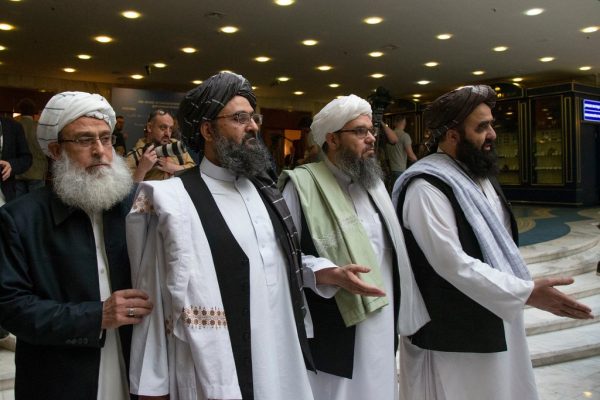
Mullah Abdul Ghani Baradar, second from left, with members of a Taliban delegation in Russia in 2019.Credit…Alexander Zemlianichenko/Associated Press

If you want to read an infuriating account of our incompetence making us enemies among people who wanted to be allies during that second round of war, read Chapter 5 of No Good Men Among the Living. It is a detailed description of how we were tricked into detaining and/or killing the entire anti-Taliban leadership of Band-i-Timor in the Maiwand district of Kandahar. You cannot make some of this stuff up.

The opinion piece by Sirajudin Haqqani was a masterstroke of information warfare and will be hard for the United States to refute. The Taliban leadership, unlike the American leadership, has skin in the game. There is no reason to doubt their commitment to participate in establishing an Afghanistan free of foreign troops and moving towards a consensus on who is governing what. It is now time for the United States to move out of the way and allow the Afghans to determine what their country will become.

In 2002, the Taliban were defeated, and al-Qaida had already gone to Pakistan. All the fighting since then has not changed a thing on the ground.  It is time to pull out, reduce funding to Afghanistan, and let them sort out the situation among themselves.


Light at the End of the Tunnel in Afghanistan

Last week, news broke of a possible peace deal in Afghanistan, leading to a firestorm of speculation in the media about what’s going on. The reporting was not consistent, but the consensus is that the peace deal would call for negotiations between Afghans on both sides of the conflict to start next month, an eventual countrywide cease-fire, and a commitment from the Taliban not to harbor terrorist groups like al Qaida, while setting a timetable for the withdrawal of U.S. troops.

A famous quote incorrectly attributed to Winston Churchill, “Jaw Jaw is better than War War” (actually, he said, “Meeting jaw to jaw is better than war,” which makes more sense)  reinforces that this is (potentially) good news. The devil is in the details, and we do not know what “reduction of violence” means to the United States or “withdrawal of U.S. troops” means to the Taliban.

The Taliban are not a monolithic organization but several competing factions. We have been dealing with the Quetta Shura, which represents, but cannot speak for, the other players like the Miranshah Shura (primarily the Haqqani Network) or the Peshawar Shura. That being said, the Taliban did deliver on an Eid ceasefire agreement last year, and that ceasefire held.

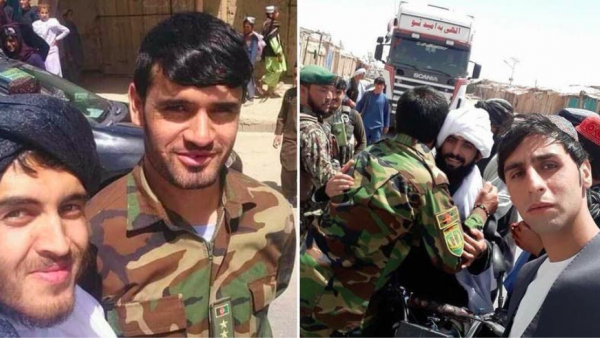
Taliban fighters taking selfies with Afghan army troops during Eid ceasefire last year.

We can get a reliable read on what the Taliban considers a reduction of violence in this detailed report from the always reliable Afghan Analysts Network. From the linked report:

Another Pakistani newspaper, quoting an un-named Taleban official, reported that the movement had agreed not to carry out attacks in major cities including Kabul and would not use car bombs and that the Taleban had also offered not to attack US bases and US soldiers, and that they wanted the US to cease air strikes in return. The newspaper said it had learnt “that Khalilzad had urged” the Taleban to agree to more measures, including a halt to IED attacks, but that they did not agree “as they have planted IEDs in many areas and it is difficult for them to remove all [of them].” Furthermore, the paper reported, the US also wanted a pause in Taleban attacks on Afghan government forces’ check posts, “which was also a concern of the Afghan government.”

Senior U.S. military officials (speaking off the record)  in Afghanistan stressed that U.S. counterterrorism operations in Afghanistan against the Islamic State group and al-Qaida will continue, separate from the truce agreement. This is problematic for several reasons, not the least of which is that ISIS-K in Nangarhar Province has been defeated.

Their fighters have mostly surrendered to the government or gone to ground. There are ISIS-K cells in the north of the country, but they are not large or powerful and are in the sights of the same fighters who rid Nangarhar Province of ISIS, and those fighters are Taliban.

The counterterrorism mission in the eastern part of Afghanistan has been focused on ISIS-K (Daesh to the locals) for years. Now that ISIS-K is gone, the Special Forces teams are flying around the province conducting ‘Key Leadership  Engagements’ like the one I wrote about last week. That occurred in the Sherzad district, which is very close to Jalalabad and full of former HiG fighters who have cooperated with the Taliban on and off over the years. They cooperate mainly because Taliban shadow courts settle land disputes quickly and, they feel, reasonably.

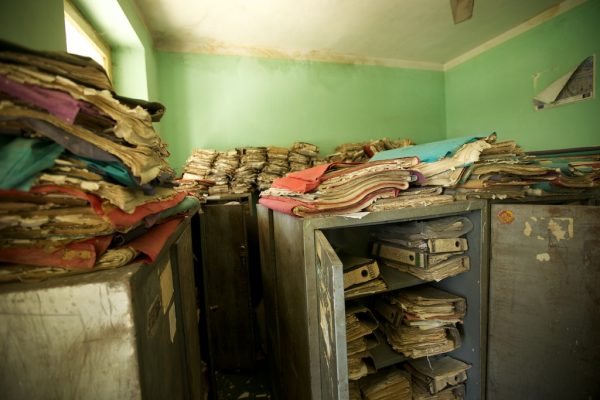
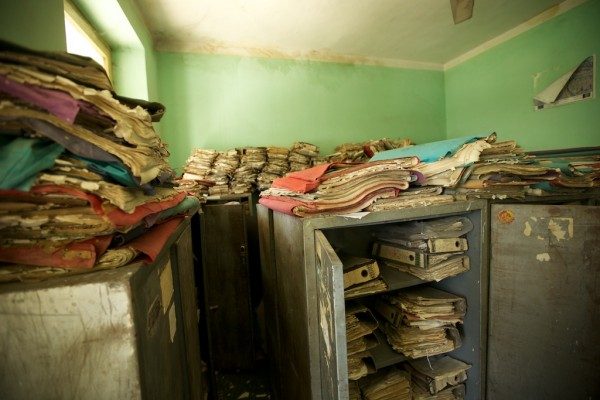
The land deed office for Nangarhar Province – some of these documents are hundreds of years old

The time for our SF troops and the Afghan varsity Commandos to be running around district centers meeting with key elders seems long past. The local elders know all about the dysfunctional government in Kabul and will not be convinced it has their interests at heart until the government demonstrates it.

With ISIS-K on the ropes, trying to separate Taliban connected fighters from al Qaida will be problematic. The remaining senior al-Qaeda leaders have successfully gone to ground inside the tribal areas of Pakistan and do not need to move anywhere. Al Qaida has a presence at Taliban training camps and may even run a few, but I have no doubt the Taliban understand the consequences of allowing them to use their territory for international Jihad.

If there are no independent al-Qaida formations, then if you go after them, you are still going after the Taliban.

The incident rate in Afghanistan has plummeted this year. Some of this is due to the pounding the Taliban have taken from American air attacks, which increased dramatically in 2019. Some of this can also be attributed to the Taliban winding down operations as the peace talks continued. The stats below come from The Armed Conflict Location & Event Data Project.

Time will tell, but it seems that the end to American involvement in Afghanistan is near. But if you pull all the training support missions out and leave a Special Forces task force to continue hunting “al-Qaida and ISIS,” it will test, if not break, the fragile peace. We need to pull everyone out and let the Afghans settle things themselves. Continuing night raids and killing bad guys in Afghanistan does not reduce any threats to our homeland. It’s time to admit that and act accordingly.

American Green Berets Gunned Down in Sherzad District; What’s Going On?

Yesterday, two Green Berets were killed and six were wounded while (reportedly) conducting a Key Leader Engagement (KLE) meeting in Sherzad district. This isn’t reassuring on several levels.

First, it appears the dead and wounded (including the Afghan SF troops with the Americans) were at the hands of Afghan National Army soldiers. From the article linked above:

Additionally, at least six more American troops were also wounded. The high number of casualties (17 as of this reporting) is attributed to the ODA/Afghan combined force coming under fire from a DShK, a Russian designed heavy machine gun which fires a 12.7mm bullet. The wounded have been evacuated to the appropriate field hospitals.

The source explained to Connecting Vets that it is suspected that the Afghan National Army (ANA) was behind the attack, although details are still developing.

From what I can determine, they were attacked by a lone gunman with a heavy machine gun. It is safe to assume (if this proves true) that the lone gunman was a Taliban. They got an assassin into the governor of Kandahar’s security force, who was able to gun down the irreplaceable Gen Raziq. As I wrote, the time and will continue to write, this will happen again. It is obvious that the screening methods in use are not working, and, given my experiences in Afghanistan, I suspect they will never work.

Second, one is forced to ask why we are still conducting KLEs in the badlands at this late stage in the game. What did the SF guys believe would be accomplished? I can’t imagine a good answer to that question, and I have over eight years of experience conducting KLEs in Afghanistan, many of them right there in Sherzad district.

It isn’t easy to understand what is happening in Afghanistan. Nangarhar Province has gone from one of the safer provinces in the country to the deadliest one for American forces. The army had been losing soldiers over the past four-plus years in Nangarhar Province, fighting an outbreak of ISIS along the border with Pakistan.

The Taliban got sick and tired of ISIS deprivations before and rolled into Nangarhar and kicked their asses hard in 2015. Last fall, the multiple Taliban units returned to Nangarhar (probably from Loya Paktia via the parrot’s beak, which is that finger of Pakistan land jutting into Afghanistan at the bottom of the district map below) and beat ISIS like a drum. ISIS was surrendering to the Afghan government last time I checked, and is no longer a threat.

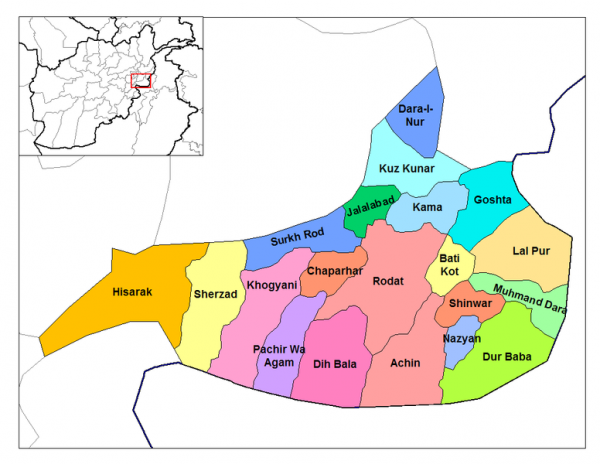
This is the Nangahar province of Afghanistan. Sherzad district is in the east of the Province, and the ISIS threat was centered in Achin district, well to the west. Back in the day, Sherzad was HIG land (not Taliban), but Heckmyter Chu-Hoi’d to the government side a few years back, and it is now a Taliban stronghold.

Despite ISIS being routed  (reported here in the Military Times three months ago), ISIS-K is still being used to justify our continued involvement in Afghanistan. That is ridiculous – ISIS-K was a collection of Pakistani Taliban who were trying to carve out their own little Jihadi paradise in an area that contains the largest talc powder deposit in the world. Threat to the US Homeland? Hardly. Al Qaeda is the same – they have gone to ground and remain unmolested in Pakistan for 18 years now, and do not need to use Afghan soil for anything. The airport in Peshawar is 10 times better than Kabul International so why would any decent Jihadi move from his decades long home in Pakistan?

ISIS-K has been eliminated, and the Taliban now control most of the countryside in Nangarhar Province. Our troops are stationed at the Jalalabad airfield, primarily consisting of aviation and aviation support personnel. There are also two different Special Forces compounds there, which still house one or more Army Operational Detachment Alpha (ODA) teams. I understand the necessity of conducting operations outside the wire of a secure base like Jalalabad to keep the threats at a distance. However, I am unsure about the potential benefits of engaging in key leader engagements at this point in time.

This is precisely the kind of senseless loss that is driving President Trump to wind down our involvement in Afghanistan. How do you justify losing 8 Americans and an unknown number of Afghan Commandos on a chin-wagging mission with a bunch of local elders?

As an aside, the only mainstream outlet to write about this is Fox, and their take is focused on the perfidy of Green on Blue attacks. They have (as usual) completely missed the obvious, and the comments section is so clueless it’s depressing. The other outlets are (I suspect) waiting to see what President Trump will say so they can say the exact opposite. Watch and see.

Maybe there are excellent reasons for the mission to Sherzad that we will never know, but I do know there are better ways to conduct KLEs.  It is always better to risk one contractor than it is to risk a dozen highly trained special operators. The counterintuitive thing about that is that an experienced contractor traveling alone into the Sherzad district, wearing local clothes, and in a local vehicle is much safer than 20 soldiers rolling around in four MRAPs.  That is a lesson we refuse to learn, and I think the President, for one, is getting tired of it.

The Taliban has Destroyed ISIS-K in Nangarhar Province: Now They Plan to Focus on US

I have no idea why the destruction of ISIS-K by the Taliban in Nangarhar Province has remained virtually uncovered in the legacy media. That changed with an excellent interview with the Taliban leadership in Nangarhar Province by The Washington Post. The Taliban were celebrating their recent crushing of ISIS-K (or the F’ing Daesh in local lingo). They interviewed in Khogyani district, which is close to Jalalabad and was once solidly under government control.

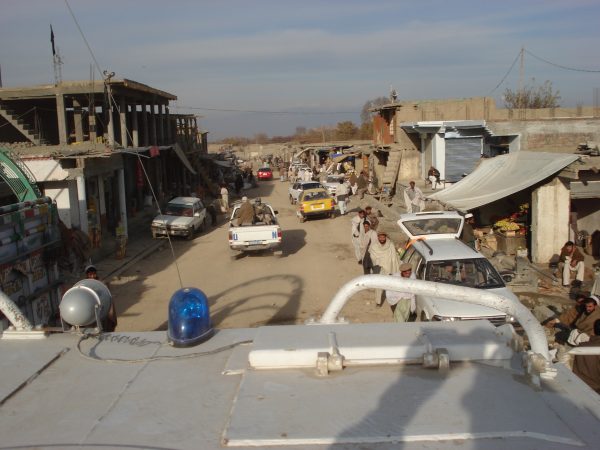
This picture is from the back of an armored vehicle belonging to a UN road building contractor in the Khogyani district center in 2008.

The Taliban were direct and to the point regarding continued military operations. Check out this quote from one of the Taliban commanders:

Mullah Nik Muhammad Rahbar, 28, a Taliban commander responsible for Kabul province, pointed to the resources freed up by the conclusion of the fight against the Islamic State in Nangahar, saying the Taliban would be able to shift back to conducting more high-profile attacks in Kabul and elsewhere.

“Thank God you saw what we achieved against Bagram today,” he said. “We launch attacks in Kabul because there are many foreigners there, many targets for us.”

The Taliban went on to claim that they are not targeting Afghan civilians (the UN attributes 922 civilians killed and 2,901 wounded just this year by the Taliban) and that they will now shift their attention to the Government and ‘foreigners.’

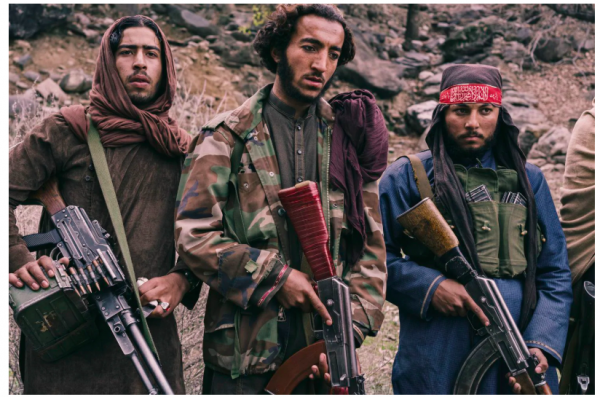
Taliban fighters showing their weapons to the press in Khogyani. Photo by Lorenzo Tugnoli for the Washington Post

This is not good news because there are a bunch of ‘foreigners’ stationed at the Jalalabad Airfield, and with ISIS-K gone, they have little to do except support the Afghanistan National Army trainers at the nearby, whatever the former Camp Gamberi is now called.  Khogyani is not far from J-bad, and back in the day, the Muj would pick off Soviet Hinds on the approach to the J-bad airfield on an alarmingly regular basis (when they had the Stingers).

The United States cannot afford to throw a bunch of soldiers inside an Airbase without some active patrolling to keep the jihadists from getting too comfortable squatting within mortar or man-packed anti-air missile range. Patrolling like that takes boots on the ground, which are in short supply.

Anybody who thinks the Taliban will fail to take a shot at inflicting severe casualties on an American military formation doesn’t understand Afghans. This is what they do, and they will pay a steep price if they think they can generate some casualties and destroy some aircraft in the process.

The United States Military is not agile enough to withdraw resources from the eastern provinces while maintaining the relentless air campaign that has dropped more air-delivered ordinance this year than any prior year in the Afghan War.  Throwing around 1000 pounders will result in collateral damage, and we now know that the generals running this war know that the collateral damage incurred while blasting the Taliban creates more Taliban and is a losing strategy.

But it is all they have for now; the Generals and senior government Mandarins have no problem stringing this out for years to come. The President isn’t happy with the status quo. I’m not sure what the Democrats’ position is on Afghanistan, as they seem to have lost their minds with the sham impeachment they inflicted on us. I have said before and will say again, this is not going to end well.

FRI Reviews Trust-Based Leadership

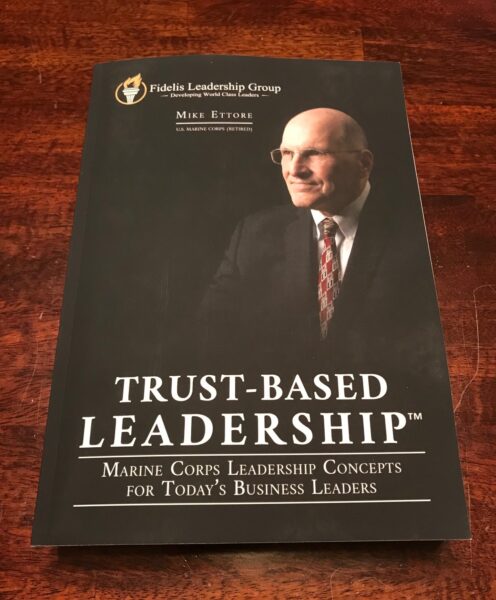
I opened a large package that arrived in the mail last week, and out fell an encyclopedia-sized book on leadership. On the cover, larger than life, was Mike Ettore, with whom I served in the Marines 20 years ago. He was staring off in the distance with a sense of purpose and the moral rectitude that one associates with famous men like Vince Lombardi. I was elated; my friend Mike Ettore must have become a renowned football coach because who the hell will read 549 pages on trust-based leadership if there was no insight into how to approach a third and long with just seconds to go in some game? I stopped watching the NFL over a decade ago, long before it was cool, so he could have been dominating there for all I knew.

I held it up to my wife and said, “Hey, I know this guy. He must have gotten into football coaching or something and become famous.”

My wife held out her hand. She has a Ph.D. in organizational leadership and is an educator who knows the industry. She starts scanning the chapters and looks at me.

“You know Mike Ettore”?

“Of course, he sent me the book, but I didn’t know he was a pro football coach”.

“He’s not. He runs executive leadership training, and I’ve heard of his Fidelis Group; they’re out of Tampa,” she adds, just in case I thought she was joking.

I never saw the book again. Off it went to her office, and a week or so later, I’m sitting at my computer doing writer stuff, and up pops this notification from LinkedIn, a platform I rarely visit. It’s a note from Mike Ettore asking if I got the book. I had to move a yellow sticky note on my screen that said “send Ettore a thank you for the book” to read the notification.

I wrote to Mike immediately explaining the book had been highjacked (as if that meant anything) and then apologized for being a scumbag. I added that I’d write a review on Amazon and retrieved my copy, but realized the book needed a blog post. Mike took the time to write what I consider the definitive book on leadership, and it’s entertaining. I want to be entertaining back with the review.

Mike wrote this book as a text to be used for developing leaders in every human endeavor where there is a hierarchy. His biggest, dare I say controversial, contention is that leaders are made, not born. Coming from Mike Ettore, that is hard to believe, at first, as is the idea that Marine Corps leadership doctrine can be injected, in any meaningful way, into a civilian business environment. I could easily see Mike as a successful, innovative football coach because Mike was an exceptionally gifted infantry leader. But coaching executives on the importance of eating last? That seemed to be a bridge too far.

Mike Ettore, at age 20, after just two years in the Marine Corps, was a drill instructor at Parris Island. First term enlisted drill instructors are as rare as finding a diamond in a goat’s butt. Ettore left the Marines after his first enlistment to complete college and returned as an infantry officer. As a rifle platoon commander, he saw action in Grenada and Beirut, making him one of the rare combat vets in the ’80s and ’90s when we served together. As a Captain, he won the Leftwich Trophy, an annual award for the best infantry company commander in the Fleet Marine Forces. An award that means little to most people but everything to an infantry officer.

When I met Mike, he was heading up the tactics department at The Basic School (TBS), a six-month course every newly commissioned Marine officer must attend after commissioning. TBS is designed to train new lieutenants to lead Marines by teaching them how to be infantry platoon commanders. The Marine Corps takes the “every man a rifleman” thing seriously, so every Marine, regardless of gender or military occupational specialty (MOS), is trained to fight as dismounted infantry.

I was an instructor at the Infantry Officer Course (IOC), and for reasons that need not be explained here, friction existed between the tactics department and IOC. That ended soon after Mike’s arrival. He understood the difference between entry and advanced-level fire and maneuver. He also understood our need to start at the squad level in an aggressive 10-week course with over twenty increasingly complex live fire events.

Drill Instructor at 20, rare combat leadership experience as a Lieutenant, winner of the Leftwich as a Captain; one would think Ettore is one of those hard asses who insists on blind obedience to regulations and strict attention to orders. He’s not, and that’s the first of many family jewels in the Marine Corps leadership doctrine revealed to readers who did not enjoy the opportunity to experience them firsthand. Despite what you have seen in movies or read in books a successful Marine infantry leader can only be successful if his troops respect and love him.

Not every man who passes through the Marine Corps leadership training pipeline masters the nuances of infantry leadership. As in every large organization, there are bad leaders and units in the Marine Corps. I’ve always thought bad leaders were missing an ingredient that the successful leader enjoyed. In other words, I felt good leaders were born to the task.

Readers unfamiliar with the military in general or the Marine Corps specifically will be overwhelmed by the exacting standards of Marine Corps Leadership. You will be dubious about the contention that the Marine Corps instills these traits and principles in young men and women who have just completed high school.

I have a shortcut to understanding the dynamic, but it’s a little long. Listen to this 4-hour, 15-minute Jocko Willink podcast about an incident involving a young Marine Corporal named Jason Dunham in less than 10 seconds, 15 years ago. Jocko is joined by four Marines who were with Jason that day. They explain who Jason was, how he became a squad leader at such a young age, his training for Iraq, and the events leading up to the day he was mortally wounded. During the discussion, all four of the Marines and Jocko lose their composure several times. It is fascinating to listen to; it is a truly inspiring tale about an iconic Marine Corps small-unit leader.

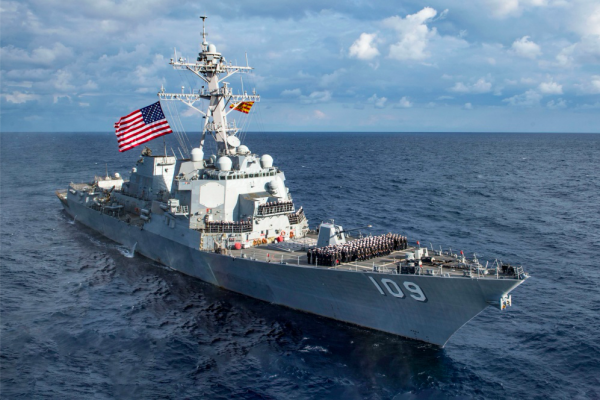
USS Jason Dunham DDG 109

Executives in the civilian business world do not lead men in mortal combat, so what does the leadership system designed to do just that have to do with running a for-profit enterprise? Everything. The Marine Corps trains to fight, but combat is not where any Marine spends most of his career. Unlike Mike, I am not a combat veteran. However, I have seen infantry battalions fold in the field after 96 hours of cold, wet, wind-driven rain in the usually sunny Southern California winter.

Good units with solid leadership thrive in nasty weather. They consider it a challenge and answer it with solid sleep, foot hygiene, and active, aggressive tactical measures (patrolling, digging, fire support planning, etc.) while ignoring the cold and wet. Good units with solid leadership cannot be beaten by terrain or weather. Units without it fold every time they are exposed to a good dose of adverse weather.

Every leader faces diversity, and effective leadership is demonstrated through navigating that diversity. This seems to be a self-evident truth often absent in today’s business and social environment. I suspect that is because leadership training is confused with leadership techniques and procedures. Good leaders work by developing and implementing effective techniques and procedures; poor leaders mimic the techniques but never achieve the same results. Tactics and techniques cannot be substituted for leadership if you are in a dynamic environment where rote routine and detailed instructions are counterproductive.

I take that back; Amazon fulfillment centers have got to run on rote routine, I would think, and if the management of those centers adopted Mike’s approach to the tasks at hand, I doubt the media would be full of stories about dismal employee morale.

If you are in the military and aspire to a leadership role at any level, buy this book, read it, highlight it, and then reread it, and again, and you will accelerate through the ranks at a blistering pace. If you are a Marine Corps Officer or SNCO and have not ordered this book yet, you’re wrong, so fix that quickly. For everyone else, I am telling you that this book will make you a more productive leader and a better human being if you accept the challenge Mike has laid out for you.

When you read and understand this textbook, you will know precisely how to develop and manage human capital.  Mike Ettore has distilled 244 years of Marine Corps Leadership guidance and doctrine into one book designed to be used throughout a career of ever-increasing responsibilities. Suppose you desire to excel in any leadership role. In that case, this book will grow your talent stack exponentially if you work to master the material and try to mentor and develop your subordinates.

As I said in the beginning, not everybody who is exposed to Marine Corps Leadership doctrine gets it. Those who do become legends. Everybody likes being associated with a good, solid leader. Now, there is a book to tell you how to become one if you have the drive and desire to work at it. Nothing worth having comes easy in life.

Some Positive News Out of Afghanistan

Two news items popped up yesterday that are certainly good, possibly great. The first was the release of two American University professors, one American, the other Australian; who were kidnapped in 2016. The other is the apparent mass surrender of Daesh (ISIS-K) fighters to the Afghanistan Security Forces.

The always reliable Mohammad Jawad (a.k.a. JD) of DPS reported:

US citizen Kevin King and Australian Timothy Weeks were released by the Taliban on Tuesday, three years after being kidnapped, as part of a prisoner-swap deal.

The two professors were taken by the Taliban in August 2016 on their way home from the American University of Afghanistan, where both taught.

They were freed in exchange for the release of three senior Taliban members being held by the Afghan government.

Earlier in the day, I had the chance to ask JD about the Daesh story when we were chatting on Messenger. He told me he had heard the story is true, but he could not verify it with sources in Nangarhar. Shortly after signing off, I received a phone call from a former Jalalabad colleague (who is still in Jbad). He said that the word in Jbad is that the Daesh have quit the battlefield en masse and are asking for Melmastia (the Pashtunwali requirement of hospitality and profound respect for all visitors, without any hope of remuneration or favor) from the central government.

That is precisely how the Daesh, who were Pakistani Taliban trying to get away from the Pakistan Army operations Khyber 1 and 2, ended up in the Achin district of Nangarhar province in the first place. In Afghanistan, nothing is easy to plan, be it military campaigns, infrastructure development projects, or a program to welcome former combatants. Those types of plans do not survive contact when implemented. Afghans just don’t work that way, but somehow, when left alone, they will reach a compromise that all interested parties can live with.

Plus, there is this:

This is the land title storage room of the Nangarhar Provincial Agriculture Department. Some of these papers date back a hundred years and fall apart if you touch them. They are not cataloged or organized.


The government is not in a position to effectively give away land in Nangarhar Province. I imagine Kabul will want to spread non-Afghan Daesh fighters out in marginal, thinly populated areas, not near the country’s most important border crossing (Torkham). But who knows? It will be interesting to see how this plays out.

My prediction has been that the Daesh in Nangarhar would be destroyed as soon as the Taliban (who have wiped them out once before, as noted in this excellent post) were allowed to have at them. The Daesh (ISIS K) was never a real threat because the Afghan people are tired of dealing with radical Sunni orthodoxy and the militants who force it on them. They like to smoke cigarettes, and occasionally they enjoy getting drunk too. Vat 69 Scotch (brewed in Rawalpindi, Pakistan) and Cossack Vodka (brewed in Quetta, Pakistan) are always available, as is The Green Meanies (Heineken in the can). Alcohol is not used as a social lubricant in Central Asia, and it is haram (as well as illegal), which is why you don’t hear much about it, but it’s there and no big deal to your average Afghan.

Although I never felt the Daesh a legitimate threat to Afghanistan or the United States, they have destabilized Nangarhar Province to the point that I’m getting panicked phone calls from Jalalabad City. Only once in the last seven years have I received a call from J-bad, and that was about the death of my friend Hedayatullah Zaheer Khan (Zee). Zee had been killed in a Daesh bombing of an Eid Cricket Tournament he had organized. This time, the call was about employment verification certificates and letters of support for a half dozen former colleagues’ Special Immigrant Visa (SIV) applications. These requests are from Pashtuns who had intended to stay in Afghanistan for the duration. The rise of Daesh in the province has unnerved them (to put it mildly).

I’m not too optimistic about the chances of my former colleagues getting SIVs. I’ve sent notarized statements verifying their employment with me and their faithful service implementing multiple aid projects in the province. I’m trying to get the corporate headquarters from the agencies I worked for to send verifications, but they never even had records of local employees in Afghanistan. That seems to be a dead end.

To say I hope this news about Daesh is true would be an understatement. The prisoner swap is another indicator of progress in getting the Taliban and the government in Kabul to start talking. At some point, the Trump administration is going to try for another deal, and the next time around, I believe the players understand they need to stick to the terms they agreed to with the President, or he’ll drop the deal like a hot potato. That’s as strong a negotiation position as we have seen in a long time.

The Afghan Endgame Emerges and it is Not Going to Work

There is one point that I have hammered home on blogs and podcast interviews concerning Afghanistan: the next round of funding is a game changer. I thought we would see some serious budget slashing in 2020, but it has already started.  Over the weekend, the State Department cut 100 million dollars designated for Afghanistan energy infrastructure projects. They also withheld another 60 million in payments to Afghanistan’s National Procurement Authority.

Aid is being withheld because of the endemic corruption found in Afghanistan (and every other country in the region). The sums involved look massive, but they aren’t. Keeping Afghanistan’s military and government solvent costs billions annually. Cutting programmed funds is long overdue, but I am guessing this is a test run to see what happens when the real funding crisis strikes next year.

My concern is that once the Afghan people understand we are doing the old cut and run, they may “complicate” our continued presence in the country.

Adding fuel to the fire is yet another ridiculous massacre of Afghan civilians by our armed forces.  A drone strike in Nangarhar province killed 30 workers who were gathering pine nuts. This is not the first time we have slaughtered pine nut gatherers. For 18 years, we have been bombing Afghans who were going about their day because people watching drone feeds thought they were up to nefarious activities. We seem to be incapable of learning.

Just yesterday, 3 American soldiers were wounded in an insider attack on their convoy by a member of the Afghan Civil Order Police. This attack might have something to do with the loss of General Abdul Raziq last year. The Afghans know that Raziq was in that vulnerable situation only because General Miller invited him to the Kandahar Governor’s compound.

The guy who perpetrated this assault may well have been a Taliban plant, just like the one who nailed Raziq. Or he could be pissed about the death of Raziq and took it out on those he thought responsible. Who knows? But the timing of this attack is ominous to those like myself (and maybe it is just me) who are worried about pulling the cut and run while thousands of troops and tens of thousands of internationals are resident in the country.

The Afghan people are not stupid. When the news of the 160 million dollar cut broke, my Afghan friends in Kabul took to Facebook to lament an act they knew was coming. Here are some of their comments from my Facebook page:

Can’t really blame the US for doing this..

That peace deal is coming the conditions are gearing up for anti-USA climate, when the money stops then why are you in Afghanistan? You gotta pay to play otherwise the Afghans are switching their attitudes. Try governing Afghans who haven’t been paid.

But it’s so right! There is no transparency in AFG gov procurement and especially large projects. Nobody can audit NPA, u can’t complain against them and they can award projects to people of their choice.

It’s about time! Bad news for some people.

This is the tragedy; there are plenty of Afghans who want our help, who respect and are inspired by the idea of America, and who, if the Taliban return, are in serious trouble.

Afghanistan is a mess, but the only way for us to extract ourselves from that mess is slowly. The imperative now for NATO and the Afghanistan Security Forces is not to cede the initiative to the Taliban.  The Taliban continue to attack; they are not going to stop applying pressure because it is working well for them.

We need to keep hammering away at them, too, but when we do that, we kill pine nut workers or smoke check wedding parties. The reason is a lack of human intelligence, local atmospherics, and American boots on the ground.

I do not see how we will square the Afghan circle. Still, I know contractors are one option with potential because contractors can loiter in the country longer than the military and can return to the same unit over and over to build cohesion and competence. There are thousands of American combat vets (and contractors) who would willingly return and stay to see the fight through. I’m one of them. I love Afghans (most of them) and the country, too, but this will not end well.

It’s Groundhog Day for Afghansitan

Fellow Afghanistan Free Ranger Dr. Keith Rose released a podcast the other day describing our current situation in Afghanistan as Groundhog Day. The people of Afghanistan are suffering with no end in sight, which is 180 degrees out from where I thought they would be when I flew into Kabul in 2005.

Using Keith’s analysis (a great podcast) as a point of departure, some dynamics with Afghanistan must be emphasised as our involvement continues. Fans of the international hit podcast The Lynch/Kenny Hour on All Marine Radio have heard Jeff, Mac, and me talk about our campaign in AF/PAK  at length, using blunt terms that sound harsh to those unfamiliar with infantry guy talk.

As I pointed out last week, that podcast (and this blog) has many Afghan fans who know me. Afghans do not communicate with each other in blunt, no-BS terms, but I know they appreciate it when we do. Nothing will freak out Afghan project managers more than saying “inshallah” after discussing a scheduled payday.

Blunt fact number one is that our stated reason for remaining in Afghanistan is a blatant fabrication. The US Government has consistently maintained that we have to stay to make sure al-Qaeda does not come back, establish training camps, and conduct terrorist attacks on the international community from safe havens in Afghanistan.

They already have training camps in Afghanistan. We took out “Probably the largest” one in Kandahar province four years ago. The leader of al Qaeda, Ayman Al-Zawahiri, has had a haven in Pakistan since 2001, and has now (obviously) drone-proofed his lifestyle. Why would he leave Miranshah to live in Khost or Kandahar?  The international airport in Peshawar is much nicer than any airport in Afghanistan; it is served by more international airlines (including Emirates, my favorite) and serves more destinations. Who in their right mind would fly Kam Air from Kabul to Dubai when you can fly Emirates from Peshawar and rack up the sky miles?

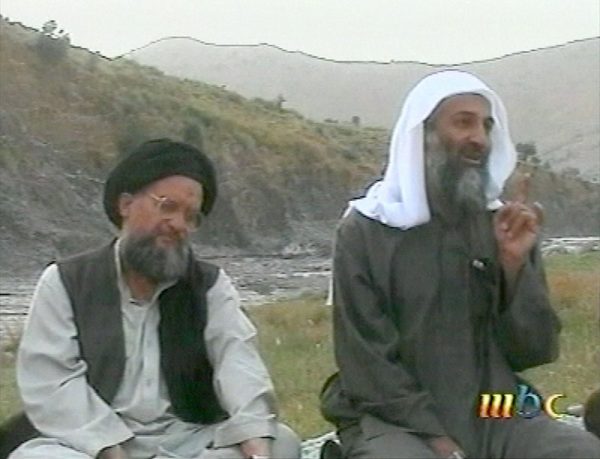
Ayman Al-Zawahiri and bin Laden in a file photo released in 2002. I would bet big money (based on the terrain behind them) that this photo was taken on the Jbad-Kabul road just west of the old Soviet hydro dam outside Jalalabad.  There was an al-Qaeda training camp out that way (ISAF still uses it and calls it Gamberi)

You are thinking that terrorists don’t use SkyMiles. Still, I must point out that the largest covert operation ever launched by CIA agents (not contractors, which is the norm) was compromised because the agents used their covert ID to fly into Italy, but had used their personal credit cards to book the flights and hotels. That’s the CIA, which is supposed to be high speed and low drag – the Taliban has to be worse on the operational security.

Blunt fact number two is that the American people, in general, and their military veterans specifically, believe we have done more than our fair share to give Afghanistan a chance, and they blew it, so the hell with them. Clearly, President Trump is looking for a way out and is willing to do almost anything (to include inviting former Gitmo detainees to Camp David for a round of ‘Let’s Make a Deal’)  to end our commitments in the region. President Trump has said we are not getting any return on our considerable investments and asks why we should stay in Afghanistan or Pakistan?

The reasons to remain in the region are no doubt varied and complex. Still, the fact is that as long as we have thousands of servicemen, along with thousands more internationals in the country, we have to keep funding the government in Kabul. The next round of international funding is in 2020, and the funds are tied to anticorruption metrics that have not been met. If the international money pipeline closed suddenly, how do you think the tens of thousands of internationals would get out of the country as the government folds and the security services crumble?

That is a scenario you don’t have to worry about because the specter of Gandamak II will keep funding going indefinitely. Nothing terrifies Western government politicians more than the slaughter of their citizens, for which their accountability is unavoidable. The Taliban will continue to attack both military and civilian targets because they are terrorists, and that is what terrorists do. The Taliban no longer resembles the popular uprising of the religiously righteous in the face of anarchy. They are now narco-terrorists first, Islamic Jihadi’s second, and Afghan nationalists (maybe) third.

The Taliban were once competent enough to protect the people of Afghanistan from anarchic violence, but they are now the source of anarchic violence. Tyrannical rule is bad, but chaos is worse, and many Afghans have lived through both. The Afghan people will side with the side that delivers them from chaos, especially if that side is committed to keeping Pakistan the hell out of the country.

That is the other great unknown: what happens to the safe havens in Pakistan when the Taliban cut a deal with us? The Afghan Taliban claim to be their movement, but they are Pakistan’s puppets, just as sure as the government of Kabul is America’s. Pakistan exerts more direct control over the Taliban than America has ever been able to establish in Kabul. For the past 50 years the Taliban have been Pakistan’s bitch.

The investment in Afghanistan’s human capital came from every corner of the globe, including Burning Man.

America no longer has the stomach for staying in Afghanistan, but that’s too bad; we’re not going anywhere for the reasons outlined above. So, how does this end? I have no idea, but I’m a fan of the Afghan people, and I believe they can, and will, sort things out given time and space. It is arguable if our continued meddling is helping, but that is irrelevant now.  We aren’t leaving and are incapable of staying without meddling, so there it is.

Groundhog Day

We Are Being Oppressed

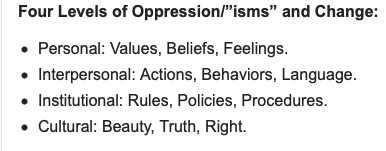
I was finishing up a post for the Freq about riot control and migrants when I suddenly discovered I was being oppressed, endnote, just a little, but on all four recognized levels of oppression. This insight jumped out when I looked for information on a topic I know something about. When I first saw it, I didn’t think much of it, but after spending hours on additional research and days thinking it through, I decided it was time to write a post, an important one, free of F bombs (to show I’m serious) in hopes of restoring a sense of calm. Calm is good when dealing with “isms”.

Let me set this up. The discussion was about the requirement to use overwhelming force to remove leaders, agitators, and natural fighters from a rioting mob. I was writing about the Marine Corps’ experience with Haitian and Cuban asylum seekers in the early 90s. The post on that topic can be found here on The Freq website, which I contribute to weekly.

As I was describing how the SNCOs managed their snatch teams, I mentioned the “rule of opposites”, a term first coined by Gavin De Becker, in his world-famous (should be mandatory reading) book The Gift of Fear.

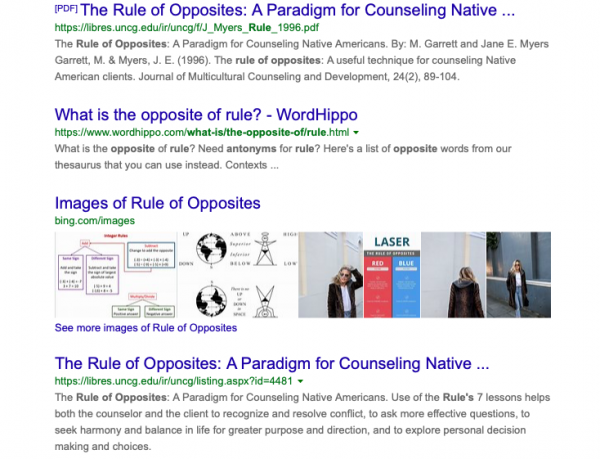
The rule of opposites is frequently mentioned in law enforcement and shooting publications. I searched FRI for that term, and four articles with that phrase popped up. I went to Google to get a hyperlink, and guess what I found?

What are the chances that more people are looking for Native American counseling paradigms than the definition of the most common heuristic used in the law enforcement and firearms training industry? They are zero. The results from that phrase are being manipulated to present material considered more acceptable by the companies running the search engines.

That has little impact on news consumers like me who know what they seek. But what is the effect, over time, of this kind of deliberate manipulation of search engine results?

Remember that references to the “rule of opposites” in law enforcement journals appear just after the examples in the screenshot above. I’m not trafficking in conspiracy theories; I’m just pointing out an inconvenient fact about search engines.

One thing about search engine manipulation: It will not work as planned, and the unintended consequences could be significant. They always are when you launch a clever plan inside a complex system, believing that everything will work out exactly as you think it will.

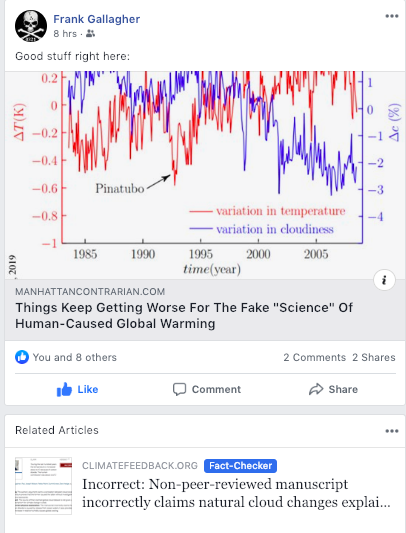
As I was milling this over while procrastinating, I saw a post about Global Warming by my FB buddy and fellow IMOA Frank Gallagher; look what was inserted below it:

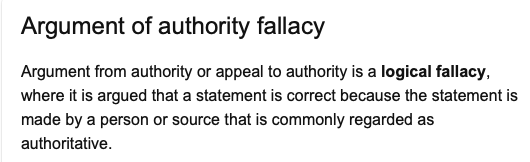
I challenge anyone to go through that climatefeedback.org rebuttal and find one citation that backs their claims in their report. It isn’t easy to decipher their academic speech, but I can summarize their point. It is an argument from authority, and the authorities say that climate change is real, so skepticism is wrong.

The author of Manhattan Contrarian, Francis Menton, is a partner in the Litigation Department and Co-Chair of the Business Litigation Practice Group of Willkie Farr & Gallagher LLP in New York.  Mr. Menton specializes in complex and technical commercial litigation and has a nationwide trial practice. Mr. Menton is not a climate scientist; he is a demonstrably competent man with a passion for analytics and a refusal to be bullied by “experts”. That is a very American trait, which is interesting because what is, or is not, an “American trait” is now a point of bitter partisan debate.

I don’t care what you believe about climate change. I find the argument from authority approach suspect after living through global cooling, the population bomb, the “running out of food” scare,  the  “you can’t drill your way out of energy dependence” fraud, AIDs, bird flu, acid rain, alar on apples, etc… All of these emerging global emergencies proved to be wrong; and not a little wrong; completely wrong.

This is why I self-identify as a “public defense intellectual” during my weekly gig on All Marine Radio with my fellow expert Jeff Kenney. It’s an ironic dig at the pretensions of self-identification validated through ‘lived experiences’. Mac, Jeff, and I aren’t experts on American foreign policy; we are victims of it, which is why our weekly podcast is so popular.

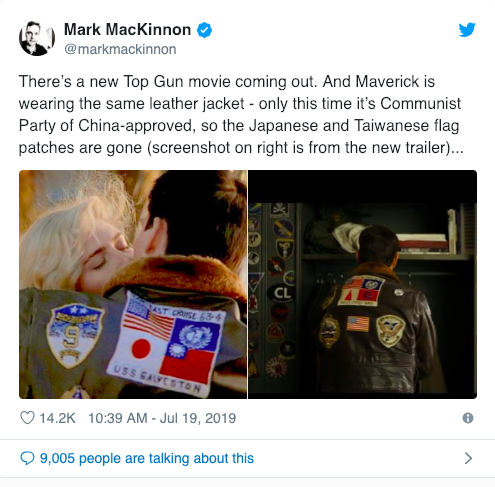
In a perfect trifecta of outrage, I stumbled upon the new trailer for Top Gun II. I even wrote an intemperate comment a friends FB page about the trailer I was so pissed, but it took me hours to figure out why. And it is not just this:

It’s the premise of the movie that I found so offensive. Cruise is a 30-year Maverick who refused promotion like the other corporate shills and stayed in the cockpit. He routinely flies along the southwestern desert mere feet off the deck and keeps his cat-like reflexes sharp with some vertical ascent high-speed, low-drag move used to invert over a Mig. The admirals admonish him saying he should be in command like them, not bumming around navy fighter squadrons for 30 years, but Cruise knows better, he’s a singleton with his creed. Ultimately, he’ll show them all that he, the anti-social, non-conformist, was right and is the true hero.

We have long known that China dictates to Hollywood what is and is not acceptable for new releases, and Hollywood always complies. It does not work the other way around. The newest Chinese hit, Wolf Warrior II, pits elite Chinese Special Operators in Africa battling former US Marines turned corporate mercenaries for some international evil corporation that I assume is not Google.

Top Gun II is not a movie about naval aviators or naval aviation. It’s not about the American military—nonconformists don’t last there, and “mavericks” fly desks, not aircraft, in the American armed forces. It’s not about traditional American military virtue or an accurate reflection of military culture. The Top Gun movie seems to be about Tom Cruise and making big bucks off nostalgia for another reboot.

The character in the Tom Cruise movie is an anti-American; he is used to show that our traditional values, mores, and systems are corrupt. Read this description of Wolf Warrior 2 from the National Review article linked above:

“In Wolf II, China is the only powerful, responsible, and benevolent world power. Chinese workers help Africans build their economy. Chinese doctors work to discover a cure for a deadly endemic. And the film unabashedly takes several swipes at the U.S. When African and Chinese civilians inside a factory are under attack by rebels and mercenaries, the only good American in the movie, Rachel Smith, a Chinese-American volunteer, fanatically tries to contact the U.S. embassy for help. Leng asks her, “Why are you calling the Americans? Where are they? It is a waste of time.” After she tells him that she tried to reach American government by Twitter, Leng responds that “the Americans are good for nothing.”

Why do I care that Hollywood movies bash America just like Chinese movies?

Consider the following propositions:

  • There is no truth, only competing agendas.
  • All Western (and mainly American) claims to moral superiority over Communism/Fascism/Islam are vitiated by the West’s history of racism and colonialism.
  • There are no objective standards by which we may judge one culture to be better than another. Anyone who claims that there are such standards is an evil oppressor.
  • The prosperity of the West is built on the ruthless exploitation of the Third World; therefore, Westerners deserve to be impoverished and miserable.
  • Crime is the fault of society, not the individual criminal. Poor criminals are entitled to what they take. Submitting to criminal predation is more virtuous than resisting it.
  • The poor are victims. Criminals are victims. And only victims are virtuous. Therefore, only the poor and criminals are virtuous. (Rich people can borrow some virtue by identifying with poor people and criminals.)
  • For a virtuous person, violence and war are never justified. Being a victim is always better than fighting or defending oneself. But “oppressed” people are allowed to use violence anyway; they are merely reflecting the evil of their oppressors.
  • When confronted with terror, the only moral course for a Westerner is to apologize for past sins, understand the terrorist’s point of view, and make concessions.

That was a list of objectives from Department V of the old Soviet KGB as distilled by the blogger esr on the Armed and Dangerous blog. He goes on to note:

As I previously observed, if you trace any of these back far enough, you’ll find a Stalinist intellectual at the bottom. (The last two items on the list, for example, came to us courtesy of Frantz Fanon. The fourth item is the Baran-Wallerstein “world system” thesis.) Most were staples of Soviet propaganda at the same time they were being promoted by “progressives” (read: Marxists and the dupes of Marxists) within the Western intelligentsia

What I know is that 50 years ago, on this very day, when I stayed up all day and night with my family to watch Apollo 11 land on the moon; the ideas listed above would have seemed alien, absurd, and repulsive to most people — at best, the beliefs of a nutty left-wing fringe, and at worst instruments of deliberate subversion intended to destroy the American way of life.

Joel Kotkin, in his post Age of Amnesia at Quillette, describes the consequences of progressive policies as they are manifesting today:

Liberals like Cass Sunstein suggest that students raised in an atmosphere of homogeneity “are less likely to get a good education, and faculty members are likely to learn less from one another, if there is a prevailing political orthodoxy.” Yet too few university administrators counter these trends. One college President in Canada, for example, justified efforts to tamp down on “free speech” by arguing that doing so created “better speech.” At many schools, professors are now asked to sign “diversity” pledges that eerily reprise the kind of “loyalty” pledges common during the darkest days of the Cold War. This passion for thought control extends even to comments such as “America is the land of  opportunity” or professing to believe in a colorblind society, views which can now be categorized as punishable “microagressions.”

This ideological rigidity has shaped a generation of progressive activists who also now represent the best educated, whitest,and most politically intolerant portion of the American polity. A common tendency among progressives is to designate certain conversations as “hate speech,” an approach to free speech recently endorsed by the California Democratic Party.

That doesn’t sound like trends that bode well for free people. As a self-identified defense intellectual, I believe that the progressive experiment is creating an enormous backlash that will sweep it into the dustbin of history.

It will not happen soon; potential significant setbacks could derail progress against progressives. I am confident that an important political change is at least six years away, but Trump could lose in 2020. If he does, the promises made by the current field of Democratic candidates will spell doom for their party if attempted. My post at the Freq talks about the last time they did that (Clinton’s first inauguration) and the consequences that followed. Consequences the press did not report on extensively and that are hard to find in search engines today. But the consequences were real, and we now have an internet of reliable sources that are not connected with the media or government. The next time around, burying the story will not work.

Change is coming because the one thing you can take to the bank is that our political system is functioning on borrowed time in its current configuration. Reality is going to introduce this change. Let us hope the lesson it inflicts is not too painful.

Digging for Truth in the Age of Fake News

I have articulated a theory based on two known facts concerning the loss of our newest national hero, Droney McDroneface, to Iran last month. I based my theory on two known facts: the drone shot down was a demonstration model for a program that had been completed. It was, to the Pentagon, an expendable asset, and it was shot down four days after arriving in theater.

To buttress my speculation, I have searched the news for more information about the cyber attack. What I have found is not what I was looking for.

First up is the New York Times, and I have the perfect cartoon to set this up:

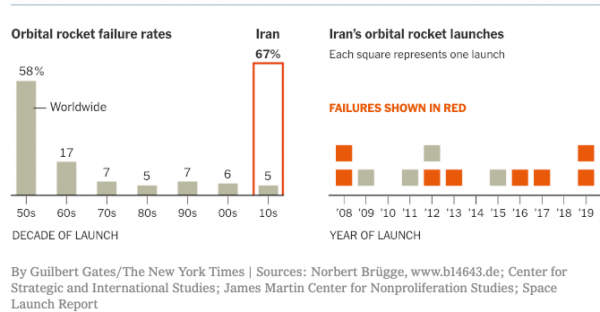
On February 13th, the New York Times published this article: U.S. Revives Secret Program to Sabotage Iranian Missiles and Rockets.  The article was based on the current failure rate of Iranian orbital missile launches as seen in the graphic below:

The article states that the CIA has been running a program for years targeting the supply chain for Iranian missile components. It implied that allies such as Great Britain, France, and Germany are cooperating with us on this program. There is something the observant professional knows to be true, but is rarely written about, and that is the CIA’s use of leaks to disseminate misinformation. I am skeptical when I read a story saying the CIA has gotten dozens of parts manufacturers in Europe (where the CIA is less popular than President Trump) to insert flawed parts into a supply chain.

The CIA’s historical record regarding human intelligence is spotty at best. An intelligence operation involving many different people, firms, governments, and international organizations would be an extraordinary achievement requiring extraordinary evidence to be considered believable.

Who needs to sabotage supply chains when you have Droney McDroneface?Then I noted the insertion of legacy media spin as fact to enhance the story’s believability. Here is an example:

When Mr. Pompeo arrived at the C.I.A., there was relatively little nuclear activity underway in Iran. Most of Tehran’s centrifuges had been dismantled under the 2015 agreement, and 97 percent of the country’s nuclear fuel had been shipped to Russia.

There is not a shred of evidence to back that claim. The United States (and the UN) have no idea where the 8.5 tons of enriched Iranian Uranium, reportedly turned over to Russia, is currently located. Hit this link and you can watch YouTube footage of Ambassador Stephen Mull, the Obama administration’s State Department lead coordinator on Iran, tell the House exactly that back when he was testifying before Congress.

It is becoming increasingly challenging to tease facts from the media narrative.  The New York Times does some excellent, in-depth reporting, but they have often been accused of publishing damaging national security secrets. Everyone in the game knows this, which is another reason to doubt that their sources intentionally reveal real secrets. If I were concerned with information operations for the United States Government, I would establish a reliable back-channel feed to the New York Times. That way, I could get them to print deception pieces when I needed that done. It’s not like it’s hard to get a bite from the press these days; any Orange Man Bad angle will do.

Digging deeper into the mystery of Cyber Warfare, I turned to my Facebook buddy and managing editor of the Lima Charlie website, John Sjoholm, who just published Cyber Warfare Now—Tales From the Digital Battlefield. John is a former Swedish Army Ranger and contractor who I consider a trustworthy source, particularly in the cyber warfare realm.

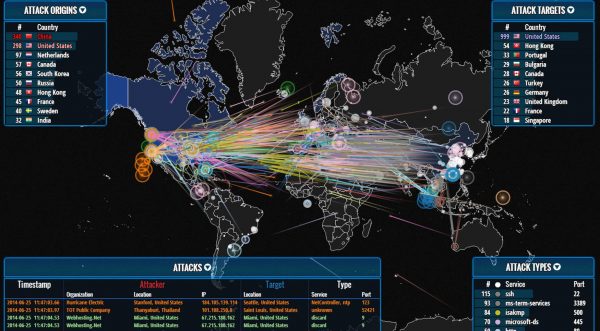
John’s piece had some awesome graphics, like this one. There is some serious evil afoot in cyber warfare.

I was working my way briskly through the piece, thinking it was great stuff, when I ran into this:

One of the premier Russian hacker signatures, Guccifer 2.0 has been tied to the GRU as well. Guccifer 2.0 became known for the so-called “DNC Hack”, the 2016 Democratic National Committee email theft which appeared on Wikileaks.

In March 2018, details from the Mueller investigation leaked attesting that Guccifer 2.0 was in fact a collective of persons working for GRU’s Unit 26165 and Unit 74455. This after server logs revealed that on at least one occasion someone utilising the Guccifer 2.0 persona had failed to activate a Virtual Private Network (VPN) to obfuscate his IP address. It was then revealed to investigators that his connection originated from a computer at the GRU headquarters on Grizodubovoy Street in Moscow.

I don’t know John well enough to know his political leanings, and I acknowledge that the Mueller report may well make this claim. What I also know, for a fact, is that the data breach on the DNC server was an inside job. The data transfer rates were too high. The narrative has always ignored this point, which is how it finds its way into legitimate reporting by guys like John. This is from the website  Knowledge is Good:

The time stamps contained in the released computer files’ metadata establish that, at 6:45 p.m. July 5, 2016, 1,976 megabytes (not megabits) of data were downloaded from the DNC’s server. This took 87 seconds, which means the transfer rate was 22.7 megabytes per second, a speed, according to VIPS, that “is much faster than what is physically possible with a hack.” Such a speed could be accomplished only by direct connection of a portable storage device to the server. Accordingly, VIPS concluded that the DNC data theft was an inside job by someone with physical access to the server.

The truth is that Muller and the FBI never examined the DNC servers and have no idea what was or was not on them. A firm hired by the DNC did the reporting concerning the data breach. I assume whoever included the time stamp did not realize that it invalidated everything that followed regarding “Lucifer 2.0.”. But it did, and it is the one fact that cannot be explained away, so the narrative moves on knowing their story is false, but that you won’t care because Orange Man Bad.

For two years and counting, the American public debate has been focused, by our media and elites, on a story concocted out of thin air, and paid for by the DNC, concerning the legitimacy of our elected President. While that has happened, our economy, stock markets,  and jobs have grown while federal taxes have dropped. North Korea is not launching missiles over Japan or South Korea. Iran’s missile control systems are crippled, the European powers are escorting their tankers through the Persian Gulf, which caused the Iranian President to accuse the United Kingdom of being “scared” of Iran’s military prowess.

Things appear to be on a positive trend, which defies the predictions of imminent doom by our credentialed elites, featured prominently in the recent resignation of the British Ambassador to America. The reason President Trump is so popular with the American people is that he is not a politician or one of the credentialed elite. He is getting things down while pissing off all the right people.

For progressives, virtue signalling has replaced civic virtue. This is how open borders and giving free health care and a college education to any person in the world who wants to come here becomes acceptable rhetoric.

Verified by MonsterInsights