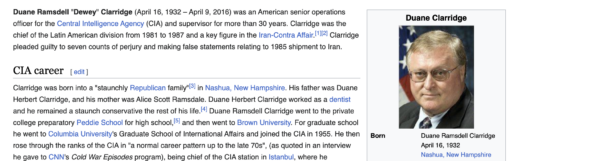
Back when I was working for the Pentagon’s Private Spy Ring, I didn’t take my boss, the legendary Dewey Clarridge, seriously when he ranted that the CIA was worthless. Dewey had been a CIA standout who had gotten into all sorts of mischief during his 33-year career. Want to know how good a spy Dewey was? Look at his Wikipedia page right now, and you’ll see a picture of Michael Furlong, not Dewey. That’s how good he was.
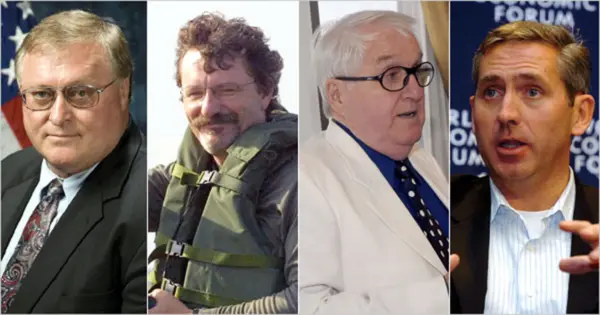
I was thinking about Dewey as I watched the seventh episode of Spy Ops, titled Taliban Spies. It’s a classic example of how the Afghan elites scammed millions of dollars from our gullible CIA. The episode features interviews with four men: CIA case officer Gary Harrington, British journalist Toby Harden, an Afghan interpreter from the Panjshir Valley named Rasul Rasekh, and Dr. John “Brutus” Buffin, the Global Response Force (GRS) team leader who provided security for this operation.
The British journalist provides the master of the obvious (MOTO) commentary, explaining the background in Afghanistan for an audience that knows nothing about our experience in Afghanistan. That may be intentional, as recent Rasmussen polling shows only Democrats under 40 have a favorable opinion of the CIA, so this is playing to their base.
The episode starts with the case officer, Gary Harrington, being introduced to Afghanistan’s Minister of Defense, General Wardak, by his station chief, and then ordered to find ways to help the Afghans with spy magic. General Wardak handed the case officer off to Marshall Fahim, who had been the Minister of Defense until being dismissed the year prior for not being college-educated (a requirement for the Defense Minister under the new Afghan constitution). In the documentary, Fahim is called “General Fahim,” which ignores the Marshal rank awarded him by President Karzai when he was forced out of the defense ministry. One would think the CIA was keen on these nuances of Afghan leadership, proving you don’t get what you pay for from federal agencies.
The interpreter, Rasul Rasekh, like Marshall Fahim and General Wardak, was from the Panjshir Valley, and he describes himself as an “independent contractor.” His English is almost flawless, but from what I can gather, he fought against the Soviets and the Taliban with the Northern Alliance, so I’m not sure where he picked up the language skills. He claims to have provided expert knowledge of tribal dynamics, which is, again, a dubious contention. The average Panjshiri knew very little about the Pashtun tribes and was about as welcome in their lands as we were. How he gained any insight or expert knowledge about the Pashtuns is never explained, but it was clear he knew both Fahim and Wardak well, which was key to pulling off this scam off.
Fahim sets up a meeting with the secret agent and a “Taliban Mullah” who was not a combatant but one who sent suicide bombers to Kabul from Pakistan. What self-respecting Taliban “Mullah” is going to walk into the American embassy in broad daylight? Not one who wants to survive his return to the Taliban – it’s not like they and about 13 other international spy agencies weren’t watching the embassy like hawks, noting every Afghan who walked into the secure area. But ignore that as the tale gets weird quickly when the secret agent describes the death-defying risks of walking out of the pedestrian gate to meet his alleged Taliban recruit out in the open, surrounded by unvetted Afghans.
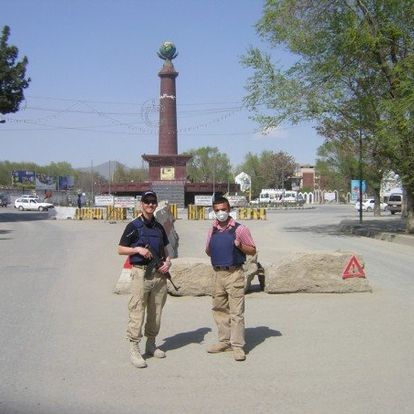
As the agent clears the embassy gate, he claims to look left and spot two sketchy-looking dudes parked in a black Toyota Corolla, which is improbable. When you walk out of the embassy pedestrian gate onto Massoud Circle, the circle is off to the left, and nobody stops there. The agent goes on to claim the same vehicle blew up an SUV full of American soldiers, which is highly unlikely. The VBIED entered Massoud Circle well ahead of the target vehicle, a white B7 SUV, and went around the circle for a head-on attack. I never heard of a VBIED that contained two terrorists, although I guess a handler could have been in the vehicle before an attack.
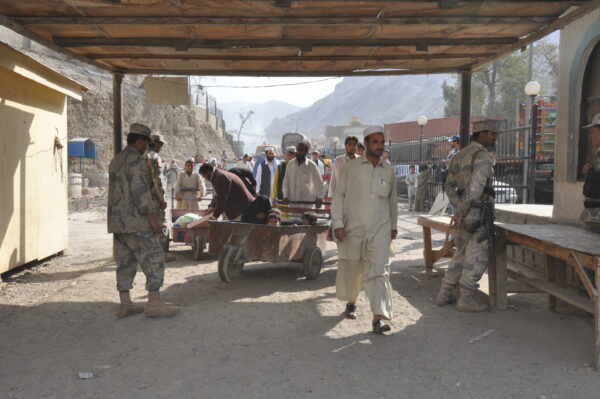
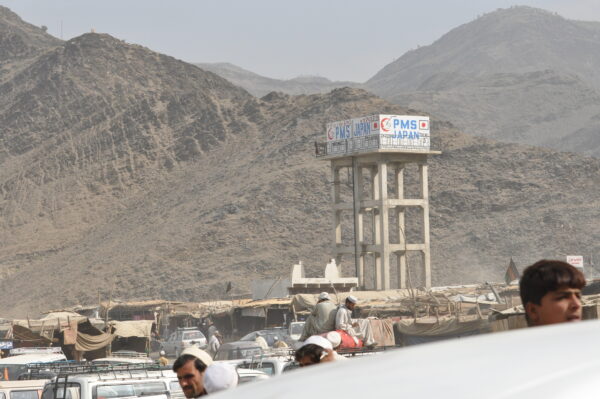
The Mullah claims to have 29 Taliban fighters in Pakistan willing to cross the border to talk with the CIA. All the CIA needs to do is drive down to the Torkham border and pick them up. But they can’t use the regular border crossing because they’re Taliban, so they use a “wadi” next to the crossing that is also heavily trafficked. I know exactly what he’s talking about, and he’s correct that people using that crossing were not going through customs, but they were paying, on both sides of the border, for the privilege of crossing there, and the fees were steep.
The CIA agent then asks Dr. Brutus to help with security, and he gets a lot of airtime explaining the dangers of this meeting. To mitigate the potential for disaster, the 29 “Taliban” are instructed to approach the CIA agent, standing next to Marshal Fahim, one at a time, so the agent could give them a 3-kiss-and-hug that would allow a quick search for weapons or a suicide vest. This is another ridiculous contention that defies easy explanation. As the agent himself notes, Fahim had worked with and knew the Haqqanis, and it is inconceivable that he would expose himself to one of their suicide bombers at a border crossing they controlled.
The CIA would learn in 2009 at Camp Chapman the folly of not searching cooperating bad guys before letting them near anyone important. Marshal Fahim’s mentor, former President Rabbani, was killed in his home by a suicide bomber who had secreted a bomb inside a turban, so letting one near you is less than optimal. Having a half-dozen GRS shooters with you is rather pointless if you’re not going to use them, along with Marshall Fahim’s militiamen, to do basic tasks like screening Taliban defectors. One explanation (and the most likely) is that the “Taliban” had already been screened and were working for Marshall Fahim.
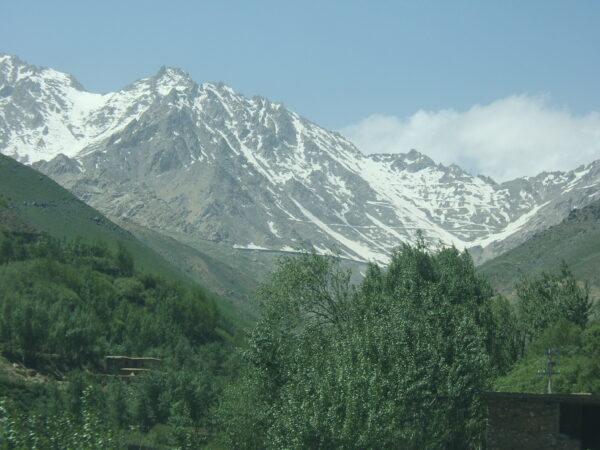
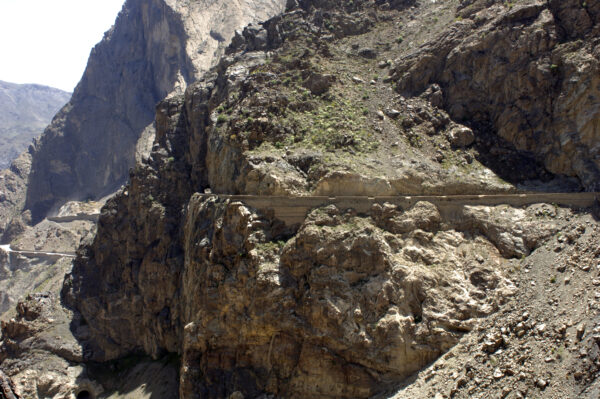
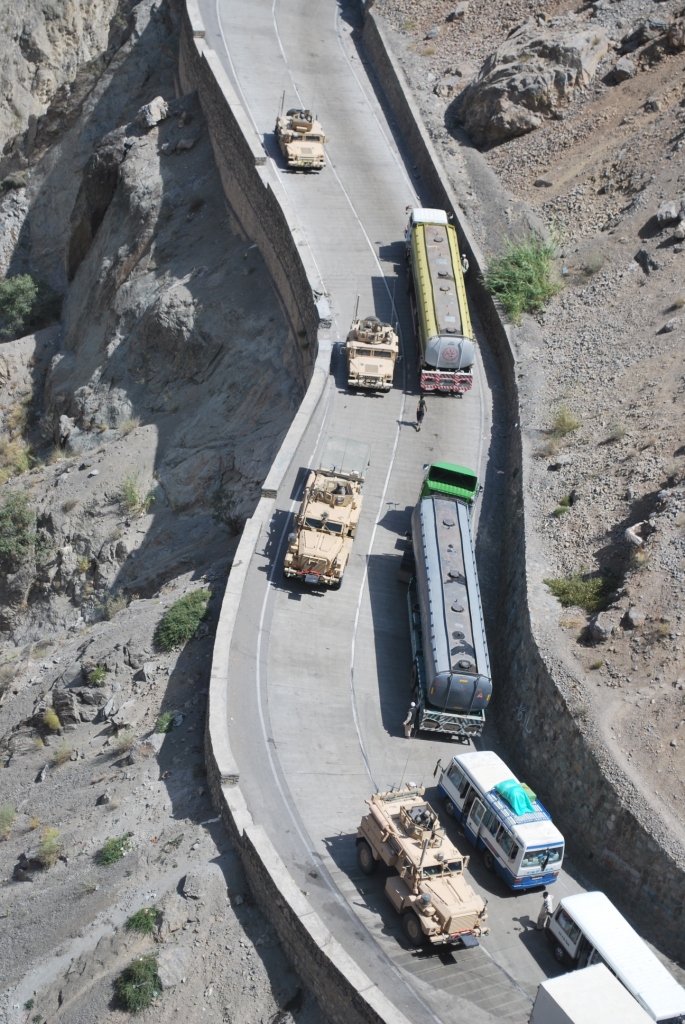
Next, we are given a detailed description of the dangerous 3-hour drive between Jalalabad and Kabul. That drive, in September 2006, took a little over an hour because the road had just been paved that summer, but never mind. Although there are plenty of hairpin turns in the Kabul Gorge portion of the drive, they aren’t dangerous. Driving through the Salang Pass was dangerous. To prove that point, the B-roll shown during the description of the hazards of the Jbad to Kabul road was clearly filmed in the Salang Pass.
Next up in this harrowing adventure was what to do with the 29 “Taliban” once they got to Kabul, where the CIA has no safe houses. They call General Wardak, who is reportedly furious but finds them a nice, giant compound in the posh Sheri-e Naw neighborhood with a basement large enough to hide 29 Taliban. The CIA interviews all these dudes and selects six they think they can work with, sending the rest back with some cash and a promise not to fight in Afghanistan with the Taliban. The rest of this stupid story is nonsense about meeting Taliban suicide bombers over the ensuing years and impressing them because the Secret Agent man is a good dude or something. At this point in the program, it was difficult for me to pay close attention because I was yelling at the TV.
It is profoundly disturbing to watch our government whitewash history to make the incompetent appear competent, but that is exactly what this show depicts. Every part of that operation was controlled by two men, Wardak and Fahim, who were clearly making money off the gullible CIA. Where did they get the bus to transport 29 “Taliban”? How about the guards who watched the Taliban? Who paid for the massive compound that housed the Taliban? Who paid for the cooks and food to feed all these people? Who paid to outfit the giant compound? They needed to furnish the entire house, too, including the rooms used by the CIA-sponsored GRS guards, and that wasn’t cheap.
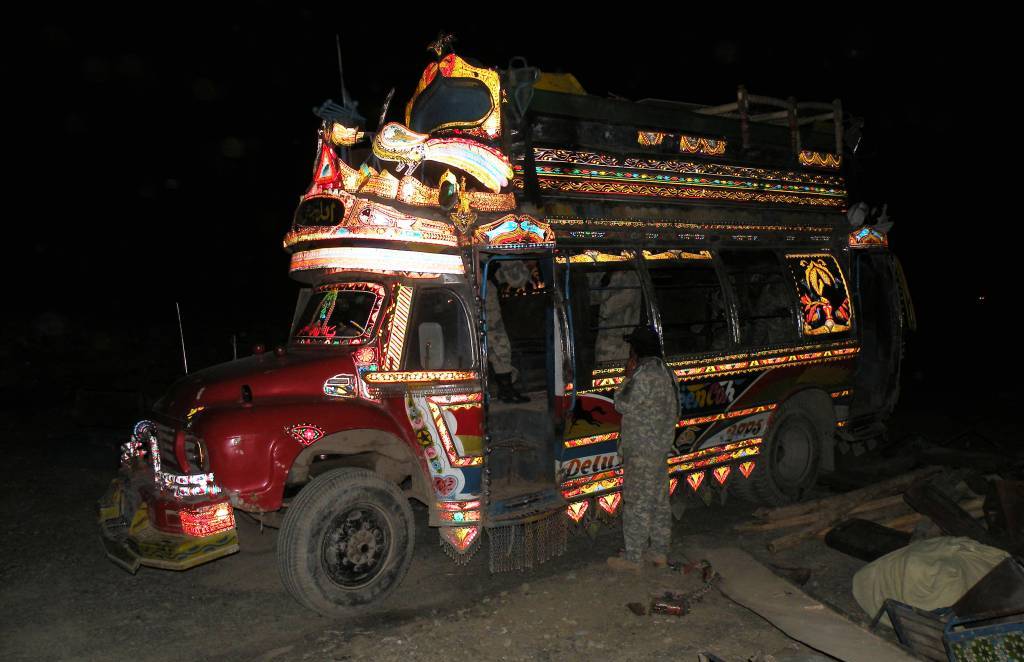
The CIA ran this operation for at least two years, paying their “Taliban” spies the whole time and, in return, receiving nuggets of intelligence, including the famous bus full of explosives that was busted at the Torkham border. I remember that bust because the claim that it contained IED explosives was preposterous. As you can see in the picture below, that bus was full of commercial explosives that were far too valuable for ongoing road and bridge reconstruction and for gemstone mining. There is no way it would have been used for IEDs.
Importing commercial-grade explosives into Afghanistan was next to impossible due to the State Department’s arcane rules, so construction companies paid top dollar for explosives provided by their connected fixers. The 2008 bus bust wasn‘t a counterterrorism operation; it was a business transaction.
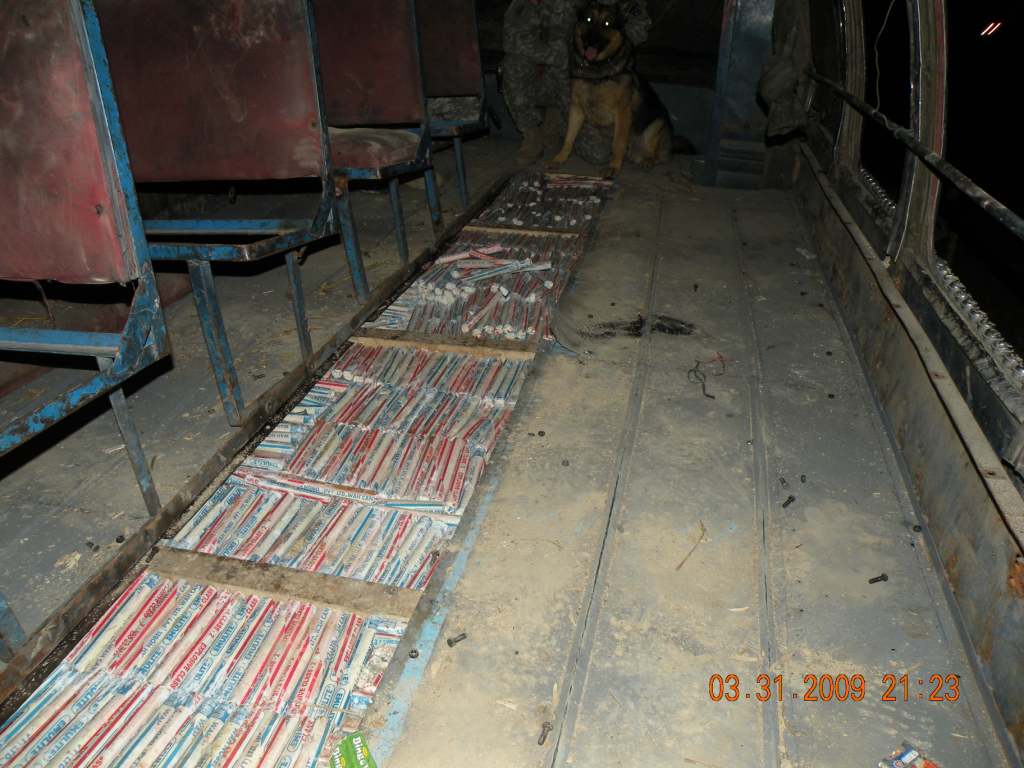
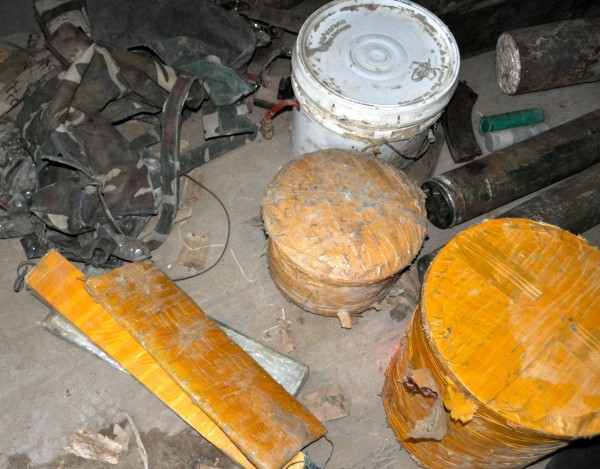
Who do you think gained custody of all that Emulite? My guess would be Marshal Fahim, who spent his years out of power (2004-2009) doing warlord shit like kidnapping people for ransom and smuggling fungible commodities such as wood, gemstones, and commercial-grade explosives. In 2009, President Karzai selected Fahim as his Vice President despite loud, boisterous bitching from international politicos that Fahim was clearly an unrepentant warlord. He was a powerful warlord who could deliver votes from the Northern provinces because he ran a disciplined criminal organization.
The Spy Ops propaganda fest would be funny if not for the fact that the joke was on us.