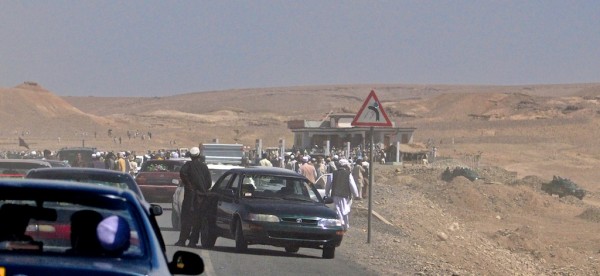
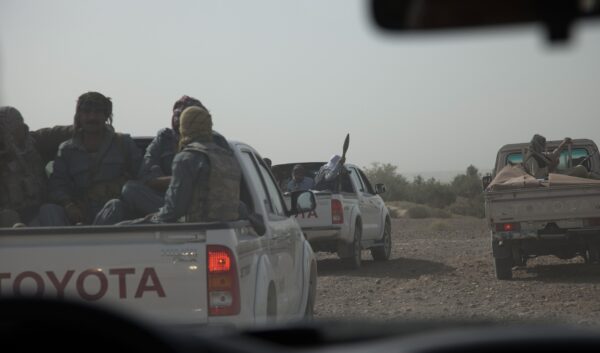
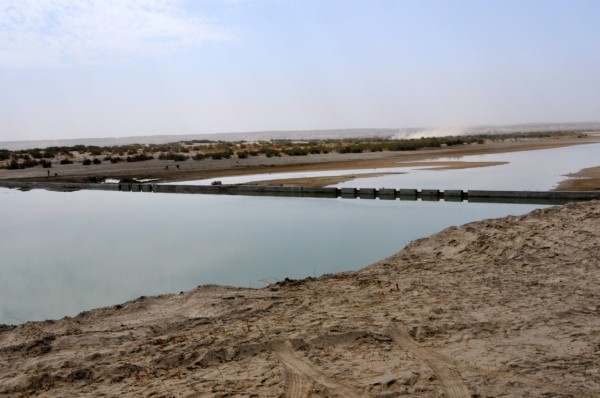
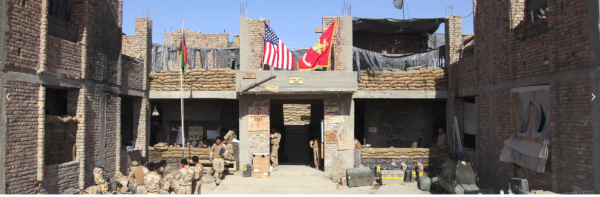
Early in the 2010 fighting season the vital Torkham – Jalalabad road corridor was suddenly beset with frequent rioting that closed it for days at a time. The Provincial government blamed insurgent attacks for the instability which seemed dubious as insurgent attacks don’t generate large scale rioting. JSOC night raids could cause a few days of agitated rock throwing but there had been none reported astride Route 1 between Jalalabad and Torkham. There was enough confusion about what was happening on the ground that one of our guests at the Taj thought we should go explore the situation. She convinced my Afghan buddy JD and I to escort her down Route 1 to the village of Amanullah Khan to witness a peace shura between the Provincial government and the rioting villagers.
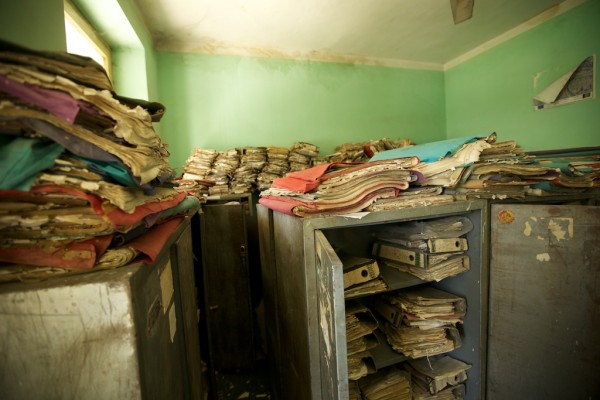
This is a 2010 photograph of the land title storage room in the Nangarhar Provincial Agriculture Department. Some of these papers date back hundreds of years and fall apart if you touch them. They are not cataloged or organized.
The road between the Torkham border and Jalalabad is flat farmland dotted with a series of villages and towns. Attacks along that road were rare and confined to random IED strikes targeting ISAF vehicles around Jalalabad. Insurgent operations were not possible without the tacit support of local civic leaders and those living along Route 1 were interested in commerce. The only useful service the Taliban provided back then was fair and impartial land deed adjudication. That was shrewd on their part because land was always the source of friction between the people and provincial authorities.
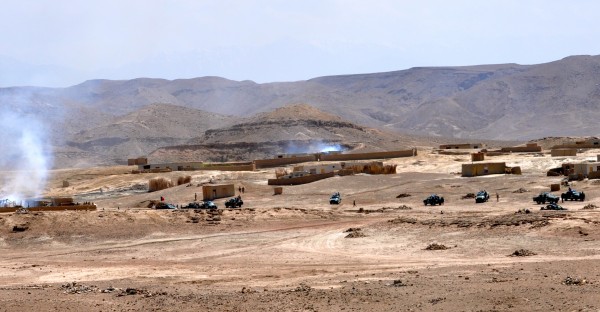
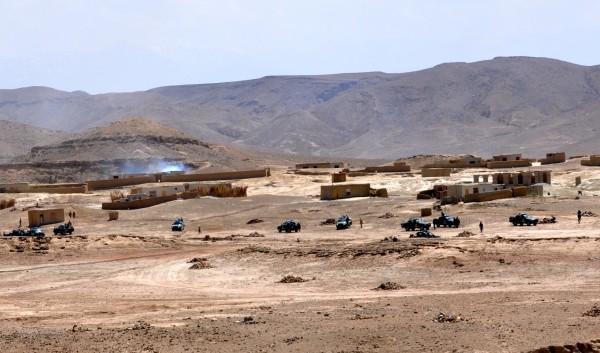
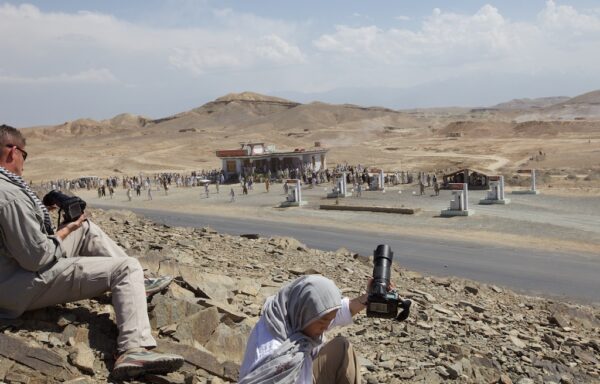
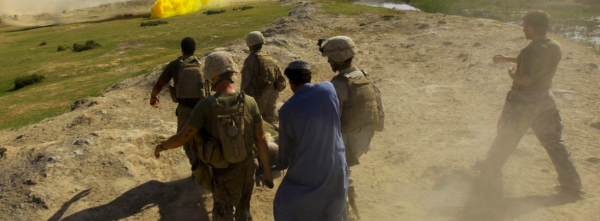
This is township of Amanullah Khan in Rodat district – the smoke is from the homes that have been set on fire by the Afghan National Police (ANP). The ANP vehicles in the valley have just arrived in response to intermittent rifle fire from the hills to the left.
The riots along Route 1 erupted after Gul Agha Sherzai, the Nangarhar Provincial Governor, dispatched a construction company to build a village to be named in his honor astride route 1 in Rodat district. The Governor liked to build things named in his honor and had a special “reconstruction tax” levied at the Torkham border to fund those projects. Before the governor could start building his village he had to eject the current residents who he claimed were squatting on government land. The rioting froze hundreds of trucks in place causing a big kink in ISAF logistics so a shura was called to settle the matter.
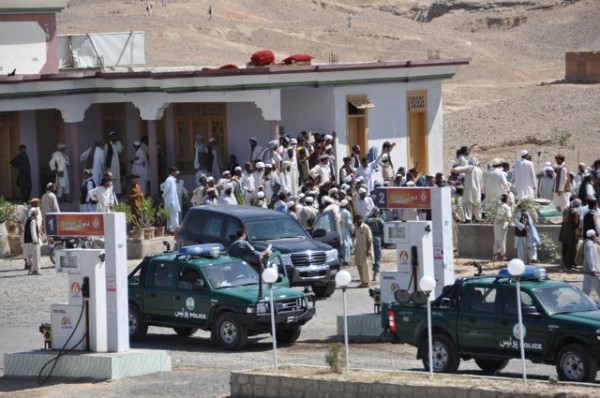
A member of the Provincial Council and ANP escort work the crowd to try and prevent rioting. As this picture was taken heavy firing broke out in the valley below
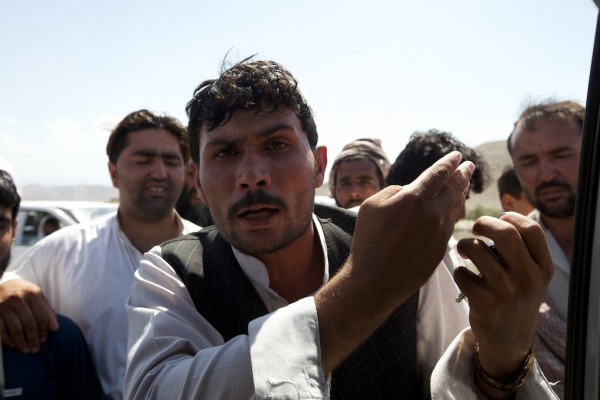
The crowd turned hostile as the shooting started to pick up in volume and intensity resulting in the local councilman and his escort beating a hasty retreat
Hard to tell from this photo but there was a bunch of firing going on – most of it coming from the ANP shooting towards the hills to the left.
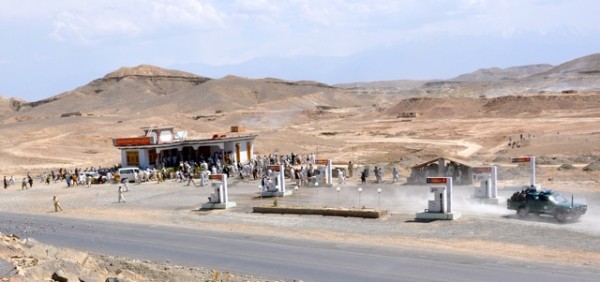
Rioting here can get out of hand quickly and the crowd at the gas station shura went high order fast.
This incident was an illustration of why our efforts in Afghanistan were doomed from the start. Conventional wisdom at the time was the US State Department was actively supporting the central government, while the US military and American intelligence services were actively supporting local warlords who supplanted central government influence. President Karzai and the UN bitched about this dynamic constantly. But it was President Karzai who put warlords like Sherzai in positions of influence. In Sherzai’s case he was given the lucrative province of Nangarhar governor specifically to remove him as a competitor to Karzai’s empire of graft and thievery in Kandahar.
Once the local officials fled the scene the shooters in the crowd turned their attention to us and started to pepper the hill with small arms fire causing us to scramble for our truck and bolt. To my right is Engineer Sun from MIT (her Afghan name) who had a knack for sniffing out dangerous trips and then conning me or JD or Baba Ken into to taking her on them.
Gul Agha Sherzai was a major Kandahri warlord who was the Governor of Kandahar Province before the Taliban took over and he was the first warlord to return (with an American Army Special Forces team) to Kandahar in 2001. President Karzai gave Sherzai the governorship of Nangarhar province knowing full well he would usurp land, initiate illegal taxation, and amass a personal fortune from American reconstruction funds because that was exactly what his brother was doing in Kandahar.
On our way home the locals massing behind the police lines insisted on telling us about getting screwed over by their governor.
The appointment of Sherzai to governor sidelined the Arsala Family and other provincial powerbrokers but Sherzai was generous enough to ensure the old families were financially rewarded. The Arsalas had governed Nangarhar Province last two decades with Haji Qader Arsalas , in the position of governor before the Taliban regime, and his elder brother Haji Din Mohammad, appointed governor under the Karzai government, a position he held until 2004. Haji Din Mohammad is the only survivor of the once powerful clan. His younger brother Abdul Haq was killed fighting the Taliban in 2001 and his other younger brother Haji Abdul Qader was murdered in Kabul by a gunmen in 2002, while serving as a minister in the interim government.
Governor Sharzai’s attempt to expel the villagers of Amanullah Khan during the summer of 2010 failed. In 2013 he approved the sale of more than 1000 jeribs (around 500 acres) of pasture land in Rodat district long used by local Mohmand tribesmen to Logar Province ‘businessman’ Ghulam Mohammad Charkhi. That pissed the locals off but the straw that broke the camels back for Governor Sherzai were the shenanigans of the Arsalas clan.
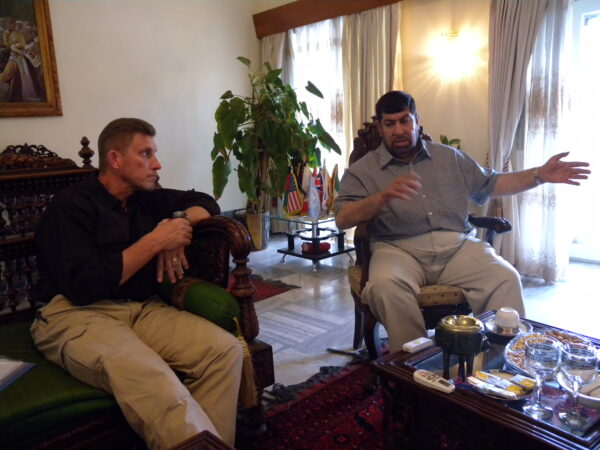
Governor Sherzai and I talking business back in the early days when he was adapt at ‘trimming the tree’ with local powerbrokers and popular with the voters.
Zahir Qadeer, a Member of Parliament and the son of Haji Abdul Qader, sold hundreds of acres of government land in Sorkhrud district to various families who were enraged to find out they had been bilked into buying government land they could never develop. He told the investors they would receive land plots in a residential project he was developing near Jalalabad called Zaher Qader Township. A move that seem to make the situation worse. The ensuing 2013 riots cut every route into Jalalabad City and by October of that year Gul Agha Sherzai was forced out of office.
Now that the Taliban are back in charge Route 1 is no longer dangerous. Land grabs require money and the Tsunami of money that flooded into Afghanistan for the past 20 years has dried up. Land adjudication is done in Taliban courts according to Sharia law, a harsh code that tolerates zero arguments once a decision has been made. The people may not be happy under the Taliban but at least their main highways are safe, something we could never accomplished in a thousand years.
There are three ways to tour the Khyber Pass; you can apply for permit and if granted then pay for a soldier to escort you through the pass, If you’re a VIP there are no fees and you get lots of escorts, special presentations at the forts, and lunch at the Khyber Rifles Officer Club, and if you’re really clever (or stupid) you can sneak through the pass dressed like a local and hope none of the roadblocks spot you. I’ve traversed the pass a half dozen times using all three methods. The VIP tour was the most enjoyable, the food on my non VIP tour with a bunch of Afridi “businessmen” was the best, and trying to sneak back through the Pass unescorted the most exciting.
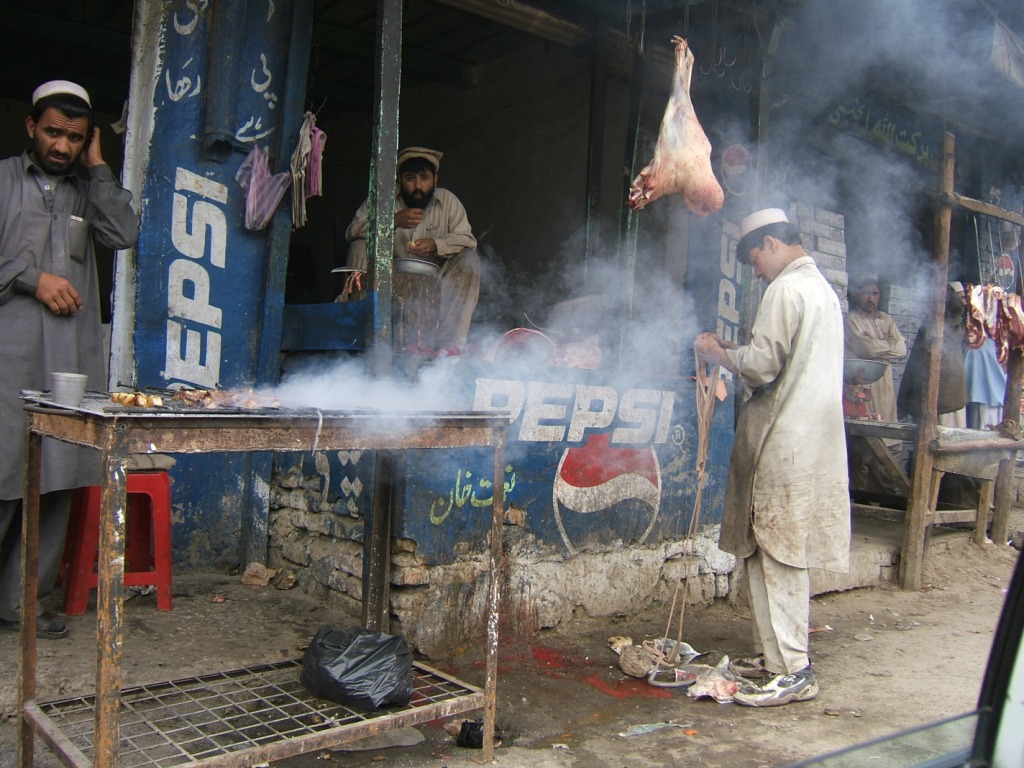
My first trip through the Khyber Pass was in 2006 when my friend Yahya Sayeed and I flew into Islamabad, got a cheap hotel and spent the afternoon shopping for shalwar kameez (local clothes) and booze for our hosts before taking a taxi to Peshawar the next day. Alcohol may be frowned upon by Islam but that has not stopped Pakistan from producing Vat 69 scotch in Rawalpindi and Cossack Vodka in Quetta, but both are vile. When we arrived in Peshawar we got a room in a modest motel across the street from a Kentucky Fried Chicken shop before a couple of stout, serious looking men showed up to take me on a tour of the world famous Qissa Khawani Bazaar.
My new bodyguards were the advance party of the Afridi clan and were there to look after me given that this was Peshawar, home to the Peshawar Taliban Shura. The famous bazaar was large and looked to me like a large Afghan bazaar with the gold souk from Dubai attached. It had plenty of big buildings built on narrow pockmarked streets with narrow brown water drainage ditches on both sides. I was as little taller than my escorts and deeply tanned at the time, but easily recognizable to the merchants who would greet me in English or Russian. I had not yet learned how easily a western gait was spotted in Central Asia. I guess if one were supple enough to squat comfortably on their heels they’re gait wouldn’t be so distinctive but I can’t do that so I stuck out like a sore thumb whenever I was on foot.
Touring the Qissa Khawani Bazaar with escort
A few hours after we returned from the bazar the main body of the Afridi’s showed up heavily armed, but friendly. I thought Yahya had told them I was a retired Marine and interested in touring famous battlefields, to explain our interest in the pass but I was wrong. The Afridi’s didn’t know anything about the American military, and they had never heard of the United States Marine Corps. They were hoping I could help them out with a business problem but first had to determine if I could be trusted. They asked why I was spending my leave time in Pakistan instead of going back home, so I explained that I had to spend 11 out of 12 months outside the USA to get an overseas tax exemption, and that my second wife was a total bitch, so I had no desire to rush home.
Avoiding taxes and having an unpleasant wife who made hanging out in the family compound a misery were problems Afridi’s understood. They spent the next hour extolling the virtues of tax avoidance and discussing effective methods for dealing with nagging wives. They then shared a business problem they needed help with; would it be possible for me to sell some beer on their behalf? Apparently a truck load Heineken had mysteriously showed up and they needed to monetize it. This was the start of my lucrative side gig as a rumrunner.
My new business partners (from the much-respected Adam Khel clan) were, with one exception, carrying bizarrely modified rifles built from AK-47 platforms. The senior guy had a legit Russian AKS 74U identical to the one carried by Osama bin Laden, but the others had custom furniture or parts added to make them look like MP-5’s or M4 rifles. Only the 74U had sights on it so I got the impression these rifles were for show. The Afridi’s, who have been living in the Khyber Pass area for centuries, are allowed (and expected) to be armed even when visiting Peshawar which is a nice, clean, modern city.
Once we had our four-car convoy organized we took off for the Northwest Frontier border at a rather high rate of speed. I looked at Yahya who smiled serenely and said something like “these guys are crazy so get used to it”. Approaching the Bab-e-Khyber gate our convoy barely slowed as the guards waved us through without inspection. We then pulled off the main road onto a dirt track for a few hundred meters and stopped in front of some small, ugly, square cinderblock rooms that functioned as Pashtun roadhouses. They served only Vat 69 Scotch, which tasted like shit. We had three toasts, including one to President Bush, the Afridi’s test fired their guns, because they could (I guess), and we were off into the Khyber.
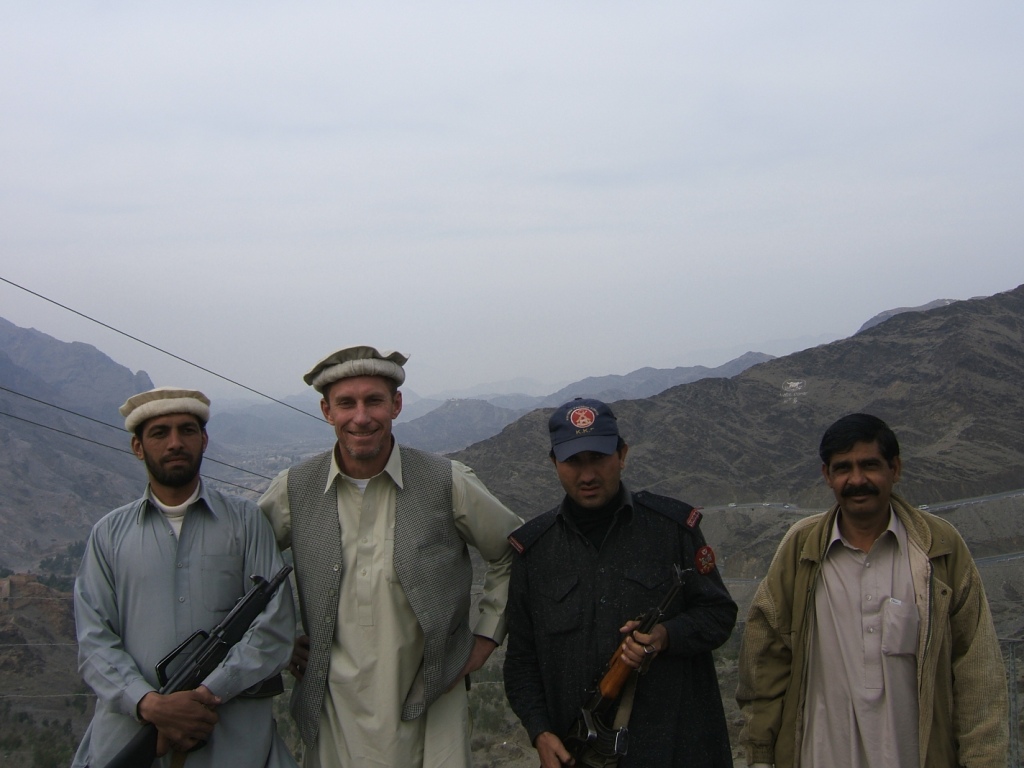
Outside Michni Fort on the non VIP tour with the Afridi’s
The pass climbs for several miles until reaching the Shagai Fort, built by the British in 1927 and currently home to the Khyber Rifles. It’s massive but closed to the public so after taking pictures we moved on traveling next to the old, abandoned Khyber railroad as the pass narrowed when approaching the Ali Masjid fort. That too is not open to the public, so we pushed on through the town of Landi Kotel, to the Michni Post, a fort that looks over the valley leading into Afghanistan at the Torkham border. After taking pictures and looking around we doubled back to Landi Kotel for lunch. We pulled up to a dodgy looking place amid the bazaar and there was a teen aged boy out front squeezing the contents out of the guts of a goat he just butchered. I looked at Yahya with trepidation, but he assured me the food would be excellent. We sat on a cushioned, raised platform inside a small filthy hovel and the food, goat kabab and Kabuli Palau. The food was delicious and caused no abdominal distress which, at the time, I thought a miracle.
The Afridi’s claim this is the best kabob stand in Landi Kotal. I was dubious about this claim to put it mildly
My only disappointment with the first trip was not stopping in the town of Darra Adam Khel a one-road town inside the Khyber Agency that is lined with gunsmiths and famous for fixing, making, and selling military grade rifles, pistols and machineguns. The Afridi’s told us that showing up there with an American would be a problem.
The difference between experiencing the Khyber Pass with the low rent, but beer rich Afridi’s and the upper caste Afridi elite was night and day. My next trip through the Khyber was in 2007 when I escorted the head of the Japan International Cooperation Agency (the USAID of Japan) through the pass to Islamabad. The head of mission had senior diplomatic status, so he received the VIP Khyber tour which was spectacular. That trip started on the Afghan side of the border, we had driven to the Torkham gate from Kabul escorted by my usual team of gunmen from the Panjshir.
Once we reached the Torkham gate I coordinated with the American army Military Policemen (MP’s) stationed there to get the JICA SUV expedited across the border. before surrendering my weapons to my Afghan crew and finished the trip unarmed. On the Pakistan side of the border we were taken into the VIP area which had a large buffet of food that the Japanese wisely ignored. We picked up an escort with motorcycle outriders and three pickup trucks full of riflemen. The lead truck had a machinegun attached over the cab with bungee cords and the gunner was wearing a motorcycle helmet which looked peculiar but was not doubt effective at keeping the wind out of his eyes.
With sirens wailing we drove up to the Michni Post for our first VIP event, a lecture about the history of the Khyber Pass by the Khyber Rifles a.k.a “Guardians of the Khyber”. The presentation room had glass walls allowing an impressive unobstructed view of the Afghanistan border. There four prominent mountain peaks marking the Afghanistan border have large white numbers (1 through 4) painted on them and are used as target reference points during the presentation. The major from the Khyber Rifles had an impeccable upper-class British accent, and had gone to university in the United Kingdom. He gave a brief history of the pass and explained the extensive counter battery battle they had fought back when the Soviet Union was warring in Afghanistan. There were many missile and artillery shrapnel pieces (all painted blue) and a few captured soviet artillery pieces on display just outside the fort to augment the presentation.
VIP briefing room. The Khyber Rifles have a first rate presentation on their role and mission
On on either side of the glass walls were pictures of famous people who had toured the fort in the past. Princess Di, Jackie Kennedy, Queen Elizabeth and Prince Phillip, Margaret Thatcher, the former Shah of Iran, and Princess Ann were there along with dozens of famous people from other countries. I noted a table full of sweets and fruits was set up at the Post just as it had been at the border so after the presentation, I munched on finger food and took pictures. We then headed for the home of a Pakistani physician/diplomat Dr. Afridi (a common last name in the Khyber Agency) who had served on the Pakistan’s delegation to Tokyo. We had lunch with Dr Afridi which my JICA clients barely touched before heading to the Ali Masjid fort, home of the Khyber Rifles Officer’s Club for another official presentation and buffet.
Entrance to the Khyber Rifles O club
The Khyber Rifles Officer Club has a treasure trove of fascinating military artifacts. Outside the club there is an ancient tree that was placed in chains back in 1898. The tree was arrested one Saturday evening by Captain James Quid who after stumbling out of the O Club noticed the tree was moving wildly and he suspected it was trying to leave the post without orders. He ordered the mess sergeant to arrest the tree and place it in chains so it could not escape, which the sergeant did. The chains remain in place to this day, protected by fencing and with a plaque explaining its history in English.
The tree arrested and placed in irons for attempting to go UA in 1927
Being a diplomat is difficult because everywhere you go people prepare local delicacies, they expect you to sample. Three lunches in one day were more than anyone can handle which was why my Japanese clients were adept at sampling a lot but consuming very little. Diplomats need to know that kind of stuff and I sure wished one of them had told me because I was slow to catch on and uncomfortably full by the time we left the pass.
My last trip through the Khyber was to take a physician from Jalalabad to Peshawar where he was scheduled to attend a medial conference. This was in 2010 when the area between Shagai Fort and Landi Kotal was experiencing serious feuding between the beer drinking Afridi’s and Jihadi inclined Shinwaris and both sides were battling the Pakistani army too.
We went on a Friday because if there was one day you could sneak around and not get caught because it was Islam’s day off. It is also the day the faithful swarm popular mosques for the weekly Juma mid-morning prayer and the mosque in Landi Kotel was so popular hundreds of the faithful, many armed to the teeth, were blocking the road as they bowed in supplication.
You see these unit plaques throughout the Khyber Pass
Our taxi driver was freaking out as we stopped well short of the crowd and waited for the Juma prayers to end. We made no more stops, but I took lots of pictures of battle damaged compounds. Every large compound had armed men stationed outside in sangers and from casual observation it appeared the arms dealers in Darra Adam Khel were having an RPG clearance sale. Hundreds had been fired at some of the compounds and that takes some time to do.
We got to Peshawar and I dropped off my colleague and then attempted to go right back through the Khyber without a tribal pass which would take a day to obtain. I sat in the back of the little Toyota cab and made it all the way to Landi Kotal before a sharp-eyed sentry manning a roadblock spotted me and yelled “Foriengee” before raising his rifle to stop the taxi and inviting me to parlay. The sentry was not interested in trying to decipher my crude attempts at Dari, a language he probably didn’t understand anyway, so he jumped into the cab, and we drove back to Peshawar.
We arrived at the tribal police headquarters where I explained to the officer of the day, who spoke English, that I was unaware I needed a different permit to travel back to Afghanistan. I was released and told to report back in the morning for a proper permit. I stepped out into the teaming streets of Peshawar, switched the sim cards to my Pakistan cell number and summoned aid before walking to the City View motel to go to ground for the night. It was a long night but in the end I made it back through without further delay. When I first traversed the pass I found it enchanting; it was easy to imagine what it looked like when Tammerlane was invading the subcontinent, but after a few trips the pass lost its charm but it would be cool to again some day . . . inshallah.
The Secret Gate is one of the best books of the year which is easily confirmed by noting its absence on any of the New York Times bestseller lists. I heard about this book from my father who was told about it by the wife of a friend, and she heard about it from one her grandchildren. How many word of mouth referrals do you think the current #1 in the NYT combined Print and E Book nonfiction list, Oath and Honor by Liz Cheney has generated this year? The question answers itself so let’s talk about the next book you’ll want to pick up knowing you won’t be able to put it down.
The Secret Gate is about the rescue, at the last possible minute, of an Afghan woman and her son by a young American diplomat using a secret gate that the CIA opened to bring in their Afghans. I’ve worked at both the Baghdad and Kabul American embassies which allowed me to take the measure of young diplomats like Sam Aronson the hero in this story, and as a rule, I don’t like them. I found indecisive paralysis of Homeira Qaderi, a celebrated author, academic, and woman rights activist distasteful. Her inability to make sound decisions in the face of existential danger is a character flaw in my book but her resolute determination to ignore reality in the face of intense international pressure from all the right people does contribute to the tension in the story.
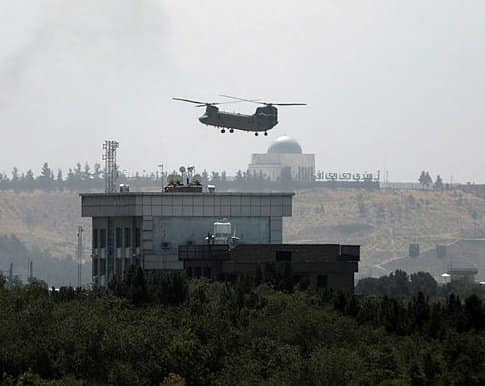
The calm before the storm: this was the entrance to the Kabul American Embassy in the spring of 2005. Within a year these guys were behind 20 foot T walls .
And then there was the secret gate which I understand (this is not in the book) was guarded by Unit 02, the Nangarhar province CIA counter-terrorism pursuit team who arrested me once and were dicks about it. Every character in this book, from the “calm professional” ambassador to the lethargic DSS agents would normally irritate the shit out of me but I couldn’t put the book down and was sorry to reach the end. This story, intentional or not, captured the consequences when the media/government/academic approved narrative collides with cold, hard reality.
The tale opens on August 2nd, 2021, with a chapter about what Homeira and family were up to that day followed by a chapter about Sam’s day which started out rough because he was hung over. As the alternating chapters progress we learn more about the Qaderi family (Homeira’s father is awesome) and we learn about Sam. He, like most diplomats, comes from a wealthy family, and he traveled a bit in his youth which exposed him to the diplomatic service because his Dad worked for the NBA and diplomats love free NBA tickets. But there is an anomaly in young Sam’s background. At the age of 15 he got the EMT bug and by the end of High School he was a member of two different volunteer ambulance corps, racing a ½ mile to the closest station on foot from his High School when a call came in.
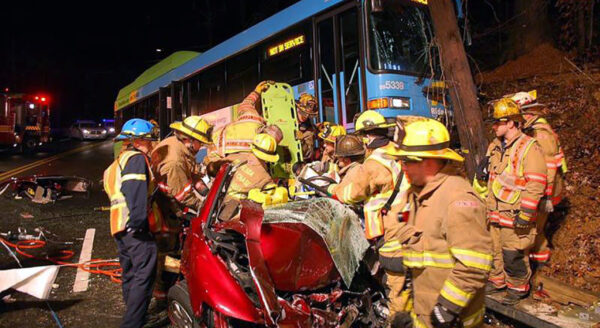
It is my lived experience that the best children of our wealthy elites will earn an EMT license and find their way into volunteer rescue squad work. I base this on my time with the Bethesda Chevy Chase Rescue Squad where a healthy percentage of the volunteers came from wealthy, and in some cases, powerful DC families. I started to like Sam when I read about his unique background.
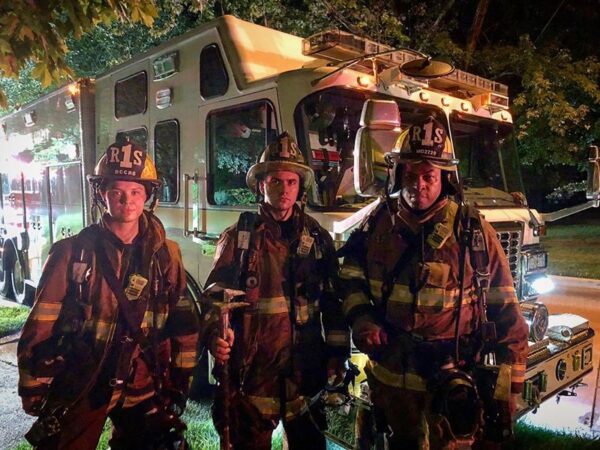
Young Bethesda dandies dressed for a night of excitement in the big city. These guys have additional firefighter training so they can man Rescue 1 – which in my day was Rescue 19 – a squad truck with all the heavy rescue equipment that operates like a ladder company on big calls. Working Rescue 19 was the most fun a young man could have with his pants on in D.C..
The backstory covers Sam’s progression from Diplomatic Security Specialist to junior diplomat and way too much of that tale concerns COVID 19. We hear about Sam’s efforts to “sneak in” vaccines for the embassy staff in some African dump. It appears both Sam and the author, Mitchell Zuckoff, think it normal for senior bureaucrats to displace to their summer coastal bungalows to isolate after of positive COVID test. No doubt drawing daily per diem too and this is in 2021 long after it was obvious that COVID was little more than a bad cold bug and the vaccines worthless. But by the time Sam hits Kabul all the concerns about COVID became OBE (overcome by events in military parlance) and we (thankfully) never hear of it again.
Sam’s first decision of the crisis is to allow a woman who threw her child over the wall to be processed for a flight out. That was explicitly against that days iteration of evacuation guidance which Sam doesn’t know because, to be honest, he barley even knows where Afghanistan is on a map. But he catches on quick and within hours he’s ejecting desperate Afghans by the dozens.
The constant pressure of making literal life and death decisions about Afghans is hard on Sam as it well should be given his total ignorance of Afghanistan and her people. Sam starts to chain smoke, bumming cigarettes from interpreters (Terps) or the troops working near him, a move so typical it is a cliché. As the story progresses Sam finds his own Terp named Asad who despite getting his parents and siblings into the evacuation que, will not leave Kabul without his sister and her family. He intends to help where he can until talking his sister into another attempt to get into the airport.
On the 25th of August, with just four days left in the evacuation Sam and Asad find themselves assigned to the “secret gate” where the CIA is bringing in busloads of their people who they take directly to the head of the line inside the airport. While Sam is bumming smokes from the CIA contractors manning the gate Asad gets the idea of bringing his sister and her family in from the gas station across the street from the secret entrance to the secret gate. Sam asks one of the CIA “shooters” for a little help, and he, surprisingly, is all in. He directs the pricks from Unit 02 to lay down some serious covering fire to distract the crowd while Asad sprints to the gas station, finds his sister and her family and they run back across the street through a gap in the wire to safety. It works like a charm and Sam then uses his junior diplomat status to walk the sister and her family directly into the airport terminal. Because (again based on my lived experience) Afghan interpreters are among the most awesome, loyal, brave, and trustworthy of temporary friends Asad stays on as his family flies out to help Sam get more deserving Afghans evacuated.
The word about Sam’s secret gate gets out and soon he is inundated with the names of Afghans connected to former friends and colleagues from around the world which he writes on his forearm with a sharpie as he and Asad start bringing the faithful into the wire. On the last day the gate will remain open Sam, as almost an afterthought, calls Homeira Qaderi and tells her that he can get her and her son out if she can get to the Panjshir Pumps gas station in 30 minutes. He stressed they can’t bring any luggage because of the recent suicide bombing, or any other family members. Homeira brings her son and her older brother along with a bag containing her laptop and a change of clothes. That was such a typical Afghan move that it forced a smile and I started to like Ms. Homeira who was making me miss hang around Afghans.
Rescue squad work is an excellent vehicle to teach the young about the importance of good decision making under stress as well as the consequences of poor decision making which is too often done under the influence of drink or drugs .
There’s lots more to the story and tons of tension and danger for the uninitiated, for the rest of us outgoing rifle fire and flash bangs are not considered that risky but what do I know? My perception of risk may be a bit dated. Sam Aronson, who directly violated State Department rules and regulations to get over a dozen under vetted Afghans evacuated comes home a hero which is exactly what he promised his wife he would not do. His wife who is also a junior diplomat cuts him some slack, but he his colleagues at State Department don’t because it is not an organization that tolerates masculine heroic virtues well. Sam quickly exits the State Department for greener pastures.
The problem with great stories like this is they make it easy to forget what we should never forget and that is the self-inflicted wound of our humiliating retreat from Afghanistan. On an early July 2021 edition of All Marine Radio, I offered to following expert analysis: “You cannot conduct a NEO from the airport in Kabul because there will be 200,000 Afghan civilians flooding the field in a panic to get out.” This was not dramatic or original insight, but common sense, any child living in Kabul could have told you that which was the point – our best and brightest knew nothing about what is happening outside the wire and that ignorance fed risk aversion and magical thinking about basic things like the difference between outgoing and incoming rifle fire.
Yet even when we flood Kabul with young diplomats trained to treat the official government narrative as legitimate reality at least one of them will recognize that he has arrived in Absurdistan and instinctively ignore what he is told in order do the right thing. For that Sam Aronson deserves a solid Bravo Zulu. And it turned out that the performance of Unit 02 at the secret gate was most honorable and they too deserve to be recognized for filling the breach at a desperate time with professional poise and determination. But the biggest thanks for this treat of a tale goes to the author Mitchell Zuckoff for finding a positive story of human courage and sacrifice buried inside our ignoble retreat from Central Asia.
This is one in a series of fictional short stories that I’ll be posting in the ensuing weeks. Like all good fiction there is enough truth in the stories to include pictures, which I believe is an interesting modification of the fictional short story genre.
The heavily armed American bumped along the Lashkary Canal road at the wheel of an old Toyota Hi Lux heading south into the vast Dasht-e Margo (Desert of Death). He watched the not-so-bright lights of Zaranj, the capitol of Afghanistan’s Nimroz province recede in the rearview mirror. His Afghan driver and constant companion, Haji jan, an old Taliban fighter who couldn’t see shit at night, was riding shotgun. Zaki, one of his construction project foremen was sitting in the center of the back seat staring pensively out of the windshield. All three of the men wore chest rigs with rifle magazines and smoke grenades, the American also carried a .45caliber Kimber holstered on his chest for easy access. Tor Spay (Black Dog in Pashto) sat behind the driver, the massive black beast was relaxed, panting slowly, as he rested contently. Tor Spay loved being out at night on the hunt.
Migrating sand dunes were a constant menace in this part of the desert. On some nights they moved at 10 miles per hour in gigantic piles of talc fine sand shaped like arrow heads. You could see dozens of them blasting across the flat desert floor when you flew in or out of Zaranj. One of those arrowheads could bury the Lashkary road under a 30 foot wall of sand in less than 15 minutes and they were hard to see when the sand was blowing. Hitting one was like hitting a concrete wall and the buses running between Zaranj and Ring Road at Delaram occasionally hit them at speed causing horrific injuries.
The autumn night was cool and clear, with bright ambient light provided by millions of stars stretched across the high desert sky. Normally beautiful, tonight the ambient light was magnifying the blowing sand making it that much more difficult to navigate. The American was a singleton, part of an off-the-book’s black operation called The Eclipse Group that was loved by ISAF and loathed by the CIA. His source code was Willie 4 which came from the “Free Willie” operation a few years back that involved rescuing a well-known reporter from even better-known kidnappers. He had not done much on that operation because the reporter self-rescued, but his participation landed him a meeting with The Old Man at his oceanfront home in La Jolla. His presidential pardon for the Iran Contra affair was the first thing you saw when entering the home and the six MG 34 German machineguns in various states of assembly littering his garage added to the ambiance.
The Old Man explained what a singleton was telling him that if he ever got pulled into some sort of agency ass covering operation he was on his own. He then added that if he directed him to participate in such an adventure it was because there were no other options. Wreathed in a halo of cigarette smoke the Old Man had stared hard into his eyes and said, “If you get yoked up, you are on your own; I don’t know you, Uncle Sam don’t know you, you’re fucked; do you understand this, and I want to hear you say it out loud”. He liked his code name; he liked the mission, and he liked the Old Man; he understood and said so.
The Spy was a retired 48 year old Marine who looked to be in his 30’s, he was fit and even with the long hair and two fist beard, penetrating blue eyes and perpetual pleasant smile he still looked like a solider. And now here he was, launching a rescue mission on blind faith that the Old Man wouldn’t send him into the unknown unless it was some sort of national level emergency. The Old Man had skyped him from his villa in La Jolla in a state of high excitement. Being old school, he was certain the NSA couldn’t hack into Skype calls, so he used Skype frequently which was how the NSA knew what Eclipse was up to. Speaking in a hushed tone, staring intently into his laptop which was perched next to his poolside lounge chair, the Old Man told the spy a disaster was unfolding just a few hundred miles from him in Iran.
Dewey explained that the current administration had bragged about a cyber attack conducted by the Israeli’s using the Sextent virus. Both President Obama and Vice President Biden had crowed about the op on national television while claiming credit for it despite having nothing to do with it. The Iranians had responded with a mole hunt that turned out to be child’s play when they discovered the internet-based platform the CIA used to communicate with their agents in the field was a post 9/11 temporary quick fix. Nobody at the CIA ever thought it important to go back and fix the quick fix so their now archaic platform was easily penetrated by the legions of professional grade Iranian and Chinese hackers.
The Iranians had already killed 15 CIA assets; the Chinese had cleared the board of every CIA asset in their country. The agency needed to get their one remaining agent out of Iran with an emergency extract but had nobody positioned to do it. The American was in the position to do something; he could get across the Iranian border with Nimroz province into the uninhabited desert. He had gone over the border before to gather a census of the scores of ancient abandoned walled cities that dot the Dasht-e Margo. The flourishing Persian civilization that once lived in those towns were forced the flee when Genghis Khan dammed the Helmand River turning the productive farmland into a desert. If the Old Man could get his agent and family into the Sistan basin portion of the desert of death then the American could get him over the border and on a plane to Kabul. Inshallah.
They forded the Helmand River easily; the intake dam the American had built the prior summer for the Charborjak district irrigation system took in most of the river upstream. That had caused the Iranians to bitch about not getting their mandated share of Helmand water, which amused the American, but not the USAID field representatives who had funded the project. Once they moved away from the river deeper into the desert the blowing sand abated, and they made good time across the hard-packed desert floor. An hour northeast of the river Zaki’s Icom radio sparked to life; Baloch tribal fighters from the Iranian side of the border were waiting to link up. A red star cluster shot up into the sky marking the stationary Baloch patrol, the American stopped and sent up two green star clusters to signal they were coming in clean.
The American pulled into a small cluster of Ford pickups that had once belonged to the Afghanistan National Police. They were now painted is desert camouflage and sported the markings of the Iranian Border Police. The men inside the trucks, like the American and his crew, wore local shalwar kameez pants and tunics; unlike the American their tunic bottom hems were squared in the Pakistani manner. The American took turns greeting the patrol leaders with a big hug, and three kisses on the cheek because they knew each other well. The American had repaired the irrigation systems the desert Baloch needed to re-occupy the land that the Soviets had driven them off some 30 years prior. The American had kept his word and delivered on every promise he made and that meant something to the desert tribes.
The American produced a claymore bag containing 50,000 US dollars: all of it in Benjamin’s which were immediately stashed in the patrol leaders’ truck without being counted. The men sat around a small campfire drinking chai and smoking cigarettes, the American was staring into the fire while visualizing the linkup in his mind, trying to anticipate how it should go down while inventorying in his head things he should not see like firearms or bulky clothing. The rule of opposites is a powerful subconscious observation tool that humans use instinctively. Thinking about what ‘opposite’ would look like in this context was critical, the American was not going to end up in an orange jump suit on Iranian national television.
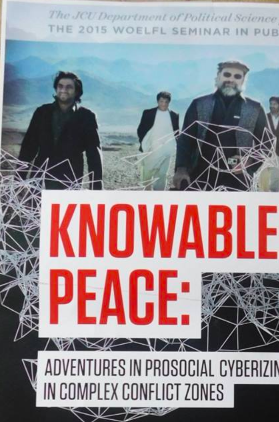
At midnight they took off with the main body tucked in behind the point element and flankers dispatched by the Patrol leader to screen their movement to an abandoned walled city identified as EF 595 – C on the satellite imagery that had been provided him by the DARPA funded, burning man loving, humanitarian outfit at the Taj guesthouse in Jalalabad known as the Synergy Strike Force. The claimed they were “prosocial cyberizing in complex combat zones” by running a guesthouse with a bar and nice pool but that was just a cover, they were spooks.
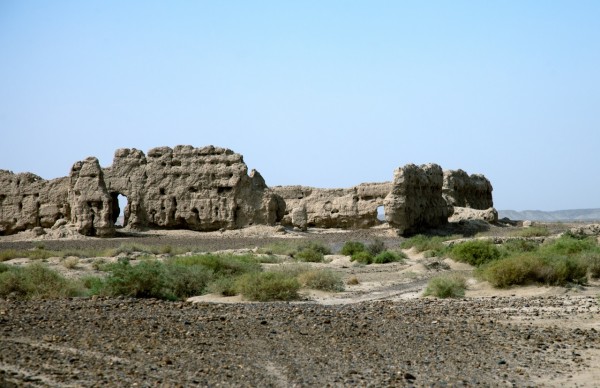
The Baluch patrol leader looked at the imagery and said the target was known as Qala Fath which meant clear water, which also meant it was a frequent stop on the Taliban rat lines running out of both Pakistan and Iran. Clean, clear water was hard to find in the Dasht-e Margo; this was a popular spot and the American wondered how the Old Man had known to send his guy there. They were 45 minutes away and had to move fast, being on the Iranian side of the border when the sun came up was asking for trouble.
The fighting patrol pulled into the eastern entrance to Qala Fath and stopped. Baba D dismounted with his weapons and went alone to the center of the old complex with Tor Spay. He found some steps to sit on, broke a green chem light shaking it good to get the fluorescence going, and threw it on the ground in front of him. He then lit a cigarette and waited, Tor Spay sitting obediently by his side. An old man accompanied by three women stepped out of one of the buildings and approached him. The man asked in English if he knew Jack; the American replied “ Yep”, before adding “I’m from the American government and here to help” then laughed at his own joke. The old man looked confused, the women behind him were shaking, clearly terrified by Tor Spay who was up on his feet looking at the Iranians with interest.
The American stood walking over to the family while asking them to stand still so Tor Spay could meet and smell them which they did with trepidation. Once that was completed he took the massive black dog off his lead and gave him a one word command: “Hunt”. Tor Spay took off like a rocket back towards the area the family was just occupying. He moved like lightening and made no sound at all as he searched the ruins for any signs of uninvited Iranians. He returned ten minutes later looking at the American expectantly for some treats.
They arrived at the American’s safe house in Zaranj, with the dawn. The safe house was across the street from the Zaranj municipal airport which consisted of a runway, an abandoned building, and a resident pack of feral dogs. The house staff had hot chai and breakfast waiting. The American made a pot of coffee and headed outside to the porch to watch the sunrise. The Iranian walked out on the porch to ask for a cup of his coffee. The American smiled and said there was plenty. The Iranian stood there uncertain what to say or do so the American spoke first.
“Look I don’t want to know your name or who you are or how you got to that old walled city in the desert. I’m not from the CIA, they will meet you on the flight to Kabul which leaves in three hours. I would appreciate it if are vague in your description of me, the less the CIA knows about me the better and the less I know about you the better. Both you and the CIA know the Old Man sent me and that is all any of you need know”.
The Iranian relaxed and sat down taking in the spectacular sunrise with the American. “How do I thank you for what you have given my family and I”?
The Spy didn’t look at him saying quietly “You owe the Old Man, not me for your rescue, but when you see him next if you would please tell him Willi 4 deserves a serious cash bonus and a long vacation I’d be much obliged”. The two sat quietly watching the sunrise until Haji jan called them down for breakfast.
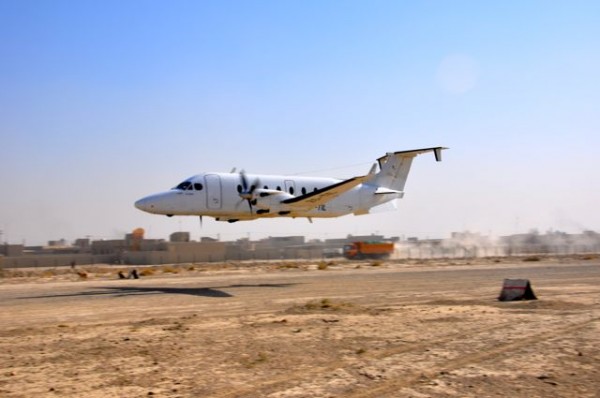
At 1100 they left the safe house and drove to the airport gate where they were met by Zaki’s uncle Mohammad, a local mullah who doubled as the airport manager. Mohammad had been the airport manager for 30 years and spoke fluent Russian, Persian, English, German as well as all the local languages of Afghanistan. At 1115 a Beechcraft Super King came screaming down the runway mere feet off the deck which sent a large pack of feral dogs fleeing towards holes in the fence line. Having rid the landing strip of dogs the plane gained altitude and kicked the rudder to starboard (going to its port side would put it into Iranian airspace), came back around and settled on the runway, taxing to an old abandoned administrative building.
The airport consisted of a chain link fence around a single runway with a single entrance gate on the western side. There were no other passengers for this flight just the Iranian and family so the Spy and the ten truckloads of Afghan Border Police sent by Governor Abdul Karim Brahui to secure the airport. The plane did not shut down its engines as Iranian and his family were hustled aboard. He was met by his CIA case officer who apologized profusely for his cover being blown and for failing to give him a burn notice. Interestingly the CIA man did not speak to or acknowledge the American who had rescued them from Iran. The Iranian thanked Allah, for the hundredth time, that the man who had recruited him had not forgotten him. That man had told him 30 years ago that he could never trust the CIA but could always trust him. He had been true to his word.
As the plane taxied down the runway towards freedom, he looked for the American, but he had disappeared. The man was a ghost; he would never see him again, never know his name, and never forget him.
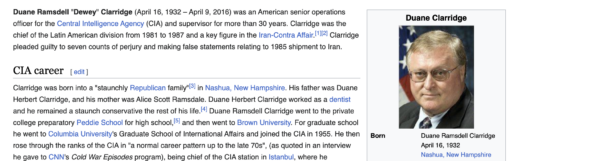
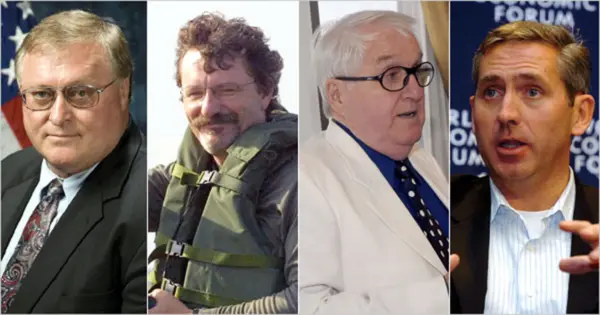
Back when I was working for the Pentagon’s Private Spy Ring, I didn’t take my boss, the legendary Dewey Clarridge, seriously when he ranted that the CIA was worthless. Dewey had been a CIA standout who had gotten into all sorts of mischief during his 33-year career. Want to know how good a spy Dewey was? Look at his Wikipedia page right now, and you’ll see a picture of Michael Furlong, not Dewey. That’s how good he was.
The Wikipedia entry for Dewey currently has a picture of Michael Furlong. The Old Man would have loved that.
This is from the NYT article linked above. Michael Furlong is the first pic on the left, and Dewey is the third from the left. The other two are Journalists who bitched that Dewey and Furlong had stolen their “atmospherics” contract.
I was thinking about Dewey as I watched the seventh episode of Spy Ops, titled Taliban Spies. It’s a classic example of how the Afghan elites scammed millions of dollars from our gullible CIA. The episode features interviews with four men: CIA case officer Gary Harrington, British journalist Toby Harden, an Afghan interpreter from the Panjshir Valley named Rasul Rasekh, and Dr. John “Brutus” Buffin, the Global Response Force (GRS) team leader who provided security for this operation.
The British journalist provides the master of the obvious (MOTO) commentary, explaining the background in Afghanistan for an audience that knows nothing about our experience in Afghanistan. That may be intentional, as recent Rasmussen polling shows only Democrats under 40 have a favorable opinion of the CIA, so this is playing to their base.
The episode starts with the case officer, Gary Harrington, being introduced to Afghanistan’s Minister of Defense, General Wardak, by his station chief, and then ordered to find ways to help the Afghans with spy magic. General Wardak handed the case officer off to Marshall Fahim, who had been the Minister of Defense until being dismissed the year prior for not being college-educated (a requirement for the Defense Minister under the new Afghan constitution). In the documentary, Fahim is called “General Fahim,” which ignores the Marshal rank awarded him by President Karzai when he was forced out of the defense ministry. One would think the CIA was keen on these nuances of Afghan leadership, proving you don’t get what you pay for from federal agencies.
The interpreter, Rasul Rasekh, like Marshall Fahim and General Wardak, was from the Panjshir Valley, and he describes himself as an “independent contractor.” His English is almost flawless, but from what I can gather, he fought against the Soviets and the Taliban with the Northern Alliance, so I’m not sure where he picked up the language skills. He claims to have provided expert knowledge of tribal dynamics, which is, again, a dubious contention. The average Panjshiri knew very little about the Pashtun tribes and was about as welcome in their lands as we were. How he gained any insight or expert knowledge about the Pashtuns is never explained, but it was clear he knew both Fahim and Wardak well, which was key to pulling off this scam off.
Fahim sets up a meeting with the secret agent and a “Taliban Mullah” who was not a combatant but one who sent suicide bombers to Kabul from Pakistan. What self-respecting Taliban “Mullah” is going to walk into the American embassy in broad daylight? Not one who wants to survive his return to the Taliban – it’s not like they and about 13 other international spy agencies weren’t watching the embassy like hawks, noting every Afghan who walked into the secure area. But ignore that as the tale gets weird quickly when the secret agent describes the death-defying risks of walking out of the pedestrian gate to meet his alleged Taliban recruit out in the open, surrounded by unvetted Afghans.
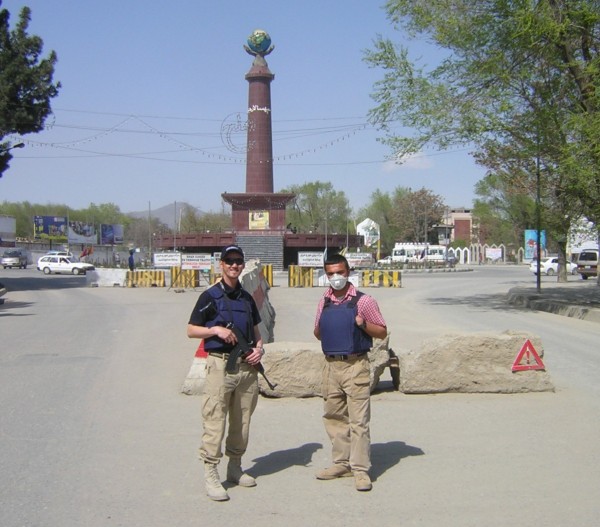
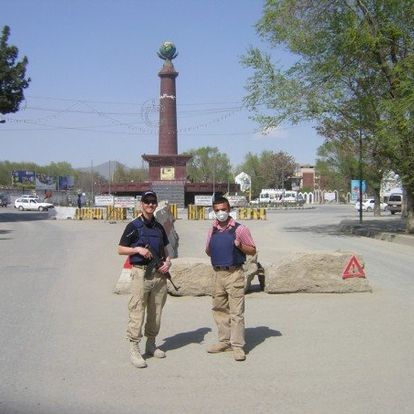
As the agent clears the embassy gate, he claims to look left and spot two sketchy-looking dudes parked in a black Toyota Corolla, which is improbable. When you walk out of the embassy pedestrian gate onto Massoud Circle, the circle is off to the left, and nobody stops there. The agent goes on to claim the same vehicle blew up an SUV full of American soldiers, which is highly unlikely. The VBIED entered Massoud Circle well ahead of the target vehicle, a white B7 SUV, and went around the circle for a head-on attack. I never heard of a VBIED that contained two terrorists, although I guess a handler could have been in the vehicle before an attack.
The US Embassy Massoud Circle checkpoint in 2005. By 2006, these men had more cover to hide behind, and the pedestrian exit (to the right) was protected by HESCO barriers.
The Mullah claims to have 29 Taliban fighters in Pakistan willing to cross the border to talk with the CIA. All the CIA needs to do is drive down to the Torkham border and pick them up. But they can’t use the regular border crossing because they’re Taliban, so they use a “wadi” next to the crossing that is also heavily trafficked. I know exactly what he’s talking about, and he’s correct that people using that crossing were not going through customs, but they were paying, on both sides of the border, for the privilege of crossing there, and the fees were steep.
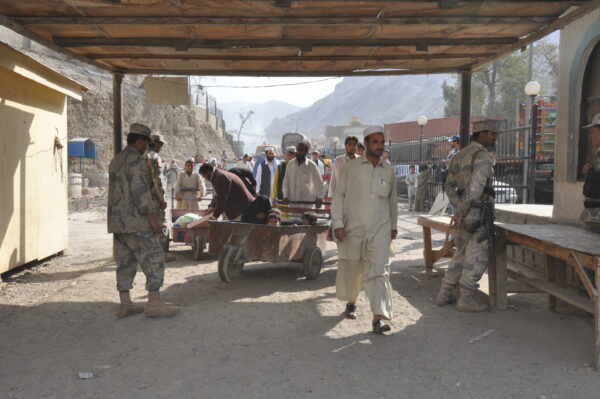
Pedestrian gate at the Torkham Border
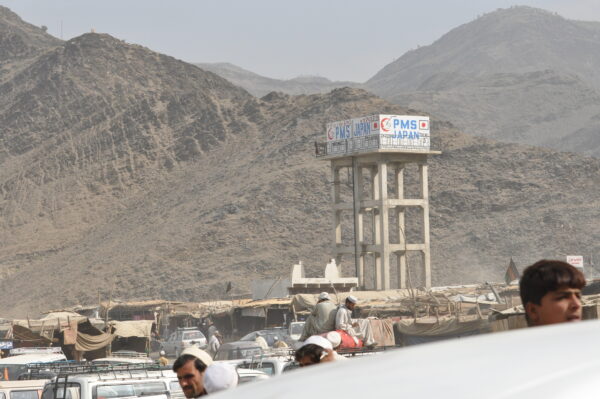
The “wadi” described in the film was just behind this water tower built by the Peshawar Kai NGO
The CIA agent then asks Dr. Brutus to help with security, and he gets a lot of airtime explaining the dangers of this meeting. To mitigate the potential for disaster, the 29 “Taliban” are instructed to approach the CIA agent, standing next to Marshal Fahim, one at a time, so the agent could give them a 3-kiss-and-hug that would allow a quick search for weapons or a suicide vest. This is another ridiculous contention that defies easy explanation. As the agent himself notes, Fahim had worked with and knew the Haqqanis, and it is inconceivable that he would expose himself to one of their suicide bombers at a border crossing they controlled.
The CIA would learn in 2009 at Camp Chapman the folly of not searching cooperating bad guys before letting them near anyone important. Marshal Fahim’s mentor, former President Rabbani, was killed in his home by a suicide bomber who had secreted a bomb inside a turban, so letting one near you is less than optimal. Having a half-dozen GRS shooters with you is rather pointless if you’re not going to use them, along with Marshall Fahim’s militiamen, to do basic tasks like screening Taliban defectors. One explanation (and the most likely) is that the “Taliban” had already been screened and were working for Marshall Fahim.
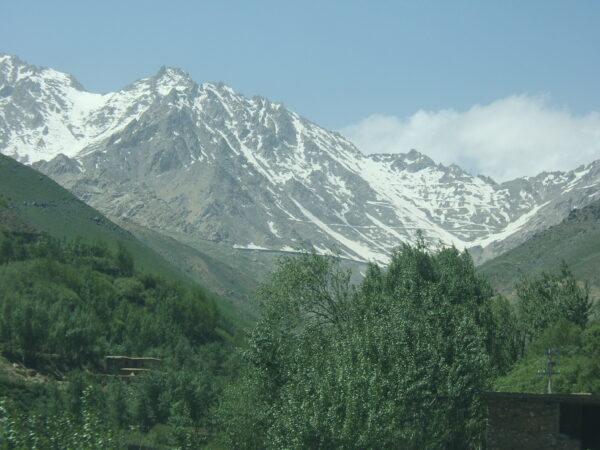
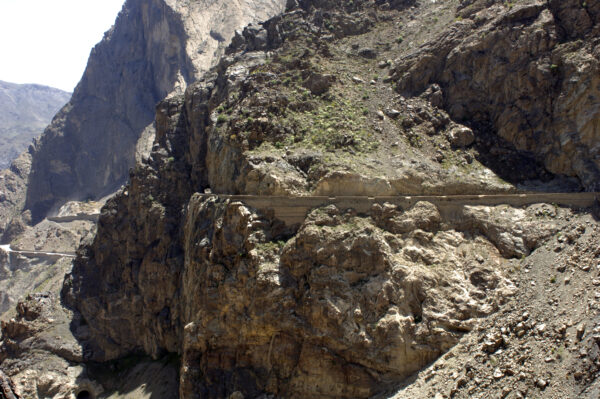
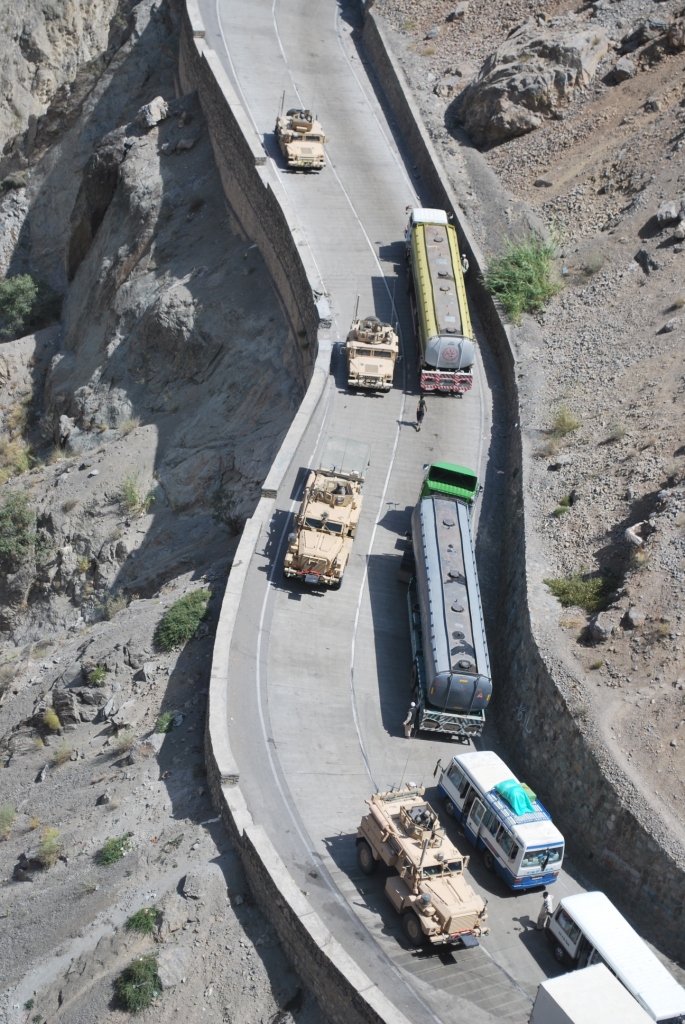
Next, we are given a detailed description of the dangerous 3-hour drive between Jalalabad and Kabul. That drive, in September 2006, took a little over an hour because the road had just been paved that summer, but never mind. Although there are plenty of hairpin turns in the Kabul Gorge portion of the drive, they aren’t dangerous. Driving through the Salang Pass was dangerous. To prove that point, the B-roll shown during the description of the hazards of the Jbad to Kabul road was clearly filmed in the Salang Pass.
The Salang Pass was a dangerous drive
The Kabul Gorge portion of the Jbad to Kabul road looked hairy but was actually safe compared to the Salang Pass
The Kabul Gorge was a cool drive with tight hairpins that allowed you to see the traffic behind you.
Next up in this harrowing adventure was what to do with the 29 “Taliban” once they got to Kabul, where the CIA has no safe houses. They call General Wardak, who is reportedly furious but finds them a nice, giant compound in the posh Sheri-e Naw neighborhood with a basement large enough to hide 29 Taliban. The CIA interviews all these dudes and selects six they think they can work with, sending the rest back with some cash and a promise not to fight in Afghanistan with the Taliban. The rest of this stupid story is nonsense about meeting Taliban suicide bombers over the ensuing years and impressing them because the Secret Agent man is a good dude or something. At this point in the program, it was difficult for me to pay close attention because I was yelling at the TV.
It is profoundly disturbing to watch our government whitewash history to make the incompetent appear competent, but that is exactly what this show depicts. Every part of that operation was controlled by two men, Wardak and Fahim, who were clearly making money off the gullible CIA. Where did they get the bus to transport 29 “Taliban”? How about the guards who watched the Taliban? Who paid for the massive compound that housed the Taliban? Who paid for the cooks and food to feed all these people? Who paid to outfit the giant compound? They needed to furnish the entire house, too, including the rooms used by the CIA-sponsored GRS guards, and that wasn’t cheap.
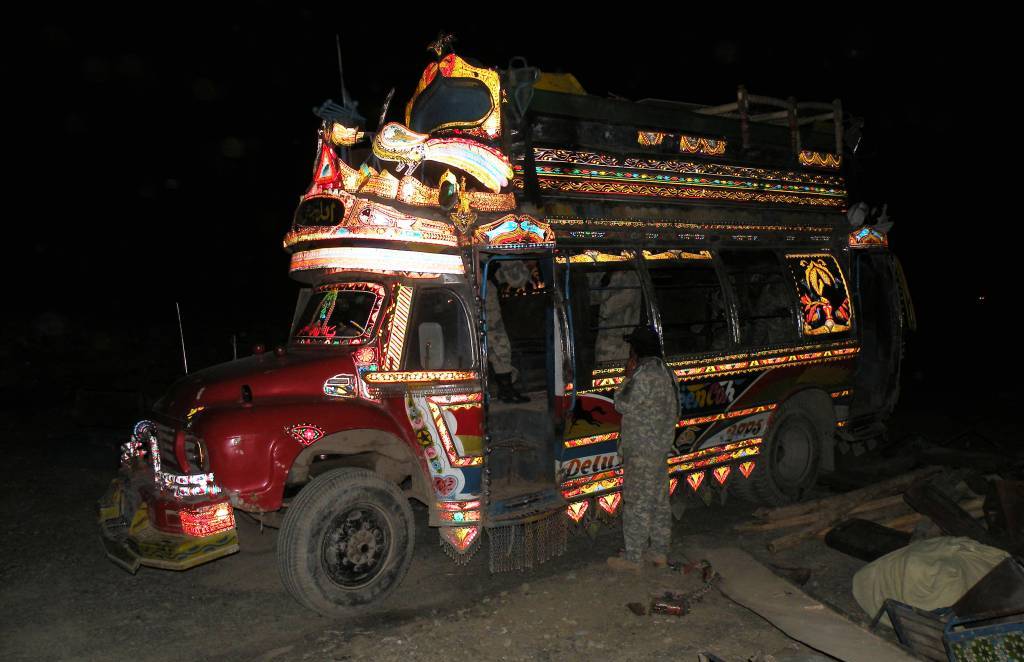
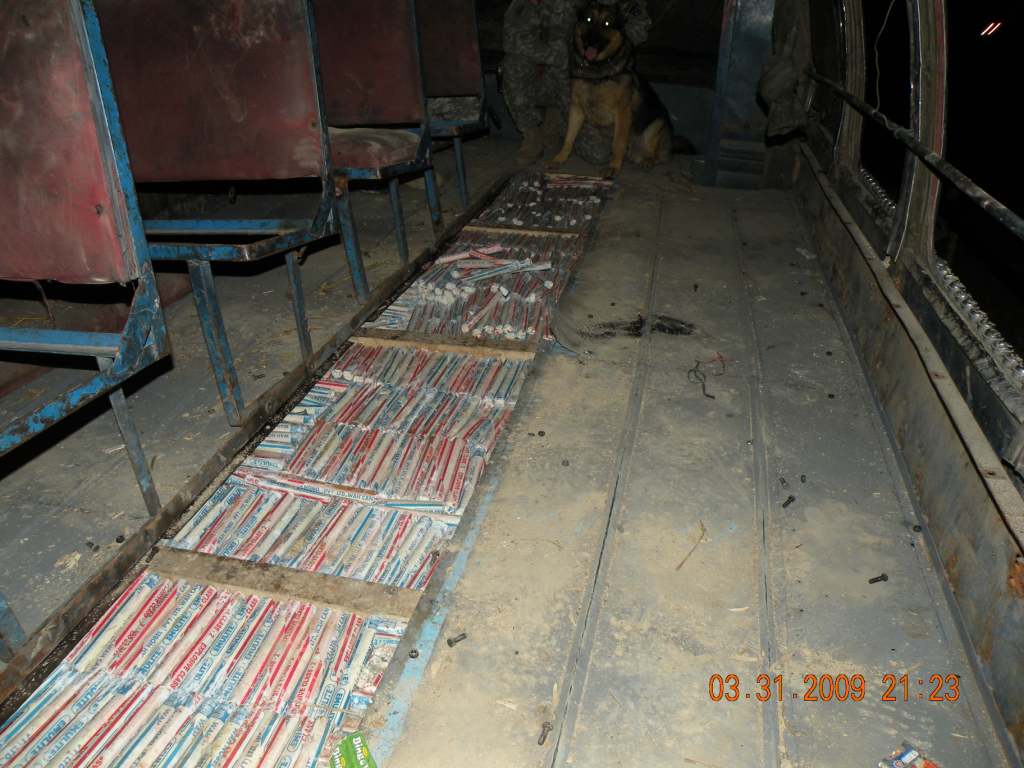
The CIA ran this operation for at least two years, paying their “Taliban” spies the whole time and, in return, receiving nuggets of intelligence, including the famous bus full of explosives that was busted at the Torkham border. I remember that bust because the claim that it contained IED explosives was preposterous. As you can see in the picture below, that bus was full of commercial explosives that were far too valuable for ongoing road and bridge reconstruction and for gemstone mining. There is no way it would have been used for IEDs.
Importing commercial-grade explosives into Afghanistan was next to impossible due to the State Department’s arcane rules, so construction companies paid top dollar for explosives provided by their connected fixers. The 2008 bus bust wasn‘t a counterterrorism operation; it was a business transaction.
The famous IED bus bust at the Torkham Border in 2008
The bus contained a king’s ransom in Emulite, which is a powerful commercial explosive that is worth more on the construction black market than it would be if sold to a bomb making syndicate.
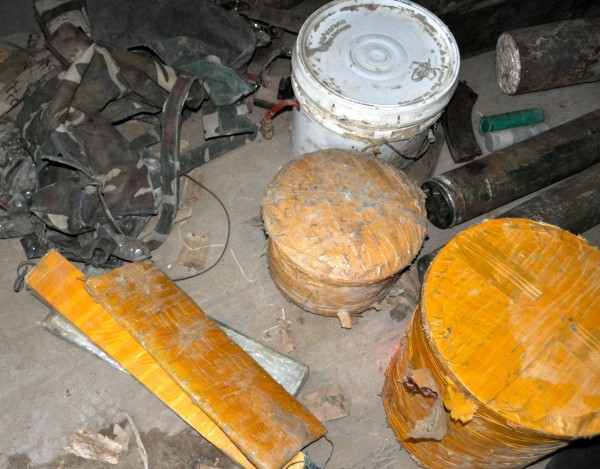
This is what IEDs looked like, and they were made with homemade explosives that, although not as powerful as Emulite, it would still ruin your day.
Who do you think gained custody of all that Emulite? My guess would be Marshal Fahim, who spent his years out of power (2004-2009) doing warlord shit like kidnapping people for ransom and smuggling fungible commodities such as wood, gemstones, and commercial-grade explosives. In 2009, President Karzai selected Fahim as his Vice President despite loud, boisterous bitching from international politicos that Fahim was clearly an unrepentant warlord. He was a powerful warlord who could deliver votes from the Northern provinces because he ran a disciplined criminal organization.
The Spy Ops propaganda fest would be funny if not for the fact that the joke was on us.
The end of our Afghanistan adventure was worse than my most pessimistic predictions. Since 2008, I have insisted there was only one way the Afghanistan conflict could end, and that would be with an accommodation of the Taliban. I never imagined that the Taliban would sweep the board and help us extricate ourselves from the country in the most amateurish Non-Combatant Operation (NEO) ever executed by the United States Armed Forces.
I first became aware of the impending disaster on July 28th when a freelancer friend of mine asked if he could provide my contact information to a man in Zaranj, the capital of Nimroz Province, who wanted me to apply for a visa on his behalf. I checked with my former interpreter from Nimroz, now a resident of California, about the man in question, and it turned out he was a resident of Zaranj, but had worked for the contractor GRS, not me. However, I did learn about the new P1/P2 visa program, which would provide a route to the United States for Afghans who were not interpreters but had worked for Americans in other capacities.
Seen this one before
On August 6, I began receiving a flood of emails from Afghans in Nimroz Province (in the southwest), Nangarhar Province (in the east), Balkh Province (in the north), and Kabul. They all wanted their P2 visa applications started, but most were not qualified.
The guidance on who could recommend visas is as follows: “For non-governmental organizations (NGO) and media organizations that were not funded by the U.S. government, but are headquartered in the United States, the senior-most U.S. citizen employee of that organization may make a referral”. As a regional manager, I held the status of Chief of Party, according to the State Department, which was the excuse they used to persuade me to stop wearing a pistol to provincial reconstruction meetings. My former company, CADG, backed me up by providing proof of employment letters within 24 hours of my request.
As the Taliban started taking provincial capitals, the trickle of Afghans reaching out to me became a flood. In addition, my former interpreter from Nimroz province called to tell me he had sent his wife and four children to Afghanistan when his mother-in-law fell ill. They were stuck in Zaranj and the two youngest, who were born in California, only spoke English. He needed help, so we organized a WhatsApp group to guide the family back to Kabul and the airport. My favorite war correspondent, Michael Yon, and the owner of CADG, Steve Shaulis, got the family to Kabul. Getting them through the Marine perimeter became the problem, despite the children having American passports and the mother a permanent resident card, they were not allowed into the airport.
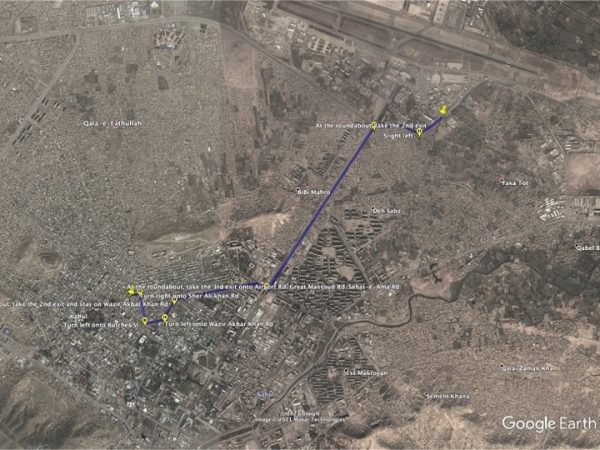
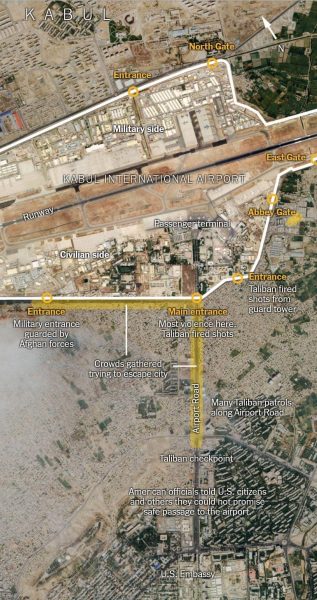
One of the maps we used to guide Afghans to the airport
I podcasted daily during the Kabul NEO with the Mensa Brothers on All Marine Radio. I regularly updated the audience on the plight of my friend’s family and the travails my visa applicants were facing outside the Kabul Airport. On the third day of the evacuation (August 18th) a listener put me in touch with a with a former Marine who was (I assume) a contractor working for the State Department inside the evacuation center. The next day, I contacted another former Marine working inside the evacuation center. On the 20th of August, I received a call from an old friend in Langley, Virginia, asking if I had a “useful man” in Kabul. I had just been chatting with my old friend N, a fixer at the Kabul embassy, when I ran the guard force. Mr. N is one of the most useful guys in Kabul, as he can acquire or do anything asked of him. The first thing he said to me when we connected on signal was “the fucking Taliban took all my houses and cars and they have closed the banks too and I cannot stay here with them”. I do miss Kabul at times.
On the 20th of August, I had one visa applicant through the process, seven complete applications in the process, and eleven other applications that were not complete and not submitted. My Langley friend (we went through the Marine Corps officer training pipeline together) sent a useful man a message on the Signal app, dropping my name and telling him to sit tight. That was cool, and now one of the richest sketchy dudes from Kabul owes me. I placed my approved visa guy on a target list, telling the Marines where he thought he was in the crowd and what he was wearing. I asked about my other applicants and was told they were on it.
Steve and Michael had done the same thing with their contacts inside the evacuation center and had made arrangements to get our California family through the gate. I could feel the momentum shifting our way, and I went to sleep that night convinced that we could salvage something positive from the Afghanistan debacle.
Then everything turned to shit.
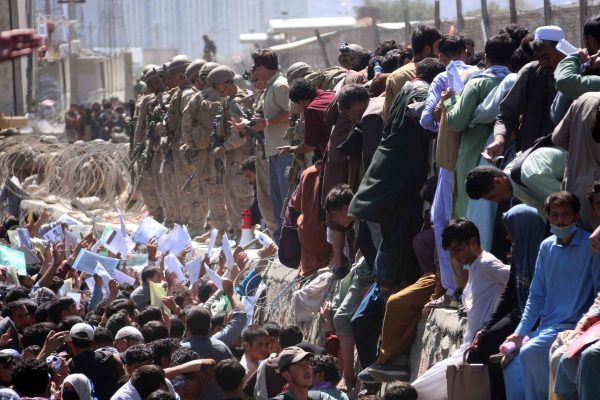
My former Terp’s wife and children were again turned away, and the wife told us she was not risking taking the children through the Taliban lines again. The Marines had not found my family either, which I deduced from the panicked messages waiting for me when I woke up. Then I received several emails from my applicants saying they had notifications from the embassy telling them to report to the Abbey Gate for processing. That is news that falls under the category of too good to be true, so I asked them to send screenshots. It did not take an evidence technician to see they were all the same screenshot. The notification system the embassy was using had been compromised ,and there were now 100,000 Afghans standing outside the airport with embassy notifications on their cell phones.
Adding to the confusion was a message from one of my contacts in the evacuation center, which is pasted below
Tim,
Please have a current USAID official submit this referral.
Based on the information that you have provided, this individual and their immediate family members may be eligible for a P2 referral to the U.S. Refugee Assistance Program if they were employed by a U.S.-based non-governmental organization in Afghanistan. P-2 referrals are intended for certain Afghans who are affiliated with the United States through employment, but who do not qualify for a Special Immigrant Visa (SIV). It is not possible for individuals to self-refer to the program; the senior-most U.S. citizen employee of the non-governmental organization for which an Afghan individual worked must submit the referral. More information is available at: https://www.state.gov/u-s-refugee-admissions-program-priority-2-designation-for-afghan-nationals/. Completed forms should be sent to ATF-TF3@state.gov with the subject “P2 Referral.” Additional guidance will be provided to the individual(s) you referred at the email address you provide for them.
Best,
State Department Afghanistan Task Force – People at Risk
There are no current USAID officials who would have any knowledge of me or the Afghans who worked for me. The USAID program officials managing my projects in Afghanistan were Afghans; the USAID officials I would (rarely) see outside the wire were contractors. What the Task Force was asking me to do was find an official from USAID willing to perjure him or herself on behalf of an American he doesn’t know to support an Afghan they have never met. It was at this point I started recognizing the sure signs of a massive clusterfuck.
Another map sent to the Afghans heading to the Kabul Airport
I now had five families from outside Kabul waiting at the airport gates, two families in Kabul who spent their days outside the airport, and seven families making their way towards Kabul from points west and north. I was still working with some of the applicants to get their paperwork in order,r and being ever the optimist, I told them all not to fear. The Marines were at the airport and would sort things out soon. On the daily podcast, we said the same thing – one of the four of us had been involved in every Non-Combatant Evacuation the Marine Corps has conducted since Vietnam. We knew how it’s done, and what we were seeing on the ground was the abandonment of every lesson we had learned about conducting these operations, starting with the imperative of standoff for the screeners.
It was clear that my two contacts in the evacuation center were exhausted and overwhelmed, and the evacuation would likely end before August 31st. The next few days were a blur, I was coaxing my Afghans to be patient, I was waiting for the Marines to get organized enough that they could start focusing on the people there were sent there to take out which would be Americans, green card holders, and Afghans with a legitimate SIV or P1 or P2 applications. That never happened. The inevitable attack by ISIS sealed the fate of those Afghans, the ones who put their skin in our game, and they were now screwed.
The most essential task in a NEO is gaining standoff for your processing center. We could have done that ourselves, instructing the Taliban that any armed Afghan near us would be smoke checked as we busted out of the airport to gain the standoff we needed. With the forces on the ground, we could have easily taken a large slice of the old Kabul City and stayed there until the job was done (which would have been long after 9/11 if I had anything to say about it)
Only 705 of the 18,000 Afghan visa applicants were evacuated. An estimated three-quarters of the people we evacuated were not visa applicants or green card holders. The Kabul NEO was a miserable failure, and an educated guess would point to the 6,938-mile screwdriver driven by micromanagers in the White House Tank taking stock in the good idea fairy. I know all the super geeky technology we now have in abundance looks cool in Hollywood movies, but it allows for micromanagement by the mouth breathers who lurk in every higher headquarters. When you have too much supervision from on high, you get the results we got in the Kabul NEO: failure with zero accountability.
We failed to bring the Afghans who proved their loyalty to the United States by putting their lives on the line out with us as promised. Instead, we evacuated tens of thousands of unknown Afghans who can never be screened or vetted because there are no records against which to vet anyone.
My old fixer, Mr. N, got the Turkish army to give him a ride to the civilian terminal where they put him on a Turkish military flight with a bunch of other Afghans who, like Mr. N, were wise enough to facilitate and partner with Turkish companies during the reconstruction boom. As I said, he is a very useful man. I’m still trying to get him a visa, though, because I want to see Mr. N having a night on the town in Las Vegas before I die.
We not only failed to accomplish the mission we lost eleven Marines, a navy corpsman, and an army sergeant in the process and under circumstances which were completely avoidable. Yet after the attack on the Kabul airport there was still hope. One of my insiders sent the email pasted in below:
Apologies for the delay, brother — it’s been an exhausting week. At the moment, here’s the word;
1. Gates are closing due to troop withdrawal and retrograde operations
2. State Department has significantly halted processing any SIV/P2 cases, US Passports are being accepted at limited capacity due to gate closures
3. All resources have been exhausted due to security and accessibility issues
His best bet is to get his family to the Abbey gate (canal side). Make a sign that says “Gy Tate”. He is my guy on the ground. His Marines know to look for that sign.
Good luck!
S/F
The signs did not work, my Afghan families who had submitted the proper paperwork, had paid the $3,000 for required medical exams and clearance, and had already been issued visa’s never made it past the gate. Female sports teams made it in, and a collection of Special Forces dudes started the Pineapple Express to get their people inside. That was no doubt rewarding for them, but their victories came at the expense of the qualified Afghans, who had done the paperwork, had waited their turn, and faced legitimate threats if they returned home. I’m not being bitter, I would have done the exact same thing had I been in their shoes.
The Kabul NEO was a fiasco, and it did not come remotely close to achieving the mission assigned, which was to remove American citizens, allies, and Afghans who had applied for Visas under the SIV P1 or P2 program. We did not remove all Americans or their allies, and barely dented the number of visa applicants.
It is now time to rethink our military. I am uncomfortable having an army capable of fighting for 20 years without declaring war. I no longer trust our military leadership or our civilian masters to do what is best for the country instead of what is best for themselves.
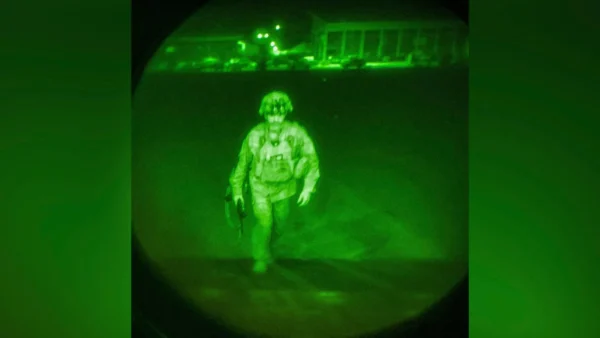
Oh, so brave!!! The last man out of Kabul ensured that his public affairs team took a picture to prove that senior officers with poor judgment are not rewarded, but rather censured. The fool will undoubtedly retire a four-star general like many of the mediocracies of his generation.
I was hoping for a win – getting one family would have been a victory of sorts, getting a dozen out would have been better. But the confusion generated by trying to conduct a NEO from Kabul International and not Bagram Airbase crushed any hope of getting the Afghans who earned the right to become Americans out, as we had promised. And to rub it in good and hard, the general who headed this debacle arranged to have a portrait of himself taken as “the last man out”. I was hoping for a win, but I got a kick in the balls from an organization that has lost its way and is no longer worthy of our trust or confidence.
Texas historian T.R. Ferhenbach wrote that the Texans considered the United States “A country grown so great even fools cannot destroy it“. That was then (back when Texas agreed to join the United States on terms most favorable to Texas). This is now, and now has serious, unsolvable, structural, problems inside our social order that will manifest themselves in ways none of us can anticipate. It is possible the fools of today may well be able to destroy the country.
We are being asked two believe, as John Hinderaker wrote in this post, that:
“… Joe Biden, a mentally impaired senior citizen who didn’t campaign, who rarely left his basement, about whose candidacy virtually no one was enthusiastic outside his immediate family, smashed all records by getting 81 million Americans to vote for him, 12 million more than voted for Barack Obama in 2008? Actual live Americans, voting legally, and only once? While millions of those same voters didn’t vote down-ballot, so that, apart from the presidential race, it was a good year for Republicans? I don’t believe it”.
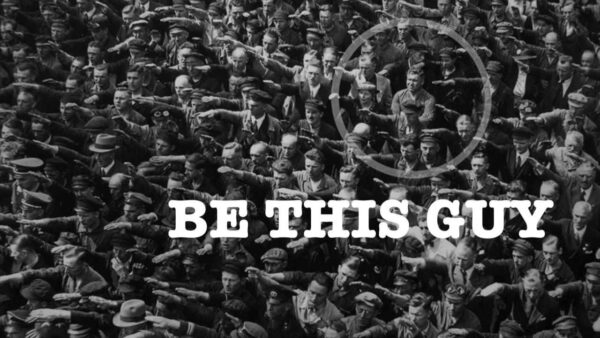
Add to this the continuing attempt to avoid any admission of guilt by our ruling classes for ignoring the obvious fact that COVID-19. However, lethal for 0.03% of the population, is no threat to the rest of us. Our ruling class knows this, which is why they routinely flout the laws they shove down our throats. This is a worldwide phenomenon that is impossible for any rational human being alive today to explain. Why have we ruined so much of our capacity and wealth for a disease that is lethal to less than 1% of the population? Reasons. I know why, but it is gratifying to find yourself being that guy in this picture.
Now, another shoe that may force me over the edge of reason and into armed, open revolt has dropped. They (the media in general, NYT specifically) have declared Tiki Bars are racist.
I have owned and run one bar in my lifetime: a Tiki Bar in Jalalabad, Afghanistan, the friendliest place in the world for people of all colors, genders, and creeds (except Afghans). It was a friendly place because everyone was armed or came with armed guards. Armed societies are polite societies. In Afghanistan, foreigners were allowed to consume alcohol but not Afghans, which is why we had a giant-screen TV room with WWE DVDs for the drivers and guards to use.
A proper Tiki Bar has no racial creed, stringent rules about firearms, or mandatory mask wearing.
[A] new generation of beverage-industry professionals are shining a light on the genre’s history of racial inequity and cultural appropriation, which has long been ignored because it clashes with the carefree aesthetic. . . A new wave of industry professionals is reimagining these delicious contributions to cocktail culture, looking to shed the appropriation and racism that have accompanied tiki since its inception. . . A recent movement aims to shift from the word “tiki” to “tropical.”
I know what you are thinking. The NYT is starting to suffer from TWS (Trump Withdrawal Syndrome), so they cook up some snarky bullshit about hipster bars and then add that Richard Nixon liked Tiki Bars to dog whistle the proles. You think this is only about the people who run Tiki Bars, but you’re wrong. First, they came for the Tiki Bars and are now coming after coffee drinkers.
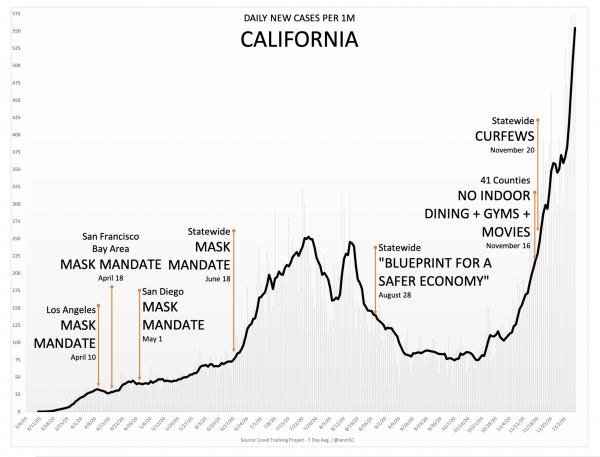
We just had an interesting year featuring a mass formation psychosis, a stolen election, and the complete collapse of confidence in the mainstream media. Now we move into the next phase of our destruction from within by identifying every touchstone of the America we love and labeling it racist. Woke ideology festers in ignorant minds, reducing their ability to understand reality. Rational people understand the graph below; woke people feel the graph threatens their physical safety and that they need protection from the information it depicts.
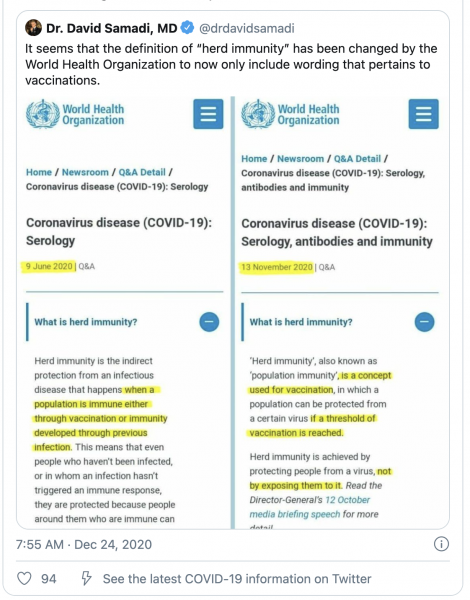
SCIENCE does not have political opinions, nor does it bend to the will of self-important, credentialed scumbags. The truth is the truth—the narrative is the narrative, and one is not related to the other. The truth is the virus will do what it was destined to do and go away when it wants to go away. Nothing we do impacts the virus.
As observable reality and the mainstream media narrative drift further apart, it will be interesting to see how the Normals of the fly-over muscular classes (VDH coined that term) react. Will the incubators of freedom in America (Tiki Bars) end up like my incubator of freedom did? Alone, abandoned, cold, and lonely, labeled a racist by the New York Times, who never even sent a reporter to look into the coolest Tiki Bar there ever was? Check that, Matt Rosenberg stayed at the Taj when he was with the Times, but he never wrote about it.
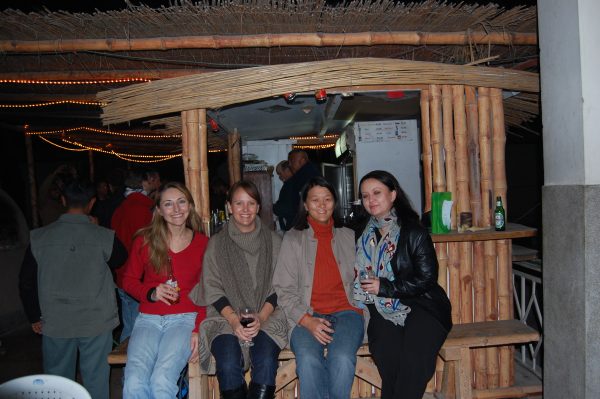
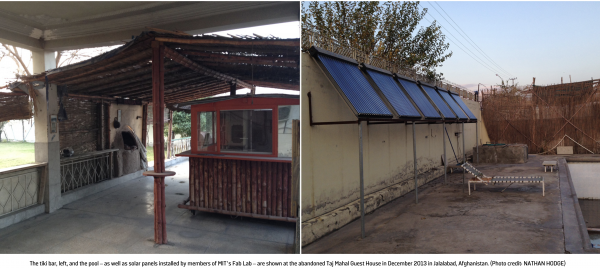
Does this look like the remnants of a racist institution to you? These photos are from Nathan Hodge, who visited the Taj in 2013, long after we had abandoned the place.
Tiki Bars represent freedom for all men because they are simple to erect, cost almost nothing, and are universally identifiable. According to the stickers and artwork plastered on the coolers, my Tiki Bar was not only an oasis of freedom but also represented Australia, the MIT FabLab, Burning Man, Synergy Strike Force, the Golden Triangle Rotary Club from La Jolla, and the United States Marine Corps.
The assault on Tiki Bars is not the only assault on common sense; there is also the mask problem. Not only are masks incapable of filtering out viruses, but they are likely contributing to the spread of the disease, as revealed by recent scientific studies. The results of a nationwide survey on the utility of masks were released yesterday, and they contain bad news, which means you’ll never read about it in the legacy media. It appears that wearing a mask increases the likelihood of infection.
When comparing states with mandates vs. those without, or periods of times within a state with a mandate vs. without, there is absolutely no evidence the mask mandate worked to slow the spread one iota. In total, in the states that had a mandate in effect, there were 9,605,256 confirmed COVID cases over 5,907 total days, an average of 27 cases per 100,000 per day. When states did not have a statewide order (which includes the states that never had them and the period of time masking states did not have the mandate in place) there were 5,781,716 cases over 5,772 total days, averaging 17 cases per 100,000 people per day.
The reverse correlation between periods of masking and non-masking is remarkable.
The American people are finally catching on. With proper medical treatment, a cold virus typically lasts. For only 7 days, left untreated, it can clear up within a week. It appears that, for most infected individuals, COVID-19 is acting similarly to other pathogenic coronaviruses. As democratic controlled states head towards another complete lockdown the proles are revolting. You can click here for an interactive map from Heritage.org, which shows 43 reported instances of local, state, and federal officials violating their coronavirus mandates, policies, or other restrictions.
Shenanigans like this are becoming depressingly common and they fool nobody.
We are now hearing about small business owners opening in defiance of ridiculous lockdown orders and being arrested for it. In New York City, bar owner Daniel Presti hit a sheriff deputy with his car, breaking both of the deputy’s legs while resisting his second arrest for the crime of opening his business. I support law enforcement 100%, but not the members of law enforcement who bully citizens while enforcing edicts from on high, while ignoring the laws of the land. The ” I was just following orders ” defense was used by Nazi’s to proclaim their innocence for crimes they supervised during WW II. That defense should stay in Nuremberg; it has no place in the culture of American law enforcement.
When police start enforcing laws they know damn well are unenforceable, unconstitutional, arbitrary, and backed by woke ideology, are they still police? I’m not sure. I live in Texas, where the police are not prone to interfering with people going about their business in public. I know that the most law-abiding segment of society in the United States is concealed carry permit holders. It will take some severe abuse of our freedoms and liberties to get the gun-owning public enraged to the point of using them; I can’t see how that happens at any scale in our large country.
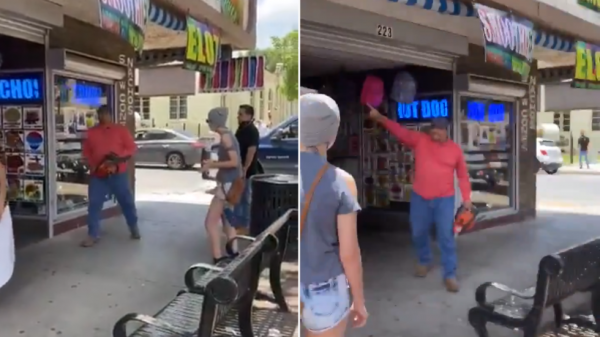
The bars, restaurants, and small businesses in my town are open, but they are struggling. The only arrest in McAllen related to COVID or BLM was a local man (that is code for Hispanic) who chased some BLM demonstrators (that is code for skinny white kids who do not live in the Valley) down Main Street with a chainsaw. He was screaming at them in Spanish, as you do in McAllen, but regrettably provided an English translation that included the dreaded N word. Usually, the chainsaw and N word combo would have caused a Twitter meltdown and maybe protests too. But this is South Texas, we don’t play those kinds of games down here.
The South Texas Chainsaw Man in action
Power doesn’t corrupt, it reveals the true character of those who hold it. The power lavished upon Joe Biden during his decades in the Senate has revealed his weak, flaccid, and corrupt character. The power currently concentrated in democratic governors and congressmen has shown them to be petty tyrants. Now, they have more power to accomplish their tasks. I’m not sure, but whatever they do, it will benefit them and their families more than it benefits you and yours.
We will never be able to vote these tyrants out of office because we no longer enjoy free, fair elections in the United States. The progressives, knowing they do not have to compete at the ballot box, may well try to disarm us to take our attention away from the plunging numbers on Wall Street. It will never happen; anyone who thinks it is even possible is beyond deluded. As long as we remain armed, the progressives will never be able to enforce too much of their anti-American, woke dogma on the rest of us. A man has to draw the line somewhere, and defending needless slander against Tiki Bars is as good a place to start as any.
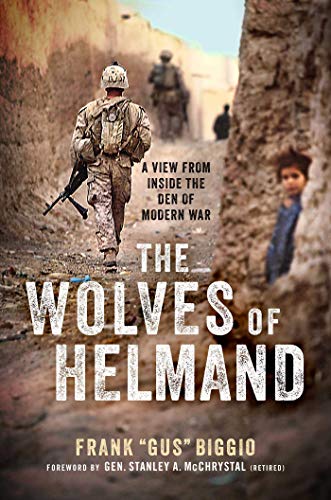
As our two-decade involvement in Afghanistan winds down to an inevitable withdrawal, there are an increasing number of memories being published by participants. I have been looking forward to this as it is the first significant conflict without a draft. The military participants were all volunteers and professionally recruited (there is a vast difference). I’ve been interested in seeing their perception of war compared to the men who fought in earlier times against a different enemy. What I experienced when I read Gus Biggio’s book The Wolves of Helmandwas déjà vu.
Frank “Gus” Biggio competed for and won a commission in the United States Marine Corps, gaining a coveted slot in the infantry back in the 1990s when the Corps was flush with cash, and overseas deployments both enjoyable and interesting. Unless you pulled a unit rotation to Okinawa in which case you were screwed. Sitting on an island where you could not train while the yen/dollar exchange rate was around 70 (meaning the dollar was damn near worthless) was misery unless you got nominated to be on the Oki Marine Expeditionary Unit (MEU) in which case you got aboard naval shipping and enjoyed yourself like the rest of the Corps.
I don’t know if Gus pulled an MEU float or a unit deployment rotation to Okinawa, but he enjoyed his tour as an infantry officer. After completing his five-year obligation, he moved on, as most Marine officers do. Gus completed a law degree, got married to a physician, started a family, and was safely ensconced in Washington, D.C., when the military went to war. Gus held out for years before succumbing to a virus, planted in all Marine infantry, that makes life intolerable unless we see the elephant.
The parable of the six blind men and the elephant is an ancient Indian fable that illustrates moral relativism and religious tolerance. However, that is not the fable Gus and the rest of us are discussing; we do not embrace moral relativism and believe that religious tolerance is a God-given right. When we refer to “touching the elephant,” we are actually using a Civil War-era euphemism for experiencing combat.
Gus was in DC, working a good job, and although he’s not a name dropper, he mentions that after his morning runs, he would occasionally chat with his neighbor Michelle until she moved into the White House with her husband Barack. So, Gus was doing well on the outside, but he had a problem on the inside. His best friends were in the fight, some of them coming home on, not with, their shields. He is a highly competent adult who has sublimated a serious competitive streak towards the development of an impressive law career and a stable, thriving family. But he doesn’t yet know what his nature demands that he know, information that he’ll only know if he gets to touch the elephant. His closest friends had touched the elephant repeatedly, so his volunteering to go back in? He had no choice; I did the same thing for exactly the same reason.
Gus is precisely the kind of guy you want as your lawyer if, for no other reason, than he talked his wife into letting him deploy. He married a perceptive woman who probably understood he had to go. Still, she’s a physician, and they’re typically rule followers, so this was by any measure an impressive feat. He then signs on with the 1st Battalion, 5th Marines (1/5) and heads to Camp Pendleton, California, to start training.
From there, he deploys, with his small team, directly into the Nawa district administrative center weeks ahead of the Marine offensive that will secure that portion of the Helmand province. No air conditioning, no working toilets, no hot chow, no roof or windows, and no ability to patrol 100 meters beyond the roofless district center because the Taliban had laid siege to a small British garrison that arrived the year prior. Surrounded by Taliban, with the nearest help fifty miles distant, living in the dirt, patrolling constantly, fighting often – the entire time exposed to the elements 24/7; does that sound like fun to you? Of course not, and Gus tries to convince the reader that it wasn’t that much fun for him either. But you can tell by how hard he tries to make his experience seem like no big deal, that it was a big deal through which he earned an intangible that only those who touch the elephant can understand.
The Nawa district administration center in 2009
Gus is a throwback in the sense that he is a citizen soldier, not a professional Marine. As such, he joins the pantheon of Americans who wore the uniform to defend the country, not as a profession. Like all Marine reservists, he was exceptionally well trained and had years of small-unit leadership to develop his military skills. Yet still he left his young family, an obviously lucrative career in the most powerful city in the world, to get dropped into a primitive hellhole. Does that sound like normal guy behavior to you? I don’t either, but Gus is a lawyer and musters his arguments well about the reasons behind volunteering to be dropped into the middle of Indian country.
When the rest of 1/5 arrived in Nawa, they did so in a pre-dawn combat assault that overwhelmed the Taliban and drove them from the district in a matter of days. That never stopped the little T Taliban (local teens and young adults with little to do) from trying their luck with random small arms fire attacks or improvised explosive devices (IED’s) but the days of the Taliban traveling openly or intimidating the locals passed, for the most part, in most of the Helmand province.
During the year Gus spent in the Helmand province the Marine Corps actually did by the book COIN operations using a completely unsustainable deployment cycle that, while it was being sustained, was the most impressive damn thing you have ever seen. In 2010, when I moved into Lashkar Gah as the regional manager for a USIAD-sponsored Civil Development Program, I drove the roads from Lash to Nawa, to Khanashin, and to Marjha wearing local clothes in a local beater with a modest security detail and had no issues. The people seemed happy, business was thriving, and the poppy harvests were returning serious cash into the local economy.
Jagran (Major in Dari) Gus and his six Marines (and 1 corpsman) Civil Affairs Team were combat enablers for the 1st Battalion 5th Marines counterinsurgency battle. The weapon they employed was cash money, they were the carrot that offered to help the Afghan people. The Marines in the line companies were the stick, and they were everywhere, deployed in small squad-sized patrol bases in every corner of the district. Gus and his team did as much patrolling as the grunts, which they needed to do in order to deploy the money weapon. There are few times and few places in Marine Corps history where a major gets to be a gunfighter, but that is what the civil affairs team in Helmand had to do. He was a lucky man to get such a hard corps gig; he could have been deployed to a firm base support role and never left the wire, a fate worse than death for an infantryman.
Jagran Gus tells some great stories about everyday life in rural Afghanistan. I spent much time there myself and appreciate his depiction of normal Afghans going about their business. Sometimes that business involves shooting at Marines for cash and there is an interesting story about catching some teenagers in the act and letting them go to the custody of their elders after the district governor chewed them out.
Marines medevacing a local Afghan in Nawa district, Afghanistan
It’s the little things that are telling; the Marines loved to be the stick, few things are more gratifying than a stiff firefight where you suffer no losses, and that is how the vast majority of firefights in Afghanistan went. The Marines were also perfectly cool with putting their weapons on safe and yoking up the dudes that were just shooting at them, treating their wounds, and releasing them to the district governor. It didn’t matter to them how a fight ended as long as they ended it. This type of humane treatment of wounded enemies is expected of American servicemen; it isn’t even worthy of comment in the book. I’m not saying we are the only military that does this, but most militaries don’t, and most people are amazed when we do.
My experience with Afghans in Helmand, like that of Jargan Gus, was mostly positive. That part of the world is so primitive that it’s like a time machine, where resilient people carve out an existence using primitive farming methods and minimal infrastructure. The Afghans are from old school Caucasian stock, which is why the Germans spent so much time and money there in the 1930s after Hitler came to power. They’re white people who do not have any concept of fragility and who cultivate a fierce pride in their Pashtun tribal roots. Living and working with them was an experience that is hard to capture, but Jargan Gus has done well.
Gus goes on to discuss the futility of his efforts. Nawa fell to the Taliban shortly after the Marines left in 2014. But there is no bitterness when he covers that, as there is none concerning the always turbulent re-entry into normalcy when he returned home for good. Touching the elephant always changes a man, but Jargan Gus is a bright guy who explains the unease he felt as he tried to ease back into normal life reasonably. He is a perceptive writer, and his book will be useful to future historians writing about the Afghan War. It is an excellent story about normal Americans thrust into exceptional circumstances and thriving. We need more stories like that.
For the first time in our history, medical treatment is a political issue. However, before I rant on that topic, I need to admit that my theory about SARS-CoV-2 has been proven wrong. My theory was based on the conviction that our government couldn’t react quickly and decisively to get ahead of a virus, regardless of who was in office. The virus became less lethal because Mother Nature forced its attachment points to return to their original configuration.
Ultimately, I could still be proven right, but I lost confidence in my theories because SARS-CoV-2 is no longer acting as I predicted it would. For three months, the pandemic conformed to my predictions almost to the letter, but it isn’t now, so I was wrong.
So what now? It’s time for the new set of facts, and here they are copied from a post I can’t find at the moment, so I can’t credit the author. It is now time to come to terms with the fact that;
1. I am probably going to get COVID-19 at some point,
2. I am almost certainly going to survive it, and
3. I might very well give it to someone else.
My new assumption is that this is a year-round virus that’s eventually going to infect 100 million people and kill roughly 1/4 of one percent of those infected. I’ve accepted those numbers. Unfortunately, millions of others have not. Many people have no sense of where this is headed, and I understand why. They’ve been betrayed by a hysterical media that insists on covering each new reported case as if it were the first case.
The McAllen/Edinburg area of South Texas has been experiencing an outbreak of SARS-CoV-2, which has filled the hospitals, filled the morgues, and has resulted in the deployment of U.S. Army medical teams to help us cope. I now know several COVID-19 patients, all of whom were OCD about mask wearing and hand washing. As we can see from Holland’s example, masks are not the answer; avoiding the three C’s — confined spaces, crowded places, and close contact —seems to be much more critical. We have known that since the pandemic began, only Japan has incorporated the 3 C’s into its social policy.
You cannot see a virus with a microscope, you need an electron microscope but the point being made here is sort of true so……Truth over Facts!
The increase in cases comes from mass mobile testing at various sites around the Rio Grande Valley. The sudden increase in deaths is not a mystery because we now know morbid obesity is a real problem with COVID-19. McAllen and Edinburg combined to win the dubious distinction of the fattest metro area in the country in 2019. When it comes to comorbidity, we are number 1!
Added to the mix is the fact that this area is tightly controlled by democrats and the hospital systems rely on federal funding because they are Hispanic Serving Institutions (HSIs), which means they get access to cash that the rest of the country kicks in because of reasons. Most doctors here follow the “Fauci Strategy,” which is “to keep early infected patients quarantined at home without treatment until they develop a shortness of breath and have to be admitted to a hospital. Then they would be given hydroxychloroquine. The Food and Drug Administration cluelessly agreed to this doctrine, and it stated in its hydroxychloroquine Emergency Use Authorization (EUA) that “hospitalized patients were likely to have a greater prospect of benefit (compared to ambulatory patients with mild illness).”
The results of the Fauci Strategy
The other problem with the South Texas outbreak is that we are told nothing about it. We hear how many test positive, and we get a daily COVID-19-related death count. There is no context, no explanations about why we are experiencing deaths at a much higher rate than the rest of the country. There is also zero coverage of the false positive problem and zero coverage of the inflated death count problem. But this is Texas, so we get news about the state going after unemployment fraud, rampant in the age of COVID-19.
Richard Cortez, an elected Hidalgo County judge who was (reportedly) a great CPA before he went on the bench, has issued back-to-back shelter-in-place orders that not one person in this county is following. The gyms remain open, as do the few restaurants that have not yet closed. My friends at the veteran-owned and operated 5×5 Brewery are watching four years of hard work. Every penny they’ve ever earned slips away because the town of Mission, TX, decided they were not an essential business.
We the people are no longer listening to the “experts” who have impinged on our lives and destroyed our economy. But ignoring them is all we can do, for those of us who have lost our businesses and livelihoods, there is always the ballot, but down here, if you’re not voting democrat, your vote counts for nothing.
Adding fuel to the fire is our controlled media, which labels the Sturgis motorcycle rally a “super spreader” event while ignoring the tens of thousands of BLM protesters who assemble nightly to burn, loot, rage, and attack police officers. Completing our new circle of misery, we have the Biden campaign. Joe Biden is obviously experiencing a severe mental decline, and that process appears to be accelerating rapidly.
I remain concerned that the controlled media narrative is so far removed from observable reality that it cannot be sustained. Yet here we are, August of 2020, and we are still in semi-lockdown over a disease that 99.9% of the population has no problem beating, especially if they are fortunate enough to have a doctor who prescribes HCL, zinc, Z-packs, and steroid inhalers.
This is worse than a bad Twilight Zone episode, but how does it end? The elites have been unmasked as petty partisan scum with inaccurate models. When questioned, they respond with petulant arguments from authority (a well-known logical fallacy). They, along with the media, have forfeited our trust in them, and at some point, there will be a reckoning. Inshallah, that reckoning will take the form of the rule of law being applied to elites in the same way it is being applied to small businessmen and women who are trying to make a living despite arbitrary, politically motivated tyranny from elected democrats across the land.
A few weeks ago, a Black Lives Matter protest occurred in downtown McAllen, Texas. They did not get far before being confronted by a local man with a chainsaw. The man was screaming racial slurs, which he, uncharacteristically for these parts, helpfully translated into English for those who are a little rusty with the lingua franca.
The man was arrested after scattering a handful of over-socialized, under-educated, upper-middle-class white kids who were protesting in support of Black Lives Matter. Black lives are not a thing in South Texas, where blacks are less than 1% of the population.
The South Texas Chain Saw man in action
So, while the rest of you are dealing with riots and cancel culture, we are dealing with an outbreak of SARS-CoV-2 that is threatening to overwhelm our hospitals. As is expected with democratically declared emergencies, nobody knows any SARS-CoV-2 patients, the local hospitals are still laying people off, and hemorrhaging money. Despite a total lack of any evidence other than news people droning on about increased numbers, Hidalgo County Judge Richard F. Cortez decreed that as of midnight tonight (19 June), masks must be worn in all businesses, at all times in the Rio Grande Valley even when you are working out in a gym.
I do not believe the new COVID numbers for the Rio Grande Valley, nor should you. Dellridge Health & Rehabilitation Center in Paramus, New Jersey, leads the nation in nursing home deaths according to the Federal Center for Medical and Medicaid Services (CMS). CMS reported that Dellridge had 753 deaths (in a 96-bed facility, mind you). The facility had reported 16 deaths of patients who tested positive for COVID-19.
We know that the media and the CDC have grossly inflated COVID-19 numbers, and it is not a mystery why. Any attempt to verify an increase in COVID numbers at local hospitals in McAllen is thwarted by armed guards and recalcitrant public affairs officers. There is no way to know what the hell is going on because trusting the government or media to tell us what is happening is for knaves or fools.
As is the case in every progressive district across the land, our judiciary is dangerously unaccountable and mostly a validation mechanism for the imposition of elite opinion. Elite opinion is Orange Man Bad, and they have been engaged in a systematic campaign to undermine the President since before he was elected.
The SARS-CoV-2 response is the most blatant example of expert class arrogance and media malfeasance in modern history. Quoting from this piece by Stacey Lennox:
What is now at stake are the reputations of the scientific expert class, the Federal bureaucracy, the media, and virtually every big-money interest, from the pharmaceutical industry to Silicon Valley to Hollywood. If President Trump gets four more years, those special interests will suddenly not be so special.
Where was the first place you heard about hydroxychloroquine? President Trump’s COVID-19 update, where he mentioned it, stood by his belief, based on reporting by frontline physicians, that it worked. Just last week, the authors of a study published in the medical journal The Lancet, which stated that treating coronavirus with hydroxychloroquine could be fatal, retracted their findings.
Hydroxychloroquine costs $3.00 per treatment. Remdesivir, which doesn’t even work well, costs $1,400 per treatment, and it has a patent. Do you believe big Pharma was not behind the coordinated assault on the effectiveness of a drug that was proven to work on SARS-CoV-1, which has identical modes of attachment with SARS-CoV-2? Maybe it was all a coincidence, what do I know?
I know that the doctors in the Rio Grande Valley are using (but have run out of) Remdesivir. Our government designates hospitals in the RGV as “Hispanic Serving Institutions,” which entitles them to numerous federal grant funds. They are rule followers to the nth degree, and despite knowing that hydroxychloroquine and zinc will work, they are not about to do anything that might jeopardize grant monies. So they use Remdesivir, but have run out of the stuff and are now using Tylenol.
Welcome to the revolution. On one side are the American people who believe in our founding principles that guarantee every American has equal opportunity for success. We’ll call them the Ameri-cans. On the other side are Americans who believe in the French Revolution’s concept of equal outcomes for all. We’ll call them Ameri-can’ts. The Ameri-cant are rioting, claiming the country is inherently racist and all the ” Four Olds” must go. Have you ever heard of the four Olds before? Here’s a quick reminder:
The last crew to use the four olds killed millions of their citizens. In America, that is not going to happen because the one thing that democrat progressives cannot do is export their organic lunacy and blatant anarchy outside the urban centers they control. Unlike China (or any other country), we have the 2nd Amendment. You want to defund the police and place the responsibility for my security on me? I have no problem with that at all. I am an American, and most of us are well-armed.
My prediction is that the President will win by a landslide this November. This country is still majority Ameri-can’s and we bend our knee to no man. The remaining weeks running up to the election are going to be painful to watch, given the media’s continuing encouragement of rioting.
If my prediction is wrong, then we will experience what happens when you try to force “equality in outcomes” (Jacobinism to the historically literate) in a country founded on the principle of equal opportunity for all. A country where the citizens are armed and where trampling on individual liberties is not tolerated. I don’t think that will work, so I hope for the best while not fearing the worst.