General John Allen, USMC (ret), president of the Brookings Institution, lashed out at the New York Times for publishing an Op-Ed by Sirajuddin Haqqani. His article, Sirajuddin Haqqani, Terrorist, was an unfortunate response that reinforces a growing narrative regarding incompetence of the elite, ruling class.
The most glaring mistake in General Allen’s attack on the New York Times was repeating the thoroughly debunked “very fine people on both sides” hoax. The legacy media spread that hoax even though President Trump was talking about people protesting the removal of Confederate battle monuments. He specifically condemned the white supremacists if you listen to the whole quote. General Allen is the direct descendant of a Confederate Cavalry officer (I forget his name, but remember he fought at Culpepper), for which he is justifiably proud. I suspect he, too, was not happy about the removal of Confederate battle monuments. I know General Allen, my boss at the Marine Corps Infantry Officer Course, and I admire him greatly, so it is disturbing to see him trafficking in hoaxes.
Worse was his endorsement of Forever War by implying we should renege on our Peace Agreement with the Taliban. This is his discussion of the Haqqani group:
This organization was and continues to be a central component of the Taliban, a major connecting file into al-Qaida, and a darling of Pakistan’s ISI. The Haqqanis, the Taliban, and al-Qaida endorse a radical interpretation of sharia that deprives women of any meaningful rights, to include the right to an education, and the freedom to pursue their own wants and interests, such as, for example, the legal profession. Countless lives were lost – and many, many more were wounded and otherwise terrorized – at the hands of this group and its peer terrorist entities, and had they not been formally designated a Foreign Terrorist Organization by the U.S. State Department’s Bureau of Counterterrorism, we would have had little means to diminish their influence and stop their violent activities. And at the very center of this violence was Sirajuddin Haqqani, operational commander of the Haqqani network as well as the #2 of the Taliban.
All of that is true and every bit of it irrelevant if we intend to sign a peace deal with the Taliban. It is none of our business if the Afghans decide to reconcile with Taliban leaders, including Sirajuddin Haqqani. Haqqani is an evil man, and so is Gulbaddin Hekmatyar, who reconciled years ago and ran in the recent presidential election. The notorious warlord General Abdul Rashid Dostum, who has been a member of the Kabul government when he wasn’t in exile dodging human rights tribunals, is an evil man. He was nominally on our side, so he’s a good, evil man, but to the Afghans, he’s little better than Haqqani.
What the Afghans do to reconcile the rift in their civil society is their business. If they want to reconcile with and guarantee the freedom of warlords like Haqqani, it is their right to do so. There are reasons to doubt the Taliban’s commitment to a more inclusive civil process, but it is no longer our concern.
Acknowledging the reality on the ground is essential. The Taliban cannot win militarily, and the same holds true for the central government. Given that context, it is time to let the Afghans work this out for themselves.
Sirajuddin Haqqani wrote an opinion piece in the New York Times yesterday where he explained the Taliban’s expectations and goals in signing a Peace Agreement with the United States. The piece was professionally written, and I do not believe Sirajudin can write so well in English, so I doubt he wrote it himself. Regardless, the Taliban statement stakes out the moral high ground with sentences like:
“I am confident that, liberated from foreign domination and interference, we together will find a way to build an Islamic system in which all Afghans have equal rights, where the rights of women that are granted by Islam — from the right to education to the right to work — are protected, and where merit is the basis for equal opportunity.”
Sirajudin Haqqani represents the Peshawar, not the Miranshah Shura, and the fact that he’s doing the writing indicates that the various factions in the Taliban are presenting a unified front. Haqqani is also directly responsible for scores of car bombings in Kabul and a laundry list of other attacks that targeted innocent Afghans. His statement has more than a bit of hypocrisy, but who cares? This communique was addressed to the Afghan people, and if they want to allow men like Haqqani to reconcile with the government, it is their business, not ours.
While the MSM component of the national media waited to see what President Trump would say so they could take the opposite position, the conservative press pounced on this sentence to dismiss the entire missive.
“We did not choose our war with the foreign coalition led by the United States. We were forced to defend ourselves.”
In the Washington Examiner, Becket Adams called the claim of self-defense “a damnable lie”. Mr. Adams went on to state that “The Taliban 100% chose this conflict with the U.S.” That was true in 2001, but that is not what Haqqani is talking about, and from the Taliban’s perspective, we did indeed force them to fight us.
In 2002, the majority of the Taliban had surrendered and returned to their villages. There was one group of Taliban and al-Qaida fighters holed up in the mountains of Shah-i Kot, which we attacked, willy-nilly, with no intelligence or fire support preparation of the battlefield, and no idea how many adversaries we faced. The remainders were turning in their weapons and going home, which is precisely what Karzai, when he accepted the surrender of the Taliban government, asked them to do.
What do you do when part of a Special Operations Task Force with no enemies to identify or target? What we did was target the enemies of the warlords who cooperated with us and in the south of the country the Warlords we supported would be Karzai and his bitter rival Haji Gul Agha Sherzad. The village of Khas Uruzgan provides a perfect example of how we snatched defeat from the jaws of victory by relying on those two men.
When the Taliban were routed in an epic battle pitting a Special Forces A-team headed up by Maj. Jason Amerine and dozens fast movers (jets) vs. a couple thousand Taliban just outside the provincial capitol of Tirin Kot the local Afghans held jirga’s and agreed to candidates for the positions of district mayor, district chief of police, etc… Unfortunately, the acting president (Karzai) sent one of his friends named Jan Muhammad, to be the provincial governor. Jan Mohammad intended to put his fellow tribesmen (Popalzai) into every paying billet in his province.
In towns like Khas Uruzgan, the men selected by the people to govern them moved into the district center and started accepting weapons from surrendering Taliban. Jan Mohammad, who had just been released from the Taliban prison by Karzai himself, moved into the provincial governor’s compound and promptly appointed his tribesmen to every district governor and police chief billet in the province.
In Khas Uruzgan, the man elected by the jirga occupied the district governor’s compound. Next door was a schoolhouse where Jan Mohammad’s men were busy disarming the Taliban, and there were tons of weapons in both buildings.
In late 2002, the U.S. Army conducted a raid on both buildings (which they thought held Taliban), killing several men in the process and yoking up several more for interrogations at the Bagram airbase. Anand Gopal, in his excellent book No Good Men Among the Living describes the results of this raid:
Khas Uruzgan’s potential governments, the core of any future anti-Taliban leadership—stalwarts who had outlasted the Russian invasion, the civil war, and the Taliban years but would not survive their own allies. People in Khas Uruzgan felt what Americans might if, in a single night, masked gunmen had wiped out the entire city council, mayor’s office, and police department of a small suburban town: shock, grief, and rage.
It would be years before the United States admitted they had raided the wrong place. Mullah Abdul Ghani Baradar (the current senior Taliban negotiator) had gone to ground near Khas Uruzgan, and our Special Forces decimated not one, but two wedding parties (with AC-130 gunships) in an attempt to catch him. Dozens of children and women were killed in these raids. It is essential to acknowledge that to the Afghan people, there were two wars, one that drove the Taliban from power quickly, and a second one that started when we stayed on in the country to “capture senior Taliban and al-Qaida”. The responsibility of this second war rests solely on the National Command Authority of the United States, which failed to define Phase four (what happens when we win).
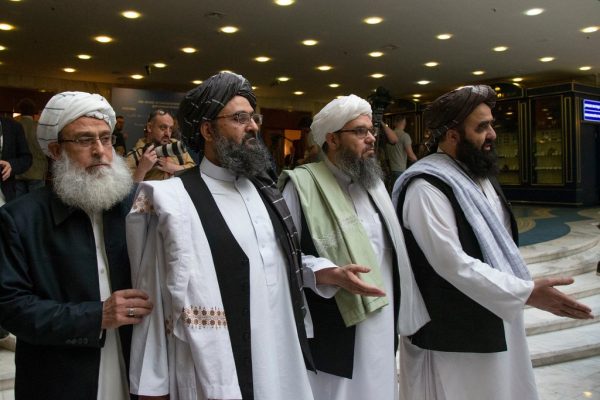
Mullah Abdul Ghani Baradar, second from left, with members of a Taliban delegation in Russia in 2019.Credit…Alexander Zemlianichenko/Associated Press
If you want to read an infuriating account of our incompetence making us enemies among people who wanted to be allies during that second round of war, read Chapter 5 of No Good Men Among the Living. It is a detailed description of how we were tricked into detaining and/or killing the entire anti-Taliban leadership of Band-i-Timor in the Maiwand district of Kandahar. You cannot make some of this stuff up.
The opinion piece by Sirajudin Haqqani was a masterstroke of information warfare and will be hard for the United States to refute. The Taliban leadership, unlike the American leadership, has skin in the game. There is no reason to doubt their commitment to participate in establishing an Afghanistan free of foreign troops and moving towards a consensus on who is governing what. It is now time for the United States to move out of the way and allow the Afghans to determine what their country will become.
In 2002, the Taliban were defeated, and al-Qaida had already gone to Pakistan. All the fighting since then has not changed a thing on the ground. It is time to pull out, reduce funding to Afghanistan, and let them sort out the situation among themselves.
Last week, news broke of a possible peace deal in Afghanistan, leading to a firestorm of speculation in the media about what’s going on. The reporting was not consistent, but the consensus is that the peace deal would call for negotiations between Afghans on both sides of the conflict to start next month, an eventual countrywide cease-fire, and a commitment from the Taliban not to harbor terrorist groups like al Qaida, while setting a timetable for the withdrawal of U.S. troops.
A famous quote incorrectly attributed to Winston Churchill, “Jaw Jaw is better than War War” (actually, he said, “Meeting jaw to jaw is better than war,” which makes more sense) reinforces that this is (potentially) good news. The devil is in the details, and we do not know what “reduction of violence” means to the United States or “withdrawal of U.S. troops” means to the Taliban.
The Taliban are not a monolithic organization but several competing factions. We have been dealing with the Quetta Shura, which represents, but cannot speak for, the other players like the Miranshah Shura (primarily the Haqqani Network) or the Peshawar Shura. That being said, the Taliban did deliver on an Eid ceasefire agreement last year, and that ceasefire held.
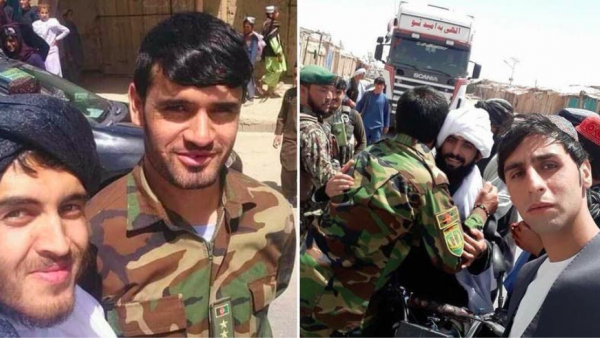
Taliban fighters taking selfies with Afghan army troops during Eid ceasefire last year.
We can get a reliable read on what the Taliban considers a reduction of violence in this detailed report from the always reliable Afghan Analysts Network. From the linked report:
Another Pakistani newspaper, quoting an un-named Taleban official, reported that the movement had agreed not to carry out attacks in major cities including Kabul and would not use car bombs and that the Taleban had also offered not to attack US bases and US soldiers, and that they wanted the US to cease air strikes in return. The newspaper said it had learnt “that Khalilzad had urged” the Taleban to agree to more measures, including a halt to IED attacks, but that they did not agree “as they have planted IEDs in many areas and it is difficult for them to remove all [of them].” Furthermore, the paper reported, the US also wanted a pause in Taleban attacks on Afghan government forces’ check posts, “which was also a concern of the Afghan government.”
Senior U.S. military officials (speaking off the record) in Afghanistan stressed that U.S. counterterrorism operations in Afghanistan against the Islamic State group and al-Qaida will continue, separate from the truce agreement. This is problematic for several reasons, not the least of which is that ISIS-K in Nangarhar Province has been defeated.
Their fighters have mostly surrendered to the government or gone to ground. There are ISIS-K cells in the north of the country, but they are not large or powerful and are in the sights of the same fighters who rid Nangarhar Province of ISIS, and those fighters are Taliban.
The counterterrorism mission in the eastern part of Afghanistan has been focused on ISIS-K (Daesh to the locals) for years. Now that ISIS-K is gone, the Special Forces teams are flying around the province conducting ‘Key Leadership Engagements’ like the one I wrote about last week. That occurred in the Sherzad district, which is very close to Jalalabad and full of former HiG fighters who have cooperated with the Taliban on and off over the years. They cooperate mainly because Taliban shadow courts settle land disputes quickly and, they feel, reasonably.
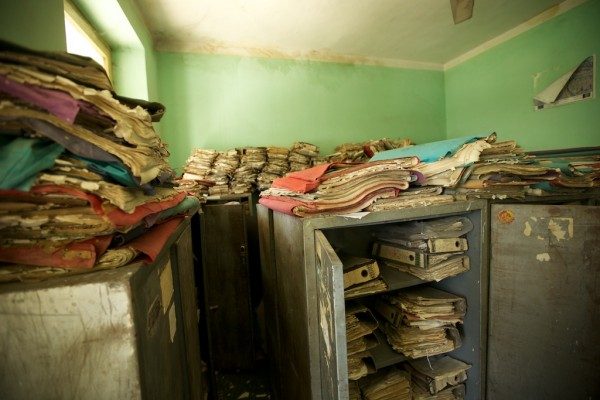
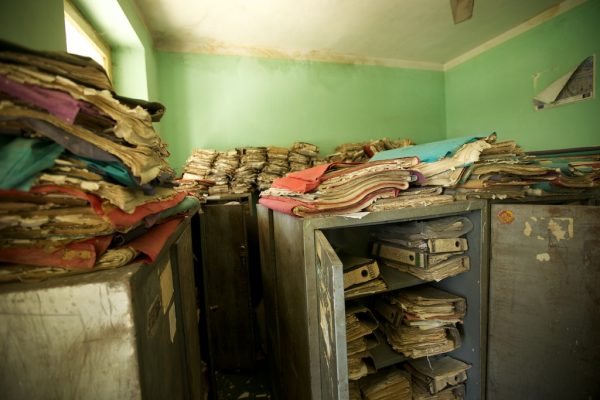
The land deed office for Nangarhar Province – some of these documents are hundreds of years old
The time for our SF troops and the Afghan varsity Commandos to be running around district centers meeting with key elders seems long past. The local elders know all about the dysfunctional government in Kabul and will not be convinced it has their interests at heart until the government demonstrates it.
With ISIS-K on the ropes, trying to separate Taliban connected fighters from al Qaida will be problematic. The remaining senior al-Qaeda leaders have successfully gone to ground inside the tribal areas of Pakistan and do not need to move anywhere. Al Qaida has a presence at Taliban training camps and may even run a few, but I have no doubt the Taliban understand the consequences of allowing them to use their territory for international Jihad.
If there are no independent al-Qaida formations, then if you go after them, you are still going after the Taliban.
The incident rate in Afghanistan has plummeted this year. Some of this is due to the pounding the Taliban have taken from American air attacks, which increased dramatically in 2019. Some of this can also be attributed to the Taliban winding down operations as the peace talks continued. The stats below come from The Armed Conflict Location & Event Data Project.
Time will tell, but it seems that the end to American involvement in Afghanistan is near. But if you pull all the training support missions out and leave a Special Forces task force to continue hunting “al-Qaida and ISIS,” it will test, if not break, the fragile peace. We need to pull everyone out and let the Afghans settle things themselves. Continuing night raids and killing bad guys in Afghanistan does not reduce any threats to our homeland. It’s time to admit that and act accordingly.
First, it appears the dead and wounded (including the Afghan SF troops with the Americans) were at the hands of Afghan National Army soldiers. From the article linked above:
Additionally, at least six more American troops were also wounded. The high number of casualties (17 as of this reporting) is attributed to the ODA/Afghan combined force coming under fire from a DShK, a Russian designed heavy machine gun which fires a 12.7mm bullet. The wounded have been evacuated to the appropriate field hospitals.
The source explained to Connecting Vets that it is suspected that the Afghan National Army (ANA) was behind the attack, although details are still developing.
From what I can determine, they were attacked by a lone gunman with a heavy machine gun. It is safe to assume (if this proves true) that the lone gunman was a Taliban. They got an assassin into the governor of Kandahar’s security force, who was able to gun down the irreplaceable Gen Raziq. As I wrote, the time and will continue to write, this will happen again. It is obvious that the screening methods in use are not working, and, given my experiences in Afghanistan, I suspect they will never work.
Second, one is forced to ask why we are still conducting KLEs in the badlands at this late stage in the game. What did the SF guys believe would be accomplished? I can’t imagine a good answer to that question, and I have over eight years of experience conducting KLEs in Afghanistan, many of them right there in Sherzad district.
It isn’t easy to understand what is happening in Afghanistan. Nangarhar Province has gone from one of the safer provinces in the country to the deadliest one for American forces. The army had been losing soldiers over the past four-plus years in Nangarhar Province, fighting an outbreak of ISIS along the border with Pakistan.
The Taliban got sick and tired of ISIS deprivations before and rolled into Nangarhar and kicked their asses hard in 2015. Last fall, the multiple Taliban units returned to Nangarhar (probably from Loya Paktia via the parrot’s beak, which is that finger of Pakistan land jutting into Afghanistan at the bottom of the district map below) and beat ISIS like a drum. ISIS was surrendering to the Afghan government last time I checked, and is no longer a threat.
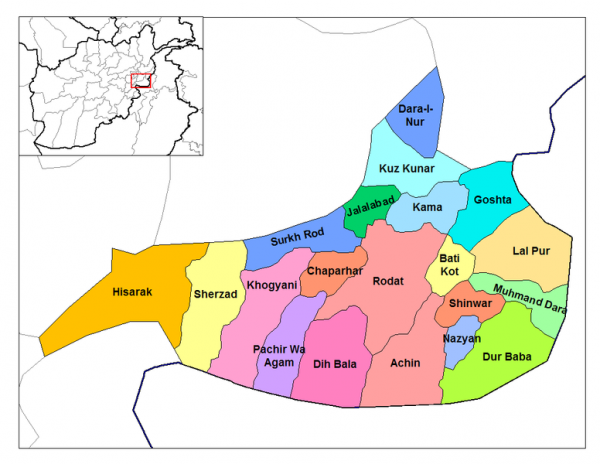
This is the Nangahar province of Afghanistan. Sherzad district is in the east of the Province, and the ISIS threat was centered in Achin district, well to the west. Back in the day, Sherzad was HIG land (not Taliban), but Heckmyter Chu-Hoi’d to the government side a few years back, and it is now a Taliban stronghold.
Despite ISIS being routed (reported here in the Military Times three months ago), ISIS-K is still being used to justify our continued involvement in Afghanistan. That is ridiculous – ISIS-K was a collection of Pakistani Taliban who were trying to carve out their own little Jihadi paradise in an area that contains the largest talc powder deposit in the world. Threat to the US Homeland? Hardly. Al Qaeda is the same – they have gone to ground and remain unmolested in Pakistan for 18 years now, and do not need to use Afghan soil for anything. The airport in Peshawar is 10 times better than Kabul International so why would any decent Jihadi move from his decades long home in Pakistan?
ISIS-K has been eliminated, and the Taliban now control most of the countryside in Nangarhar Province. Our troops are stationed at the Jalalabad airfield, primarily consisting of aviation and aviation support personnel. There are also two different Special Forces compounds there, which still house one or more Army Operational Detachment Alpha (ODA) teams. I understand the necessity of conducting operations outside the wire of a secure base like Jalalabad to keep the threats at a distance. However, I am unsure about the potential benefits of engaging in key leader engagements at this point in time.
This is precisely the kind of senseless loss that is driving President Trump to wind down our involvement in Afghanistan. How do you justify losing 8 Americans and an unknown number of Afghan Commandos on a chin-wagging mission with a bunch of local elders?
As an aside, the only mainstream outlet to write about this is Fox, and their take is focused on the perfidy of Green on Blue attacks. They have (as usual) completely missed the obvious, and the comments section is so clueless it’s depressing. The other outlets are (I suspect) waiting to see what President Trump will say so they can say the exact opposite. Watch and see.
Maybe there are excellent reasons for the mission to Sherzad that we will never know, but I do know there are better ways to conduct KLEs. It is always better to risk one contractor than it is to risk a dozen highly trained special operators. The counterintuitive thing about that is that an experienced contractor traveling alone into the Sherzad district, wearing local clothes, and in a local vehicle is much safer than 20 soldiers rolling around in four MRAPs. That is a lesson we refuse to learn, and I think the President, for one, is getting tired of it.
I have no idea why the destruction of ISIS-K by the Taliban in Nangarhar Province has remained virtually uncovered in the legacy media. That changed with an excellent interview with the Taliban leadership in Nangarhar Province by The Washington Post. The Taliban were celebrating their recent crushing of ISIS-K (or the F’ing Daesh in local lingo). They interviewed in Khogyani district, which is close to Jalalabad and was once solidly under government control.
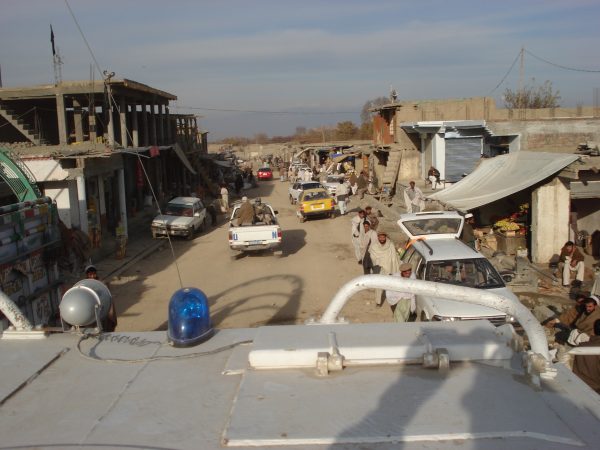
This picture is from the back of an armored vehicle belonging to a UN road building contractor in the Khogyani district center in 2008.
The Taliban were direct and to the point regarding continued military operations. Check out this quote from one of the Taliban commanders:
Mullah Nik Muhammad Rahbar, 28, a Taliban commander responsible for Kabul province, pointed to the resources freed up by the conclusion of the fight against the Islamic State in Nangahar, saying the Taliban would be able to shift back to conducting more high-profile attacks in Kabul and elsewhere.
“Thank God you saw what we achieved against Bagram today,” he said. “We launch attacks in Kabul because there are many foreigners there, many targets for us.”
The Taliban went on to claim that they are not targeting Afghan civilians (the UN attributes 922 civilians killed and 2,901 wounded just this year by the Taliban) and that they will now shift their attention to the Government and ‘foreigners.’
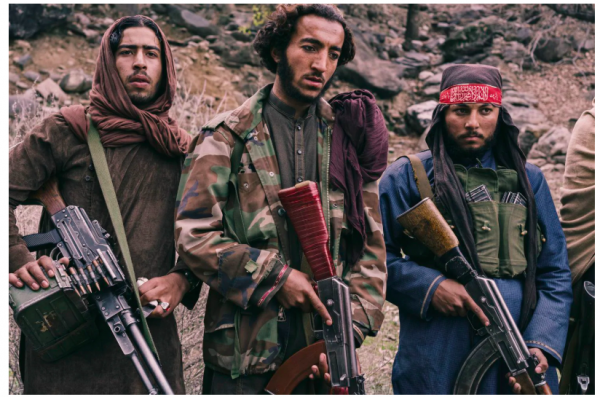
Taliban fighters showing their weapons to the press in Khogyani. Photo by Lorenzo Tugnoli for the Washington Post
This is not good news because there are a bunch of ‘foreigners’ stationed at the Jalalabad Airfield, and with ISIS-K gone, they have little to do except support the Afghanistan National Army trainers at the nearby, whatever the former Camp Gamberi is now called. Khogyani is not far from J-bad, and back in the day, the Muj would pick off Soviet Hinds on the approach to the J-bad airfield on an alarmingly regular basis (when they had the Stingers).
The United States cannot afford to throw a bunch of soldiers inside an Airbase without some active patrolling to keep the jihadists from getting too comfortable squatting within mortar or man-packed anti-air missile range. Patrolling like that takes boots on the ground, which are in short supply.
Anybody who thinks the Taliban will fail to take a shot at inflicting severe casualties on an American military formation doesn’t understand Afghans. This is what they do, and they will pay a steep price if they think they can generate some casualties and destroy some aircraft in the process.
The United States Military is not agile enough to withdraw resources from the eastern provinces while maintaining the relentless air campaign that has dropped more air-delivered ordinance this year than any prior year in the Afghan War. Throwing around 1000 pounders will result in collateral damage, and we now know that the generals running this war know that the collateral damage incurred while blasting the Taliban creates more Taliban and is a losing strategy.
But it is all they have for now; the Generals and senior government Mandarins have no problem stringing this out for years to come. The President isn’t happy with the status quo. I’m not sure what the Democrats’ position is on Afghanistan, as they seem to have lost their minds with the sham impeachment they inflicted on us. I have said before and will say again, this is not going to end well.
Two news items popped up yesterday that are certainly good, possibly great. The first was the release of two American University professors, one American, the other Australian; who were kidnapped in 2016. The other is the apparent mass surrender of Daesh (ISIS-K) fighters to the Afghanistan Security Forces.
The always reliable Mohammad Jawad (a.k.a. JD) of DPS reported:
US citizen Kevin King and Australian Timothy Weeks were released by the Taliban on Tuesday, three years after being kidnapped, as part of a prisoner-swap deal.
The two professors were taken by the Taliban in August 2016 on their way home from the American University of Afghanistan, where both taught.
They were freed in exchange for the release of three senior Taliban members being held by the Afghan government.
Earlier in the day, I had the chance to ask JD about the Daesh story when we were chatting on Messenger. He told me he had heard the story is true, but he could not verify it with sources in Nangarhar. Shortly after signing off, I received a phone call from a former Jalalabad colleague (who is still in Jbad). He said that the word in Jbad is that the Daesh have quit the battlefield en masse and are asking for Melmastia (the Pashtunwali requirement of hospitality and profound respect for all visitors, without any hope of remuneration or favor) from the central government.
That is precisely how the Daesh, who were Pakistani Taliban trying to get away from the Pakistan Army operations Khyber 1 and 2, ended up in the Achin district of Nangarhar province in the first place. In Afghanistan, nothing is easy to plan, be it military campaigns, infrastructure development projects, or a program to welcome former combatants. Those types of plans do not survive contact when implemented. Afghans just don’t work that way, but somehow, when left alone, they will reach a compromise that all interested parties can live with.
Plus, there is this:
This is the land title storage room of the Nangarhar Provincial Agriculture Department. Some of these papers date back a hundred years and fall apart if you touch them. They are not cataloged or organized.
The government is not in a position to effectively give away land in Nangarhar Province. I imagine Kabul will want to spread non-Afghan Daesh fighters out in marginal, thinly populated areas, not near the country’s most important border crossing (Torkham). But who knows? It will be interesting to see how this plays out.
My prediction has been that the Daesh in Nangarhar would be destroyed as soon as the Taliban (who have wiped them out once before, as noted in this excellent post) were allowed to have at them. The Daesh (ISIS K) was never a real threat because the Afghan people are tired of dealing with radical Sunni orthodoxy and the militants who force it on them. They like to smoke cigarettes, and occasionally they enjoy getting drunk too. Vat 69 Scotch (brewed in Rawalpindi, Pakistan) and Cossack Vodka (brewed in Quetta, Pakistan) are always available, as is The Green Meanies (Heineken in the can). Alcohol is not used as a social lubricant in Central Asia, and it is haram (as well as illegal), which is why you don’t hear much about it, but it’s there and no big deal to your average Afghan.
Although I never felt the Daesh a legitimate threat to Afghanistan or the United States, they have destabilized Nangarhar Province to the point that I’m getting panicked phone calls from Jalalabad City. Only once in the last seven years have I received a call from J-bad, and that was about the death of my friend Hedayatullah Zaheer Khan (Zee). Zee had been killed in a Daesh bombing of an Eid Cricket Tournament he had organized. This time, the call was about employment verification certificates and letters of support for a half dozen former colleagues’ Special Immigrant Visa (SIV) applications. These requests are from Pashtuns who had intended to stay in Afghanistan for the duration. The rise of Daesh in the province has unnerved them (to put it mildly).
I’m not too optimistic about the chances of my former colleagues getting SIVs. I’ve sent notarized statements verifying their employment with me and their faithful service implementing multiple aid projects in the province. I’m trying to get the corporate headquarters from the agencies I worked for to send verifications, but they never even had records of local employees in Afghanistan. That seems to be a dead end.
To say I hope this news about Daesh is true would be an understatement. The prisoner swap is another indicator of progress in getting the Taliban and the government in Kabul to start talking. At some point, the Trump administration is going to try for another deal, and the next time around, I believe the players understand they need to stick to the terms they agreed to with the President, or he’ll drop the deal like a hot potato. That’s as strong a negotiation position as we have seen in a long time.
There is one point that I have hammered home on blogs and podcast interviews concerning Afghanistan: the next round of funding is a game changer. I thought we would see some serious budget slashing in 2020, but it has already started. Over the weekend, the State Department cut 100 million dollars designated for Afghanistan energy infrastructure projects. They also withheld another 60 million in payments to Afghanistan’s National Procurement Authority.
Aid is being withheld because of the endemic corruption found in Afghanistan (and every other country in the region). The sums involved look massive, but they aren’t. Keeping Afghanistan’s military and government solvent costs billions annually. Cutting programmed funds is long overdue, but I am guessing this is a test run to see what happens when the real funding crisis strikes next year.
My concern is that once the Afghan people understand we are doing the old cut and run, they may “complicate” our continued presence in the country.
Adding fuel to the fire is yet another ridiculous massacre of Afghan civilians by our armed forces. A drone strike in Nangarhar province killed 30 workers who were gathering pine nuts. This is not the first time we have slaughtered pine nut gatherers. For 18 years, we have been bombing Afghans who were going about their day because people watching drone feeds thought they were up to nefarious activities. We seem to be incapable of learning.
Just yesterday, 3 American soldiers were wounded in an insider attack on their convoy by a member of the Afghan Civil Order Police. This attack might have something to do with the loss of General Abdul Raziq last year. The Afghans know that Raziq was in that vulnerable situation only because General Miller invited him to the Kandahar Governor’s compound.
The guy who perpetrated this assault may well have been a Taliban plant, just like the one who nailed Raziq. Or he could be pissed about the death of Raziq and took it out on those he thought responsible. Who knows? But the timing of this attack is ominous to those like myself (and maybe it is just me) who are worried about pulling the cut and run while thousands of troops and tens of thousands of internationals are resident in the country.
The Afghan people are not stupid. When the news of the 160 million dollar cut broke, my Afghan friends in Kabul took to Facebook to lament an act they knew was coming. Here are some of their comments from my Facebook page:
Can’t really blame the US for doing this..
That peace deal is coming the conditions are gearing up for anti-USA climate, when the money stops then why are you in Afghanistan? You gotta pay to play otherwise the Afghans are switching their attitudes. Try governing Afghans who haven’t been paid.
But it’s so right! There is no transparency in AFG gov procurement and especially large projects. Nobody can audit NPA, u can’t complain against them and they can award projects to people of their choice.
It’s about time! Bad news for some people.
This is the tragedy; there are plenty of Afghans who want our help, who respect and are inspired by the idea of America, and who, if the Taliban return, are in serious trouble.
Afghanistan is a mess, but the only way for us to extract ourselves from that mess is slowly. The imperative now for NATO and the Afghanistan Security Forces is not to cede the initiative to the Taliban. The Taliban continue to attack; they are not going to stop applying pressure because it is working well for them.
We need to keep hammering away at them, too, but when we do that, we kill pine nut workers or smoke check wedding parties. The reason is a lack of human intelligence, local atmospherics, and American boots on the ground.
I do not see how we will square the Afghan circle. Still, I know contractors are one option with potential because contractors can loiter in the country longer than the military and can return to the same unit over and over to build cohesion and competence. There are thousands of American combat vets (and contractors) who would willingly return and stay to see the fight through. I’m one of them. I love Afghans (most of them) and the country, too, but this will not end well.
Fellow Afghanistan Free Ranger Dr. Keith Rose released a podcast the other day describing our current situation in Afghanistan as Groundhog Day. The people of Afghanistan are suffering with no end in sight, which is 180 degrees out from where I thought they would be when I flew into Kabul in 2005.
Using Keith’s analysis (a great podcast) as a point of departure, some dynamics with Afghanistan must be emphasised as our involvement continues. Fans of the international hit podcast The Lynch/Kenny Hour on All Marine Radio have heard Jeff, Mac, and me talk about our campaign in AF/PAK at length, using blunt terms that sound harsh to those unfamiliar with infantry guy talk.
As I pointed out last week, that podcast (and this blog) has many Afghan fans who know me. Afghans do not communicate with each other in blunt, no-BS terms, but I know they appreciate it when we do. Nothing will freak out Afghan project managers more than saying “inshallah” after discussing a scheduled payday.
Blunt fact number one is that our stated reason for remaining in Afghanistan is a blatant fabrication. The US Government has consistently maintained that we have to stay to make sure al-Qaeda does not come back, establish training camps, and conduct terrorist attacks on the international community from safe havens in Afghanistan.
They already have training camps in Afghanistan. We took out “Probably the largest” one in Kandahar province four years ago. The leader of al Qaeda, Ayman Al-Zawahiri, has had a haven in Pakistan since 2001, and has now (obviously) drone-proofed his lifestyle. Why would he leave Miranshah to live in Khost or Kandahar? The international airport in Peshawar is much nicer than any airport in Afghanistan; it is served by more international airlines (including Emirates, my favorite) and serves more destinations. Who in their right mind would fly Kam Air from Kabul to Dubai when you can fly Emirates from Peshawar and rack up the sky miles?
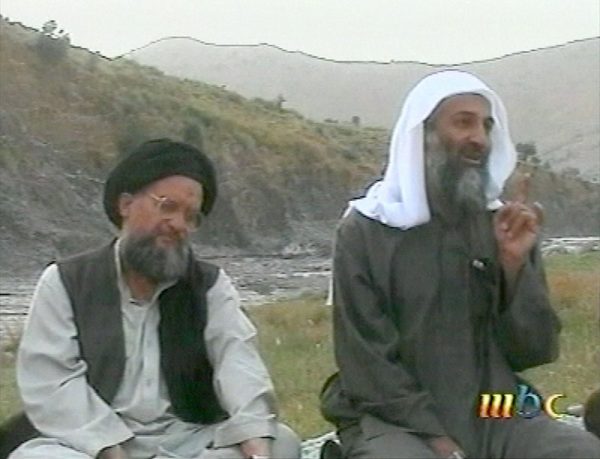
Ayman Al-Zawahiri and bin Laden in a file photo released in 2002. I would bet big money (based on the terrain behind them) that this photo was taken on the Jbad-Kabul road just west of the old Soviet hydro dam outside Jalalabad. There was an al-Qaeda training camp out that way (ISAF still uses it and calls it Gamberi)
You are thinking that terrorists don’t use SkyMiles. Still, I must point out that the largest covert operation ever launched by CIA agents (not contractors, which is the norm) was compromised because the agents used their covert ID to fly into Italy, but had used their personal credit cards to book the flights and hotels. That’s the CIA, which is supposed to be high speed and low drag – the Taliban has to be worse on the operational security.
Blunt fact number two is that the American people, in general, and their military veterans specifically, believe we have done more than our fair share to give Afghanistan a chance, and they blew it, so the hell with them. Clearly, President Trump is looking for a way out and is willing to do almost anything (to include inviting former Gitmo detainees to Camp David for a round of ‘Let’s Make a Deal’) to end our commitments in the region. President Trump has said we are not getting any return on our considerable investments and asks why we should stay in Afghanistan or Pakistan?
The reasons to remain in the region are no doubt varied and complex. Still, the fact is that as long as we have thousands of servicemen, along with thousands more internationals in the country, we have to keep funding the government in Kabul. The next round of international funding is in 2020, and the funds are tied to anticorruption metrics that have not been met. If the international money pipeline closed suddenly, how do you think the tens of thousands of internationals would get out of the country as the government folds and the security services crumble?
That is a scenario you don’t have to worry about because the specter of Gandamak II will keep funding going indefinitely. Nothing terrifies Western government politicians more than the slaughter of their citizens, for which their accountability is unavoidable. The Taliban will continue to attack both military and civilian targets because they are terrorists, and that is what terrorists do. The Taliban no longer resembles the popular uprising of the religiously righteous in the face of anarchy. They are now narco-terrorists first, Islamic Jihadi’s second, and Afghan nationalists (maybe) third.
The Taliban were once competent enough to protect the people of Afghanistan from anarchic violence, but they are now the source of anarchic violence. Tyrannical rule is bad, but chaos is worse, and many Afghans have lived through both. The Afghan people will side with the side that delivers them from chaos, especially if that side is committed to keeping Pakistan the hell out of the country.
That is the other great unknown: what happens to the safe havens in Pakistan when the Taliban cut a deal with us? The Afghan Taliban claim to be their movement, but they are Pakistan’s puppets, just as sure as the government of Kabul is America’s. Pakistan exerts more direct control over the Taliban than America has ever been able to establish in Kabul. For the past 50 years the Taliban have been Pakistan’s bitch.
The investment in Afghanistan’s human capital came from every corner of the globe, including Burning Man.
America no longer has the stomach for staying in Afghanistan, but that’s too bad; we’re not going anywhere for the reasons outlined above. So, how does this end? I have no idea, but I’m a fan of the Afghan people, and I believe they can, and will, sort things out given time and space. It is arguable if our continued meddling is helping, but that is irrelevant now. We aren’t leaving and are incapable of staying without meddling, so there it is.
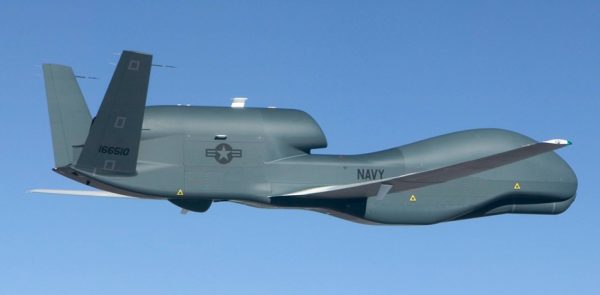
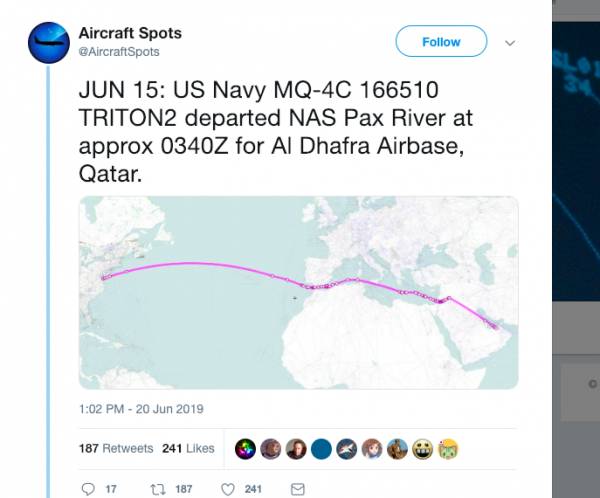
July 4th is the perfect day to launch a campaign aimed at uniting Americans behind a national hero of whom we can all be proud. In prior posts, I have nominated the RQ-4N BAMS-D (Broad Area Maritime Surveillance-Demonstrator) drone that arrived in the Persian Gulf on June 15th and was shot down by Iran five days later.
BAMS-D Broad Area Maritime Surveillance-Demonstrator
The day after we lost our drone, the United States launched a retaliatory strike on Iran, but called it off at the last minute. Concurrent with the feint (or aborted) attack, a real cyber attack hit the Iranian Missile Control Systems and devastated them.
There is an apparent connection between an old surplus drone being sent to the Gulf and then promptly shot down, and the subsequent cyber attack. Cyberattacks on closed systems (like missile control systems) have limited entry routes—either a human agent or a targeted platform introduced the virus. Given the Central Intelligence Agency’s record regarding human intelligence, the chances they had someone on the inside are beyond remote.
I believe the attack was effective because Richard Fernandez, writing at the Belmont Club, said they were. Mr. Fernandez is a proven source of consistently good geopolitical analysis. He could be wrong, I have no way of knowing, which raises the question of who and what can you believe in this day and age?
In an era when the press and politicians use divisive rhetoric to separate and categorize us along racial or ethnic lines, it is hard to know what to believe or who to trust. I believe in and trust the American people. At this moment in our history, the American people need a hero, and what better hero than an unarmed drone with a story that inspires and educates?
A hero needs a name that has meaning, and on July 4th, what could have more sense than a name that acknowledges the genius and wit of the British people?
When Britain’s Natural Environment Research Council allowed the British people to name their new 300 million-dollar Arctic research ship, the people, recognizing a boondoggle, insisted it be named Boaty McBoatface. The boat is now called the RRS Sir David Attenborough, public opinion be damned, but to me and millions of Brits it will always be Boaty McBoatface.
Thus, I propose we name our hero drone Droney McDroneface.
The 4th of July is the perfect day to recognize Droney with a tip of the hat to the British people. But his accomplishment is only significant because we are now energy independent. The story of our energy independence starts on July 4th, 1845. On that day the Texas legislature held an emergency meeting to accept an offer from the United States to become the 28th state. Texans had been pleading with the United States for entry into the Union for ten years. For ten years, they had been held at arm’s length due to international treaty obligations with Mexico and the issue of slavery.
The Texans had capable leaders, and they started flirting with Britain, France, and Mexico when the United States realized it needed to own the land all the way to the Pacific as a strategic necessity. Texas drove a hard bargain; part of that bargain was that the Federal Government could not claim or own any land in Texas.
As an aside, the only member of the Texas constitution committee born in Texas was José Navarro of San Antonio. We’ve been a multicultural country from the start, a point seldom heard in national discourse these days.
The United States is currently the world’s leading oil producer. The modern fracking boom started in Texas specifically because the federal government owned no lands and could not impede development there. We are the world’s leading energy producer despite, not because of, our federal government.
In the words of the immortal historian T.R. Fehrenbach, the founders of Texas thought they had joined a “country so great that even fools could not destroy it“.
Millions of Americans believe that President Trump is a fool who will destroy the country. I felt the same about President Obama. The government survived eight years of Obama and will survive four or eight years of Trump.
America’s greatness has more to do with the land and the people than specific programs or forms of government. We are strategically dominant because we have found a way to extract petrochemicals efficiently using new technology. The people, not the government, made us energy independent.
Iran now has no missile defense capability because Americans engineered a way to attack and disable it without shedding a drop of blood. The people, not the government, developed that technology.
All people remember significant past events by telling stories that organize the action into a coherent narrative. The narrative behind Droney is straightforward to map out without triggering any special interest. Droney was unarmed, an outcast scheduled for the bone yard. Droney was bipartisan; nobody used drones more than the Obama administration. Droney is gender fluid, I refer to him as ‘him’ not to offend any other gender, but because I too am a him. But Droney could be a ‘her’ or an ‘it’ or a ‘post op transsexual’ drone; it doesn’t matter. Droney can be all things to all people.
Droney McDroneface wasn’t like the other drones; he didn’t fly at 60,000 feet or have weapon pylons or the ability to loiter for hours on end and then rain death and destruction down from on high. He had no crew, he had no mission, he was headed to the desert to be mothballed.
Then one day, contractors came and started performing preventative maintenance. They refurbished every system and outfitted him with a special payload. Droney got the mission brief; he was destined to be shot down by the unhinged mullahs in Iran. But before they got him, he would feed a special packet into the systems that interrogated him. His sacrifice would ensure oil flow to Africa, Asia, and the Pacific Rim. Granted, it would be great for America if the price of oil started to climb, but the world economy is bigger than the American energy market, so Droney had to go.
Drowney flew to the Al Dhafra Airbase, squawking that he was an MQ-4C Triton, which he is not. He sat in a secluded hangar as the same techs from Pax River worked him over again. But now dozens of military officers were watching them, taking pictures of his insides, and talking in low, hushed tones about something important.
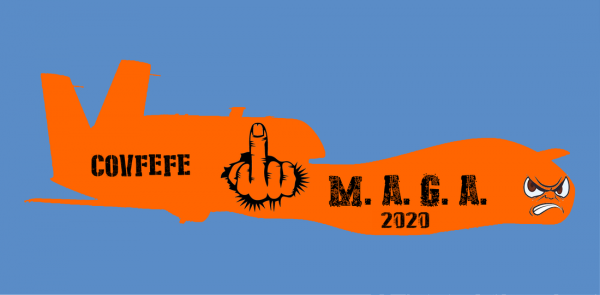
Droney received a new paint job—he was now orange, which was weird. He added new nose art (a big, sweet, innocent smile) and the letters MAGA where the US Navy had once been. A large human fist was drawn on his fuselage, with the middle finger standing straight up. Droney didn’t know what that was all about, but the Air Force guys who painted it were laughing the entire time they were there.
Just days after arriving, he rolled out into the evening twilight, rested, focused, and fit for the last flight he would ever make. Without hesitation or remorse, he launched into the night sky and the pantheon of American heroes as the first cyber warrior to deliver a knockout punch without spilling one drop of blood.
That is the story of American grit and ingenuity, of which we can all be proud.
Editors Note: The title of this post was changed at the suggestion of a long time fan of FRI, LtCol Robert Brown, the publisher of Soldier of Fortune magazine.
Intentionally or not, in the current contest of wills with Iran, the United States is now in a dominant geo -political and military position. Intentionally or not, the United States now has the most accurate, comprehensive, intelligence on Iran’s order of battle that any adversary has ever harvested from its opponent in history. We may not have arrived at this point due to a clever plan but we are here just the same, so let me describe where “here” is.
Iran was caught seeding mines into the strait of Hormuz in, what many believe, was an attempt to stage a heroic rescue of international sailors who were victims of the instability caused by the reckless actions of the President of the United States. That plan did not survive contact when the freighters did not sink and the USS Bainbridge arrived on scene to stop the Iranians from pushing one the disabled freighters into Iranian waters.
Days later the Iranians shot down a U.S. Global Hawk drone. This was no ordinary Global Hawk, it was a RQ-4N BAMS-D (Broad Area Maritime Surveillance-Demonstrator) flown into the area of operations just days prior. It had been the proof of concept demonstrator for the new navy RQ-4C Triton maritime surveillance drone, but that program was finished and the demonstrators headed to the bone yard. At the last minute that changed and one was sent to the UAE. Why? It did not bring any new capabilities, it wasn’t needed, there are no units set up to crew the beast, what good could it have done?
It is amazing what you can find on the internet
I’m not sure, but here is a theory. That platform was sent to be sacrificed in an effort to fine tune our intelligence of Iranian anti air order of battle. The drone was headed for demobilization anyway; what is the downside to using it for a baited ambush?
One of the four BAMs-D demonstrators
The Iranians shot down a drone for which the United States had no further use. The Iranians contend that we flew the drone into their airspace; we say we didn’t. I say what would you do with the most sophisticated, disposable drone in history? One that is designed to run well below the normal Global Hawk mission profile I might add. One that is so damn big it looks like a jet on radar. What would you do with an asset like that?
I’d run that asset right into the teeth of the Iranian air defense system and record exactly what they do, how long it takes for them to scramble, and how quickly they acquire and shoot me down. Let me explain how valuable that intelligence is. Suppose you had very high confidence in your ability to launch a cyber-attack another countries missile control system and take them all out. Very high confidence would be what? 80 -90%? How could you get your confidence level up to almost 100%? Run a drone at the air defense system to watch how it responds.
We then stage a raid saying we will not tolerate any state shooting down our drones. At the last second, the President decides to turn the planes around; he doesn’t want to spill blood over a drone. He says any further provocations will be dealt with harshly and is immediately criticized for his indecision. How much intelligence did that feint of a raid generate?
Concurrent with the feint raid was a real cyber attack that knocked out Iranian missile control systems. As Richard Fernandez observes in this Belmont Club post:
A sucessful cyberattack inflicts considerable financial damage on the target, rendering vital equipment inoperable. It costs money to diagnose the damage, patch it and test the fix. Before the system can be restored it would be necessary to ensure there was no residual malware. Although Iran has denied any damage to its missiles the unbridled fury of their public response indirectly confirms they are hurt.
It looks to me like the President used a large, serious, diversion to cover his actual attack. That is Sun-Tzu level planning and execution, actually winning a battle without firing a shot, something I have never seen at the national command level. There is another unique aspect to a cyber attack; it produces no pictures.
Pictures cause problems, and right now, President Trump has no problems. Had he gone with a traditional strike package, he would have had significant issues from the pictures of dead kids caught in collateral damage. If we had not caused the collateral damage and casualties, the Iranians would have done so themselves. That is how the Iranians play the game, and we have known that for decades.
The narrative would have been ‘Bad Orange Man strikes because he is unstable. Innocent Persians suffer because Americans need their oil. The narrative never changes and is impervious to facts. The facts are we do not need oil from the middle east and we don’t need bombers to deliver a crippling blow to a state in our crosshairs.
Following the script of the traditional Middle East North Africa (MENA)Kabuki Theater play book, President Trump launched a retaliatory strike with air and rocket assets.Congress and the media immediately played their assigned roles by preemptively declaring that Congress must authorize any military conflict with Iran. The bipartisan duo of Matt Gaetz (R, FL) and Ro Khanna (D, CA) is correct. BUT, we have been dropping bombs and droning people non-stop over there for 18 years, and now they care?
Congress has removed itself from the oversight of our military by refusing to do the work required, by law, to get proper authorizations for using military force. How many times did former SecDef Mattis and the CJCOS General Dunford say, during congressional testimony, that they would welcome and, in fact, need Congress to do its job with respect to the War Powers Act? The question answers itself while amplifying, to the American public, serial congressional incompetence at a vital function they assigned themselves with the War Powers Act over forty years ago.
President Trump has used the current crisis to point out inconvenient truths. He has asked why we protect shipping lanes we do not need ( without compensation) for too long. Trump has asked why we should be shouldering the burden of keeping the straits open to benefit China when the Chinese are stealing us blind and working against our interests.
I understand that keeping the world’s shipping lanes running smoothly and safely is in the best interests of the largest economy in the world. Instability in world markets cause prices to rise and that hurts everybody, who in the world wants to see the price of oil rise?
We do. Oil is selling around $65 a barrel, get that price around $100 and the Permian Basin and the Eagle Ford Shale plays (these fields are in Texas, New Mexico and Mexico) will explode. The one country in the world that would benefit from a significant rise in the price of oil is the United States. The one country no credible person would accuse of manipulating world oil prices is the United States. The position of being the hegemon, who does not put his thumb on the scale, is one Americans shoulder willingly. But we have been taken advantage of by too many for too long and the American people are sick of it.
Iran just got a good taste of the Trump Doctrine, and what has that cost them? Untold millions of dollars and man-hours to replace and repair their missile control systems, which means? They are now Open Kimono. They know we know their air defense system inside and out and that their missile control systems are down hard. If we struck now there is not one damn thing they could do about it. They know it, we know it, and now you know it.