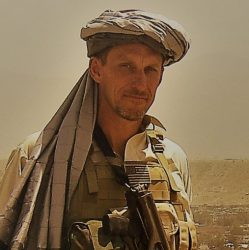
Approaching the Tipping Point

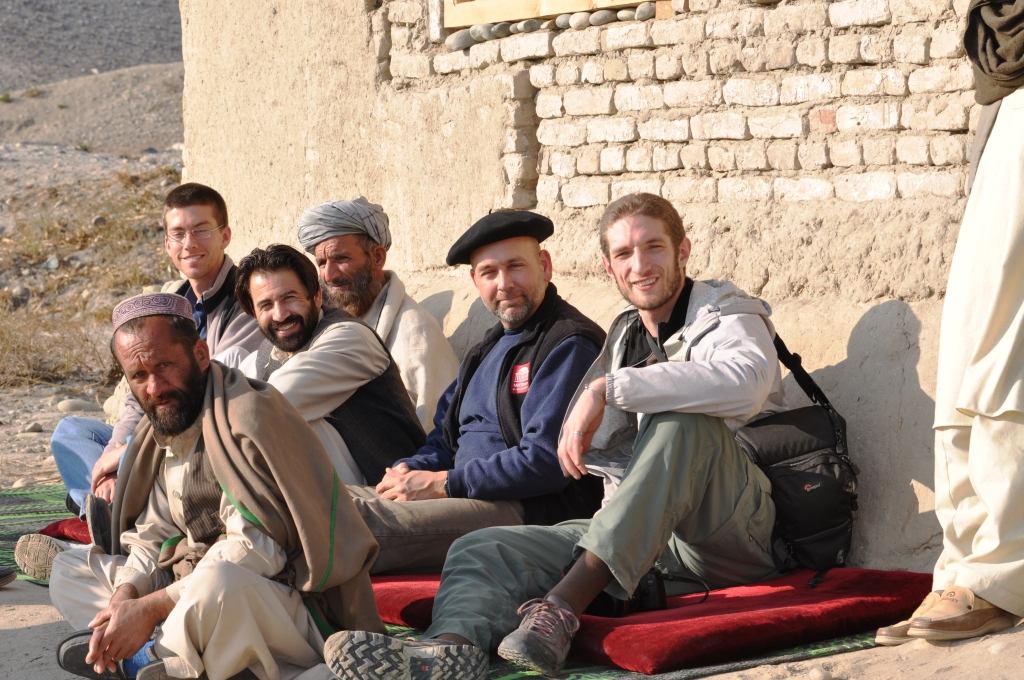
The Fab Folk continue to work like demons to maximize their time on the ground. Yesterday they had successful test shots with their fabricated internet antennas to a local NGO and the Nangarhar Public Hospital. They work every evening setting up the XO laptops they have sent in, and early each morning, they meet for a couple of hours to learn Pashto. Their teacher comes from the local school and is a lifelong resident of the local village. He tells me that poverty is driving people to desperate measures despite the very mild winter we have had to date. Frequently, voices call out to him from the shadows at night, “We are Taliban, give us your wallet, watch, and cell phone.” They are not Taliban but men he has known for years. I asked why this was happening because our understanding of Pashtun culture would prohibit such gross criminality inside one’s community. “Yes, this is true, but we are now so poor that the elders do not ask young men where they got this or where they got that; they praise them instead for bringing anything of value, which will ease their poverty.” This is just a hint at the tension under the surface of a population in one of the more affluent portions of Afghanistan.

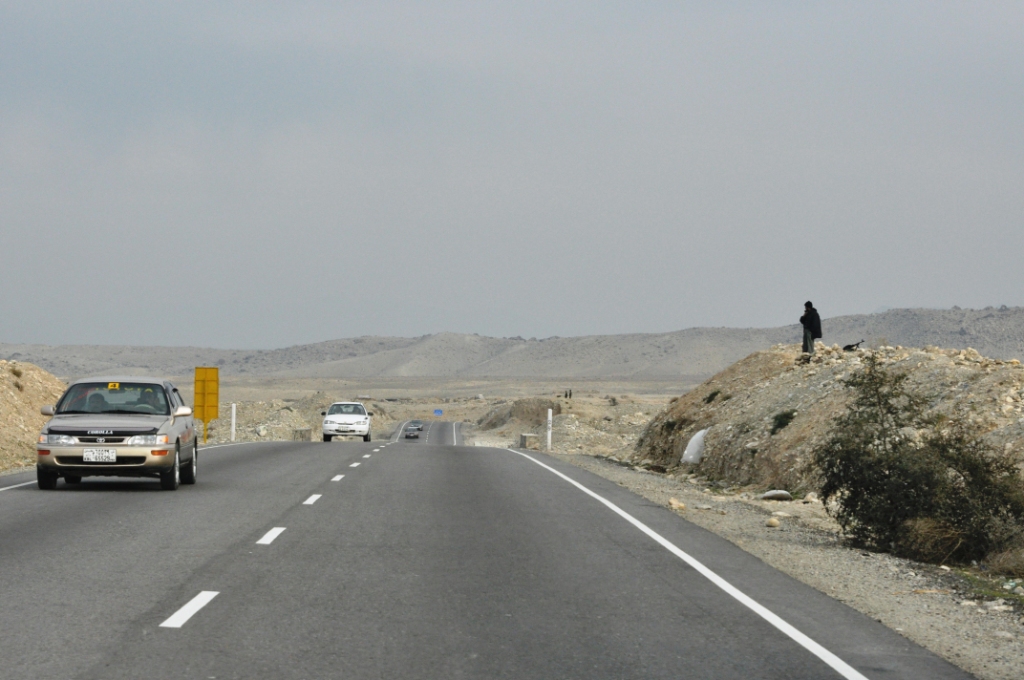
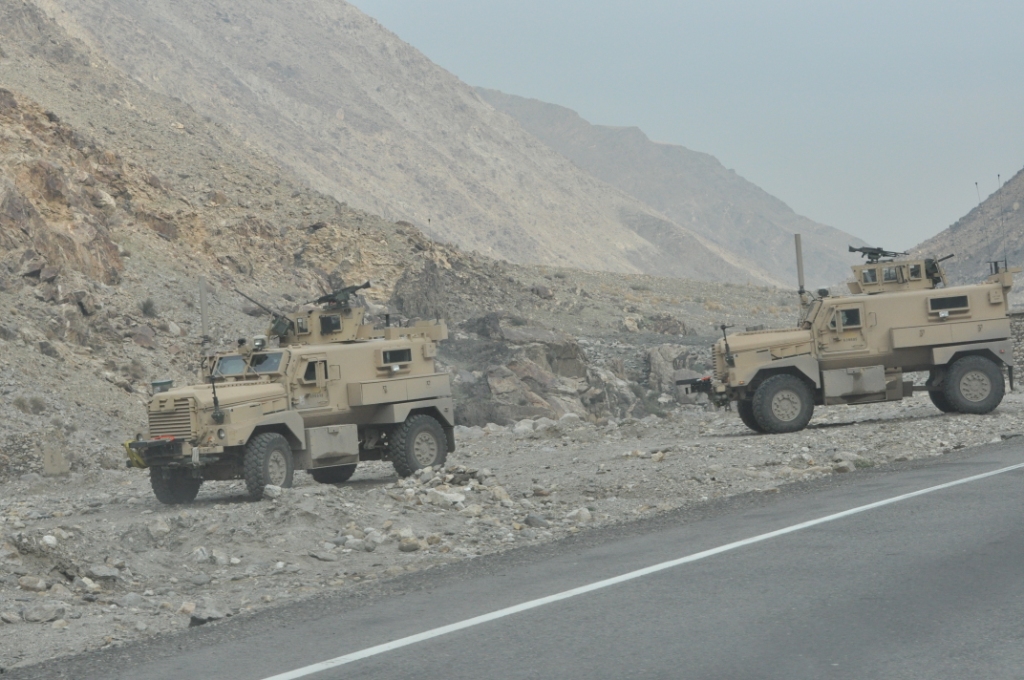
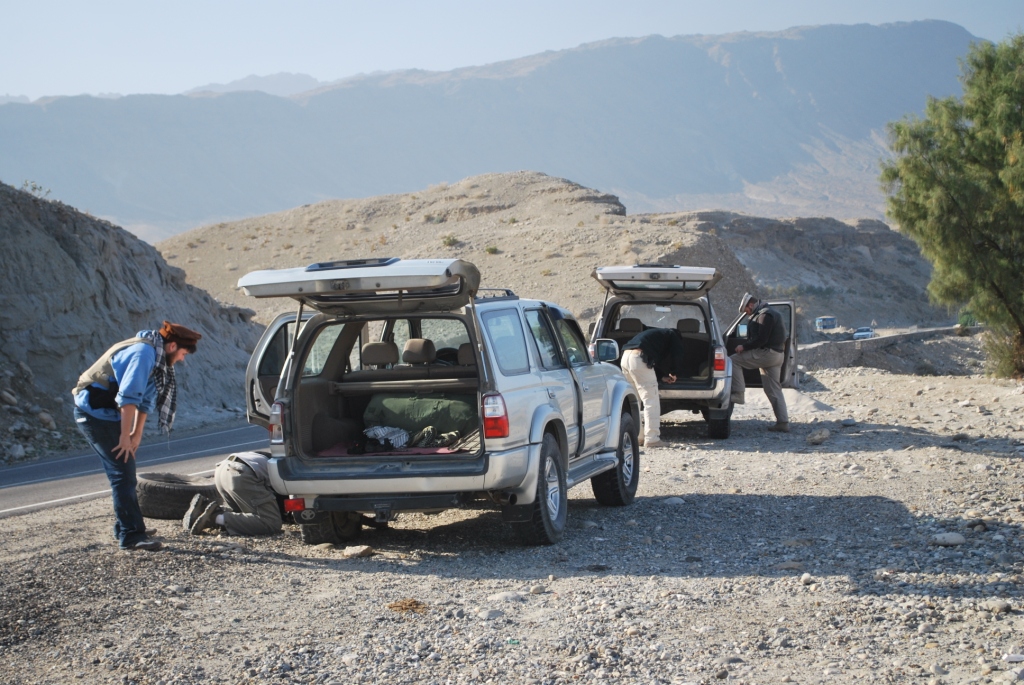
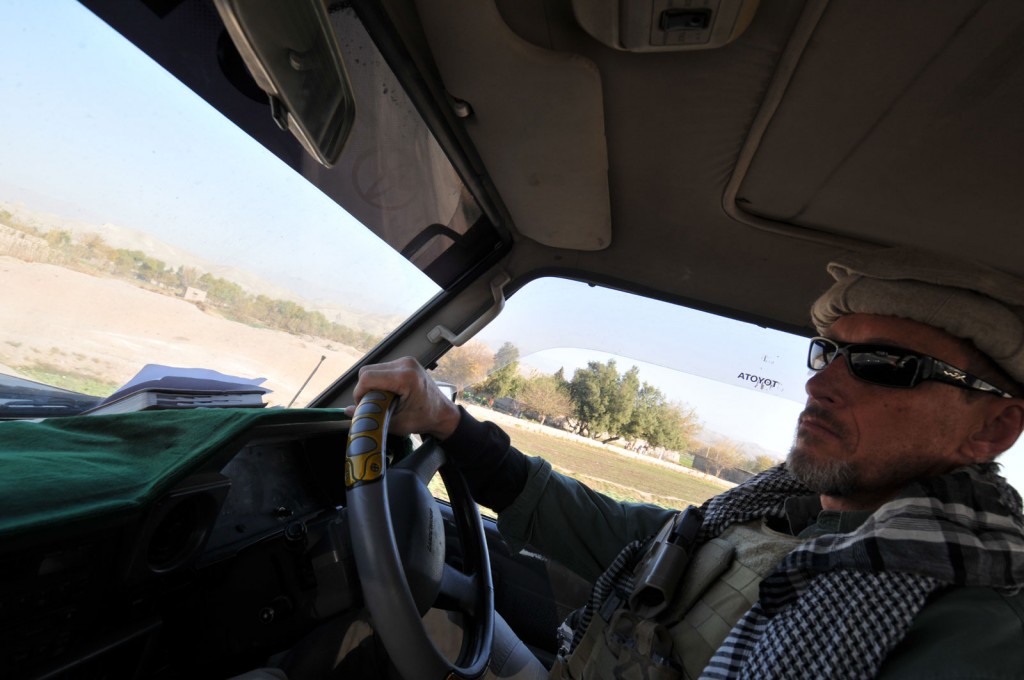
We have been running the road to Kabul a lot lately, taking people to and from the Airport in Kabul. A couple of days ago, we took Dr. Dave and Dr. Art Mendoza back to Kabul for their flight home and saw the aftermath of a big fight the night before. We were warned before leaving by another security firm (we share all intel at all times in the field) that there had been much fighting outside Gamberi and sure enough when we got to the point in the road where the Afghan National Army (ANA) and Afghan National Police (ANP) had set up on the shoulders we saw this:
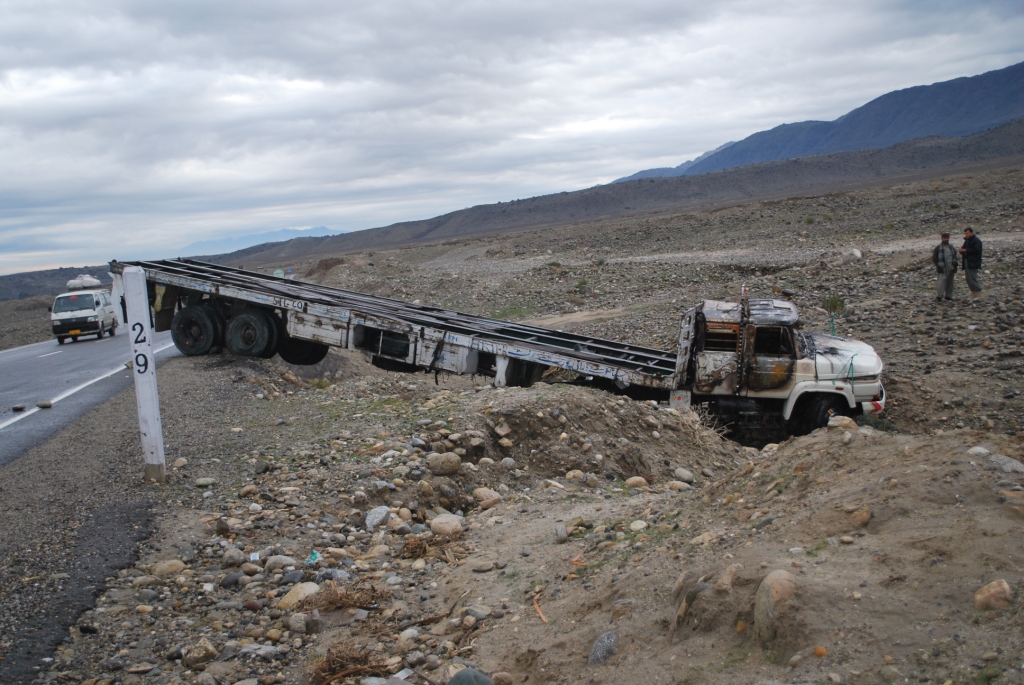
Looking east from the ANP position

A group of Armed Opposition Group (AOG) fighters sneaked up the draw between the ANA and ANP positions and shot up the truck above with small arms and RPGs. They then fired at the ANP positions to their west and the ANA positions to their east before withdrawing across the Kabul River. The ANA and ANP spent the next hour or so firing at each other. By the time we rolled past the ANA had taken their casualties and withdrawn leaving the poor police to sit in their shallow little holes to suck up all the rain we have been getting of late.

We are convinced that somebody in Laghaman Province is running an RPG gunners school because we see reports of RPG-only attacks on police posts along this portion of the road every 4 to 5 weeks. Normally, they volley 10 rounds rapidly and withdraw, causing little to no damage. But we know at least one RPG mechanic (most likely in Laghman) who can put some English on his rockets and consistently make challenging shots. I bet he has a group of students he is working with, and what better way to train them than to take on the softest of soft targets, like the silly deployment of ANA and ANP forces five feet off the main road? You could tell just by looking at them that they had no fire plans, fire control measures, and probably no plan. They need no more PowerPoint lectures from DynCorp contractors; they need mentors in the field, and there are not enough here.

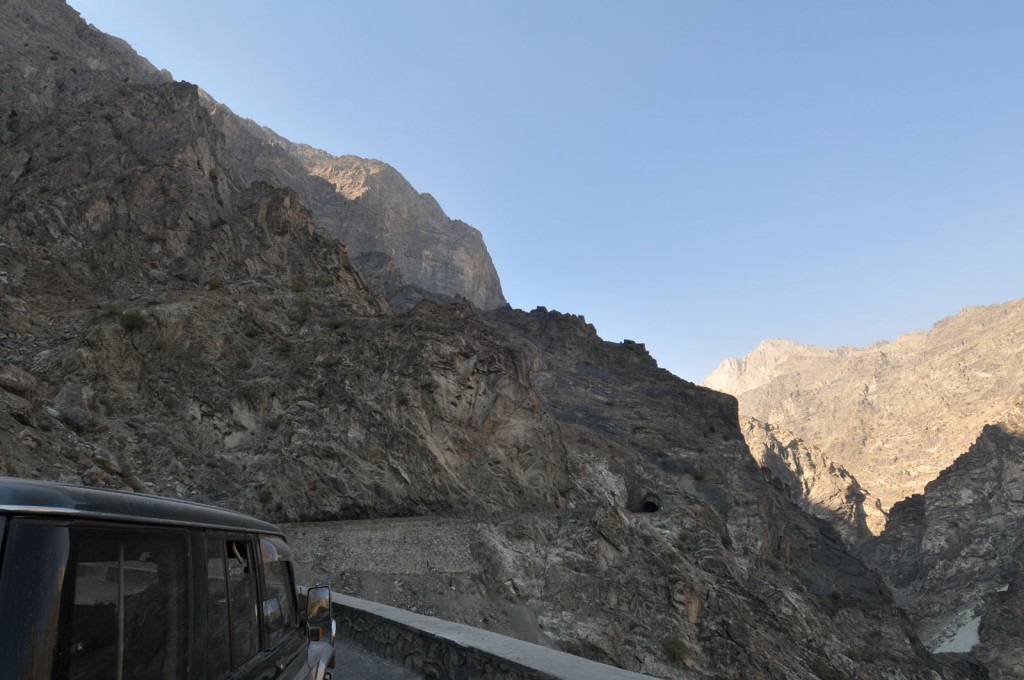
Yesterday I was returning from dropping off James the Marine, and because I had no choice, I had to make the return drive alone. As I rounded the Mahipar Pass, I saw a wall of trucks pulled off to the side, indicating some tunnel blockage. I moved far enough to get a look before turning around and saw a U.S. Army convoy stopped right in the middle of the pass. Once the traffic stops flowing in Afghanistan, it is very difficult to start again because all the east-bound traffic will move into every nook and cranny available to their front and block the road. Getting them out of your way takes an hour before the convoy can move again. But I was ready checking my wallet to find 100 Euros there I turned around and headed back to the German PX at the ISAF camp outside Kabul to score some premium German beer (at only 12 euro a case) figuring if I had to drive back in the dark I might as well do so with a truck load of beer.
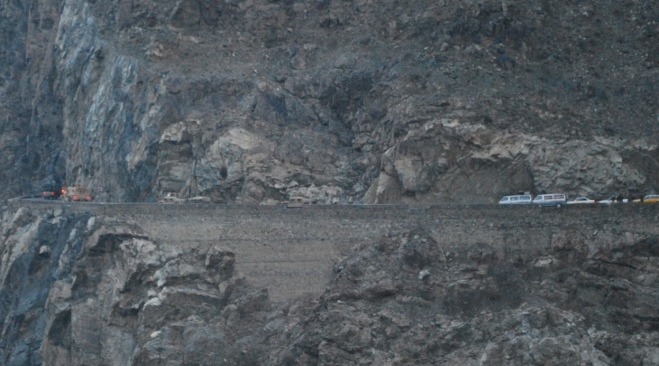
The American convoy is stopped, and the vehicles are stacking up behind it. The same is true to their fron, so when they start moving, they will have to thread their way through the local traffic, which sort of defeats the whole purpose of keeping the traffic away from them at all times. It also makes it easier for the bad guys to target them.

Sure enough, when I returned to the Mahipar Pass, it was clear, and I was driving smoothly for the next 45 minutes until I got outside Surobi.   Rounding a corner, I saw all the trucks parked in the right lane, and taking the left lane, I moved far enough down to see the same convoy parked in the middle of the road. They sat there for 30 minutes and then took another 30 minutes to get moving before stopping again, maybe five miles down the road. I had worked my way up to the front of the line by then, and 45 minutes into this stop I approached the convoy tail gunner to ask if they would let me through. He got on the radio and in a few minutes said, “No, because the road to the front is blocked (by the west-bound traffic) and I couldn’t make it through anyway.” I asked him what the problem was and he replied “don’t know” which is precisely the correct answer because he has no business telling me a damn thing.

But the longer we sat, the more upset the locals behind me became. Soon, the sound of a thousand car horns filled the air. Over a hundred men stood around my vehicle, trying to get the ANA troops to let them pass. As is usually the case, several fluent English speakers amongst them came over to chat me up about what was happening. I was as pissed as they were and being a poltroon by nature freely admitted this. Then out of the crowd came a man with a very sick-looking child, and I was pressed into service to intervene on his behalf. I walked over to the tail gunner and asked if a vehicle with a medical emergency could get through. He asked how many more vehicles contain people with medical emergencies, and I glanced back, saw about a thousand cars stacked up behind me, and said “probably about a thousand,” which made the kid laugh. Again, a correct response from the tail gunner, who seems like a great trooper, because if you let one vehicle through, the rest will follow. TIA, this is Afghanistan. To make a long story short, it took me five hours to return to the Taj. Several more times, the American convoy stopped, and each time, the fluent English speaker from Leeds, England, came up to stand near my car. That is a very Pashtun thing to do. He was watching out for me to ensure none of the drivers behind took out their frustrations on the lone American in their midst. Not that I thought this would occur, but it was a nice gesture.

The struggle of the average Afghan to find enough to eat, the continued lack of performance by the Afghan security forces, and the inability of the ISAF military to operate amongst the Afghans without treating every civilian they come in contact with as a crazed jihadist killer are linked. The United States and its allies have spent billions in Afghanistan and have very little to show for it. Afghanistan is currently in a death spiral, not because of a lack of aid funds, but rather how those funds have been spent and allocated. Every indication we see on the ground is that more money will be thrown into the same failed programs currently being implemented; another demonstration that we have not learned any meaningful lessons.

These programs won’t work because they are off-the-shelf solutions designed to make the lives of bureaucrats and contracting officers easy, rather than bringing assistance to the Afghans. The Department of State has spent 2.5 BILLION bringing in police trainers, jail guard trainers, and lawyers to train the judges. Now, what the hell does anyone at DynCorp or PAE know about Afghan police or Afghan jurisprudence? Nothing, of course, but that is not why they win these large, lucrative contracts; it is because they already have large, lucrative contracts and therefore know how to work with DS contracting officers to make their lives easier. What is the return on our investment? After the large-scale jail break in Kandahar last summer, investigators discovered over 100 illegal cell phones in the hands of inmates. When we capture important Taliban leaders and send them to the central Afghan jail at Pul-i-Charki, they are often back home before the soldiers who delivered them. The Afghan police are unreliable and prone to preying on the population. The current Afghan government is more of a problem than a solution. It is being out-governed by the Taliban in the many districts under Taliban control. Who “built capacity” with these Taliban? How many billions of dollars were spent teaching the Taliban to administer justice and civil control so effectively?

The State Department used off-the-shelf solutions, which had nothing to do with the situation in Afghanistan and everything to do with what was easy for the Department of State. After all, when you spend all your time in Afghanistan locked inside a gigantic posh embassy compound, how in the world would you know what the Afghans need? You are forced to work through the Afghan government. Have you ever read a news story about the Afghan government that was not about the appalling corruption found at every level in every ministry? I would say you have not, but as an insider, I will tell you there is one ministry, the aviation ministry, that is as honest and effective as its international counterparts.

The State Department is and has been the lead agency in Afghanistan, and its performance here is a fiasco, as it is in Iraq. Remember that Paul Brenner was President Bush’s compromise between Foggy Bottom and the Pentagon. He gave the boys at State a year to get Iraq back on its feet, but Brenner used his 12 months to destroy the country and hamstring our military. He unilaterally made decisions for which we paid in American blood. The price tag for his incompetence paid by the Iraqis is probably beyond measure. Colin Powell, who foisted Brenner upon Iraq, had more to do with the fiasco portion of that war than Rumsfeld. Still, you’d have to do some serious archival research to know it because the nitwits in the MSM would not in a million years burden the people of America with good, honest reporting that strayed from their preferred narrative.

That is not to say that the US Military has demonstrated the capacity, tactical flexibility, or ability to assess the situation on the ground, learn from past mistakes, and formulate a strategic framework under which all operations in Afghanistan can be conducted. They have not, and we are risking another Vietnam, and I am not talking about getting beaten by the ragtag assortment of Taliban and neo Taliban on the field of battle. I am talking about having the American peoples will to fight crippled by a media who can reveal that the Generals are spinning tales that are as stupid and uninformed as the old “five O’ Clock follies” in Saigon were back in Vietnam. Let me clarify: I am not critical of the American (or any other ISAF) soldier here doing his duty. All of them volunteered to join the military during wartime, and their grit, determination to do what is right, and courage are commendable.

I am critical of the generals who seem unable to implement the very doctrine they tout as the answer to the counterinsurgency battle. I am not the only one who sees things this way. Please take the time to read this excellent piece by a retired Army Colonel who is a much better writer than I am. He calls for a massive forced retirement amongst American General Officers, which would be a smart move given their lackluster performance and one with serious historical precedent.

The only reason we are not at the point where the American people start to treat their military in the manner it was treated in the early seventies is that our media is even more incompetent than the Department of State or the Pentagon. If we had the same type of reporters as the ones who worked in Vietnam year in and year out, they would be able to throw the BS flag at every single briefing they are given, because the things I hear the big Army saying about the situation here are flat-out nonsense. This situation will not last much longer. As I saw when talking with Martha Raddatz, the Senior Foreign Affairs Correspondent from ABC News, the drive-by media is starting to get a clue. The only thing stopping her from getting a comprehensive first-hand view of how silly the DS and military approach is to this conflict is her own silly corporate “force protection” rules. But she got an earful from me and spent a few hours roaming the countryside like the thousands of other internationals living and working here. Not that you can do that in every district or province in Afghanistan, there are many where it would now be suicidal for a westerner to walk around, knowing where you are safe and where you are not is the most basic function of military intelligence. Why we cannot figure that out and act accordingly is beyond me.

Here is the connection to my rambling observations. If our billions of dollars went to implement the infrastructure improvements that the Afghans at the district level have been pleading for during the last six to seven years, you could instantly start employing massive amounts of idle, unemployed men. But you cannot do this with the Department of State contracting vehicles or through large, bloated, international companies like Louis Berger, DynCorp, PAE, KBR, or any other current “implementers” receiving most of the reconstruction monies. You need a company like Louis Berger to build big things like hydroelectric dams, posh embassy compounds, or international airports. You do not need Louis Berger to build roads and schools. The Afghans can do that themselves. You also don’t need the nitwits of Foggy Bottom deciding how to implement a reconstruction plan because what you get is what the average Afghan sees now. Lots of police posts, government office buildings, and training bases are being built for the very people and organizations who abuse them, steal from them, and fail to protect them from other (nonuniformed) criminals or the Taliban. The only way forward is for civil-military teams to stay in the community and green-light and supervise Afghan-designed and built irrigation, road, and micro-hydro projects. An excellent prototype of this kind of team worked in Afghanistan in the early days before the Big Army came and put all the SF teams back inside the large FOBs. It will be the topic of my next post.
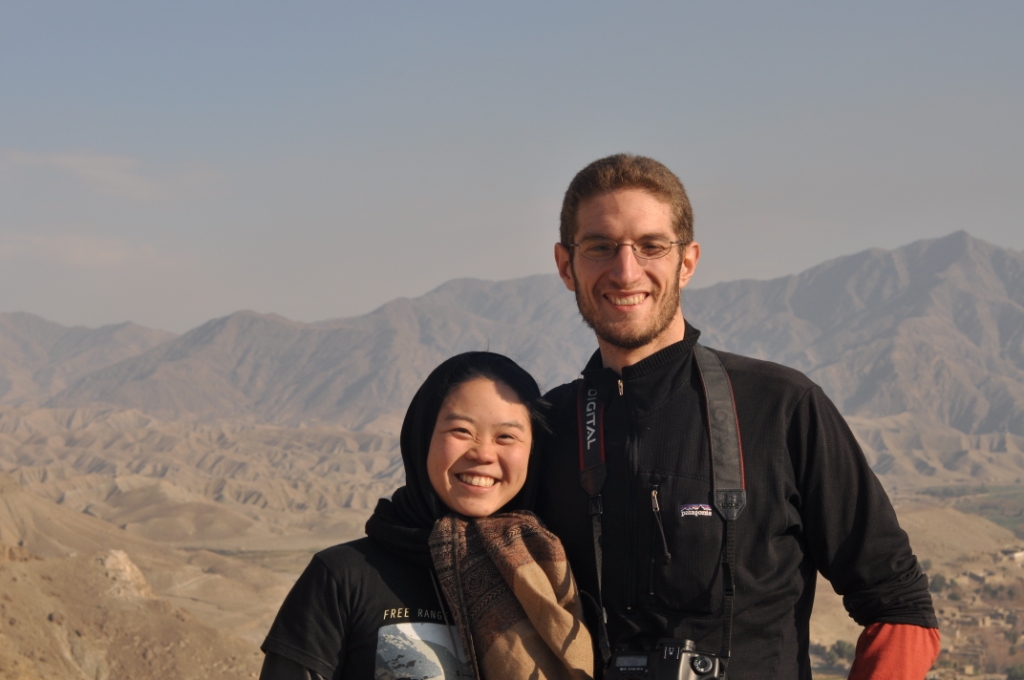
Fab Lab Surge and ABC News

The Fab Lab team has arrived and is now hard at work.  They are blogging daily and you can monitor their progress here. They’re doing cool stuff like fabricating antenna’s to share our fatpipe internet with the local schools and NGO’s. They’re  raising money to buy XO Laptops for every 6th grader in the local (Bagrami) school. They’re setting the local kids up with a tee shirt business to fund the Jalalabad FabLab operations and the local kids are beside themselves with opportunity that just landed on their doorstep.

Amy and her roommate Kieth from MIT – the Fab Lab advance party

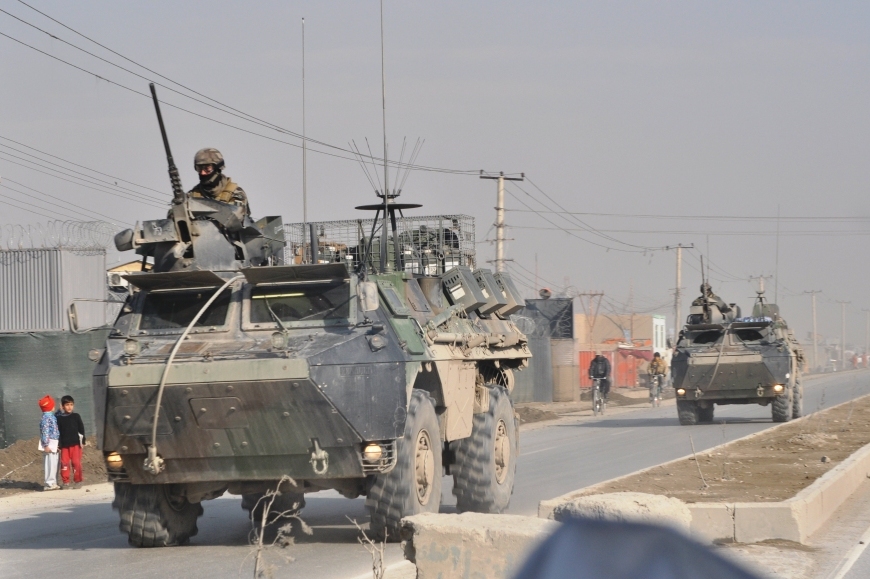
We have had to run up to Kabul and back several times to get all the Fab Folk to Jalalabad. The Jalalabad to Kabul road is a vitally important supply route to both the military and the government of Afghanistan. There were several attacks on the road this past summer and there continues to be problems on it now despite the winter weather. We saw several interesting things along the route and the first was the number of French Army troops transiting from Kabul to Surobi.

French troops on the road outside of Kabul

Surobi is a large hamlet half way between Kabul and Jalalabad, last August the French suffered a humiliating defeat in the Uzbin valley which is just to the north of Surobi. The town has long been considered to be sympathetic if not supportive of Gulbiddin Hekmatyar and his party Hezb-e-Islami Gulbuddin (HiG.) We see sunburned adult males with high-water trousers, tennis shoes, and black turbans every time we pass through Surobi. They could be Sheppard’s or gold miners but it’s a safe bet their Taliban fighters hitting Surobi in for in-country R&R (rest and recreation).

The French have been serious about establishing a presence in Surobi since their first unfortunate encounter with the Taliban. They are keeping units in the field 24/7; have launched several operations which have netted some prominent local commanders (according to UN incident reporting). It’s good to see our ISAF allies taking the initiative, going on the offensive and clearing out such an important area.

But after you clear an area you have to hold it and it will be interesting to see how (or if) they do that. The operations in Surobi are not impacting the repeated attacks on the Kabul/Jalalabad road – with one exception. We’ve heard from reliable sources they tracked down and killed The Mechanic. It appears to be true too because it’s been months since we’ve seen his signature long range pin point RPG shots nailing tankers. The tankers are still getting nailed but only other portions of the road that allow ambush from rifle and machinegun range.

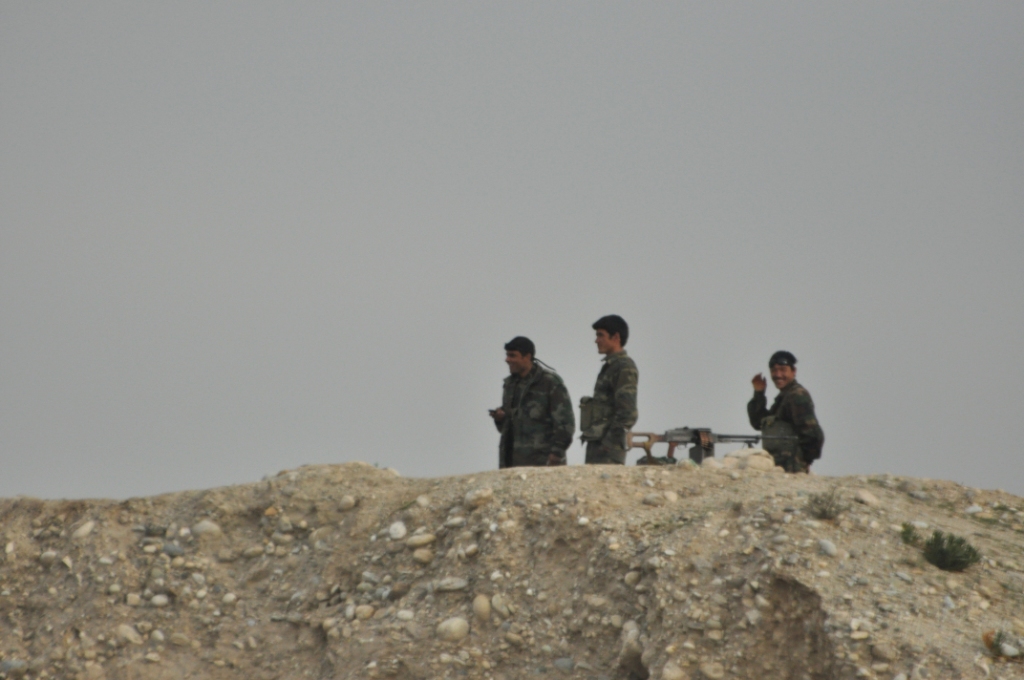
As noted in previous posts these occur in the Tangi valley area east of Surobi and in portions of Laghman Province below the Tangi. Both the ANP and ANA have posted small units along the road to augment the numerous permanent police posts. As you can see from the pictures below the positions they have set up are weak at best and their patrol routine, which appears to be sitting by the side of the road, is not proving very effective.

Typical ANP deployment on the Jbad – Kabul road
ANP machinegun crew – they are not dug in and they don’t move so they are not accomplishing much

Here is an intel report from one of the PSC’s (the private security companies in Afghanistan do a lot of intel sharing with each other.)

Laghman Province, Qarghayi District, Route 1-area of Tangy

AOG Vehicle Checkpoint 05 January 2009, between 1630-1700 hrs

A doctor who works for a NGO was returning to Jalalabad from Kabul alone in his private car, when his vehicle was forced to stop by a group of armed men. The doctor was then questioned about his work and personal behaviour. He was finally allowed to proceed unharmed when, on seeing the cassette player in the vehicle, the armed men instructed the doctor to play a cassette found in the vehicle. The cassette played was a religious tape and satisfied the requirements of those who had stopped the car. Despite reported increased security force deployments, this is the third reported instance of AOG activity on Route 1 in the Tangy area since 31 Dec 08. All three incidents have occurred in daylight hours and two have been attacks on military vehicles. These incidents should demonstrate to all the risk of travel along Route 1 between Kabul-Jalalabad at any time of day. Any international staff using Route 1 should expect further instances such as that outlined in this report and seek alternative means of travel between Jalalabad-Kabul.

Along with the above report, we have made several trips the past few days along the route. A few ANA vehicles have been pulled off the side of the road about half way back to Kabul, and the soldiers were in a defensive posture behind their vehicles, weapons pointed at the high ground. Most likely some pot shots taken at the ANA as they passed thru.

The Kabul to Jalalabad route is one of the most important in Afghanistan. The effort being expended to secure this route is currently being wasted because the troops are being deployed in poorly sited positions and being tasked to do nothing other than sit there. There is an easy fix and that would be to embed and infantry squad into the Qarghayi District ANP headquarters with a mission style order. It should sound something like this; “Sergeant you’ve got six months to work with these guys and stop any and all attempts to attack this vital route, go down there scout it out, come up with a plan and I’ll see you in five days so you can brief me on your plan. ”

Winning the IED battle requires that you kill the IED makers and you can only do that if they are unmasked by the people. To reach the people with the consistency required to gain that level of cooperation requires that you leave the big armored vehicles and spend time (lots of it) among the people. I am pretty sure that if you consult the Pentagon’s counterinsurgency manual you’ll find that it says more less exactly the same thing.

It is always a good sign to see American soldiers getting a handle on the recent attacks

There is hope for those of us who use the Kabul Jbad road frequently and that is the appearance of a small American patrol right in the heart of the Tangy valley visiting the local ANA checkpoint. Inshallah they will be spending some time and effort trying to help the various small unit commanders develop a more aggressive plan to secure the route. We did not encounter any problems on our numerous trips to Kabul and back. What follows is some photo blogging about the Fab Folk we are hosting and some of the things they are up to.

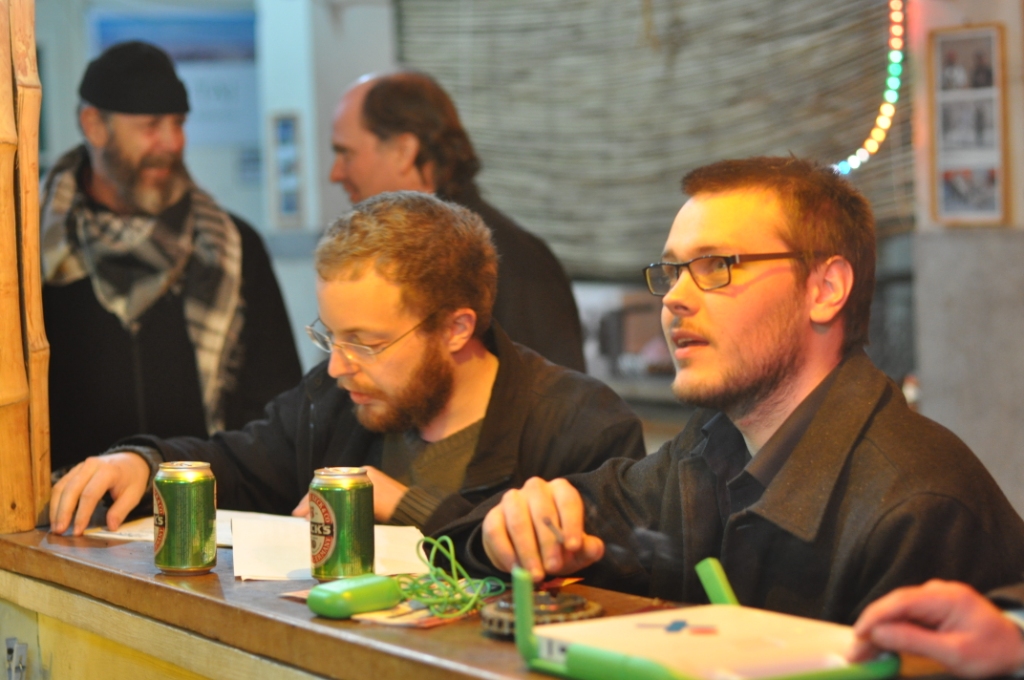
Kieth, Steve and Carl from the Fab Folk team. Carl is from South Africa, Kieth and Steve are Americans. The Taj manager Mehrab is pulling interpreter duty – he is between Steve and Carl
Smari and Andres – Fab Folk from Iceland
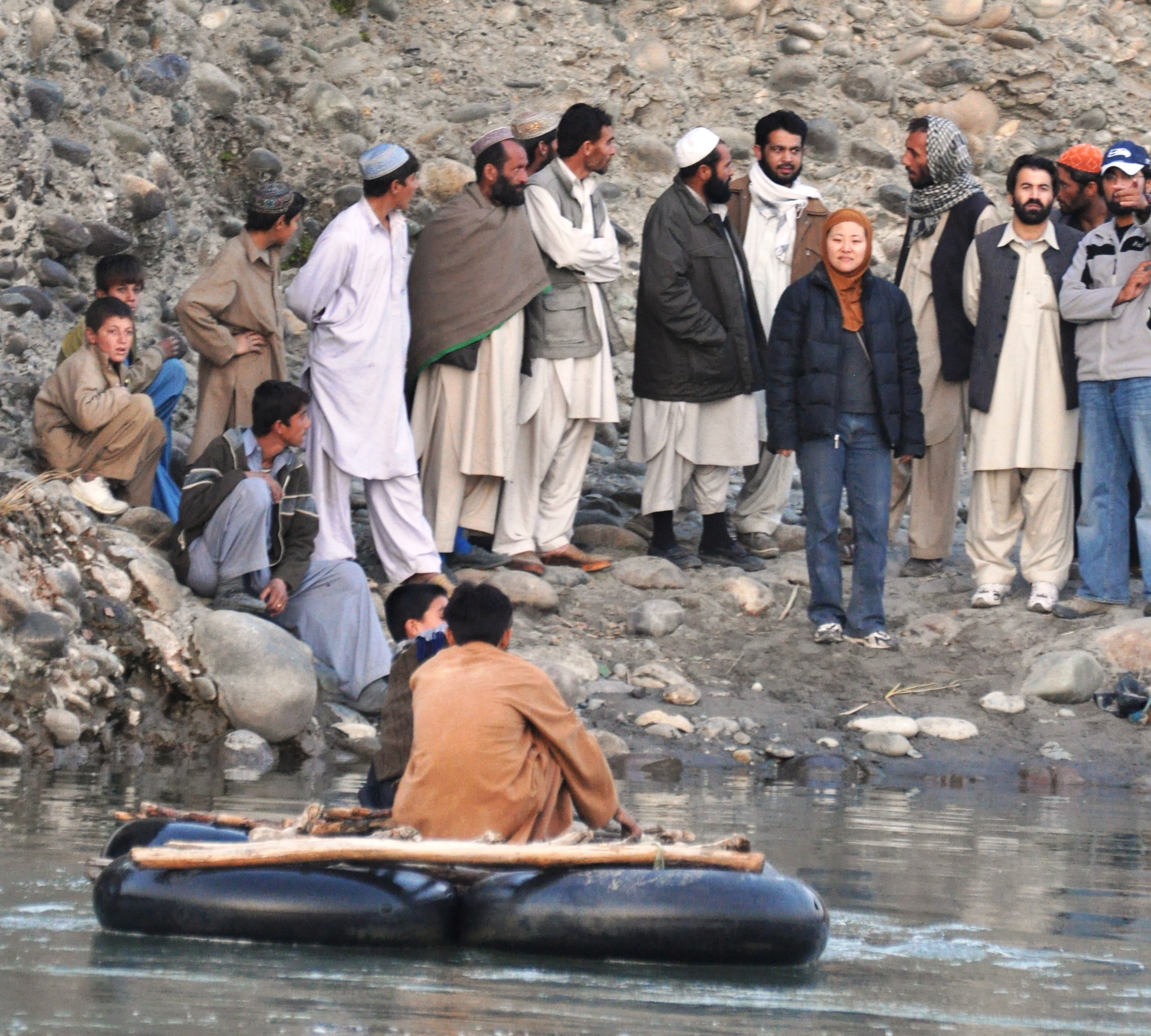
Miss Lucy, a former US Navy officer, getting ready to cross the Kabul river from Little Barabad
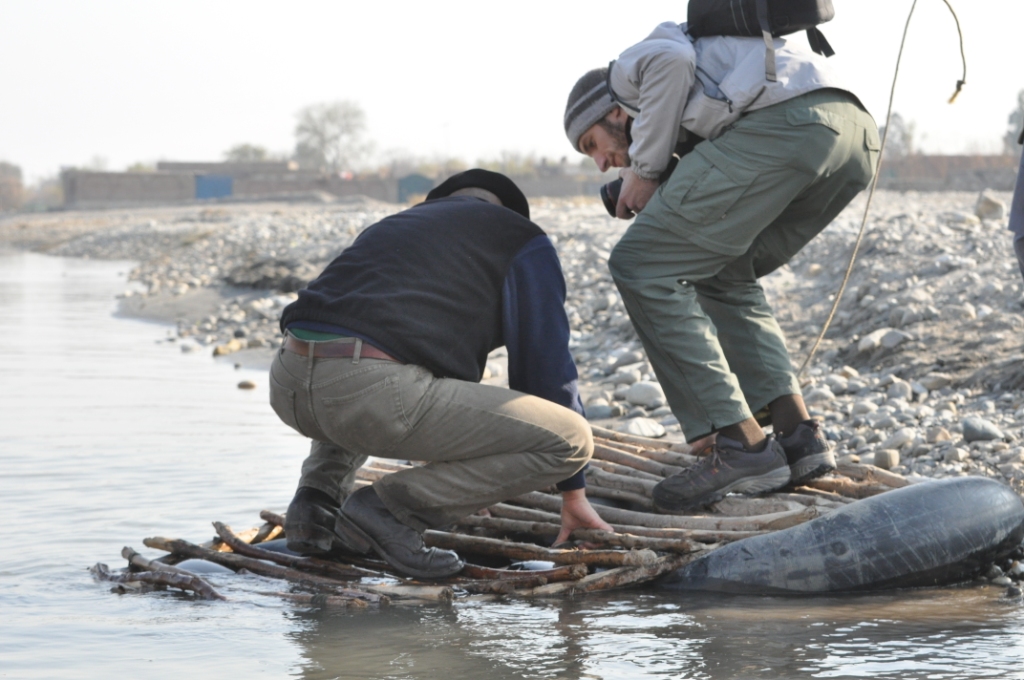
Steve and Keith getting ready to cross the river to Little Barabad
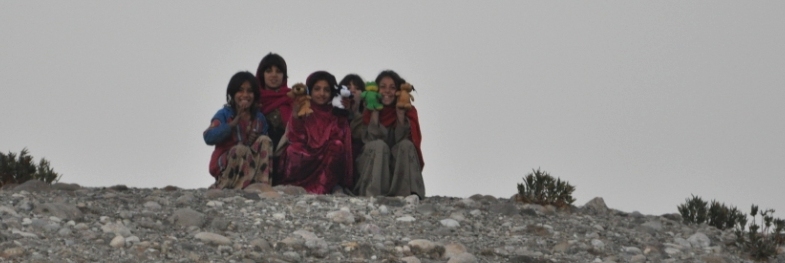
The Fab Folk took a box of stuffed animals with them to Little Barabad. Here is a great shot of the girls watching them cross the river
We hosted ABC News reporter Martha Raddatz at the Taj yesterday.

Here’s a link to Martha’s first news story from her visit to Jalalabad.

Dubious News Reports from Afghanistan

An interesting article in the news about Afghanistan today illustrated (to me) the dire straits we now face. A senior USAID officer gave a mildly negative critique of the USAID reconstruction efforts. The story represents a total lack of situational awareness as 2008 draws close.

When you have lived in a poorly understood, distant country like Afghanistan, as long as I have lived here, it is easy to find mistakes in the international press. I am not nitpicking mainstream news reports because they report as fact things I know to be completely untrue. You get that a lot from the media these days.

Feeling the love in Paktia province

The article was written by Mark Ward, a senior Foreign Service Officer with US AID, who had just completed an impressively long tour in Afghanistan. Here is the opening paragraph:

“Nearly every observer of Afghanistan, from the most senior U.S. military officers to Washington think tank analysts and everyone in between, agrees that stability in that country demands a multipronged approach involving the military, diplomatic efforts and economic assistance. Having spent nearly the past five years as the senior career officer responsible for U.S. economic assistance to Afghanistan, I agree with those in the military who have said that 80 percent of the struggle for Afghanistan is about reconstruction and sustainable economic development and only 20 percent about military operations. In the face of a heightened Taliban insurgency, the U.S. military has changed its tactics. But if civilian U.S. agencies do not change the ways they deliver economic assistance, they jeopardize their chances for success and risk alienating the Afghan people.”

He is spot on with this assessment. I would judge that he is around six years late, but better late than never. He then goes on to discuss the ramifications to the morale of the American people if, given relaxed security standards, Foreign Service Officers get killed in the line of duty. What??? The American public doesn’t even know what a Foreign Service Officer is, and they couldn’t give a hoot if a few buy the farm in Afghanistan. You have already lost men in Iraq, and that caused no detectable disturbance in the body politic. My friend, FSO Steve Sullivan, was killed by a VBIED in Mosul along with three Blackwater contractors. State Department and contractor casualties are not the same as military casualties because the mainstream media doesn’t treat them the same. You won’t see our names in memorials on Sunday talk shows or PBS, or our numbers included in the national dialogue.

A new administration is also taking office, which will change the tone and tenor of media coverage 180 degrees for reasons that are too obvious to mention. I do not believe for a second that the concern about FSO casualties will in any way affect (or even register with) the will of the American people to continue our efforts in Afghanistan.

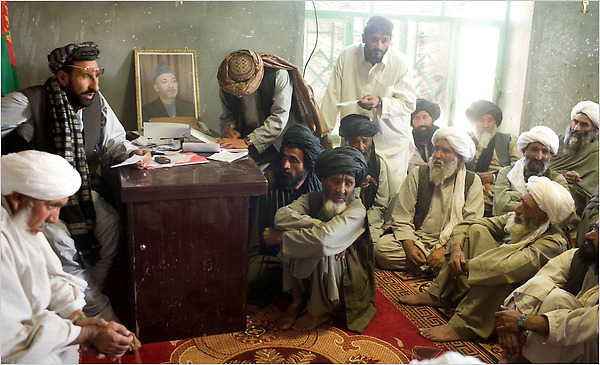
This is an excellent picture from an old NYT article by Moises Saman

Mr. Ward concludes his article with this paragraph:

The new team at the State Department and USAID should engage a team of outside experts to conduct an objective assessment of the security rules and their impact on our economic assistance program in Afghanistan. The review should give due weight to the importance of interacting with the Afghan people to hear their ideas, get to know them and gain their trust. It should rigorously test the theories about what would happen if an increasing number of Foreign Service officers were killed and injured as a result. And it should look at other donor countries’ approach to security in Afghanistan. Some have the balance between security and access about right, particularly in parts of the country where security is more permissive.”
We do not need expensive DC-based contractors to conduct a review of security procedures or conduct an assessment of the consequences of increased Foreign Service officer casualties. There is a seven-year track record in Afghanistan from governmental and nongovernmental organizations operating precisely as Mr. Ward advocates. The government of Japan has over 100 “Foreign Service officers” (the Japanese do not use that term) spread out from Mazar-e-Sharif to Jalalabad, working every day in Afghan ministries and offices, mentoring their Afghan colleagues. They do this on a security budget that is less than the cost of providing bottled water to the US Embassy compound in Kabul. The Japan International Cooperation Agency uses the same security guidelines as every other international organization in Afghanistan (except for the US AID contractors who use DS guidelines), and that is the UN minimum occupational safety standards (UN MOSS.)

The UN MOSS standards are not applicable in contested provinces (Helmand, Zabul, Kandahar, etc). In those provinces, the best solution would be to turn over all reconstruction monies to our military, which has repeatedly demonstrated that they are better at delivering reconstruction aid anyway. For the rest of the country, the US could start sending its FSOs out into the provinces immediately and be reasonably sure that any casualties they take would come from motor vehicle accidents, one of the bigger threats faced by internationals living outside the wire. There have been IGO and NGO casualties in Afghanistan, but they are rare and disproportionately suffered by those who choose not to use armed security. By that I mean those organizations that place stickers on their vehicles of an AK 47 with a red circle and a line drawn through it. Nothing says “I am important and unarmed” like a new SUV with “no weapons on board” stickers. This is not a country where it is wise to advertise that you are both essential and unarmed. It is a dangerous place, but the risks are manageable and reasonable, which has been proven by JICA and the hundreds of other organizations currently operating outside the wire in Afghanistan.

The last time I was at the Kabul International Airport I saw a group of embassy workers being escorted from the VIP parking lot adjacent to the terminal to the front door by four Blackwater contractors with weapons and complete kit. I would submit that having armed men escort your diplomats the entire 100 yards from the parking lots to the front door is not only unnecessary but insulting to the host nation. The men Blackwater places on the embassy contract are highly trained operatives who must maintain rigorous weapons proficiency standards and top-secret security clearances. They would be of much greater use out in the provinces and undoubtedly be much happier roaming around the countryside where their skill set is used. Parading around the Kabul airport with rifles at the ready is silly.  

I applaud Mr. Ward for highlighting this issue in Washington, D.C.. Still, I must stress that we must adopt a sense of urgency regarding the rapidly deteriorating situation in Afghanistan. We do not have the time or money to study what to do; it is time to do. The way forward had been marked by the thousands of internationals operating inside Afghanistan daily, using the UN MOSS security guidelines. The American Embassy and US AID already have dozens of highly trained security contractors in Kabul. It is time to put them to better use.

Irregular Warfare

The Pentagon recently released a directive on Irregular Warfare that has generated speculation among the various players in Afghanistan. When you see documents that say “The Chairman of the Joint Chiefs of staff shall”  it is a powerful piece of paper from on high. There are a finite number of people in the world who can task four star generals or deputy secretaries of defense and professionals in the business study these directives as if they were the Dead Sea Scrolls. This comment came from a discussion thread in a group I belong to.

“I find it particularly interesting that DoD would come up with a “Directive of the obvious”… For all of its claims the Army as an organization doesn’t learn so quickly. I suppose that it took years of doing the same things expecting different results for the light to shine on reality. Not to be condescending in any way; I am glad to see the directive has been introduced. I hope that it grows roots quickly and flourishes… There is a full-spectrum under which many current peripheral entities can be brought to bear in order to surpass the expectations that DoD may currently have.”

I could not have said it better myself; it will be interesting to see how this directive impacts the template used by the U.S. military as it introduces more maneuver units into the country. Reports in the press indicate that the Army is planning on sending combat units in to Loghar and Wardak Provinces which are just outside of Kabul. The Marine Corps appears to be preparing to deploy in expeditionary force strength into the south. That could mean up to three infantry regiments of Marines with all their supporting arms, aircraft and logistics. That is a lot of gunfighters.  The Question is – does it matter?


The Taliban control large swaths of Afghanistan not because they are better fighters but because they are beating the Karzai regime with better governance in the areas they control. The people know that a Taliban tribunal will not award land and water rights based on the largest bribe. They also know that once a case is settled the dispute is over. Fire fights between families involved in land and water disputes are frequent and bloody affairs in areas under government control. In areas under Taliban control the losing party accepts the Taliban ruling or takes 15 rounds in the chest. People tend to cooperate in systems like that.

But they don’t like it too much and would rather see a platoon of Marines or Army soldiers hanging around than a crew of religious zealots. It would be a pleasant surprise to see the Army and Marine units who flow into the country next year deployed down to the district level. I suspect that there will be tentative steps to branch out like that and these steps will involve what the new directive terms “civilian-military teams.”

That will be interesting to see play out and I believe small teams at the district level can, if properly funded and deployed, make a difference in the battle to control the only thing that matters in Afghanistan. The people.

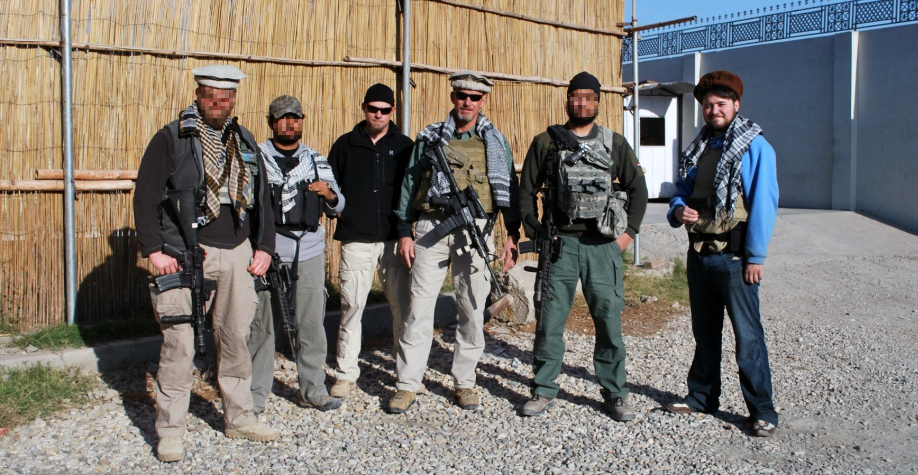
Getting ready for a road mission. The guy on the right is our buddy Brandon who just graduated college and is in Nangarhar teaching orphans English (a story line he is planning to use to pick up women when he returns home; we’re coaching him on the art of seduction but he’s a big Liberal and isn’t catching on too well). The pixalated guys are American SF – Shem and I are in the middle.

We were able to conduct a “civilian-military team” field trial a few days ago during a road mission to Kabul (to re-stock the bar). This was a demonstration to our SF buddies of why we prefer unarmored local vehicles and they caught on fast. One of the Captains remarked that he never really got to see too much of the country because his visibility in an armored hummer was so restricted. They also marveled at how we attracted no attention (except in the busy main street of Surobi; a HIG R&R village). We also rolled up on a French convoy which gave the boys an excellent opportunity to experience the joy of low visibility ops when the  Frenchman manning the trail .50 cal swung the barrel towards us.

Ah yes using local transport - always a good deal
Using local transport is not always a good deal

The military travels in convoys that do not allow the local vehicles to get near them. They do this to avoid being hit by “suicide vehicle borne improvised explosive devices” (VBIED’s). In the south Canadian and British forces force all traffic off the roads they are driving down to prevent VBIED’s. In the east sometimes all the traffic will pull off the road when they see an American convoy approaching and sometimes it won’t.

One of the Army officers had "good glass" on his camera and took this photo which I think looks pretty damn cool - if I say so myself
One of the Army officers had “good glass” on his camera and took this photo which I think looks pretty damn cool – if I say so myself

Using unarmored local vehicles with light body armor and fighting kit is another option. This appears to be taking unwarranted risks but I’ll let the quote below from Vietnam legend Col David Hackworth address the issue.
In Vietnam, today’s most successful infantry tactics and techniques were yesterday’s heresy and madness. When these ‘overly reckless’ ideas were first introduced by farseeing innovators in 1965 and 1966, few commanders took them seriously. Most, because of parochial conventional orientation, looked upon these new concepts with contempt not unlike many reactionary English lords’ attitude toward the longbow before Crecy. But today in Vietnam, these once ‘wild schemes’ have become standard drill. These bold techniques have changed the thrust of the war from uneconomical multi brigade operations to fights that are fought almost exclusively by the squad and platoon.”

That was true in Vietnam and it’s true today; we need to win the people and that means being in the with them 24/7. We can do it and do it for pennies on the dollar we currently spend. But only if we reach back to our past and remember how to conduct independent small unit operations on a very large scale. Let them live and move around like we do and you’re talking change you can really believe in.

Another cool photo shot with the good glass - this is the Mahipar Pass outside Kabul
Another cool photo shot with the good glass – this is the Mahipar Pass outside Kabul

It is time for some “outside the box” thinking and last week’s demonstration may lead to more discussions between the big base behind the wire military and all the other internationals in Afghanistan who feel safer at night on the streets of Kabul or Jalalabad than we do in Washington DC or Chicago.

Dan the Reconstruction Man

This was first posted sixteen years ago but has stood the test of time so well it’s worth moving to the front of the blog for readers interested in a different perspective of our failed Afghan adventure. I didn’t predict the ending exactly right but was close.

For the past five years our senior leadership has claimed the reconstruction of Afghanistan is their highest priority. Yet our efforts at reconstruction have proved so inadequate they should be a national scandal. A major source of our inability to correctly implement major projects are the force protection polices that restrict State Department and USAID personnel to the US Embassy complex. It is hard to get a sense of what is going on outside the embassy walls if you never leave the embassy walls. And the only people who leave the embassy walls are the contractor guard force from Global Risks who are inexplicably billeted in hastily built barracks off Jalalabad Road.

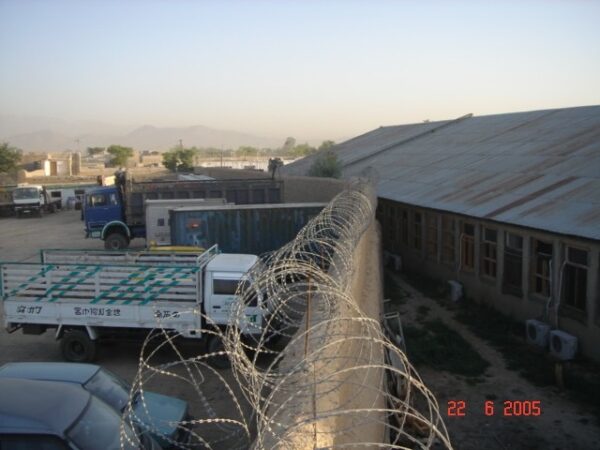
The embassy guard force barracks are on the right and a public truck parking lot on the left. Every day dozens of trucks backed up against our wall and the drivers took off until they were allowed into Kabul after dark. It took months of bitching to the RSO before this obvious danger was mitigated. Can you imagine State Department security officials being so caviler with the lives of 350 Marines? Of course not, so why was it ok to put contractors so far out in harms way?

The security situation is dramatically different from district to district within the 34 Provinces of Afghanistan but you would not know that unless you had some contact with the Afghans living in those provinces. That is difficult to do when every trip outside a “secure compound” is a combat patrol, every Afghan met out in the wild considered a potential threat, and every vehicle that gets near you in traffic a potential car bomb. Thus there is a need for more (not less) outside the wire contractors who can live and work with Afghans supervising reconstruction projects while simultaneously building capacity by training contractors to deliver quality work.

There was a program in eastern Afghanistan that did exactly that for the local contractors who had won projects funded by the American Army Corps of Engineers (CoE). I discovered this when the eastern regional supervisor came to stay at the Taj with us in 2008. Dan the reconstruction man was paid by the CoE to work with a consortium of local construction companies to ensure their bids were written and priced correctly, the work is done to standard, and bribes and theft kept to an absolute minimum.

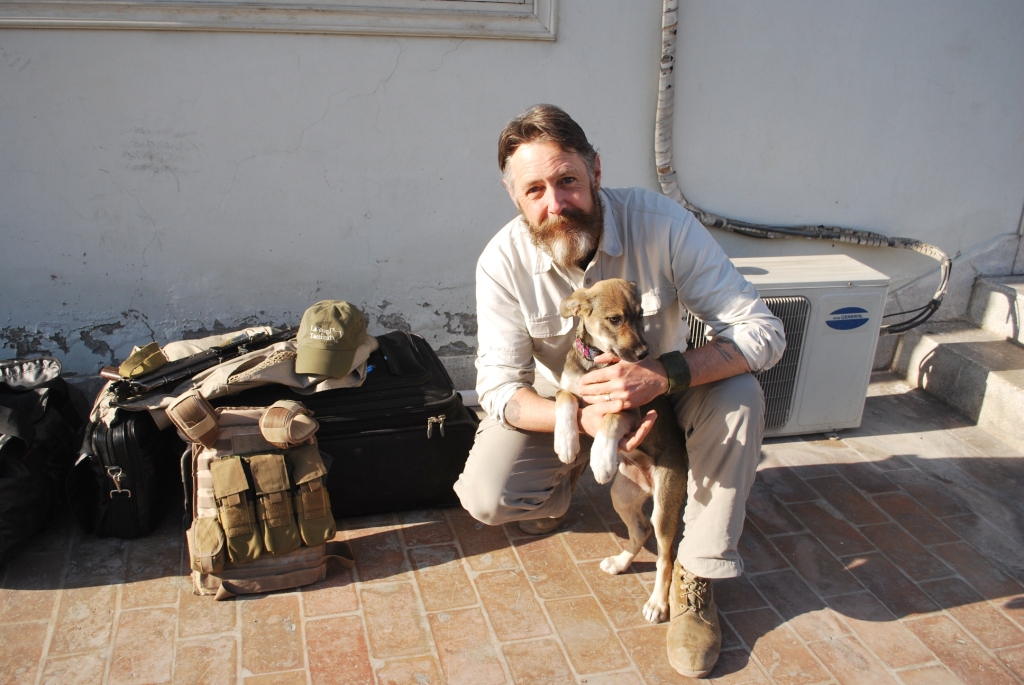
Dsn packed up and ready to go with our new protector dog in training Scout
Dan packed up and ready to go with our new guard dog in training Scout

His life support costs are a fraction of the costs of State Department or Corps of Engineers (CoE) personnel stationed in Afghanistan but unlike them he is out interacting everyday with the locals. Dan has seven years of Afghan experience, speaks some Dari, wears a shalwar kameez when working in the rural districts and like us, he’s perfectly comfortable being the only international around for miles while working projects in the bush.

Dan was getting ready to head home for a well earned 30 day break when his flight from Jbad to Kabul was canceled. Yesterday evening, instead of being on his way home he was sharing the finer points of holographic weapons sights with another outside the wire crew when he got a snarky email from the CoE headquarters in Kabul about his main project in Jalalabad. The CoE was accusing him of not doing the proper quality control on his concrete mix, not having his QA guy on site as required, and not having the required personal protective equipment (PPE) for his stone masons. They sent pictures of these infractions demanding an immediate response.

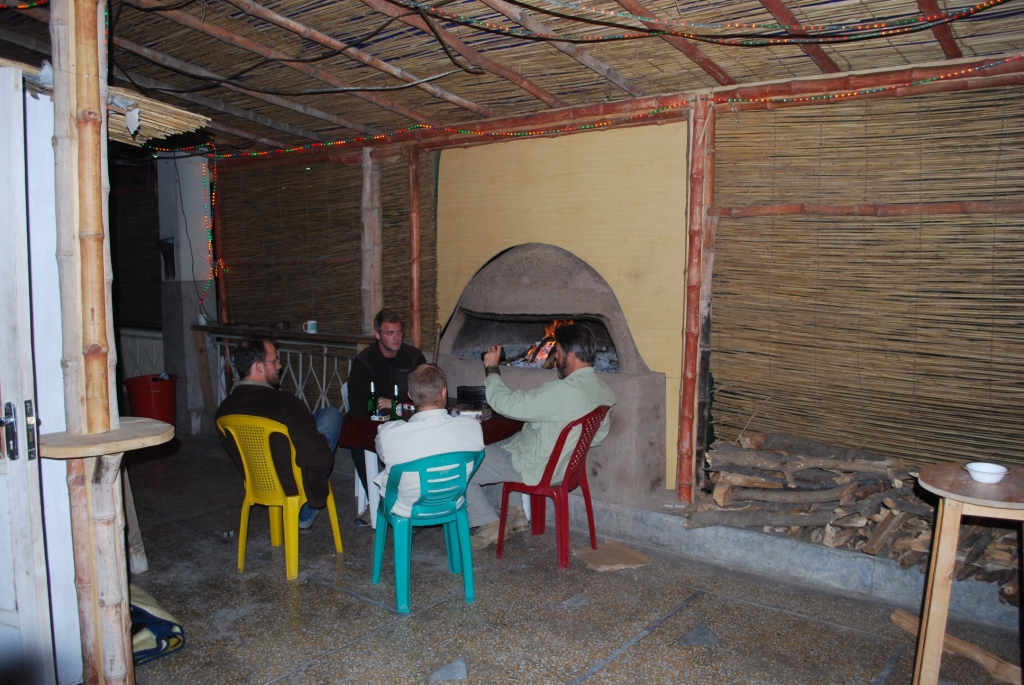
Dan chatting up old friends from Kabul at the winterized Tiki Bar

Dan started to laugh out loud, he wasn’t remotely close to pouring concrete at the job site in question and he employs no stone masons but it was obvious what had happened. His Afghan government counterpart thought he was on his way to Canada so he was making his move. Dan checked his vehicle log to see if his QA guy had been dispatched, he checked his phone logs to see if his QA guy had called in from the work site, he then asked the me to take him to the job site where he found everything in order.

It turned out that the Afghan Quality Assurance engineer (appointed by the Karzi administration)) wanted his “sweets” (shirini) from the subcontractors but had been unable to get a penny from them. Shirini is a dreaded word in Afghanistan, it’s code for a bribe which  Afghans have to contend deal every time they interact with any government official. The engineer in question bolted back to Kabul when he saw Dan driving up the project site.

Dan sent a tempered response which should serve as a wake up call but won’t. He pointed out that they were not pouring concrete yet and that the pictures of his “stone masons” were taken at the Afghan business located next to his site which has nothing to do with the project in question. Guess what happened next? While Dan was home on leave he was fired for creating animosity with the Kabul appointees. It turned out that actually building capacity by living and working with the Afghans daily was not what our diplomatic class had in mind when they talked about building capacity because (according to them) it’s too dangerous to be outside the wire.

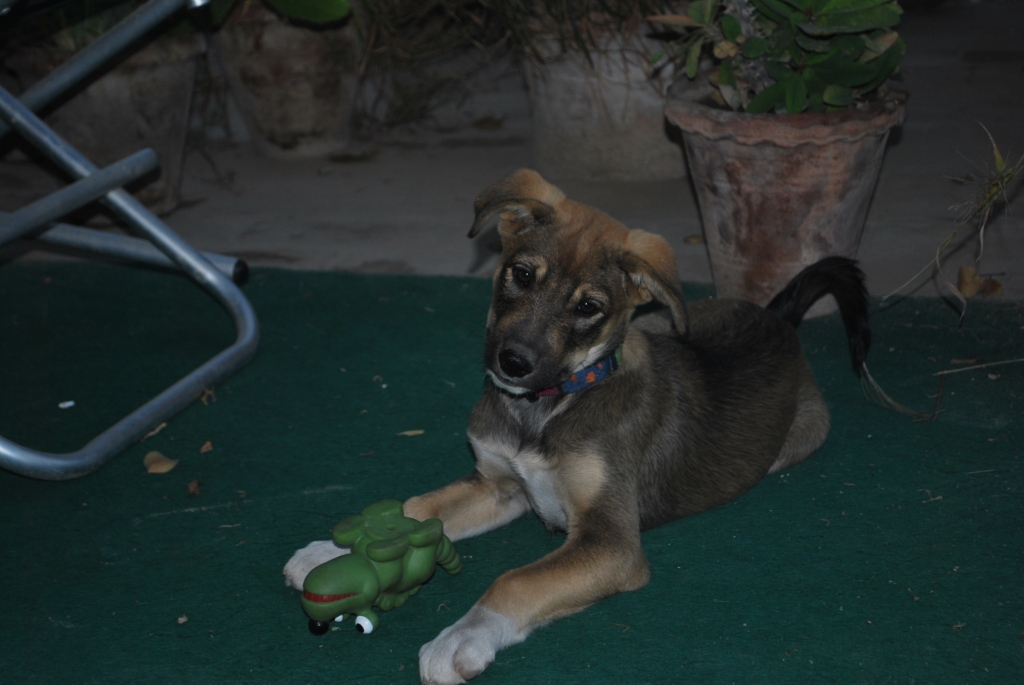
Scout - the offical prtector dog in training at the Taj
Scout was a good looking dog but not a good guard dog because loud noises terrified him.

I live like a king for pennies compared to the life support costs for our military, State, USAID, or the dozens of other federal agencies operating in Afghanistan. When I need work done on the Taj I hire local contractors and use local products, the military hires KBR and imports every bit of their construction material from America. I would think “capacity building” would involve taking every opportunity to build capacity at the district level. Instead we are allowing the Karzai government to steal reconstruction funds hand over fist while ensuring that contractors like Dan who interfere with their corruption are removed from the field,

I will say this again knowing that I sound like a broken record we are running out of time. We can no longer afford continued failure in the stability operations fight. When the people of Afghanistan decided that we are not serious and not really here to help them they will eject us and we will have no choice but to go. The butcher’s bill for that will be more than Americans will want to consider. Look at what happened back in 1978 when the people of Herat decided they wanted the Soviets and their families to go, they all went, in body bags.

Change you can believe in

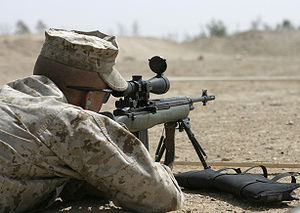
Today started great, I am back in Jalalabad after completing a short job which I cannot freely blog about, and the weather is perfect. I fired up the computer and checked in with Power Line to find this excellent story about a Marine rifle platoon that 250 Taliban ambushed. They routed the Taliban and sent them fleeing from the battlefield in panic, with the designated marksmen putting down dozens of the enemy fighters using their excellent M-14 DMR. The M-14 DMR fires a 175-grain 7.62x51mm match round through a 22-inch stainless steel match grade barrel at 2,837 fps out of the muzzle. Marine marksmen can routinely hit individuals at 850 meters with this rifle, and because of the round, it has real stopping power. You won’t see a Taliban fighter take six hits with this beast and keep running (which happens frequently with the M4). You won’t see a Taliban or any other kind of human take two rounds and keep moving.

M-14 DMR
M-14 DMR

The Marine story made my day and validated something I have said repeatedly on Covert Radio which is you can move anywhere in this country with a platoon of infantry. The Taliban, rent-a-Taliban, criminals, and warlord-affiliated fighters cannot stand up to the punishment a well-trained platoon can inflict. NATO needs to learn this lesson quickly. The French lost almost a dozen men in an ambush up in the Uzbin valley in August. In that very same valley last month a force of 300 French troopers conducted a “tactical retrograde” leaving behind sophisticated anti tank missiles in the process when they were confronted by a small force of Taliban. When a much larger enemy force hit the Marines, the entire unit immediately got onto the flanks of the ambushers and rolled them up to free the men trapped in the kill zone. Once they accomplished this, they maintained contact until the Taliban broke and ran.

Conversely, the French expended all their resources and energy trying to break contact and recover casualties, a tactic not unheard of among other NATO military units. The point to all this isn’t that the Marines are great and the French army is not, but rather it’s difficult to build and sustain good infantry. NATO countries did not have to worry about producing quality infantry over the past 50 years; instead, they allowed America to shoulder that burden while they developed their economies with the money they would have otherwise needed for national defense. Producing good infantry requires a confident attitude and mindset not typically found in polite society, but when Europeans are faced with adversity, they will develop effective infantry units. You’ll know when they do because you’ll start seeing 30-man platoons from NATO countries running all over the country, hoping against hope that 200 to 300 Taliban are stupid enough to try and take them on.

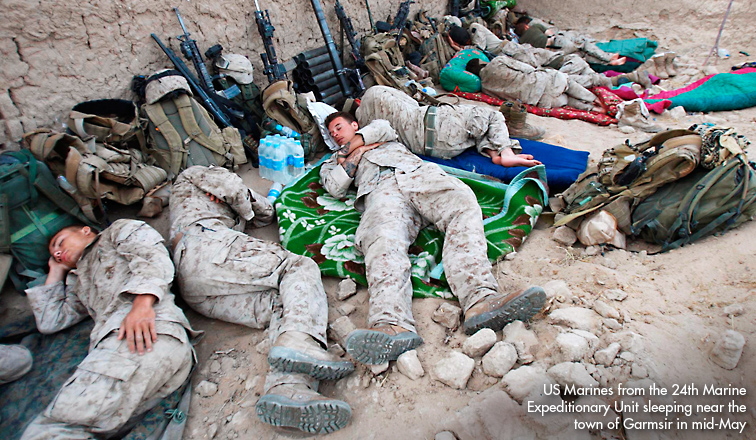
Fighting in the town of Garmsir last summer - the 24th MEU drove the Taliban out of that district in a 72 hour blitz while taking just one casualty
Fighting in the town of Garmsir last summer – the 24th MEU drove the Taliban out of that district in a 72 hour blitz while taking just one casualty..

I enjoy it when events validate some of the things I say in this blog or on Covert Radio. Still, this excellent story of combat dominance will have absolutely no impact on the situation in Afghanistan at all. You cannot win here by just killing people, nor can you deal the Taliban and their affiliates a decisive blow, because they are not a unified movement, and their leaders are all in Pakistan, outside our reach. The people of Afghanistan are the prize of this contest, and a few of them are down in the Helmand or Farah Provinces. While the Marines dominate their area of operations, the rest of the country is falling outside of central government control. Every district, town, and village in Afghanistan has some ongoing land or water dispute, and land disputes here are often deadly affairs. We routinely see clashes between clans over land disputes in UN security reports, and some of these conflicts result in over a dozen casualties. When the Taliban move into an area they decide these disputes using Sharia law instead of who can pay the biggest bribe. They are considered fair in most of these rulings and will tolerate no armed fighting over disputes once a case has been decided upon. A country doesn’t lose a war against insurgents by being out-fought; they lose by being out-governed, which is exactly what is happening all over this country.

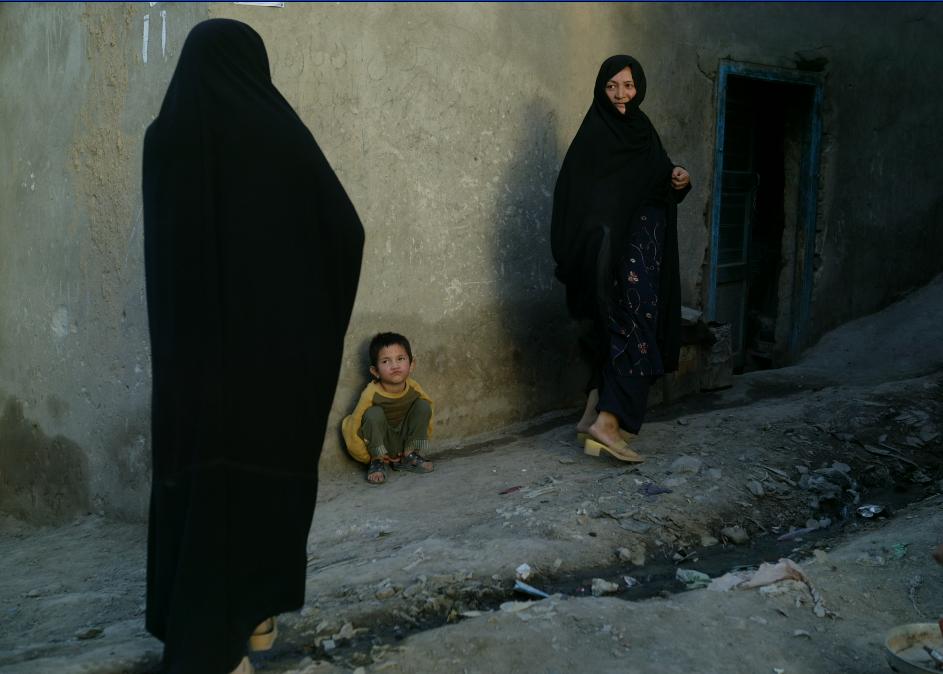
Last night, I was chatting down at the new and improved Tiki Bar with some old friends who have considerable experience in Afghanistan. One of them first came here with an NGO in 1996, and the other in 2002. Our conversation was all about change. When I first arrived in Afghanistan, it took about six hours to drive between Jalalabad, which is now a 90-minute drive. In Kabul, it was rare to see a woman who was not wearing a burka, and today the opposite is the case. In Jalalabad, which is one of the largest cities in the Pashtun belt, not all women here wear the hated burka.

Streets of Kabul 2007

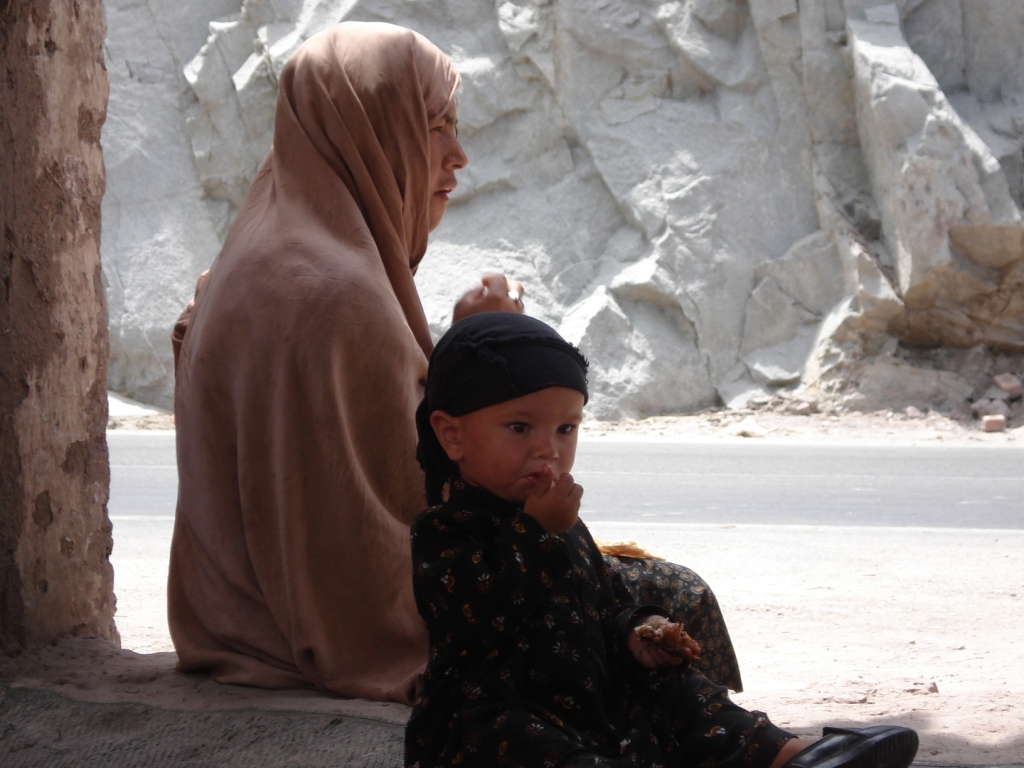
Duranta area of Jalalabad this local woman and her daughter walked in and joined us for lunch without ever saying a word.

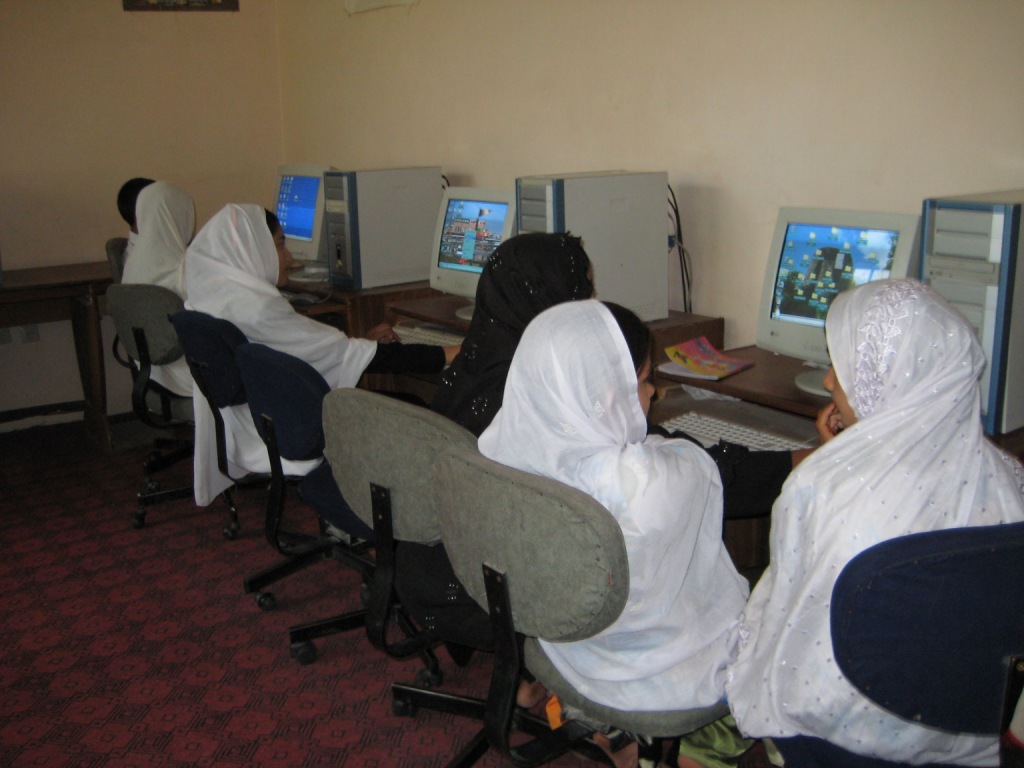
However, there is a fundamental change that will never be reversed. The change you can believe in is computers and the Internet.

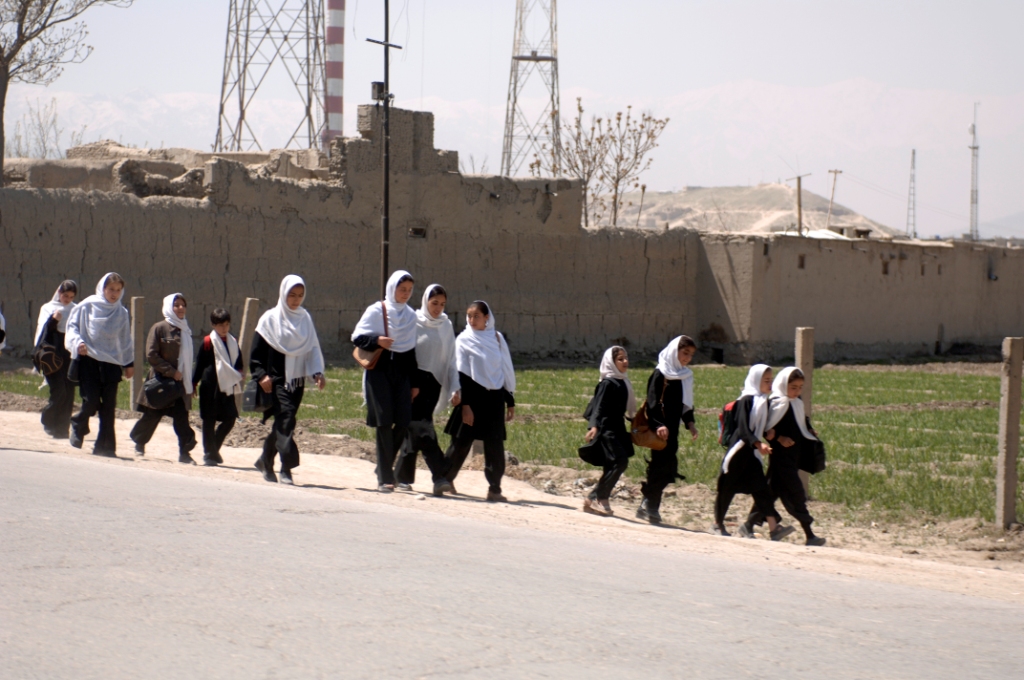
Middle School girls in Jalalabad summer 2008
Middle School girls in Jalalabad, summer 2008

Computers provide access to knowledge for children who are impoverished and eager to learn about the world around them. That genie is now long out of the bottle, and my friends and I believe that the sudden surge towards modernity is spooking many of the elders who play such an important role in tribal life. We noted the backlash in Peshawar where the Pakistani Taliban is trying to reverse the headlong rush towards modernity by forcing the woman back into the burka (and with some short term success at the moment.) Peshawar used to be a very modern place that welcomed internationals and where very few women could be seen in the burka just two years ago. Not true today, and you can’t buy CDs or pirated movies either. There are many forces at play in Central Asia, and the most significant one has its momentum and will continue to generate a range of unintended consequences as it unfolds. Knowledge is power extreme poverty is motivation and the people of Afghanistan, Pakistan and all the other Stans are very motivated to acquire the power of knowledge.

The Jalalabad road in Kabul

We cannot control the effects of the explosive power of the internet and computers on the local people. What we can do is to continue developing the infrastructure while providing a secure environment in which the Afghans can build their economy. Security in the Afghan context requires boots on the ground doing what the Marines did in Shewan. Small units who are constantly outside the wire with the Afghan people and who crush anyone silly enough to fight them, even if they are outnumbered 20 to 1. Combat is a dangerous business, requiring men who can endure incredible hardships and discomfort while maintaining their motivation and, most importantly, a sense of humor.

Good infantry doesn’t need ice cream every day or the cushy barracks found at the Khandahar airfield; they need water, chow, lots of ammunition, and leaders who trust them. The Marine Commander down south is Colonel Duffy White, a close friend, an extraordinarily competent and experienced warrior, and a man who combines pragmatism with a great sense of humor. America has a few more like him, as do our allies. I hope to see them in-country soon, utilizing the decentralized tactics necessary to provide security to people living outside main cities and military bases.

Poor Bloody Infantry - they wouldn't have it any other way
Poor Bloody Infantry – they wouldn’t have it any other way

This morning’s email contained two different security alerts about impending attacks on the vital Jalalabad-Kabul road. We have been here for almost eight years and still have not oriented our forces to provide security for the vast majority of the Afghan population. We are running out of time but it is not too late to get more of our forces oriented on the population and operating like the lone rifle platoon from the 2nd Battalion 7th Marines did in Shewan a few days ago. That requires courage from commanders on high, there are troops on the ground who already have that courage and are ready to fight like lions to give people they do not know a chance to enter the modern world. That is a worthy fight by any standard of measurement.

Shakedown

We had to make a run to Kabul last Friday to take some clients to the airport and to pick up new ones. The Jalalabad to Kabul road is considered very dangerous by the military and US State Department, of medium risk by the UN, and minimal risk by me and the hundreds of internationals who travel the route daily. The Taliban or other Armed Opposition Groups (AOG) have never ambushed internationals on this route with the sole exception of taking some pot shots at a UN convoy last week. The reason this route remains open is that it is too important to all the players in Afghanistan to risk its closure; almost 80% of the Afghan GDP flows along it, so the Taliban would have a real PR problem if they cut it, causing a large-scale humanitarian crisis. The criminal gangs and drug lords who cooperate with the Taliban would also become very agitated if the road were closed and probably turn on any real Taliban groups foolish enough to be within their reach if that happened.

We don’t take this run lightly, but we often choose to make it without body armor or long guns because we fear being ambushed by other villainous members of the Afghan security forces. On Friday, our long string of luck ran out, and we became the latest victim of the Afghan security company game. It cost us two sets of body armor, which we cannot replace because you cannot import body armor into Afghanistan, and we were lucky to get away with the weapons. Although we cannot replace the body armor, we were fortunate to get off lightly; it would be difficult for a small company like ours to raise the funds needed to secure the release of an international prisoner from Pul-e-Charkhi prison.

Many think of private security companies as analogous to mercenary bands with all the associated negative connotations. A few of them are shady companies and deserve all the contempt and bad karma in the world to befall their greedy principals. However, most of the companies operating here are well-run and highly professional. To facilitate the implementation of the rule of law in Afghanistan, they formed an association three years ago to support the effort to regulate the industry. That effort has been stymied at every turn by Afghan government officials who seem less interested in regulation or the rule of law than in establishing rules that benefit them.

Just one of many examples; when the Afghan government wrote the first set of regulations, it stipulated that the payment of all fees and penalties would be made to the Ministry of the Interior (MoI). The Private Security Company Association of Afghanistan (PSCAA) has politely pointed out that the new Afghan constitution explicitly states that all fees and taxes must be paid to the Ministry of Finance. There are sufficient international mentors at the Ministry of Finance (MoF) to ensure that fees paid into the ministry are directed directly to the Government treasury.

NDS Commander and 2IC

It was immediately clear that our assistance in Afghan constitutional law interpretation was not well received and the process has gone downhill ever since. There are still no valid laws regarding PSCs in Afghanistan; however, a series of “temporary” licenses have been issued, which every legitimate company in Afghanistan has acquired. These “temporary” licenses are often overlooked by Afghan security services not under the control of the Ministry of Interior (MoI). Afghan security forces have arrested international workers for licensed PSCs who had individual weapons permits from the MoI and thrown them in jail. Although we cannot replace the body armor stolen from us, we were fortunate to get off lightly; it would be difficult for a small company like ours to raise the funds needed to secure the release of an international prisoner from Pul-e-Charkhi prison.

Here is how it went down. We were through the Mahipar pass and almost to Kabul. We approached the last “S” shaped curve before the Puli Charki checkpoint, and an NDS (National Directorate of Security) checkpoint was set up with belt-fed machine guns off to the side, with a good quarter mile separating the east and west checkpoints.

Unfortunately I did not have the Shem Bot with me so I had Haji jann, my good friend and official driver in the contested areas, come down from Kabul to drive us up. This turned out to be a critical mistake because the NDS will not toy with two armed expats when one is driving. If they see an armed Expat with a local driver, it is an indicator for an ” illegally” armed international, which means big cash if they play their cards right. I flashed my weapons permit and license but the boys noted my two clients, PhD candidates from the Massachusetts Institute of Technology (MIT) – had body armor. In Afghanistan, body armor (used to protect clients), armored vehicles (also used to protect clients), and two-way radios are considered the tools of war, and those of us working here must obtain licenses for them. However, clients change frequently, so we cannot get individual permits for them. We have also never had a problem with this catch-22 because our language skills and charming personalities normally forestall any potential disagreements.

The reason I take Haji jann on all missions into contested areas is because he is a former Taliban commander of some repute (emphasis on former.) He has also been with me through thick and thin, and I truly appreciate him. We talk for hours, although I understand very little of what he says, but we love to chin wag with each other. I heard him say right after we were stopped something like “the armed white guy is a little crazy and I would not arrest him if I were you.” I gave him the ‘what the fuck’ look, and he didn’t smile, indicating that things were serious.

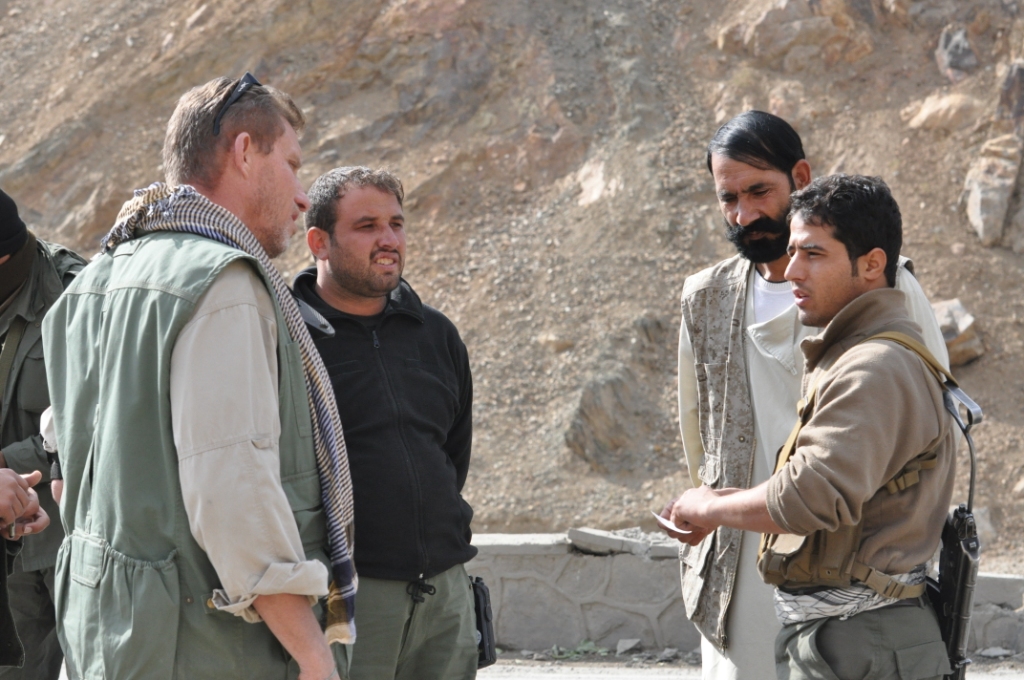
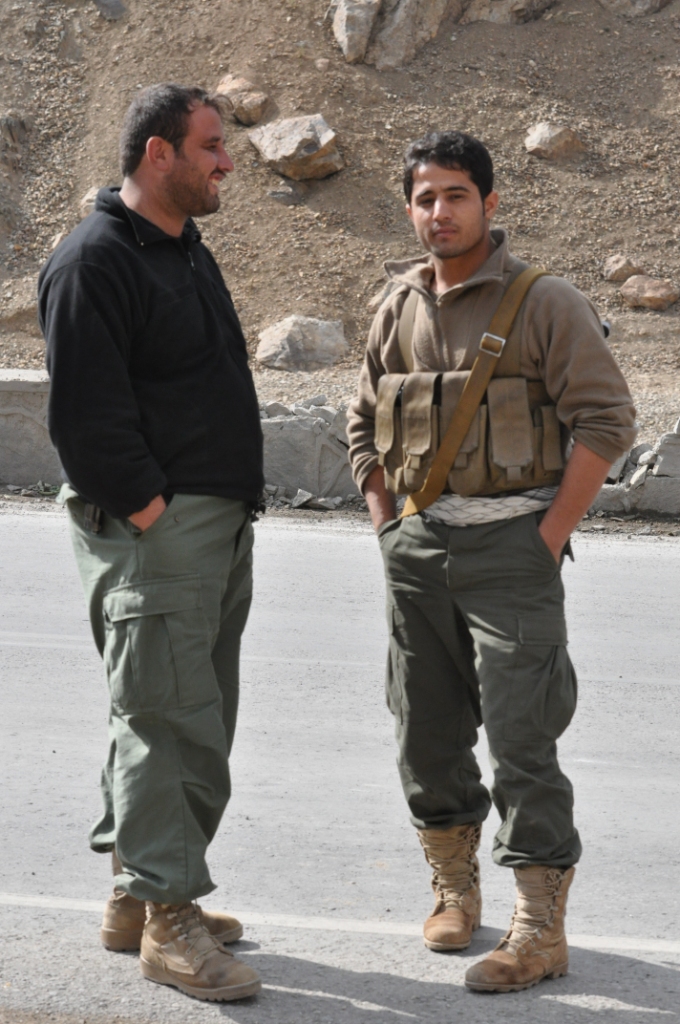
The National Directorate of Security (NDS) wanted the body armor from my MIT clients because they had no license. They also started searching our baggage, which was problematic. I had another gig starting up in Kabul and had extra rounds, magazines, and a first aid kit, all of which are considered illegal (for internationals) in Afghanistan. The “commander,” who is the pot-bellied, slack-jawed fellow in the black fleece, started pulling all my stuff out for confiscation.

I looked at Haji jann who shook his head slightly giving me the go sign and went off like a firecracker at the “commander” who also instantly lost his cool and started to yell back at me. That is a great sign because it indicates fear on his part, and I knew I was not going to lose my spare ammo (which is expensive) and first aid kit. However, they removed the body armor from my MIT charges, and I could do nothing about it. The “commander” gave me a FU smile when his boys stole the body armor because he knew there was no cell signal in the canyon, so what was I going to do? You can only push so far in a situation like this.

This kind of harassment has been routine for the past 18 months in Kabul. We have been spared because we have the proper licenses and travel in pairs, as a rule. Yesterday, I was copied on an email from the security director of the largest US AID contractor in the country regarding one of their projects in the north. It is slightly redacted:

“This afternoon Gen Khalil, commander of the police in Sherbegan, visited one of our well sites demanding to see the PSC license of (deleted) Security. He informed (deleted) that the license expired and that they have until 16:00 to produce a new one or face arrest.  Rather than facing arrest all LN guards were stood down and the Expats and TCNs went to Mazar to stay over for the night. This leaves one of our sites uncovered and can have a serious impact on our operations. Can MOI please as a matter of urgency issue new licenses? Maybe someone in MOI can talk some sense into (deleted) head. His no is xxxxxxx”

LN = local national, TCN = third-country national, Expats = armed Westerners

Which brings us to the US Embassy and how they react to news like this, which is (to my mind) deplorable. The embassy response was:

“We do not encourage US citizens to come to Afghanistan for any reason and will not help you in your dealings with the Afghan government. If you are arrested, we will endeavor to ensure you have adequate food and a blanket.”

Since working as a contractor for the Department of State, I have grown to hate it. I was the project manager for the American Embassy guard force and knew precisely what was going on inside our embassy. I’ll write a book about it one day; the tentative title is ‘Diplomacy is Hard When You’re Fat, Stupid, and Arrogant. ‘

A significant problem with the stability operations part of our campaign in Afghanistan is that the local people do not perceive us as serious. The people are our mission; everything we do should be focused on bringing security and infrastructure to the district level to benefit them. After seven years on the ground, we have yet to accomplish basic infrastructure programs. The most efficient way to do this is with a small number of armed contractors who can work at the district level for extended periods. A few people are doing that right now; they are armed because they have to be, and they are doing the daily quality control of Afghan contractors. 

We need more support in this area regarding mentoring and quality control of projects awarded to Afghan small businesses. That level of oversight and reporting brings in donor dollars because the money can be accounted for. Donor dollars and expat project management would significantly help break the funding logjam, which currently hampers the district-level reconstruction of roads, irrigation systems, and micro-hydro power generation.

At some point, one hopes the powers will realize this and aggressively support the Americans and other internationals operating far outside the comfortable confines of Kabul. For now, we are essentially on our own, which will ultimately lead to tragedy. Nothing good will come from continued confrontations between dodgy police running “surprise” checkpoints and armed Westerners.

What is going on in Sherzad District? Part Two

One of the most incredible aspects of living in Afghanistan is the sense of history that surrounds you as you trek off the beaten path. In rural districts, the daily routine of the people has remained unchanged for hundreds of years. It is easy to find the sites of historic battles or ancient ruins, which few Westerners have had the opportunity to see. The hospitality of the Afghans is a constant reminder that the capacity for good in people transcends the evil that constantly searches for cold hearts or idle brains where it can embed and grow. An armed society is a polite society, but the Afghans take politeness to an extreme that is at times bewildering.

Yet the Afghans have never been able to govern themselves effectively. Despite their culture of warm hospitality to guests and strangers, their political culture remains polarized, vicious, and deadly. These are tribal lands with a small percentage of the wealthy and a large population of the less fortunate. The “haves” are the leaders with positions determined at birth and not resented by people at the village level because they do not have significantly more than their fellow tribal members. The “have-nots” do not engage in political agitation because they spend most of their lives trying to find their next meal. They are not like the American poor afflicted with health issues from morbid obesity. Poor people here die of starvation, poor children die of exposure during the harsh winters even on the streets of Kabul.

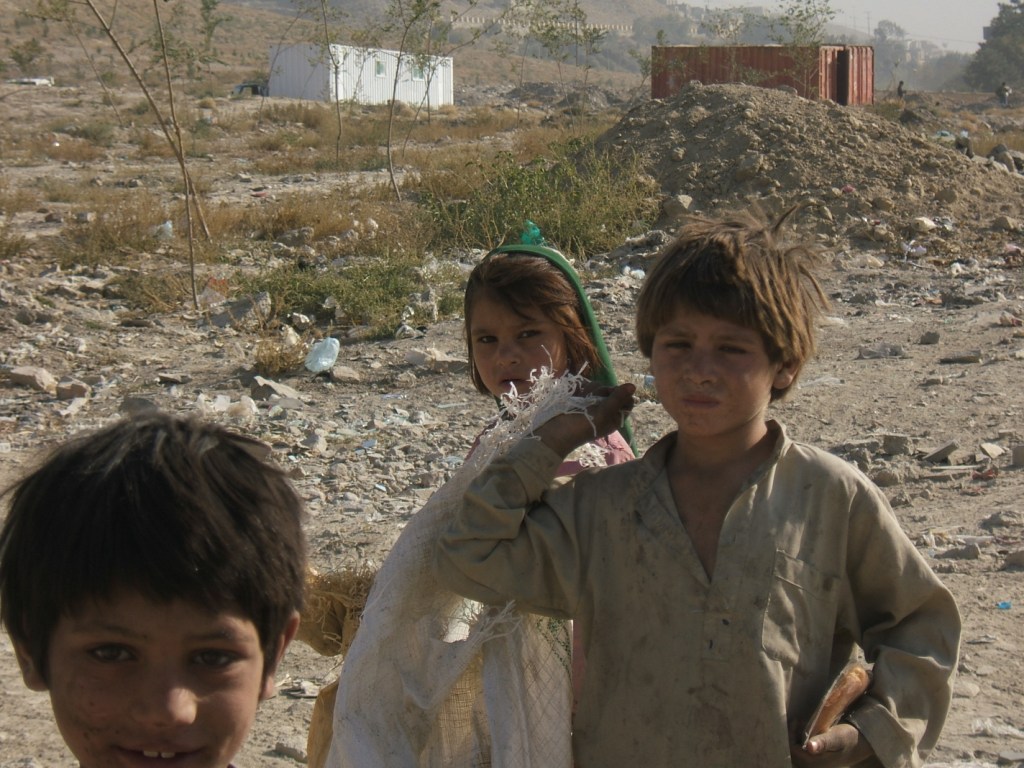
This is what real poverty looks like. Remember these kids who stand little chance of reaching adulthood the next time you hear NPR or CBS or the racial grievance mongers carrying on about the poor in America.
This is what absolute poverty looks like. Remember these kids who stand little chance of reaching adulthood, the next time you hear NPR or CBS or the racial grievance mongers carrying on about the poor in America.

And speaking of politics, what was the first topic discussed when I joined the elders of Sherzad district for a lunch meeting last Thursday? Barack Obama and I’m not making that up. Talk about weird, but let me set the trip up before I get to that.

Traveling into contested tribal lands is a bit tricky. I did not doubt that the Gandamak area Maliks would provide for my safety once I arrived, but I was concerned about the trip in or out. The time-tested decision-making matrix is to examine what the State Department is doing and do the exact opposite. The State Department insists on brand-new armored SUVs with heavily armed contractor escorts in front and behind. I went with an old, beat-up Toyota pickup, without a security escort, and wore local clothing. The Taj manager, Mehrab, served as both driver and interpreter.  

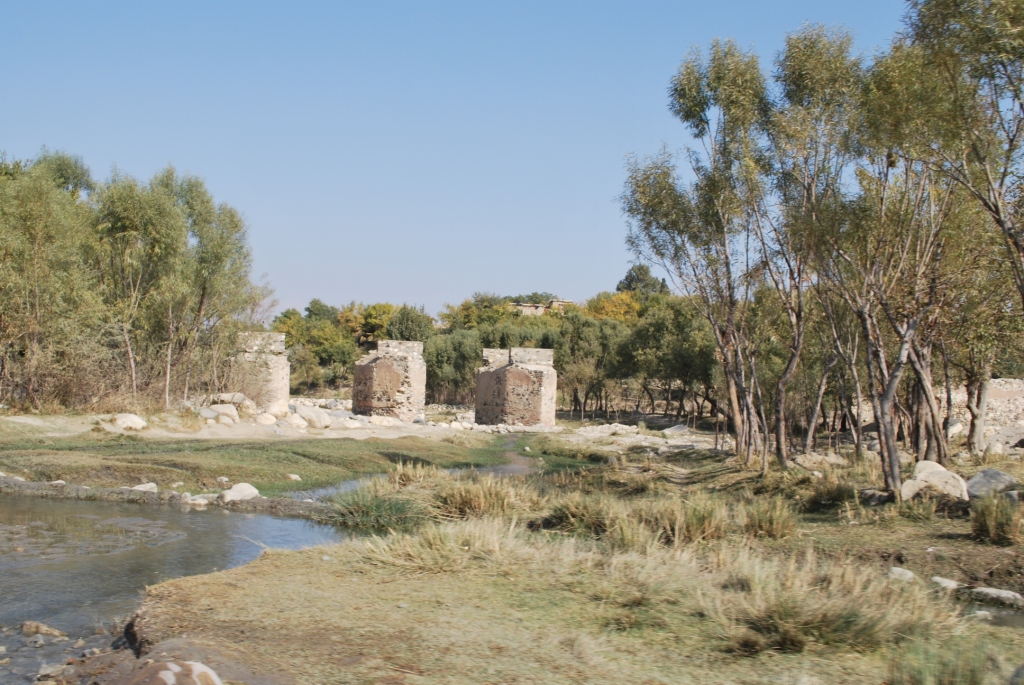
The first of three downed bridges between Gandamak and Jalalabad

The road into Gandamack required us to ford three separate stream beds. The Soviets destroyed the bridges that once spanned these obstacles around 25 years ago. We have been fighting the Stability Operations battle here for seven years, but the bridges are still down, the power plants have not been fixed, and most roads are little better than they were when Alexander the Great came through the Khyber Pass in 327 BC. It took the Soviets around seven years to build the bridges, pave the roads in the southern triangle, and then blow up the bridges and destroy the streets they just built. How did the Soviets completely outclass us in the Stability Operations arena? That’s a question that will never be answered because it will never be asked.

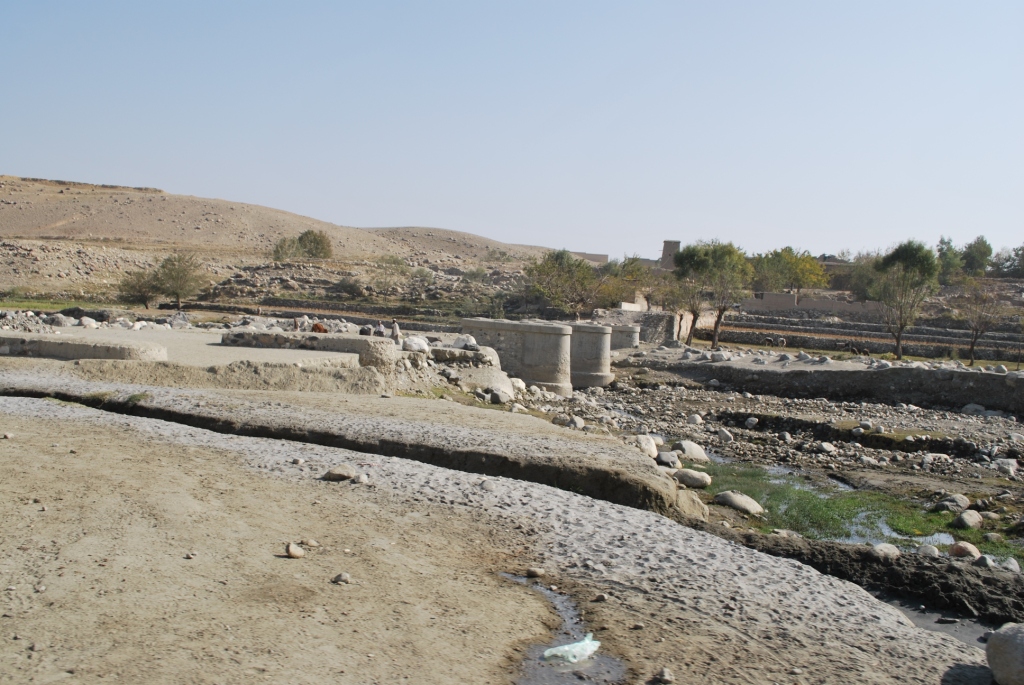
Also destroyed 25 years ago - how do we expect the farmers to get their produce and livestock to market over this? What the hell have we been doing for the past seven years? I watchd the tallest building in the world go up in Dubai, with about 300 other super sky scrappers over the past four years but we can't even repair a few stone bridges in seven; check that, make it 14 years?
Also, this was destroyed 25 years ago. How do we expect farmers to get their produce and livestock to market over this? What the hell have we been doing for the past seven years? I watched the tallest building in the world rise in Dubai, alongside about 300 other super skyscrapers, over the past four years. However, we can’t even repair a few stone bridges in seven years; check that, make it 14 years.

It took over an hour to reach Gandamack, a prosperous hamlet tucked into a small valley. The color of prosperity in Afghanistan is green, as green vegetation signifies water. Villages with access to abundant, clean water are consistently better off than those without. You can see the difference in the children’s health, livestock, and crops.

My host for the day was one of my driver’s older brothers. When I first met Sharif, he told me, “I speak English fluently,” in perfect English. I immediately hired him and issued a quick string of coordinating instructions about what we were doing in the morning, then bid him good day. He failed to show up on time, and when I called him to ask why, it became apparent that the only English words Sharif knew were “I speak English fluently.” You get that from Afghans. But Sharif is learning his letters and has proven an able driver, plus a first-rate scrounger, which is vital for the health and comfort of his ichi ban employer.

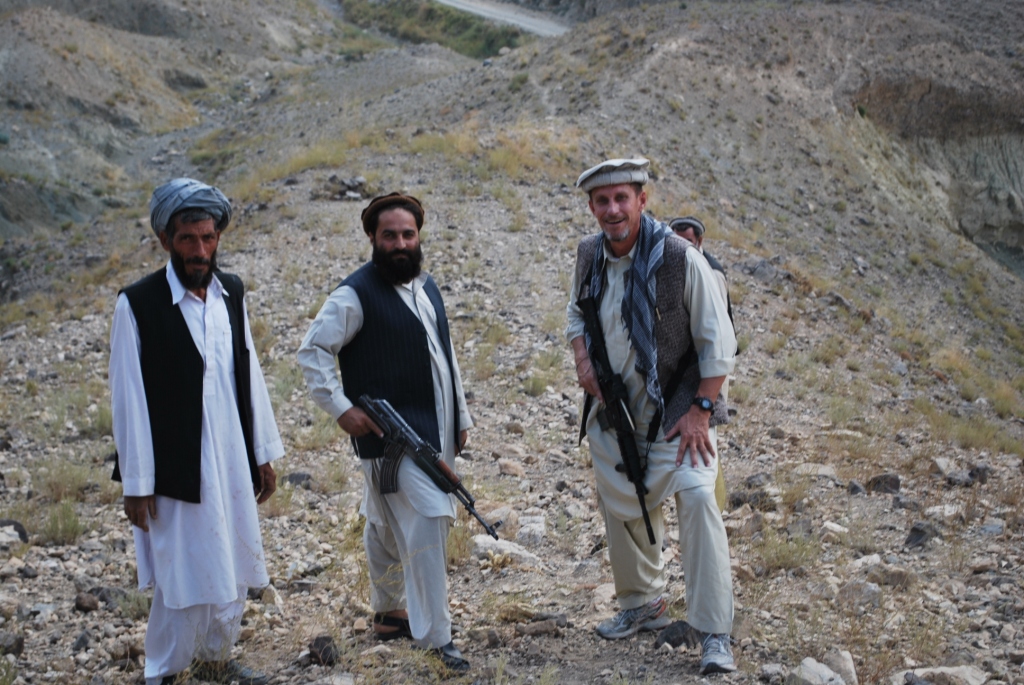
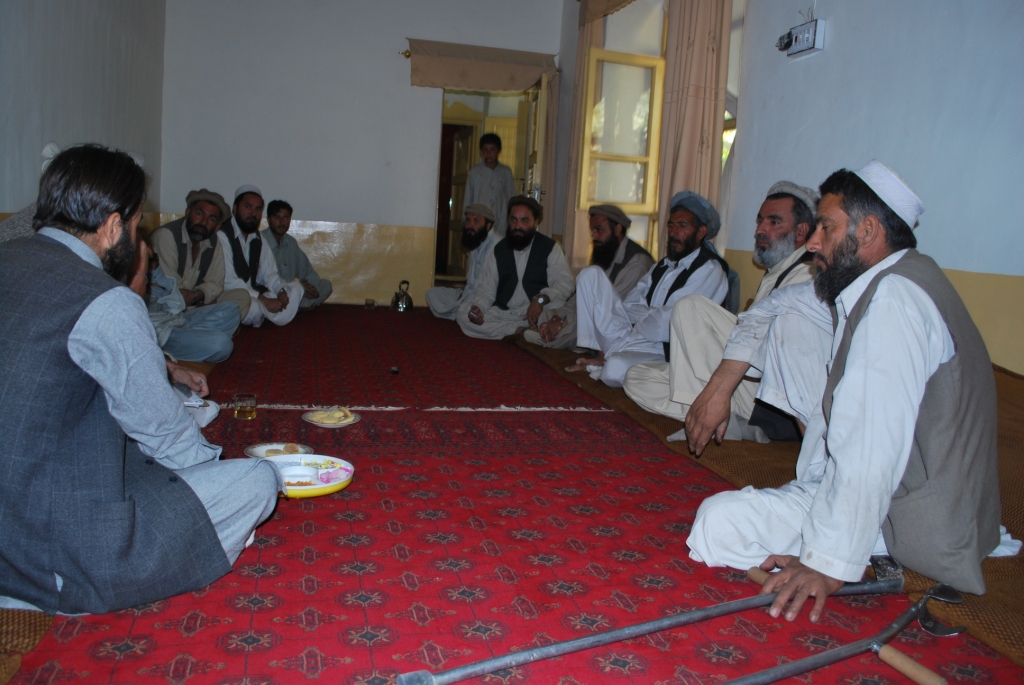
The Maliks (tribal leaders) from Gandamak and the surrounding villages arrived shortly after we did. They walked into the meeting room armed; I had left my rifle in the vehicle, which, as the invited foreign guest, I felt obligated to do.  Gandamak is in Indian country, and everybody is armed to the teeth.  The day started with a shura about what they needed from international NGO’s, followed by a tour of the Gandamak battlefield, and then lunch. I could not do much about what they needed, but I could listen politely, which is all they asked of me.  I’ve enjoyed visiting battlefields since I was a kid, and when my Dad and I visited the Gettysburg, Antietam, The Wilderness, and Fredericksburg battlefields.  I especially enjoy visiting obscure battlefields in remote areas. To my knowledge, I am the only Westerner who has visited the Gandamak battlefield in the last 60 or so years.

Back Cover of the Osprey War Series book The First Afghan War 1839-1842, written by Richard Macrory in 2016. He told me I was the only Westerner who visited the Gandamak Battlefield during the 20-year Afghan-American War

As the Maliks arrived, they started talking among themselves in hushed tones, and I kept hearing the name “Barack Obama.” I was apprehensive; I’m surrounded by Obama fanatics every Thursday night at the Taj bar. Talking with them is unpleasant because they know nothing about the man other than he is not Bush and looks cool. They are convinced he is ready to be president because NPR said so. I had no interest in pointing out to the Makiks that Obama has zero experience in executive leadership and will make a terrible president. They have the time and will insist on hashing things out until they understand clearly. I have a wristwatch and a short attention span; this was not a good start.

Sharif's Great Great Grandfather and son waiting on the Brits to make it down from Kabul
Sharif’s great-great-grandfather and son waiting on the Brits to make it down from Kabul.

As I had feared, the morning discussion began with the question, “Tell us about Barack Obama?” What was I to say? His resume is razor thin, but he has demonstrated traits Pashtun Maliks could appreciate, so I described how he came to power in Chicago. Once they understood that lawyers in America are like warlords in Afghanistan and can rub out their competition ahead of an election using the law and judges instead of guns and explosives, they got the picture. A man cold enough to win every office by eliminating his competition before the vote is a man the Pashtuns can understand. I told them that Obama will probably win and that I have no idea how that will impact our effort in Afghanistan.

They asked if Obama was African, and I resisted the obvious answer: Who knows? Instead, I said his father was a Black African and his mother a white American, so he identifies himself as a Black American. They asked if he was joining his mother’s tribe, why wouldn’t he be considered white like her? I didn’t want to explain the racial spoils system in America, so I lied and said the father’s race determined racial classification.

What followed was (I think) a long discussion about Africans; were they or were they not good Muslims? I assume this stems from the Africans they may have seen during the Al Qaeda days. I think the conclusion was that the Africans were like the Arabs and therefore considered the local equivalent of scumbags. They talked among themselves for several more minutes, and I heard John McCain’s name several times, but they no longer asked about the pending election, praise be to God. They assured me that they like all Americans regardless of hue, and it would be better to see more of them, especially if they took off the helmets and body armor, because that scares the kids and woman folk. And their big MRAPs scare the cows, who already don’t have enough water and feed, so scaring them causes even less milk to be produced, and on and on. These guys knew how to beat a point to death.

Maliks of Sherzad district

We talked for around 35 more minutes about the anemic American reconstruction effort, their needs, and the rise in armed militancy. The American military visits about once a month and remains popular with the local people. They have built some micro-hydro power projects upstream from Gandamak, which the people, even those who do not benefit from the project, greatly appreciate. The US AID contractor, DAI, has several projects in the district, which the elders believe could be executed more effectively if they were given the funds to manage them themselves. However, DAI is welcomed despite this, and its efforts are greatly appreciated. When I asked who had kidnapped the DAI engineer (a local national) last month and how we could secure his release (which was another reason for my visit), they shrugged and one of them said, “Who knows”?  That was to be expected, but I felt compelled to ask anyway.

The elders explained, without me asking, that they are serious about giving up poppy cultivation but have yet to see the promised financial aid.  They need a road over which to transport their goods to market. They need their bridges repaired, and their irrigation systems need to be restored to their condition in the 1970s. They said that these improvements would bring security and increased commerce. One of them commented most interestingly: “The way the roads are now, the only thing we can economically transport over them is the poppy.”

After the talking part of the meeting, the senior Maliks and I piled into my SUV and headed to the Gandamak battlefield.

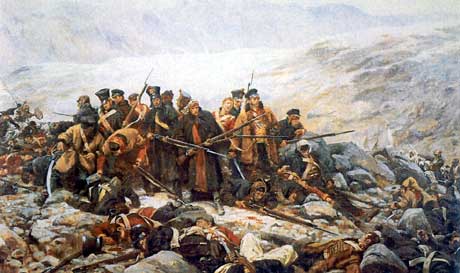
The Last Stand of the 44th Foot

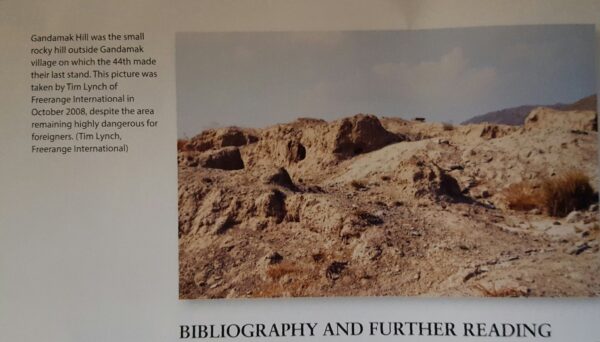
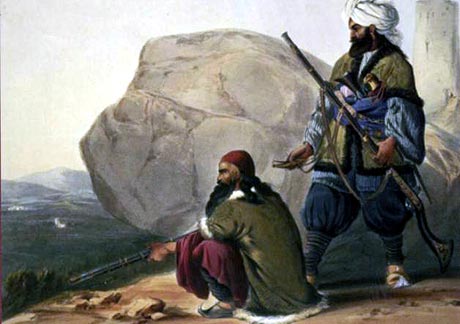
The final stand at Gandamak took place on January 13, 1842. Twenty officers and forty-five British soldiers, most from the 44th Foot, pulled off the road onto a hillock when they found the pass to Jalalabad blocked by Afghan fighters. They must have pulled up on the high ground to take away the mobility advantage of the horse-mounted Afghan fighters. The Afghans closed in and tried to talk the men into surrendering their arms. A sergeant was famously said to reply, “Not bloody likely,” and the fight was on. Six officers cut their way through the attackers and tried to make it to British lines in Jalalabad. Only one, Dr Brydon, made it to safety.

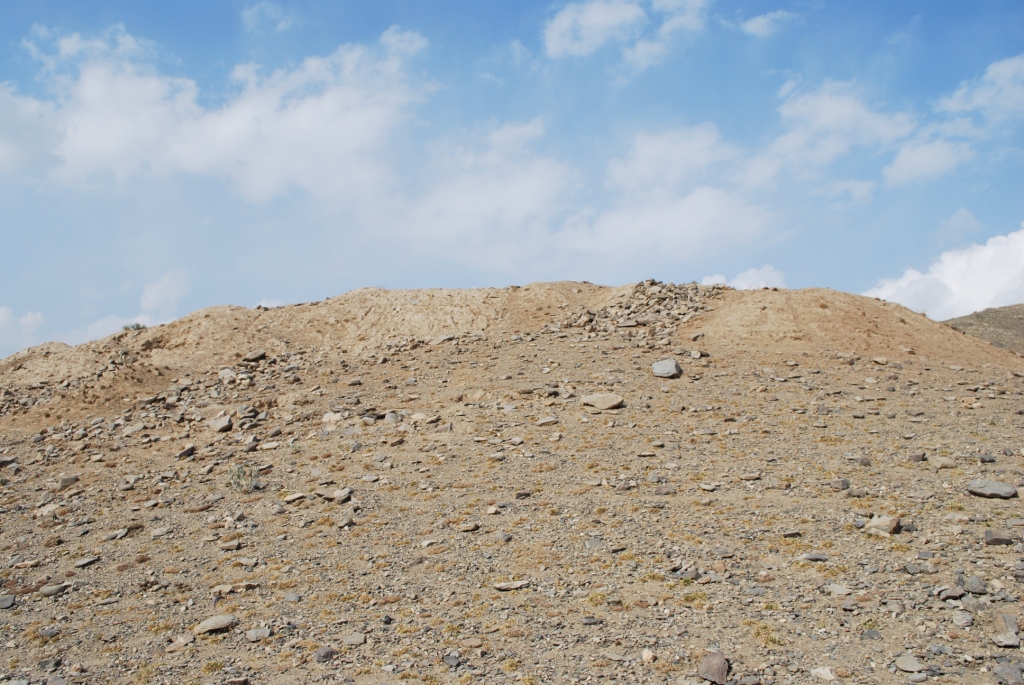
The Gandamack Hill today

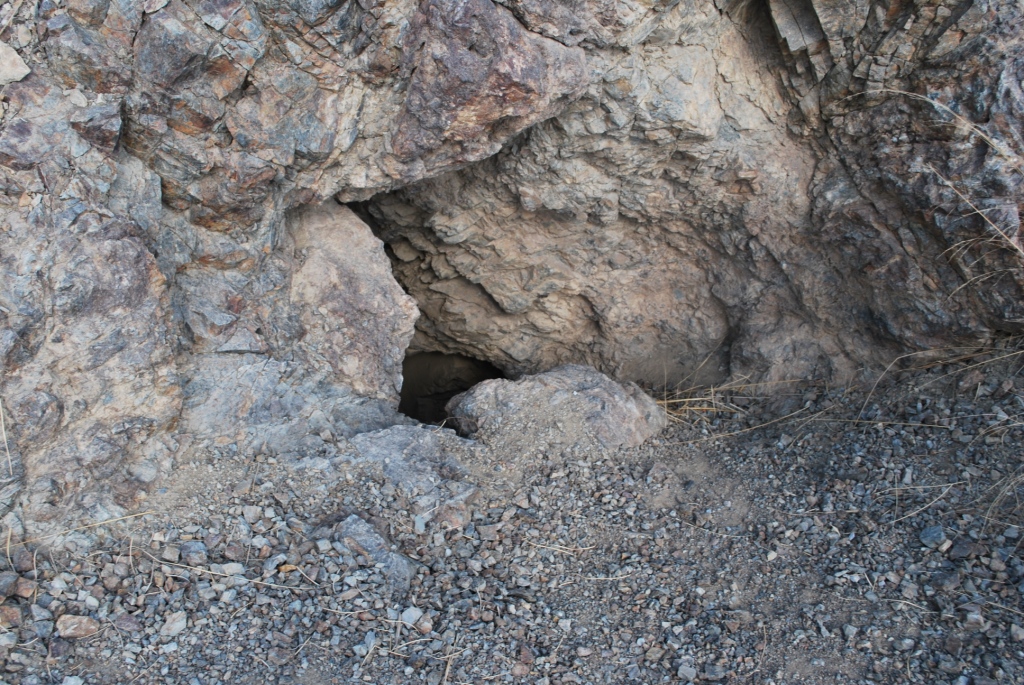
Our first stop was at what the Maliks described as “The British Prison,” which was on the side of a pass about a mile from the battlefield. We climbed up the steep slope at a vigorous pace set by the senior Malik. About halfway up, we came to what looked to be an old foundation and an entrance to a small cave. They said this was a British prison. I can’t imagine how that could be – there were no British forces here when the 44th Foot was cut down, but they could have established a garrison years later, I suppose.  Why the Brits would shove their prisoners down inside a cave located so high up on the side of a mountain is a mystery, and I doubted this story behind what looked to be a mine entrance.  It was a nice brisk walk up the very steep hill, and I kept up with the senior Malik, which was probably the point of this detour.

Enterance to the "Brit Jail
Entrance to the “Brit Jail
Heading up the slope to the Brit jail
Heading up the slope to the Brit jail – not an easy walk

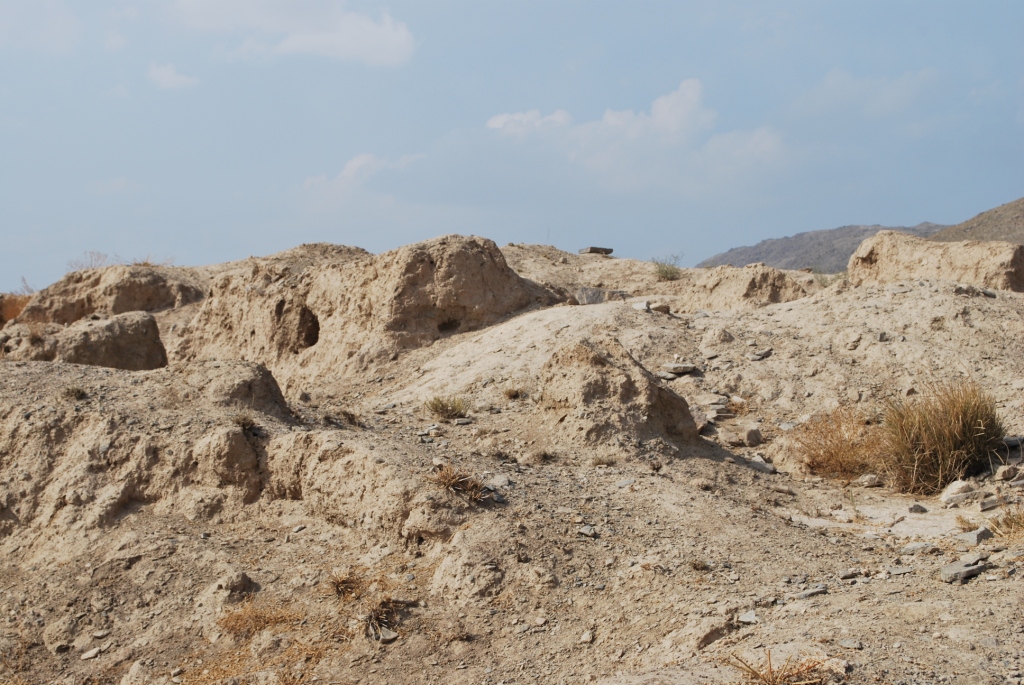
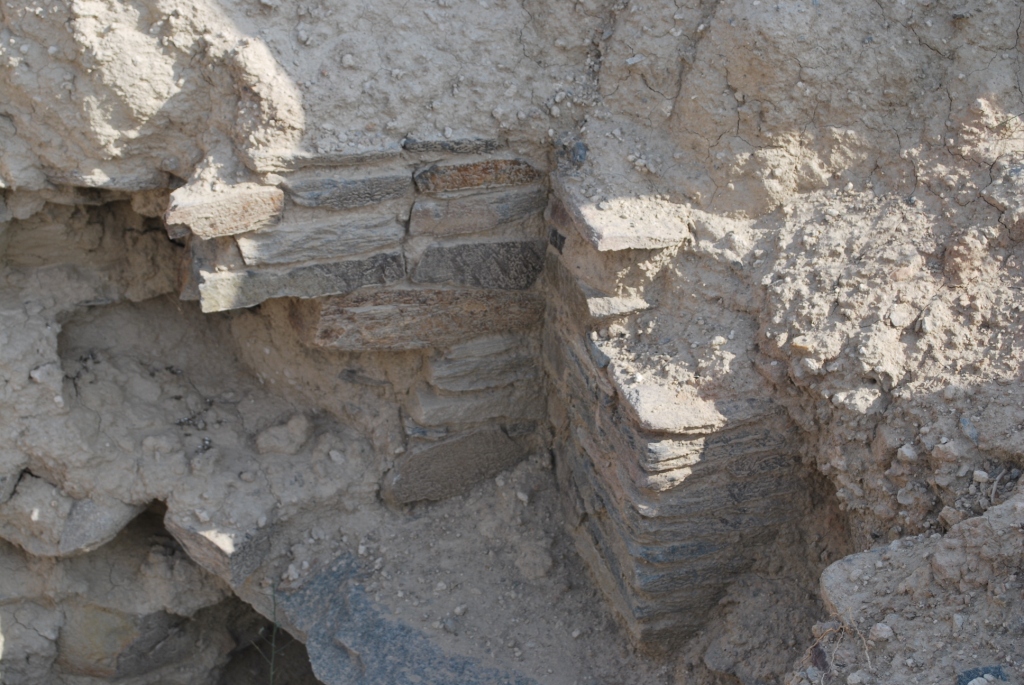
After checking that out, we headed to the battlefield proper. We stopped at the end of a finger, which looked exactly like any other finger jutting down from the mountain range above us. It contained building foundations that had been excavated a few years back. Some villagers started digging through the site looking for anything they could sell in Peshawar shortly after the Taliban fell. The same thing happened at the Minaret of Jam until the central government deployed troops to protect the site. The elders claimed to have unearthed a Buddha statue there, which they figured the British must have pilfered in Kabul. I estimate there are 378,431 “ancient, one-of-a-kind Buddha statues” for sale in Afghanistan to Westerners willing to buy one. The penalties for stealing ancient artifacts are severe; tampering with that kind of material is not something reasonable people do in unstable third-world countries.

I do not know where these foundations came from. In 1842, the closest British troops were 35 miles away in Jalalabad, and there are no reports of the 44th Foot pulling into an existing structure. We were in the right area – just off the ancient back road to Kabul via the Latabad Pass. My guides were specific that this finger was where the battle occurred, and as their direct ancestors participated in it, I assumed we were on the correct piece of dirt. I would bet that the foundations are from a small British outpost built here, possibly to host the Treaty of Gandamak signing in 1879 or to recover the remains of their dead for proper internment.

Site of the final battle
Foundation from an unknown building on Gandamak Hill
Foundation of an unknown building on Gandamak Hill

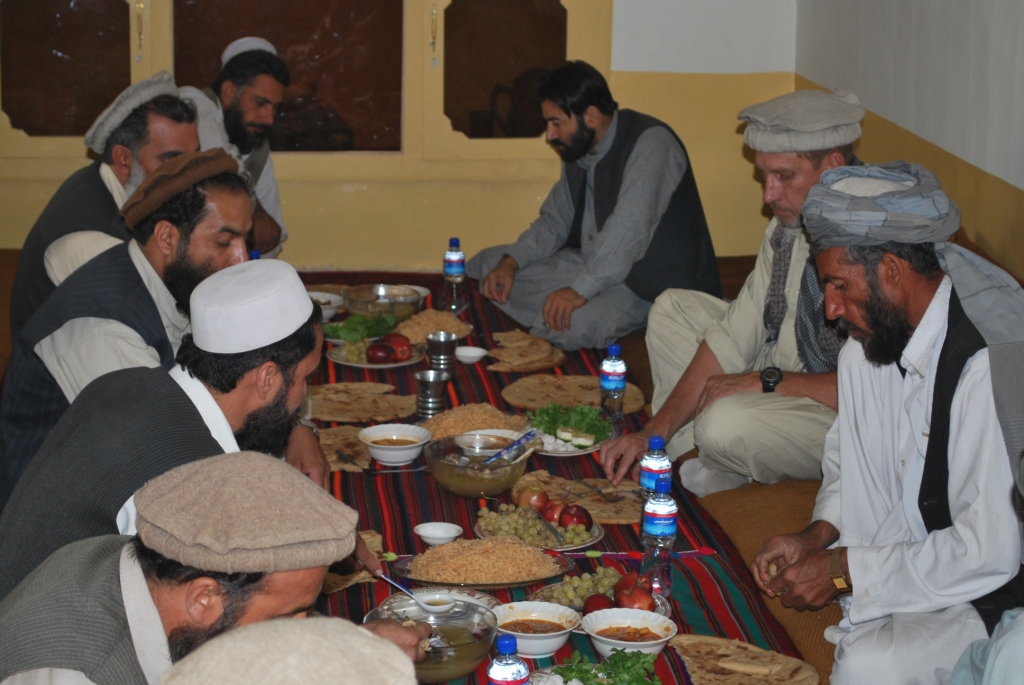
The visit concluded with a large lunch, and after we had finished and the food was cleared away, our meeting was officially concluded with a short prayer. I’m not sure what the prayer said, but it was short. I’m an infidel; short is good.

Man I love Kabuli Pilau - and eating with my hands
I love Kabuli Pilau – and eating with my hands. Mehrab Siraj, a close friend and the Manager of the Taj guesthouse, is sitting to my right.

Post Script

The Maliks of Sherzad district never received the attention they wanted from the US Government or the Afghan authorities.  Instead, the Taliban came to fill the void and started muscling their way into the district back in 2011. By early 2012, things were bad enough that my old driver, Shariff, called me to see if there was anything I could do about getting the Americans to help them fight off the encroaching Taliban fighters.  I was in the Helmand Province by then, dealing with my own Taliban problems, and could offer him nothing. That bothered me then, and it bothers me now, but that’s life.

In August 2012, my old friend Mehrab was gunned down by the Taliban outside his home. By then, several of the men I had shared a pleasant lunch with back in 2008 had also perished fighting the Taliban. Gandamak is now Taliban territory, and the poppy is now the primary source of income. It will be a long time before a Westerner can revisit the old battlefield.

Traveling in the East of Afghanistan; Jalalabad, The Khyber Pass, Peshawar, with a Small Rant on Reconstruction

There are two main routes heading through the mountains to the east out of Kabul. The Latabad Pass, which is a poorly maintained dirt track road, and the Mahipar Pass which is a newly paved road and in excellent condition. Both passes funnel traffic into the village of Surobi and from there all traffic heading east must take the main Jalalabad to Kabul road, which is also called Route One. The trip between Jalalabad and Kabul takes about two hours on the paved road and four on the Latabad Pass route. Traveling in the east was very safe until this past summer when fuel tankers started getting ambushed in the Tangi valley, which is just to the east of Surobi. Some of these attacks were made by criminal gangs to cover up fuel theft and some looked to be the work of Taliban affiliated fighters. The first post on this blog covered our efforts to determine what was happening on this vital route.

Security on the route has improved in the past week as the Afghan National Army patrols it much more aggressively. They have to because almost all the supplies needed by ISAF enter the country at the Torkham border and move over the Jalalabad Kabul road.

The main road out of Kabul goes through the Puli Charki pass. This is a good picture of that pass looking back towards the direction of Kabul.

The road then heads down the Mahipar Pass which is really spectacular;

The guys at Bill and Bob’s Excellent Adventure have video of them driving the switchbacks of Mahipar Pass in their Hummers which you can find here. They say it takes them three hours to do this drive the Bot and I average 90 minutes. Being unarmored and low profile allows us to move smoothly through the countryside and smooth is fast.

As the road heads towards Surobi a few abandoned villages can be seen across the river. These villages were destroyed by the Soviet Army who would not tolerate attacks on their military convoys. If they felt a village had provided Mujaheddin fighters with sanctuary there was only one response complete destruction. When you see a village like this today which has not been reclaimed by people it is a good indicator that there are lots of mines and/or unexploded ordinance seeded into the soil. Only the very foolish would approach structures like this. When the de-mining teams work these areas they leave behind white rocks where they have cleared, and with the white rocks will come people to reclaim what little productive land remains around these unfortunate settlements.

One of the frequent and more interesting sights along this road are the nomadic Kuchi people, who head up into the northern mountains for the summer and back into the lower plains around Jalalabad during the winter months. These are a hardy people who follow their own ancient traditions even the Taliban were deferential to them and did not attempt to force their women into the Burka. They are mostly illiterate and they have not had a good run since the Soviets invaded Afghanistan almost 30 years ago. Drought, land mines, UXO’s, and constant conflict with Afghans villagers over open range grazing areas have decimated the Kuchi. These are people who really bitterly cling to their guns and religion – and with good reason.

Typical Kuchi camp with low tents, camels and dogs but no water or vegitation nearby

Kuchi’s using the foundation of an old destroyed fort to anchor their tents. The woman do not wear the burka and are often responsible for moving the family while the men scout ahead for their next camp site

The Kuchi nomads are not the only people you see on this road Afghan families being repatriated by the UN are a common site too. This used to be a money maker for more affluent Afghans. Every spring they would fly into Peshawar and rent a truck, fill it with empty boxes and some cheap livestock, rent a family or two worth of woman and children to throw on top, and then proceed to the UN repatriation station for their cash payment to go home. Much to my surprise I have learned there are parts of the UN which function with admirable efficiency. This was the case with UNDP Peshawar who obtained biometric data measurements on all returning displaced persons thus instantly eliminating the massive fraud which had plagued the program. The UN also runs absolutely first rate mine dog training and certification programs, thus ensuring mine dogs are in fact performing to standard. There are no similar standards for bomb dogs in Afghanistan outside of the military working dogs and almost every bomb dog team in this country should be considered suspect. The good canine operations will follow the US Army training manual on canine team employment to the letter; the marginal operations have little in the way of training program documentation at all. It is too bad the UN does not have a mandate to certify all detection dog teams working in Afghanistan.

Afghan men heading towards Kabul in high spirits

I’m not too sure I’d be so happy to be riding down Rte 1 like this but it is a common site.

Here is a picture of the Latabad Pass dusty, miserable, dangerous and long. We had to use this route for about three months earlier in the year when the main route was closed for repairs. I get a headache just thinking about it.

Latabad Pass – May a pox fall upon anyone who makes me drive that route again

All passes lead into Surobi a large town with good water and 24/7 electricity thanks to the hydroelectric dam which is named after the town. This is the territory of Hezb-e-Islami Gulbuddin (HIG) which was founded by the warlord Gulbuddin Hekmatyar. The boys from HIG are not our friends. Their leader is not too friendly with the Taliban either, but does cooperate with them when it is in his interests. He also has a long association with Al Qaeda and we believe that the foreign fighters who moved into the Surobi area and tangled with the French back in August were funded and protected by HIG. Although there is a strong Afghan police presence in Surobi and many internationals travel through the town daily on Rte 1 it is not a good idea to stop here.

The Surobi Dam – Rte 1 is on the other side of this reservoir as is the town of Surobi. This picture was taken from the head of the Uzbin valley which is now Indian Country

Once you exit Surobi (if you’re smart) you’ll drive like hell through the Tangi valley and on into Jalalabad. The Tangi saw a half dozen or so attacks on fuel tankers this summer. Since the end of Eid there have been several reports of Taliban affiliated vehicle check points (VCP’s) appearing on this part of the road. These VCP’s could well be manned by criminals who are shaking down motorists for money, but UNDSS reports say they are looking for Afghans who work for the government or international organizations. It is hard to say without interviewing the Afghans who were stopped at these VCP’s, but I can tell you this much it is impossible for these VCP’s to operate without some sort of tacit support from the ANP who man checkpoints on the road every 2 to 3 kilometers. I drove to Kabul yesterday to resupply the Taj bar and saw that the Afghan National Army (ANA) had units on the road and in the high ground throughout the Tangi Valley area. They really have to drive any criminal or enemy activity off the road because all of the ISAF supplies and most of the Afghan legitimate commerce travel this route to and from Pakistan. If the route were cut the impact on both the international military and normal Afghans would be disastrous.

FRI incident investigation team augmented by Dr. Sun from MIT. This tanker was destroyed by Taliban fighters. Most of the others attacked and burned last summer we attribute to fuel theft.

When heading into the east of Afghanistan the international visitor has to stay on the main paved roads and really has one of two destinations. They can visit Jalalabad or they can head to the Torkham border and cross into Pakistan via the Khyber Pass. The other Provinces in the east Nuristan, Kunar and most of Laghman are considered extremely high risk. The US Army averages several firefights per day in Kunar Province (although they rarely take any casualties). Nuristan is very isolated and violent and would generate more incident reporting were it not for the fact that no international organizations (except the military) operate there. Jalalabad City is in Nangarhar Province which is generally considered to be stable. However the districts of Nangarhar bordering the Spin Ghar (White Mountains which contain Tora Bora) are rapidly falling out of the government’s control. Taliban flags now fly openly in the bazaars of Khogiani district which is very close to Jalalabad moving off Rte 1 into the surrounding countryside is not a good idea unless you really know what you are doing.

Jalalabad is a city of some 200,000 people and sits at the junction of the Kabul and Kunar rivers. It remains the business center for the region and is considered a “green” or open city by the UN. There are lots of schools in Jalalabad and lots of kids. The international community has been here over seven years yet there is still very little electricity or infrastructure improvements. There is a hydro electric dam in the Duranta area just outside the city which is supposed to be refurbished as part of the US AID AIRP program. The Louis Berger Group was awarded this multi-Billion dollar program in 2006 but they have not gotten around to the Duranta Dam which is (to be fair) a very small component of that massive effort.

The Duranta power plant was put back on line with donations from local businessmen in 2003.

The Duranta Dam was built in the 1950’s by the Soviet Union and is producing 25% of its rated capacity due to equipment shortages. The plant managers told me that it was bombed by US planes back in 2001 but I don’t believe that. When American Tactical Aircraft go after a target like a hydroelectric dam there is normally not much left of it when they finish. I saw no evidence that it had been attacked back in 2006 when we conducted a security assessment for the refurbishing project we thought was to start back then. There are probably good reasons why, two years later, nothing has been done. No doubt one could sit in the US Embassy and get a great PowerPoint from US AID explaining what to me is unexplainable.

So the people of Jalalabad go without electricity and seven years into our rebuilding effort you see this; schools without lights, or heat, or much of anything. Allow me a slight rant here please. Every year I hear the ISAF commander stressing the fact that the reconstruction effort is the most important mission in Afghanistan. There is no question that this is true. Yet the reconstruction effort has yet to gain momentum while the central government continues to lose control over larger sections of the countryside. This will slow the reconstruction effort to a snail’s pace. Well, that is not true – it is at snails pace now and always has been so I guess I’ll have to think of a metaphor for slower than a snails pace.

It was freezing cold when I took this picture last winter. Note the chairs and desks piled up on the roof of the school building. You see that at every school in the area because they take up too much room in the classrooms given all the children who attend.

We are cursed by the “man on the moon” phenomenon. The Afghans believe that if we could put a man on the moon than we are more than capable of fixing their infrastructure if we really wanted to. I understand that this is a common problem in third world redevelopment work. Another common problem is the conviction amongst the educated locals that the CIA has a master plan and everything that happens is a planned milestone from the master plan. Trying to explain the historically dismal record of our Central Intelligence Agency is pointless no one believes you. And so the frustration mounts and the population which is the center of gravity slips further away from us. These are the seeds of disaster which if allowed to grow will cause our defeat.

The Afghans believe in education but do not have the capacity to provide enough of it to their children

The second best reason to drive east from Kabul is to pay a visit to the Khyber Pass. You need to obtain special permission to transit the tribal areas of Pakistan. If you enter from the Afghanistan side and exit the tribal lands in Peshawar you have to again get permission to transit them back to Afghanistan. I learned this the hard way which was a most unpleasant experience and cost me a ton of cash. The pass is just plain cool 53 kilometers long and 3 meters wide at its most narrow point. On one of my trips I was escorting a diplomat from one of our strongest allies. We had a large armed escort which you can see in the picture below. Note the old belt fed machinegun bungee corded to the top of the pickup bed cover. This is a stupid way to rig a machinegun and is more for show than utility. It also tells the military experts out there a lot about the kind of weapons and support the Khyber Rifles enjoy today. These old weapons may help explain why the Frontier Corps gets beaten like a drum every time they try to take on the Pakistani Taliban.

Ceremonial escort – although Rambo could make it through a 2 hour movie with just 10 rounds of linked ball hanging out of his machinegun feed tray in real life it doesn’t work that way. These troops are carrying enough ammo to last them about 45 seconds in a real firefight.

The Michni Post is the ceremonial HQ of the Khyber Rifles and it overlooks the Torkham crossing into Afghanistan. The Khyber Rifles do an excellent dog and pony show for visiting VIP’s. I’ll let the pictures tell that story.

VIP briefing room. The Khyber Rifles have a first rate presentation on their role and mission

More ceremonial guards. Having sentries pull stag out in the open like this may make sense to a Hollywood producer but not to someone who knows what they are doing (like the Pakistani Taliban.)

The Sov’s apparently shot rockets into the Khyber Agency on a regular basis back in the day.

If you are on the VIP tour you will also stop into the Khyber Rifles officer club. Back in the 1920’s when the British were still garrisoning the Khyber a group of junior officer’s stumbled out of this club in the early morning hours and thought they saw the large oak tree in front attempting to desert the post without proper orders. They had the sergeant of the guard place the tree in chains and those chains remain there to this day.

This tree was placed under arrest in 1922 for attempting to go AWOL.

Like any proper O club there are lots of plaques including this one from the mighty 22 MEU. I know Col McKenzie (now a two star if memory serves) and I’m pretty sure he didn’t clear the spelling on this plaque. I would be interested in learning how it got there. Col McKenzie commanded the 22nd MEU in 2001 2002 when they were down south policing up the Taliban and I can’t imagine that he found time for a courtesy call on the Khyber Rifles. By 2004 the good Colonel would have been on another assignment – you only get one shot at commanding a MEU. Check out the old uniforms on the side boys which reflect the incredible history of the Khyber Pass. As an old military man there are few things more interesting to me than this kind of nonsense.

The plaque reads “Presented by Col Mekenzei on 20 Jul 2004”

Traditional uniform of Khyber warriors dating back to the time of the Golden Horde

My first trip to the Khyber was self funded. I had a month to kill before going home at the end of a contract. Going home earlier would have cost me around 25k in income taxes as I had been outside the country for just 10 months. Yahya and I headed to Peshawar to kill a couple of weeks and Yahya’s childhood friends welcomed us like we were part of their extended family. This trip was on the cheap so I wore my Shalwar Kameez and we stayed in a dive guesthouse. They had 24/7 Fox News in the City View Inn which made my stay most enjoyable. We applied for permits and traveled the Khyber with Afridi tribal fighters who knew Yahya since he was boy. Yahya’s family had moved to Peshawar to escape the Soviets, but returned just before the Taliban took over. That proved to be a big mistake. The Afridi’s were an interesting crew who all wanted to immigrate to the US. I told them to cough up Bin Laden and I’d get the whole tribe green cards which they thought was really funny. Because I was their guest of honor I was duty bound to eat lunch in the most disgusting room I have set foot in. Being an American guest of honor I got to pay for the feast too which wasn’t exactly cheap. The Afridi tribe is a collection of land pirates who don’t really follow the tenants of Pashtunwali. The meal was actually very tasty and I didn’t get sick which was nothing short of amazing. We also traveled around Peshawar which has interesting museums and is home to the famous Qissa Khawani Bazaar.

Once again I’ll let the pictures flesh out the story.

The Afridi's claim this is the best kabob stand in Landi Kotal. I was dubious about this claim to put it mildly
The Afridi’s claim this is the best kabob stand in Landi Kotal

You can't just not eat in this kind of situation but the only thing gripping my bowls was apprehension
You can’t refuse to eat in this type situation without losing face. The only thing that ended up gripping my bowls was apprehension. The food was really good. Honest.

Outside Michni Fort on the non VIP tour with the Afridi's
Outside Michni Fort on the non VIP tour with the Afridi

Yahya and some friends waiting to linkup with the rest of our land pirate guides

You see these unit plaques throughout the Khyber Pass

The bazar

Qissa Khawani Bazaar.


Driving through the Khyber these days has gotten much more risky. There was serious fighting between the semi secular Afridi. like Yahya’s friends, and their more fundamentalist Taliban influenced neighbors. Scenes like the picture below are common now and unless things change dramatically I would not recommend driving through the Khyber Pass.

Tribal fighter at his post two feet off the main road. The compound he is guarding was attacked two days prior to our last trip to the Khyber

Travelling West: Ghazni, Herat, Ghor, Chaghcharan, Jam Minaret, Badghis, Qala-i-Naw

The security situation in the western provinces of Afghanistan has deteriorated significantly over the last year. The first five years after the Allied invasion were a time of peace and hope for the people in the West. The Western city of Herat has 24/7 electricity from nearby Iran, functioning modern infrastructure, and has shown much promise early on. But bad news started filtering out in late 2006. Stories about businessmen unable to operate or turn a profit due to the graft, corruption, and incompetence of the Afghan government appeared in the press. Now, Taliban fighters are active in Herat, Ghor, and Badghis provinces, and the brief flame of hope that Herat once represented is dying slowly but surely.

We had a mission out west back in December of 2006 to conduct a food assessment survey. It was rumored that famine was afoot in the remote mountain villages out there so someone needed to assess how much food was available and at what price. Readers familiar with the military effort here probably think, “Wait, that is what the PRTs are supposed to be doing”, which is true. But that would require extended missions outside the wire, which is something PRT’s do not seem to do, so we were contracted to do it for them. Long-haul remote trips like that are our specialty, so the Afghan American specialist assigned to this task contracted us to take him. I was gone two weeks, yet at times felt I had traveled back 200 years. Along the way, we came across one of the most unbelievable sites in Afghanistan: the minaret of Jam.

The Minaret of Jam — I thought I was the first Westerner, since the 1970s, to see this unbelievable sight!

We had serious time and budget constraints, which forced us to drive around the ring road to Herat, where the assessment was to begin. That could not be safely done today, and it was dangerous two years ago, too, but not so much during the winter months. The picture below illustrates one of the reasons why being molested by the Taliban while traveling in the winter is rare.

Snow covered Ring Road – we are in the hills just north of Ghazni.

There are no snow plows in Afghanistan (except a few the Soviets left behind in the Salang Pass), so a traffic jam like this can last several days. Working with my usual team of Tajiks we weaved through this mess in about 90 minutes by cajoling people to move a little here and a little there, and sometimes driving through the snow on the shoulder. Afghans will always cooperate and help an international who smiles at them, is polite, and knows a few words of Dari or Pashto. Being a good Marine, I first learned the swear words. Swearing about the weather, the road, and the lack of snow plows allowed me to fit right in.

More waiting in traffic on the way to Ghazni

We arrived in Herat the next day and hit one of the better restaurants in town for an early afternoon meal. The weather was cold that day so of course we ate outside because my team knew I would be cold and wanted to see if I bitched or moaned about it. I know how to play this game, and acted like eating out in windy, 40-degree cold was precisely what I wanted to do. This made Little Daud (pronounced Dow good, Dari for David and a familiar name) glum. He had bet Big Daud and Medium Daud (there are three in my crew) that I would make them move inside, and now owed a little coin to his cousins.

Cold eating outdoors at a restaurant in Herat
The city of Herat – beautiful, modern, and currently failing

The Marco Polo Inn in Herat has a wing for foreigners with heaters in the halls and rooms, sit-down toilets, and TVs playing live CNN and the BBC news casts. I would have to wait for a trip to Peshawar of all places to watch Fox News, but man, did I like the sit-down toilet and heat. Afghan buildings are not heated and this was the last I was to see of a warm room and biased crappy western news for the next 10 days.

Downtown Herat

We headed into Ghor Province the next day, planning to take two days to reach Chaghcharan, the provincial capital. Like most countries, the roads into Ghor are unpaved and often rugged to follow. Sometimes, they peter into dry stream beds or divide into three directions. A map and compass are critical if you stay on track. In the countryside, you have two choices for overnight accommodation: camp out in the mud or remain on the floor of a local tea house. We chose the tea house route

The main road through Ghor Province
Afghan Tea House in Ghor Province
Dining in Afghan style – after folding up the sleeping mats it is time for chow. This tea house is 10 miles south of the Jam Minaret.

Life in the villages of this rural area has remained unchanged for many years. There are a few modern conveniences; the people have access to motor transport, some have generators, and most have radios. The irrigation systems are primitive but work, plus this is one area where the US AID contractors have had great success with their field veterinary units. These outposts, run by Afghans, provide vaccinations and medicine for local livestock, the primary source of food and income. But for all intents and purposes, life in these villages has not changed for generations.

Wooden Irrigation Controls
Remote mountain village

On our second day of travel, my crew and Karim awoke with great excitement and anticipation. They would not tell me why, saying I would not believe what we would see in a few hours. They were right. As we moved down a valley towards the Hari Rud River up popped the minaret of Jam. The tallest complete and authentic ancient minaret in the world, it was built by the once great Ghorid Empire, which in the late 12th century ruled over what are now Afghanistan, Pakistan, and India.

Rumors about this magnificent tower did not reach the West until 1944. They were not confirmed until a French archaeologist located it in 1957. For 700 years, since Genghis Khan had rampaged through the valley destroying the Ghorids, it had been forgotten by history.

The Jamm Minaret suddenly appears as you drive down towards the river – the sight is stunning and this picture does not do it justice.
Detailed work from over 700 years ago
Remnants of the Turquoise Mountain Complex behind the Jam

None of my Afghan colleagues had ever seen the Jam, and a few had doubted its existence. There was one ANP policeman guarding the site, and he told us no westerner had ever been here before as far as he knew. I was excited, soon convincing myself I was the first westerner to see the Jam in 40 years. After this trip, I flew home for Christmas and picked up a book by a Brit named Rory Stewart in the Dubai airport. He had walked the exact route I was driving with just a dog, a backpack, and a walking stick. His book had an entire chapter on the Jam Minaret and the surrounding Turquoise Mountain complex. Rory lives in Kabul and is restoring an old bazaar with his Turquoise Mountain foundation, and I hope to meet him someday. Walking from Herat to Kabul with only a dog and a big stick in winter is madness. But the kind of madness I can respect.

Group photo: The boys seemed excited to be here, but their enthusiasm was tempered by the raging river behind us that we had to cross.

Crossing the Hari Rud River in the middle of the day was drama – the river was swollen and the ford point so deep that when we came back, we hit this spot at 0200, knowing the water level would be much lower. In Chaghcharan, we stayed at the house of a local judge related to Karim. We reported to the PRT, which was manned by Lithuanian troops so that Karim could chat with the USAID representative. I don’t know how much the Lithuanians get out and about, but man, they had a gigantic, very cool-looking sauna in their camp. After conducting our census and talking with the Provincial Governor, we headed back out the next night to cross to Hari Rud before dawn.

I was so happy to see a sit-down toilet in Herat. At least these did not smell, given the sub-zero temperatures.
Downtown Chaghcharan

On the way out of Ghor, one of our vehicles had a front strut weld break. Big Daud spotted a hand-cranked welding machine on the side of the road in one of the villages, so we stopped and asked the owner to help us fix the truck. That took about 10 minutes and cost all of two dollars. The weld has worked to this day. Afghans may not have been educated well, but they are smart people.

On the road fix
Big Daud and the broken vehicle

The trip’s next leg was into Badghis Province, requiring us to go way above the snow line. As you transit the lowlands, you’ll see that most houses are made of thick mud walls with domed roofs. Domed roofs are standard in the lower elevations of the west and north because there is not enough timber to build flat roofs. The domes are also efficient in areas with a significant variation in daytime and nighttime temperatures. They vent the warm air at night and allow cool air in, making it comfortable for the families below.

Domed style housing is found in the west and north of Afghanistan

As we moved up into the Badghis Pass, we hit a fair-sized snowstorm, which required us to get the tire chains fitted.

Putting on the chains at Badghis Pass

Once in the pass, we encountered a typical scene: traffic jammed up due to heavy snow, trucks with bald tires, and no chains. Once again, the crew got out and started moving traffic out of our way.

Main road into Badghis

The capital of Badghis Province is Qala-i-Naw, and Spain has the PRT there. We stayed at the local RRD (rural rehabilitation department) office. Karim and I could get onto the PRTs overnight, but our escorts could not, so leaving them to fend for themselves is uncool. Tajiks from the Panjshir valley are not always welcomed in these parts, although most of the population is Tajik, so we stick together at all times and in all places.

Downtown Qala-i-Naw

Qala-i-Naw reminded me of an old Western town like Deadwood—mud, mud, and more mud. We took a census of the wheat lot and moved out because heavy weather was coming in, and we didn’t want to be stuck there.

Typical wheat lot; we found that supplies were plentiful and the prices not inflated.

The drive out was easy, as we beat the storm. Here is an excellent shot of medium Daud up on the pass.

Medium Daud in the mountains

We could not make a trip like that today, even in the snows of winter. I saw a news article about a BBC film crew that went to the Jam Minaret last year to film a special. They took 60 ANP policemen with them. That is unquestionably overkill. In the remote west, the chances of running into AOG bands numbering more than a dozen are around zero. It cost the BBC a fortune, too, but who cares?

Karim is getting a photo for the folks back home.

There is little doubt that the region is much more dangerous than it was just two years ago, ten times more dangerous than four years ago, and twenty times more dangerous than six years ago. See the trend line?

Verified by MonsterInsights